





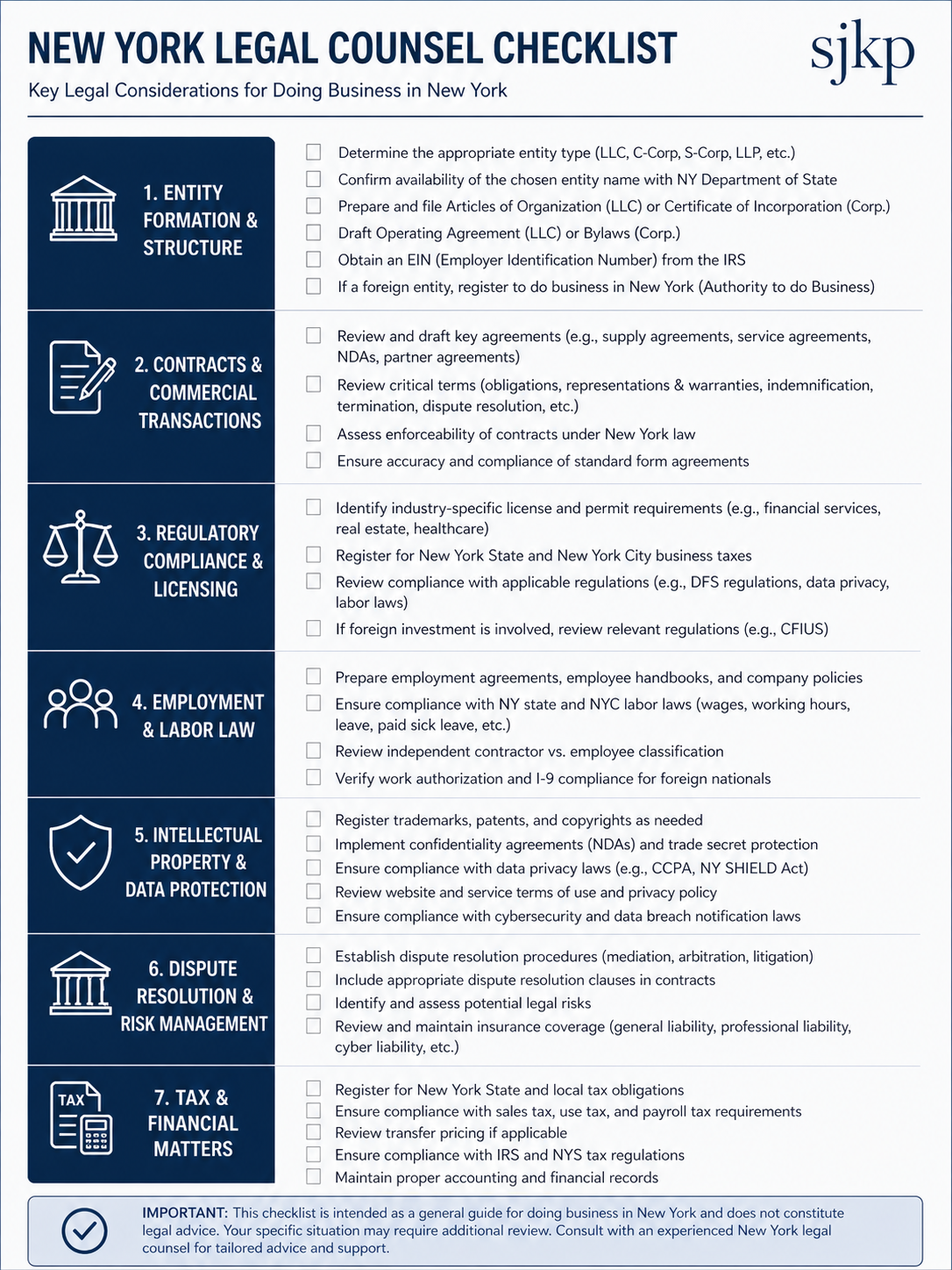
1. When Does Your Situation Actually Call for Legal Counsel?
Knowing when to engage legal counsel can save you significant time, money, and exposure. Many New Yorkers wait until a dispute escalates, but early intervention almost always produces better outcomes. Recognizing the right moment is the first item on your checklist.
Common Triggers That Demand Immediate Legal Review
Certain situations require professional guidance without delay. If you have received a summons, a cease-and-desist letter, or a notice from a New York state agency, you should contact counsel before responding. Business owners forming an LLC under the New York Business Corporation Law often need help structuring ownership, drafting operating agreements, and meeting publication requirements unique to this state. Employment matters under the New York Labor Law, including wage disputes and wrongful termination claims, also justify early legal review. Even routine transactions, such as commercial leases above a certain threshold, can carry hidden liabilities that only experienced legal advisory services can identify.
High-Stakes Situations That Warrant Specialized Counsel
Some matters demand attorneys with specific subject-matter expertise rather than general practitioners. Workers' compensation claims, governed by the New York Workers' Compensation Law, involve strict procedural deadlines and benefit calculations that vary by injury classification. According to Section 13 of the New York Workers' Compensation Law, employers must respond to medical bills within forty-five days, and missing this window can trigger interest penalties of up to 1.5 percent per month. Complex litigation, regulatory investigations, and cross-border transactions are other areas where specialized legal counsel offers measurable advantages over general advice.
2. How Do You Verify That an Attorney Is the Right Fit?
Once you decide to retain legal counsel, your next checklist item involves due diligence. Not every attorney admitted to practice in New York has the experience your matter requires, and verifying credentials protects you from costly mismatches.
Confirming Bar Admission and Disciplinary History
Every practicing attorney must be admitted to the New York State Bar and remain in good standing. You can verify an attorney's admission status, registration number, and any disciplinary history through the Office of Court Administration's public attorney database. New York's Rules of Professional Conduct, adopted by the Appellate Division, govern attorney advertising, conflicts of interest, and client confidentiality. Reviewing this information before signing a retainer agreement gives you a clearer picture of the legal counsel you are about to hire.
Evaluating Practice-Area Experience and Local Knowledge
Bar admission alone is not enough. New York City courts, including the Commercial Division of the Supreme Court, operate under specific procedural rules that differ from federal practice. An attorney handling corporate compliance and risk management matters should understand both the New York Lien Law and the publication requirement under Section 206 of the Limited Liability Company Law. Ask prospective counsel about recent matters in your specific practice area, the counties where they routinely appear, and their familiarity with the administrative agencies relevant to your case.
3. What Should You Expect When It Comes to Fees and Engagement?
Cost transparency is a critical part of the relationship between you and your legal counsel. New York attorneys use several fee arrangements, and choosing the right structure depends on the nature of your matter and your budget.
Hourly, Flat-Fee, and Contingency Arrangements Compared
Hourly billing remains common for ongoing corporate legal advisory work, complex litigation, and matters with unpredictable scope. Flat-fee structures suit discrete projects, such as drafting a shareholder agreement or filing a trademark application. Contingency arrangements, where the attorney collects a percentage of the recovery, are typical in personal injury and certain employment cases. New York's Rules of Professional Conduct require all fee agreements to be reasonable, and written engagement letters are mandatory for matters expected to exceed three thousand dollars.
What Your Engagement Letter Must Address
A proper engagement letter is more than a formality. It should identify the scope of representation, define the responsible attorneys, set out billing rates and frequency, and explain how disputes will be resolved. The letter should also clarify whether your legal counsel will handle related matters, such as appeals or post-judgment enforcement, or whether those services require a separate agreement. Reviewing this document carefully before signing prevents misunderstandings that can derail the attorney-client relationship later.
4. How Can You Get the Most Out of Your Legal Counsel?
The final checklist item focuses on the working relationship itself. Even excellent legal counsel cannot deliver strong results without your active participation, and how you engage with your attorney directly affects the outcome.
Communication Expectations and Document Management
Establish communication preferences early. Some attorneys prefer email for routine updates and reserve calls for substantive issues, while others schedule recurring check-ins. Maintain organized records of all correspondence, contracts, financial statements, and notes related to your matter. New York courts increasingly demand electronic discovery compliance, and the New York Civil Practice Law and Rules impose preservation duties as soon as litigation is reasonably anticipated. Providing complete information promptly allows your legal counsel to develop a stronger strategy from the outset.
Protecting Privilege and Following Strategic Advice
Attorney-client privilege protects confidential communications made for the purpose of obtaining legal advice, but the privilege can be waived through careless conduct. If your matter involves overlapping claims or unresolved liability questions, early dispute resolution planning may reduce both cost and exposure. Avoid forwarding privileged emails to third parties, discussing case details on social media, or copying outside parties on correspondence with your attorney. When your legal counsel recommends a course of action, even one that feels counterintuitive, that recommendation reflects experience with how New York courts and regulators actually behave.
29 Apr, 2026
