
CONTENTS
- 1. Minority Shareholders | Overview of the Case

- - The Lower Court's Determination
- 2. Minority Shareholders | The Supreme Court's Determination
- - Determination on the Representative Director's and Director's Breach of the Duty of Oversight
- - The Standard for Assessing the Duty of Oversight as Seen by the Supreme Court
- 3. Minority Shareholders | Scope of Application and the Structure for Establishing Illegality
- - The Legal Principles on the Scope of Damages and Proximate Causation
- 4. Minority Shareholders | Implications of the Judgment
- - Daeryun's Assistance

1. Minority Shareholders | Overview of the Case
A minority shareholder is a shareholder who holds shares below a certain ratio of the total number of shares issued by a company but who, where the requirements set by the Commercial Act are met, may pursue a director's liability through means such as a shareholder derivative suit.
The plaintiffs in this case were minority shareholders who had held a total of 33,676 shares of the non-party company, amounting to at least 1/10,000, for six months or more. When the company did not file a suit to pursue the officers' liability, the plaintiffs filed a shareholder derivative suit (claim for damages) under the Commercial Act.
Article 403 of the Commercial Act (Shareholder's Derivative Suit) (1) A shareholder who holds shares amounting to at least 1/100 of the total number of issued shares may request the company to file a suit to pursue a director's liability.
The issue was whether the officers, intentionally or negligently, violated statutes or the articles of incorporation or neglected their duties and thereby caused damage to the company, and to what extent that damage was subject to compensation.
 The Lower Court's Determination
The lower court determined the following with respect to this matter.
As to the representative director (Defendant 2), the court determined that, because the creation of off-the-books funds and the remittance of political funds within the CR Division had never been reported to the representative director or the board of directors, and because there were insufficient grounds to find that the representative director had any particular reason to suspect the illegality, it was difficult to recognize liability for breach of the duty of oversight.
As to the director (Defendant 13), the court partly recognized the direct remittances and a breach of the duty of oversight for a certain period thereafter, but it limited the scope of liability for damages by finding that the damage had been made good through return, repayment, and the like, or by denying any causal relationship with the U.S. sanctions payment.
2. Minority Shareholders | The Supreme Court's Determination
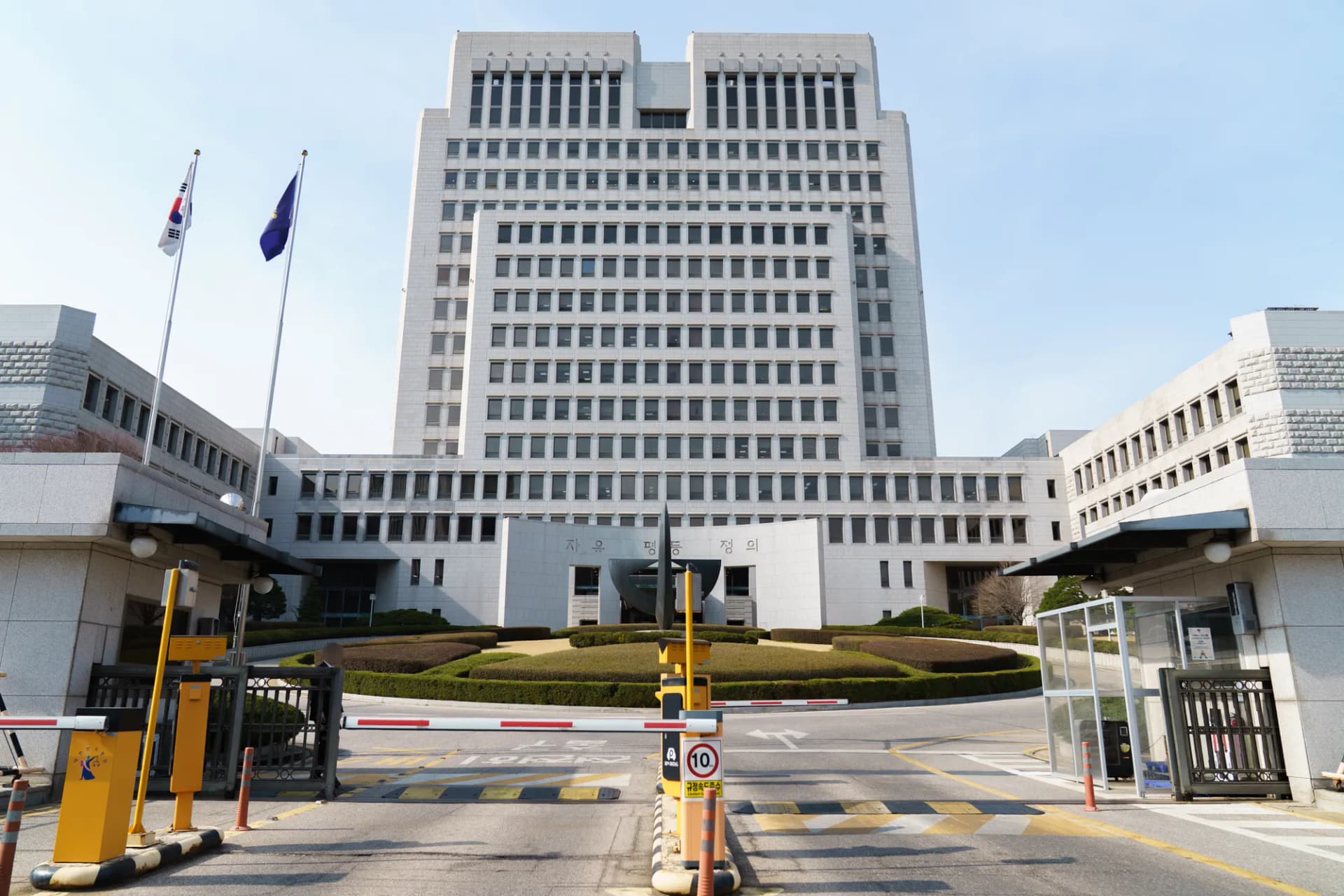
The Supreme Court reversed and remanded the portion of the lower judgment concerning the claim for damages against Defendant 2 relating to the creation of off-the-books funds and the remittance of political funds, as well as the portion concerning Defendant 13.
In other words, the import is that further review and determination are required as to whether the officers breached their duty of oversight and as to the scope of damages.
Determination on the Representative Director's and Director's Breach of the Duty of Oversight
The Supreme Court confirmed the premise that a director who, intentionally or negligently, violates statutes or the articles of incorporation or neglects his or her duties bears joint liability to the company, and that the representative director bears a company-wide duty of oversight. It then held that the duty of oversight is not exempted even in a large-scale, division-of-labor organization.
The court went on to summarize that the key point is whether a reasonable information and reporting system and an internal control system have been established and are functioning.
In particular, the court found that, taking the following circumstances together in this case, there was a substantial possibility that Defendant 2 (the representative director) and Defendant 13 (a director) had neglected their duty of oversight in connection with the creation of off-the-books funds and the remittance of political funds during their terms in office.
In the end, the Supreme Court determined that it is difficult to confine the period of the representative director's and director's breach of the duty of oversight as narrowly as the lower court did, and that further review is needed as to whether an internal control system was actually established and operated.
The Standard for Assessing the Duty of Oversight as Seen by the Supreme Court
The Supreme Court held the following with respect to the standard for assessing the duty of oversight.
- Division of labor and specialization does not exempt the duty of oversight
Even in a large company, the duty of oversight is a basic duty, so liability does not disappear.
- The key is the "effectiveness" of the internal control system
The mere existence of a system on paper is insufficient; what matters is whether it operated in a form capable of detecting, reporting, and correcting signs of a violation.
- High-risk areas require stricter oversight
Where there has been neglect in areas of high legal risk, such as off-the-books funds and government-relations or political funds, the assessment of liability may be reinforced.


3. Minority Shareholders | Scope of Application and the Structure for Establishing Illegality
This case had a structure in which minority shareholders pursued the officers' liability on the ground of damage to the company.
- Conduct requirement: a violation of statutes or the articles of incorporation, or neglect of duties (including a breach of the duty of care or the duty of oversight)
- Damage requirement: the occurrence of damage to the company
- Causal relationship: a proximate causal relationship between the above breach of duty and the damage
In particular, the Supreme Court held that the matter should not be disposed of on the mere assertion that "the representative director or director did not know," but that a breach of the duty of oversight should be assessed on the basis of whether the duty to establish, inspect, and operate internal controls was substantively performed.
The Legal Principles on the Scope of Damages and Proximate Causation
With respect to the determination of the scope of damages against Defendant 13, the Supreme Court found it difficult to accept the lower court's having limited the damage solely to the amount of remitted political funds and having readily denied a causal relationship even as to the U.S. sanctions payment.
The key points are as follows.
- The damage is not limited solely to the "amount of remitted political funds"
The money remitted as political funds out of the off-the-books funds was only a portion.
If the remaining amounts likewise represented company funds that were abnormally diverted or used, they may be assessed as damage (with returns and reimbursements deductible).
- The U.S. sanctions payment (collection of equivalent value and penalty surcharges) is not excluded from the causal relationship either
If the conduct of creating off-the-books funds is included among the grounds for the sanctions, it is, in principle, difficult to deny the causal relationship between the officers' breach of duty that made the creation of off-the-books funds possible and the damage of paying the sanctions.
However, because other causes frequently concur, identifying the amount of damage may be difficult, so that portion must be further reviewed.
In other words, rather than concluding that "there is no causal relationship," the Supreme Court indicated the direction that the scope must be determined by reviewing to what extent the damage bears a causal relationship.
4. Minority Shareholders | Implications of the Judgment

The implications of this case, as seen by Daeryun's attorneys handling corporate matters, are as follows.
- Strengthening the effectiveness of minority shareholders' derivative suits
In a case where minority shareholders pursue the officers' liability on behalf of the company, the Supreme Court made clear that internal controls and the duty of oversight should be assessed not formally, but on the basis of whether they substantively operate.
- Government relations, political funds, and off-the-books funds are a "high-risk area"
It shows that the longer and larger the scale on which off-the-books funds are created, the greater the inducement for them to be used for unlawful purposes, and that a strict standard may be applied in assessing the representative director's and directors' duty of oversight.
- The scope of damage may not be limited to the "remitted amount"
If the creation of off-the-books funds itself is the result of undermining the company's fund-management and compliance systems, damage may be at issue beyond the amount of remitted political funds.
It is also important in practice that even sanctions imposed by overseas regulatory authorities may be subject to review for a causal relationship.
Daeryun's Assistance
In a case where minority shareholders pursue the officers' liability through a shareholder derivative suit, merely listing the unlawful acts is insufficient; one must structure, in accordance with the legal principles, (1) the structure of the internal control failure, (2) the timing and scope of the breach of the duty of oversight, and (3) the identification of the damage and the causal relationship.
Drawing on its experience in corporate governance and Commercial Act disputes, Daeryun Law Firm LLP reconstructs, on a case-by-case basis, the structure of the breach of the duty of oversight by the board of directors, the representative director, and the directors in charge of operations.
It also designs the direction for gathering and organizing evidence centered on whether the internal control system was effective, and at the same time it pursues a strategy of organizing the scope of damage and the causal relationship into a provable form, including the relationships among off-the-books funds, sanctions, returns, and repayments.
The success or failure of a minority shareholder's exercise of rights turns on how precisely the structure of liability and the structure of damage are proven.
If a related dispute is anticipated or proceedings are already underway, you are welcome to seek a legal assessment and develop a response strategy from the early stages.