
CONTENTS
- 1. Dissolution of a Corporation | Decision to Dissolve the Japanese Unification Church

- - The Connection Between Religion and Politics Revealed After the Case Involving Former Prime Minister Abe
- 2. Dissolution of a Corporation | The Japanese Court's Determination, the "Order to Dissolve the Religious Corporation"
- - An Order to Dissolve a Corporation: Does It Mean the Organization Disappears?
- - Will the Unification Church Disappear From Japan?
- 3. Dissolution of a Corporation | The Key Issues After an Order to Dissolve a Corporation
- - Cases in Which an Order to Dissolve a Corporation May Be Issued in Korea
- - Corporate Response Strategies When Facing the Risk of Dissolution

1. Dissolution of a Corporation | Decision to Dissolve the Japanese Unification Church
Dissolution of a corporation is easily mistaken for a procedure that completely eliminates an organization, but in legal terms it refers to a measure that terminates the legal status of the corporation and winds up its assets.
Accordingly, an order to dissolve a corporation does not mean that the organization's activities immediately cease, and the actual impact can vary depending on the legal structure and the social environment.
The Japanese judiciary is accelerating the dissolution proceedings against the Family Federation for World Peace and Unification (formerly the Unification Church).
Recently, the Tokyo High Court once again affirmed the dissolution order against the Unification Church, upholding the determination of the court of first instance, the Tokyo District Court.
As a result, the petition for dissolution of the religious corporation filed by the Japanese government has, in effect, been recognized through the court's determination.
This judgment is drawing international attention as a case that shows how the corporate dissolution system can be used to address social problems.
Within Japanese society, however, a range of observations are emerging as to whether this judgment will lead to the complete extinction of the Unification Church organization or whether its activities will continue in another form.
 The Connection Between Religion and Politics Revealed After the Case Involving Former Prime Minister Abe
The issue of the Unification Church became a matter of full public debate in Japanese society after the 2022 killing of former Prime Minister Shinzo Abe.
At the time, the suspect who committed the act claimed that his mother had made large donations to the Unification Church, leading his family to ruin.
After this case, the relationship between the Unification Church and political circles was intensively examined in Japanese society.
In particular, the social repercussions grew as it came to light that figures in political circles, including Japan's ruling Liberal Democratic Party, had maintained exchanges with organizations affiliated with the Unification Church.
The Japanese government subsequently launched an investigation into whether the Religious Corporations Act had been violated and, in October 2023, ultimately filed a petition for an order to dissolve the religious corporation with the Tokyo District Court.
2. Dissolution of a Corporation | The Japanese Court's Determination, the "Order to Dissolve the Religious Corporation"
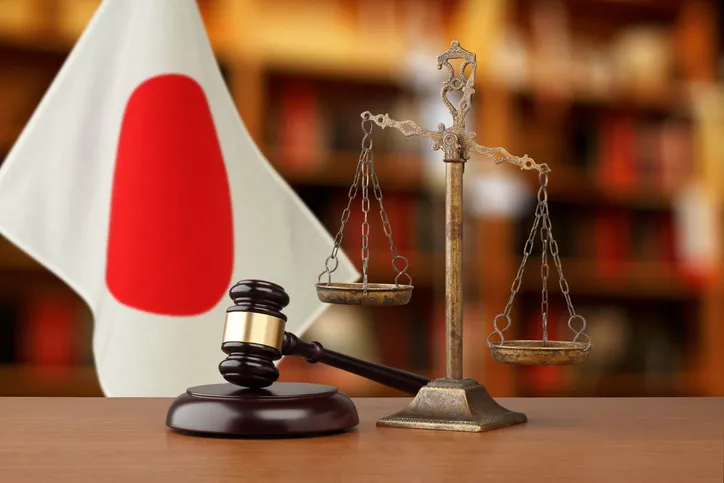
The Tokyo District Court found in 2025 that the Unification Church, through unlawful acts such as soliciting high-value donations, had caused harm to more than 1,500 victims and damage amounting to approximately 20.4 billion yen.
The court determined that, while giving consideration to the constitutional right to freedom of religion, the dissolution order was unavoidable on the ground that violations of the Religious Corporations Act had occurred continuously.
The Unification Church then immediately appealed against the order, contesting the judgment, but the Tokyo High Court likewise did not accept this.
As a result, the religious corporation loses its legal status, and a liquidator appointed by the court will carry out the procedures for winding up its assets and compensating the victims.
This is the third instance in Japan in which a religious corporation has received a dissolution order on the ground of a violation of law.
Unlike the earlier instances, which involved criminal offenses, this case is significant in that it is the first time a dissolution order has been issued on the basis of a civil unlawful act.
An Order to Dissolve a Corporation: Does It Mean the Organization Disappears?
The concept of dissolution of a corporation is generally understood as if the organization completely disappears, but in legal terms it carries a somewhat different meaning.
Dissolution of a corporation refers to a procedure that terminates the legal status and capacity for rights that the corporation held.
In particular, when a dissolution order is issued against a religious corporation, the following changes occur.
A dissolution order does not, however, immediately mean the complete cessation of the organization's activities, and under the Japanese legal system, even if a religious corporation is dissolved, there remains a possibility that it will continue its activities in the form of an unincorporated association.
In practice, under the Japanese legal system, mechanisms that completely prohibit a religious organization itself are applied only on a very limited basis.
Will the Unification Church Disappear From Japan?
The Unification Church is a religion founded in Korea in 1954, but it has built greater influence overseas, including in Japan and the United States.
In Japan in particular, it is estimated to have approximately 600,000 adherents.
The Unification Church has also continued its activities not only in religious affairs but across various fields, including media, education, tourism, and cultural enterprises.
For these reasons, some experts offer the analysis that an order to dissolve the religious corporation may be unlikely to completely halt the organization's activities themselves.
That said, the fact that public opinion toward the Unification Church has sharply worsened across Japanese society following the case involving former Prime Minister Abe is cited as an important variable.
Because the loss of religious corporation status brings changes to tax benefits and the asset management structure, it may have a considerable effect on how the organization is operated.


3. Dissolution of a Corporation | The Key Issues After an Order to Dissolve a Corporation
This decision by the Japanese court may become an important turning point that weakens the legal foundation of the Unification Church organization.
Because dissolution of a corporation does not mean the complete extinction of the organization itself, however, the form in which the Unification Church will continue its activities going forward is likely to depend, as important variables, on the response of Japanese society and on changes in the legal environment.
In the end, an order to dissolve a corporation is not a simple dismantling of the organization but a measure that restructures the legal framework, and its practical effect is expected to vary depending on the direction in which Japanese society and its legal system respond.
Cases in Which an Order to Dissolve a Corporation May Be Issued in Korea
In Korea as well, when certain grounds arise, a court may issue an order to dissolve a corporation against a company.
Under Article 176 of the Commercial Act, a court may order the dissolution of a company upon the petition of an interested party or a prosecutor, or on its own authority.
1. Where the very purpose of the company's establishment is unlawful
For example, if a company is intended to systematically carry out criminal acts or has a purpose that violates the law, the court may determine that the continued existence of the company itself cannot be permitted.
2. Where the company does not conduct business for a long period after its establishment
The Commercial Act provides that a company may also become subject to a dissolution order where, without justifiable grounds, it fails to commence business within one year after its establishment or suspends business for one year or more.
This is a provision intended to prevent a "dormant company," which does not substantively operate, from continuing to maintain its legal status.
3. Where a director or member of management commits a serious act in violation of the law or the articles of incorporation
If a representative or director of the company repeatedly commits unlawful acts, or if the operation of the company itself reaches a level that seriously infringes the legal order, the court may determine that the continued existence of the company can no longer be permitted.
When such grounds are raised, rather than immediately issuing a dissolution order, the court may first appoint an administrator or take measures to preserve the company's assets in order to protect them.
Corporate Response Strategies When Facing the Risk of Dissolution
An order to dissolve a corporation is a very powerful measure that terminates the legal existence of the company itself, so when a related dispute arises, a company needs to respond actively from the early stages.
First, the company should legally examine whether the grounds for dissolution actually exist.
Where an interested party has filed a petition for dissolution, if that petition is malicious or based on assertions contrary to the facts, the company can demonstrate this to the court and respond accordingly.
The Commercial Act likewise takes such situations into account and provides that, where the company demonstrates that an interested party's petition is malicious, the company may require the provision of security.
In addition, where violations of law or unlawful acts by management become an issue in the course of the company's operation, the company can persuade the court of the need for the company's continued existence through structural improvement measures such as improving governance, replacing management, and strengthening internal controls.
In practice, in dissolution cases, whether the company has corrected the problematic situation and restored a normal management structure can also serve as an important factor in the court's determination.
Above all, what matters is preparing a legal response strategy before the stage at which a dissolution order is issued.
Because a dissolution order can have a significant effect on the company's business activities and asset structure, when a related dispute arises, a company needs to comprehensively review the legal risks and response measures.
If you need legal advice regarding the dissolution of a corporation, you are welcome to make a 🔗legal consultation reservation with our firm, where attorneys handling corporate matters and related legal practitioners can provide a coordinated response.