
CONTENTS
- 1. Franchise Agreement | Overview of the Case

- - The Lower Courts' Determination
- 2. Franchise Agreement | The Supreme Court's Determination
- - Price Change Clause in the Franchise Agreement: Written Presentation and a Consultation Procedure Are Required
- - The Effect of a Procedural Violation: A Price Increase Does Not Immediately Become Void
- - The Need for the Price Increase: Changes in Economic Conditions May Be Considered
- - Claims Regarding POS Usage Fees and Damages: A Legal Basis Was Recognized
- 3. Franchise Agreement | The Legal Standard for a Franchisor's Price Change
- - Key Points for Assessing the Liability of the Franchisor and the Franchisee
- - Legal Response Strategy for Businesses

1. Franchise Agreement | Overview of the Case

In this case, which concerned a franchise agreement, the franchisor raised the prices of raw and subsidiary materials (commonly referred to as "material costs") without following the procedure set out in the agreement, and the franchisees brought a claim for the return of unjust enrichment on that ground.
The franchise agreement concluded between the franchisor and the franchisees set out a procedure for changing the supply prices of raw and subsidiary materials.
The relevant clause was structured as follows.
Provided that, where a price change becomes necessary due to changes in economic conditions, such as rising prices, the franchisor shall present the details of the change, the reasons for the change, and the basis for calculating the price in writing, and the two parties shall decide through consultation.
The franchisees argued that the franchisor raised the prices of raw and subsidiary materials without sufficiently following the above procedure, asserting the following.
- The price increase violated the procedure set out in the agreement and was therefore void.
- Accordingly, the increased material costs constituted unjust enrichment.
- The franchisor was required to return the difference.
 The Lower Courts' Determination
The courts of first and second instance, however, did not accept these arguments.
The lower courts acknowledged that there had been a procedural violation in the course of the price increase, but they took the following circumstances into account.
Ultimately, the courts held that the franchisees could be regarded as having given implied consent to the price increase after the fact.
The Supreme Court likewise upheld this determination.
2. Franchise Agreement | The Supreme Court's Determination
In this judgment, the Supreme Court set out the legal principles concerning the interpretation of the price change clause in a franchise agreement and its effect.
Price Change Clause in the Franchise Agreement: Written Presentation and a Consultation Procedure Are Required
The Supreme Court held that in order to change the prices of raw and subsidiary materials, the franchisor must satisfy the requirements set out in the agreement.
That is, the following requirements are necessary.
- The existence of a need for the price change
- Presentation of the details of the change and the reasons for the change
- Presentation of the basis for calculating the price
- Consultation with the franchisee
In particular, the court ruled that these matters must be presented in writing.
Accordingly, the court held that, where this procedure is not followed, a unilateral price change by the franchisor does not, in principle, take effect against the franchisee.
The Effect of a Procedural Violation: A Price Increase Does Not Immediately Become Void
The Supreme Court, however, held that the mere fact that there was a procedural violation does not automatically render the price increase void.
In this case, the following circumstances were found.
- The franchisees continued to trade even after the price increase.
- Trading to which the increased prices were applied continued over a long period.
- No separate objection was raised to the price increase.
Taking these circumstances together, the court found that the franchisees could be regarded as having impliedly consented to the price increase.
Accordingly, the court held that the lower courts' conclusion that the price increase was not void was justified.
The Need for the Price Increase: Changes in Economic Conditions May Be Considered
The Supreme Court also assessed whether the price increase was justified.
The lower courts held that a need for the price change existed when the rise in the prices of raw and subsidiary materials and the changes in economic conditions at the time of the first and second material cost increases were taken into account.
The Supreme Court likewise accepted this determination.
Claims Regarding POS Usage Fees and Damages: A Legal Basis Was Recognized
The franchisees also asserted unjust enrichment in connection with the imposition of POS usage fees.
The lower courts, however, held that the POS usage fees could be regarded as costs grounded in the contractual relationship, and the Supreme Court upheld this as well.
The franchisees' claim for damages was likewise not recognized.


3. Franchise Agreement | The Legal Standard for a Franchisor's Price Change
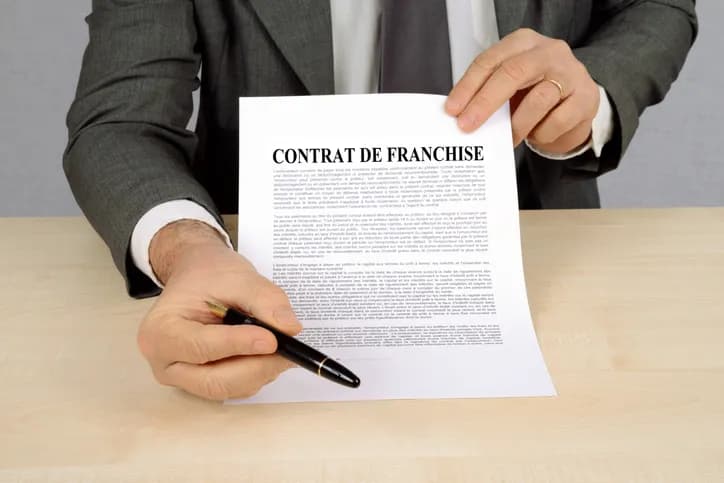
Where a franchise agreement sets out a price change procedure, the franchisor must comply with it.
The following matters are particularly important.
- Whether a need for the price change exists
- Presentation of the basis for calculating the price
- The consultation procedure with the franchisee
- Whether written notice was given
Even where a procedural violation exists, however, if the franchisee accepts it and continues to trade, implied consent may be recognized.
Ultimately, the following factors appear likely to be the key issues in future disputes.
Key Points for Assessing the Liability of the Franchisor and the Franchisee
Category | Key Practical Points of Assessment | Materials the Company Should Prepare |
Franchisor | Whether a need for the price change exists, and whether a consultation procedure was carried out | Price calculation materials, materials on rising prices, and records of consultation |
Franchisee | Whether the price increase was expressly refused, and whether trading was maintained | Written protests, official letters, and trading records |
Operational Staff | The method of notifying the price change, and records of the consultation process | Emails, official letters, and meeting records |
The Corporation | The reasonableness of the pricing policy, and the fairness of the franchise business | Internal pricing policy, and the contract management system |
Legal Response Strategy for Businesses
This judgment is a case that set out an important standard for interpreting the price change clause in a franchise agreement.
In particular, while confirming the principle that a franchisor must comply with the procedure set out in the agreement when changing prices, it made clear that the effect of a price change may be maintained where the franchisee's implied consent is recognized.
In franchise business disputes, judgments are often reached by combining the interpretation of the contract clauses with the actual trading practices, so it is important for both the franchisor and the franchisee to clearly design the structure and procedure for price changes from the stage of concluding the contract.
At Daeryun, attorneys experienced in fair trade matters and corporate matters work together to provide franchise-related legal services, including the drafting of franchise agreements, responding to franchise business disputes, and reviewing fair trade risks.
Area of Assistance | Key Details |
Contract Review | Review of the price change clause in the franchise agreement |
Dispute Response | Responding to franchise disputes relating to material cost increases |
Fair Trade Risk Management | Analysis of whether the Fair Transactions in Franchise Business Act has been violated |
Litigation Strategy | Responding to unjust enrichment and damages litigation |
Evidence Strategy | Securing the basis for price calculation and records of consultation |
If a dispute concerning contract interpretation or pricing policy arises in the course of operating a franchise business, professional legal review is needed from the early stage.
If you need legal assistance with matters such as the drafting of a franchise agreement, you are welcome to book a 🔗fair trade legal consultation with our firm.