




法律情報

How Does Vendor Accountability in Outsourcing Work in New York?
You can outsource the work. You cannot outsource the obligation.For regulated clients, the vendor contract is a compliance document. NYDFS cybersecurity rules require covered entities to maintain third-party service provider policies and to address specific protections contractually — access controls, encryption, incident notification, and diligence. The annual certification signed by senior management covers this, which means a gap in a vendor agreement becomes a personal exposure at the client. When the vendor fails, the regulator looks at you. That is the premise the entire contract should be drafted against. Audit rights get negotiated into irrelevance. Once annually, on notice, at the auditor's expense, satisfied by a SOC 2 report — each concession is reasonable and the combination leaves you with nothing timely. The provisions worth holding: whether the right extends to subcontractors, and whether it survives a suspected incident without the notice period. Service credits are not damages. They are usually the exclusive remedy for performance failures, calculated as a percentage of monthly fees. That figure bears no relation to what a sustained outage costs. Which failures escape the credit regime and trigger termination is the more important negotiation. And transition is where leverage disappears. An agreement without defined exit assistance, a data return format you can actually use, and an obligation to continue performing during a dispute leaves you unable to leave. Vendors know this. It is negotiated at signing or not at all.
続きを読む
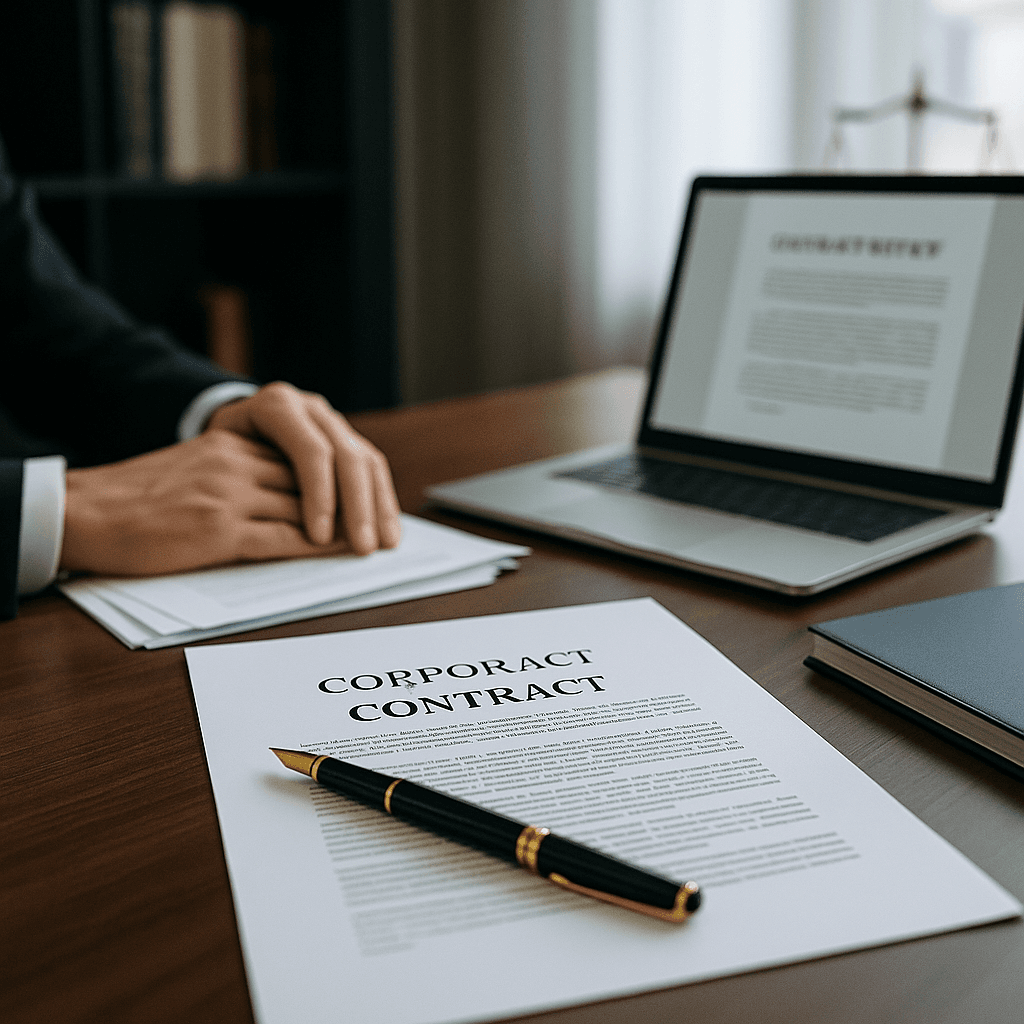
Joint Venture: Dispute Resolution and Liability
3 Bottom-Line Points on Joint Venture from Counsel: Governance structure, dispute resolution mechanisms, capital contribution schedulesA joint venture creates a separate legal entity or partnership that pools resources and shares control between two or more parties. The structure determines tax treatment, personal liability exposure, and how disputes are resolved when partners disagree on strategy or exit timing. From a practitioner's perspective, the foundational decisions made at formation often determine whether the venture survives disagreement or dissolves into costly litigation.
続きを読む

How Corporate Counsel Protects Your Business from Legal Risk in New York
Corporate counsel manages fiduciary duties, regulatory compliance, contract risk, and governance strategy for businesses operating under New York law, providing both preventive legal architecture and crisis response. The reality I encounter most often with clients is that corporate counsel is rarely just a legal safety net. It is the strategic foundation that determines whether a company's decisions hold up under scrutiny. Effective corporate counsel covers every layer of business exposure: directors' and officers' fiduciary duties under the business judgment rule, compliance frameworks across securities, employment, and data privacy law, contract enforcement risk, and shareholder dispute prevention.Whether your company is navigating a transaction, facing a regulatory inquiry, or managing internal governance conflict, understanding what corporate counsel does and where gaps most often appear is the first step toward protecting your business.
続きを読む

What Does a Corporate Law Attorney Do in New York?
A corporate law attorney helps New York businesses manage contracts, regulatory compliance, and complex transactions. SJKP’s legal team safeguards your assets and minimizes operational risks under state laws.
続きを読む

How to Prevent Scope Creep in a Services Agreement
A change order clause protects the customer. It can also trap the provider. Where a written contract governs the work, New York generally bars quasi-contract claims for the same subject matter. A contractor who performs extra work at the client's request, without the written change order the agreement requires, may find that both routes to payment are closed — the contract because the procedure was not followed, and quantum meruit because the contract occupies the field. A no-oral-modification clause reinforces that. Under General Obligations Law § 15-301, a written agreement barring oral modification is not orally modified. The exceptions are partial performance and estoppel — which is why parties who have repeatedly proceeded without written change orders sometimes find the requirement waived by their own practice. The practical point is not whether the clause exists. It is whether anyone followed it. Most scope disputes we see involve agreements with perfectly adequate change procedures that nobody used. And most deliverable disputes are not about scope at all. They are about whether the work was finished. An acceptance provision — a review period, a defined method of objecting, and deemed acceptance if no objection arrives — resolves more arguments than a longer scope description. Exclusions do more work than inclusions. Stating that a statement of work does not cover data migration, third-party licensing, or end-user training prevents disputes that a detailed scope section invites.
続きを読む

How to Respond to a Consumer Complaint: 3 Critical Factors
Learn how to respond to a consumer complaint with the right deadlines, evidence preservation, and documentation strategy to protect your business from regulatory and litigation risk. Learning how to respond to a consumer complaint starts with treating the first few days after you receive it as the most important phase of the entire dispute. A consumer complaint can trigger significant legal and financial consequences for businesses, creditors, and service providers, whether it arises from a billing dispute, product defect, service failure, or contractual breach. In my experience advising clients on consumer complaint matters, the businesses that respond methodically in this early window are far more likely to resolve the dispute quickly rather than watch it escalate into formal litigation. This guide walks through the three critical factors that should shape how you respond to a consumer complaint, from procedural deadlines to evidence preservation and the point at which legal counsel should get involved.
続きを読む