Page title background (PC version)Page title background (mobile version)

Press Coverage

Numerous media outlets recognize the expertise of Daeryun Law LLC.
Explore interviews, legal commentary, and columns by Daeryun lawyers.

Financial News
2025-10-01
변호사가 전하는 유사수신 사기 대처법은?
How to deal with quasi-receipt fraud according to a lawyer?
According to the National Police Agency's 'Pre-indictment confiscation and collection preservation status by year' on the 1st, the crime proceeds confiscated and collected by the police last year were KRW 1.2684 trillion, a 151% increase compared to KRW 506 billion in 2023. This can be interpreted as a significant increase in multi-damage fraud crimes such as multi-level marketing, voice phishing, and quasi-receipt investment. In particular, in the case of multiple fraud crimes, it was revealed that the amount of compensation increased by about 160% in one year from KRW 315.4 billion in 2023 to KRW 815.6 billion in 2024. Quasi-receipt activity refers to all fundraising activities that attract investment funds without obtaining permission or permission by law, and caution is required due to the large amount and scale of damage. In particular, because the boundary between ‘legal investment’ and ‘illegal investment’ is often vague, many people realize that they have been scammed only after the situation has occurred. Attorney Jeong-Hyun Yoon of Daeryun Law Firm, which specializes in the financial legal field, said that if you have been a victim of such a crime, “evidence must be secured quickly and an application for provisional seizure of the perpetrator’s property must be quickly made.” Below are related questions and answers. - What are the characteristics of ‘quasi-receipt acts’ and what are the general fraud crimes and punishments in the law? Is it different? ▲The crime of fraud requires the misappropriation of property profits through deceptive acts, but the act of quasi-receipt constitutes the act of raising funds from an unspecified number of people by promising to guarantee the principal without permission. Quasi-receipts are subject to imprisonment of up to 5 years or a fine of up to 50 million won. The crime of fraud is punishable by imprisonment for up to 10 years, and if the amount of misappropriation is more than 500 million won, the punishment is aggravated according to the Act on the Aggravated Punishment of Specific Economic Crimes. -If there are key characteristics or red flags that the general public can distinguish from legal investments. ▲Unauthorized companies promising ‘principal guarantee’ and ‘confirmed high profits’ at the same time are the key characteristics of illegal quasi-receipt activities. In addition, unclear business models, payment of allowances when attracting new investors, lack of permission from financial authorities, excessive use of celebrities' images, and inducement of additional investment after payment of profits are representative risk signals. -What is the first thing a victim should do when he or she finds out that he or she has been scammed by a similar receiving fraud, and is there a realistic way to get the investment back other than criminal charges? ▲ When damage occurs, evidence such as investment contracts and deposit details must be secured and a criminal complaint must be filed quickly. Separate from criminal punishment, a civil lawsuit for damages is necessary to recover damages. Applying for preservation measures such as provisional seizure or injunction to tie up the perpetrator's assets before litigation is a realistic way to recover from damage. -There are many new quasi-receipt practices these days, but what are the characteristics of these latest fraud methods? ▲The latest quasi-receipt acts have the characteristic of making it difficult to identify the true nature of the business by touting technical terms such as virtual assets, NFT (non-fungible tokens), and RWA (real-world assets). They usually use a method of creating a plausible homepage or white paper, attracting investment using listings on famous exchanges, and then setting a ‘lock-up’ period to tie up investors’ funds. It is also necessary to carefully examine cases where new members are invited to a group room via text or KakaoTalk, claiming that losses can be made up through YouTube or blogs. - There are times when the boundary between legal investment attraction and illegal quasi-receipt activities is vague, and to distinguish the difference between the two. ▲The clearest standard for distinction is the presence or absence of a ‘principal guarantee agreement’. While legal investments require notification of the possibility of loss of principal, quasi-receipt activities raise funds from an unspecified number of people by promising to guarantee principal. Additionally, legitimate investment brokerage companies are registered with financial authorities and are subject to management and supervision. Reporter Kwon Byeong-seok (bsk730@fnnews.com)[View full article] How to deal with quasi-receipt fraud according to a lawyer? (Shortcut)
4 places including Korea Economy TV
2025-09-30
대륜-스위스 로펌 PST '맞손'…"아시아-유럽 잇는 크로스보더 법률 협력"
Daeryun-Swiss law firm PST ‘joins hands’… “Cross-border legal cooperation between Asia and Europe”
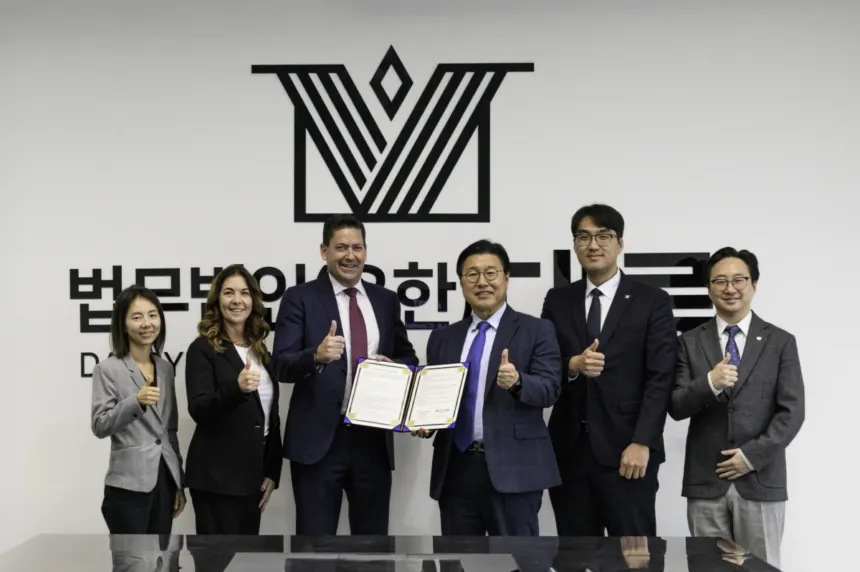
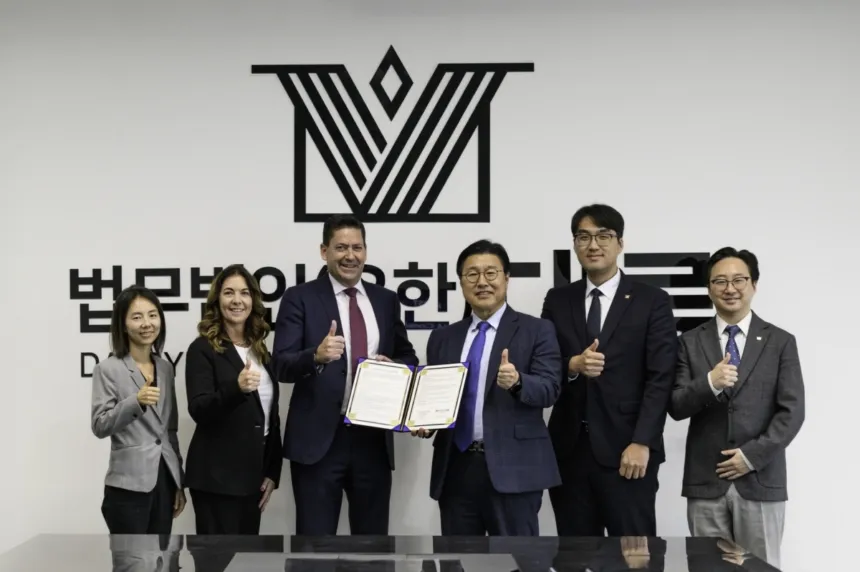
Strengthening cooperation in new technologies such as blockchain and AI and international consulting, Daeryun Law Firm signed a strategic business agreement with Swiss law firm PST Legal & Consulting. We plan to cooperate in various fields such as international procurement, contract law, AI risk management, and cross-border transactions, and provide global legal services to both local European and domestic companies. At the signing ceremony held at Daeryun's Seoul headquarters branch office on the 24th, Daeryun CEO Kim Kuk-il, American lawyer Son Dong-hu, accountant Yoo Jeong-yeon, PST representative attorney Patrick Storchenegger, attorney Park Min-young, and Natalie Sella-Rolando Rolando) Manager and other officials attended.PST Legal & Consulting is an independent law firm headquartered in Zug, Switzerland, providing convergent legal services to individual, institutional, and corporate clients based on more than 30 years of expertise and an international network. It has expertise in various fields such as commercial law, tax law, finance and capital market law, real estate and construction, immigration and labor, intellectual property rights, criminal affairs and compliance, and has specialized advisory capabilities in new technology-based industries such as blockchain, artificial intelligence (AI), and FinTech. Daeryun operates 36 offices in Korea and is seeking to expand into international markets, including New York and Washington, DC. In particular, in addition to legal services, it is attracting attention as it provides 'total legal services' by collaborating with various internal and external experts such as the software development team, online marketing team, digital forensics center, and security center. Through this MOU, the two companies will ▲cooperate on legal advice on international procurement and global contract law ▲jointly develop an AI-based contract analysis and regulatory risk prediction system ▲provide corporate expansion and legal advisory linkage services between Korea and Europe ▲cooperate on global asset protection and tax structure design advisory cooperation We plan to cooperate in various fields, including ▲ jointly promoting ethical management consulting based on ESG and compliance ▲ co-producing and marketing cooperation with online-based international legal content ▲ co-hosting policy forums and international seminars and activating legal talent exchanges. PST CEO Patrick Storchenegger said, “By collaborating with Daeryun, a competent Korean law firm, we will be able to provide more reliable Asian legal services to European clients,” adding, “Korea is a country where digital industries such as blockchain and AI are rapidly growing. He said, “We expect that both sides will create practical results through the cross-border cooperation model.” Kim Kuk-il, CEO of Daeryun, said, “PST has a close network with various European countries, so it will be a great help in expanding Daeryun’s global service scope throughout Europe.” He added, “We will secure international competitiveness based on AI technology, online marketing, and Daeryun’s unique total legal service model.” Through this agreement, the two companies will form a working council to establish a cross-border legal service platform. We plan to implement a mid- to long-term cooperation model such as construction, joint marketing, and support for domestic companies entering Europe. Meanwhile, in addition to PST, Daeryun is strengthening its cooperation network with law firms and accounting firms in major countries such as the United States and Japan, and is continuously expanding its customized international advisory system. Reporter Park Jun-sik (parkjs@wowtv.co.kr)[View full article] Korea Economic Daily - Daeryun-Swiss law firm PST 'joint hands'... “Cross-border legal cooperation between Asia and Europe” (link) Law Leader - Daeryun joins forces with Swiss law firm PST... Cross-border legal cooperation between Asia and Europe (Click here) Venture Square - Daeryun Law Firm signed a strategic business agreement with Swiss law firm PST Legal & Consulting (Click here) Legal Times - [Law Firm iN] Daeryun, strategic business agreement with Swiss law firm PST (Go here)
2 places including Gyeonggi Ilbo
2025-09-30
상환능력 없이 사업 자금 빌리고 안 갚았는데 ‘무죄’...이유가
I borrowed business funds without the ability to repay and did not pay them back, but I am ‘not guilty’... the reason is
The defendant denies the charges... "The repayment ability was sufficient" The court countered, "High profit record... Appears to have been capable of repaying the loan" Business owners who had been put on trial for borrowing business funds without the ability to repay and then failing to repay were found not guilty. According to the legal community on the 30th, the Bucheon branch of the Incheon District Court on the 12th found not guilty two people, including A, a man in his 40s, who had been put on trial on fraud charges. Mr. A and others had been with the company for about a year since 2017. He is accused of stealing approximately 600 million won in the name of business funds from Mr. B, a moneylender, while he was unable to repay due to management difficulties. Mr. A denied the charge, saying, “I had sufficient ability to repay because I was generating significant sales through other personal businesses in addition to the company that was experiencing management difficulties,” and “I maintained a normal business relationship with Mr. B.” In addition, “During the course of financial transactions, I used a bank account in the name of a third party at Mr. B’s request, and money was continuously transferred through that account.” “I repaid it,” he said, adding, “If you add up all the transaction details on borrowed-name accounts, the amount was repaid much more than the loan amount.” The court accepted the claims of Mr. A and others and declared them not guilty. At the time of the indictment, Mr. A was running a private business and recording high profits, and most of the borrowed money seemed to have been spent on the private business, so the court ruled that it could be seen that he had the intention or ability to repay the loan. In addition, the fact that the financial transaction details became more complicated by using a borrowed-name account without accurate settlement during the transaction process also influenced the ruling. The court said, “It is difficult to rule out the possibility that repayment was made in this situation,” and “Looking at the past transactions, the defendants Considering that the victim was continuously repaid, it is difficult to say that there was an intention to deceive only with regard to the amount in question.” Attorney Park Jeong-gu of Daeryun Law Firm, who represented Mr. A, said, “Generally, fraud through repeated financial transactions builds trust and then gradually increases the borrowed amount and then stops repayment.” “I was able to do it,” he said. Reporter Kim Mi-ji (unknown@kyeonggi.com)[View full article] Gyeonggi Ilbo - I borrowed business funds without the ability to repay and did not repay, but I am ‘not guilty’... The reason is (link) Seoul Economic Daily - "I borrowed 600 million won in business funds and couldn't repay it"... The reason for the ‘not guilty’ verdict (Shortcut)
2 places including Jose Ilbo
2025-09-30
법무법인 대륜, K&Y 회계법인과 MOU…국제 조세·규제 대응
Daeryun Law Firm, MOU with K&Y Accounting Firm… International tax and regulatory response
Daeryun Law Firm announced on the 30th that it has signed a business agreement with Ko & Yun, which is considered one of the largest Korean accounting firms in the United States. The signing ceremony was held at Daeryun Law Firm's Seoul headquarters branch office on the 26th, and was attended by Daeryun's CEO Kuk-il Kim, CEO Dong-il Park, advisor Il-hwan Ahn, accountant Jeong-yeon Yoo, CEO Seong-hwan Ko of K&Y Accounting Firm, and Jin-kyung Lee, CEO of GROUP The accounting firm is headquartered in Atlanta, Georgia, USA, and currently operates offices in major cities such as Texas, New Jersey, and Michigan. In addition, as a member of the BDO Alliance USA, in which 151 countries around the world participate, it has secured competitiveness in the international accounting and tax fields. Daeryun Law Firm is one of the largest domestic law firms that operates 36 offices nationwide. It provides comprehensive legal services, including corporate law, litigation, and human rights protection, based on a collaboration system of specialized lawyers in each field and an AI- and IT-based case management system. In addition, it operates a 'total legal service' model that utilizes a variety of experts such as security and security teams and software development teams. This agreement is expected to serve as an opportunity to accelerate Daeryun's global expansion. Through this MOU, the two companies agreed to cooperate in establishing a 'global one-stop service system' to support domestic companies' overseas expansion and overseas investors' activities in Korea. Specifically, ▲ Establishment of overseas corporations and international tax and regulatory response advisory cooperation ▲ Establishment of a joint response system to resolve international lawsuits and disputes ▲ Provision of integrated tax and legal services for global investors We plan to ▲ jointly promote ESG and compliance-based management consulting ▲ jointly produce and hold seminars on online-based international accounting and legal content ▲ strive to exchange talent and operate joint education programs. Ko Seong-hwan, CEO of K&Y Accounting Firm, said, "Through this agreement, we will provide an integrated solution that can simultaneously solve accounting, tax, and legal issues faced by customers in a cross-border business environment." He added, "The cooperation between the two companies will greatly increase global customer satisfaction." “Daeryun’s service area will be further expanded to the U.S. and international markets through K&Y Accounting Firm’s global network and expertise,” said Kim Kuk-il, CEO of Daeryun Law Firm. “We will continue to strengthen our international competitiveness by combining AI technology and Daeryun’s total service model.” Eunhye Lee (zhses3@joseilbo.com)[View full article] Jose Ilbo - Daeryun Law Firm, MOU with K&Y Accounting Firm... International tax and regulatory response (link) Sejeong Ilbo - Daeryun Law Firm signs MOU with K&Y Accounting Corporation of the U.S. (Click here)
Pharmacy Newspaper
2025-09-29
[기고] 의료기 업체 미국 진출시 꼭 알아야 할 내용 - FDA 허가 절차·진출 전략
[Contribution] What medical device companies need to know when entering the U.S. - FDA approval process and entry strategy
Attorney Daeryun Lee Il-hyung " FDA, AIand IoT Strengthening regulations on medical devices-Strict marketing regulations""FDA Permit process is complex but predictable...Compliance investment is a necessity, not an option" Contributors and Pharmacy Newspaper 「medical device」We planned a series related to. In this article, we will look at the legal regulations and entry strategies of domestic medical device companies when entering the U.S. market.. 1. Recently, the rush of Korean medical device companies to enter the U.S. continues.. K-Following beauty success K-This is because the potential for global expansion of medical technology is attracting attention.. However, when we meet companies preparing to enter the U.S. market, FDA Many people are confused when faced with the complexity of the permitting process and various entry strategy options.. The contributor recently held consultations with dozens of companies through a COEX consultation booth event., Recognizing that most of the questions the working-level staff were curious about overlapped, we felt the need to organize key points.. In this contribution FDA We would like to introduce content that may be helpful to practitioners, focusing on the permitting process and proven entry strategies.. 2. FDA Permit Procedure, America is trickier than you think FDAAccording to the risk posed to patients, medical devices are Class I, II, IIIDivide and manage into. Because the permit procedures required for each grade are different,, Above all, the first hurdle is to find out exactly what grade your product falls into..Class I The product may seem relatively simple, but, not really. mostly 510(k)is exempted, but FDA Facility registration and equipment list registration are required., Compliance with the quality system is also essential.. In particular, products that are classified as quasi-drugs or cosmetics in Korea may be treated as medical devices in the United States, so caution is required.. Class II This is the area that most product companies worry about.. 510(k)Equivalence with existing approved products must be proven through, The key here is appropriate Predicate Deviceis to find. Even products with the same function predicate device Permission may vary depending on selection.. FDA The review period is officially 90It's work, but, In reality, if you request additional data or go through a supplementary process, 4-6It usually takes months. Class III Product is the most demanding area. Fillers are a representative example., PMA(Pre-market approval)Large-scale clinical trial data is needed to receive. Minimum permit period 180It can take anywhere from one day to several years, so there is sufficient time, Must be approached with financial resources. 3. Direct payment or indirect payment?, That is the problem. The biggest concern for Korean medical device companies is their entry strategy.. It is largely divided into a direct payment method that sells directly to hospitals and a short payment method that uses distributors.. The biggest attraction of direct payment is profitability.. Since there are no distributor commissions, you can maximize your margins., You also have direct control over brand management and customer relationships.. Additionally, you can receive direct feedback from hospitals and medical staff, which is advantageous for improving products or identifying market trends.. However, the reality of direct payment is not easy.. A large initial investment is required to deploy sales personnel and build a logistics system throughout the United States.. The burden of understanding and responding to different regulations in each state is significant.. One large medical device company also attempted direct sales at first, but eventually switched to partnering with partners.. On the other hand, the biggest advantage of Gannap is quick market entry.. The initial investment burden is low as you can utilize already established distribution networks and customer relationships., Distributors are also responsible for complex regulations and logistics procedures.. However, profitability declines due to distributor commissions., The downside is that it is difficult to directly control brand management or customer relationships.. In case of short payment GPO(Group Purchasing Organization)me DistribuotrA representative method is to use. However, they are price competitive, product competitiveness, Because we attach great importance to supply stability, having sufficient competitiveness is a priority.. 4. Practical know-how found in success stories Looking at the cases of companies consulted by the contributor, several patterns are identified.. For products dealing with rare or unique diseases, direct delivery was advantageous.. This is because a direct approach is more effective in areas where patient numbers are limited and expertise is important.. On the other hand, general consumables or general-purpose medical devices were often cheaper..A medical device company was attempting direct delivery by establishing a U.S. corporation based on its differentiated technological capabilities as the world's first developer.. On the other hand, disposable medical device manufacturers chose a strategy of gradually expanding the market, starting with government bidding.. This is a method of expanding into the private market after gaining experience in the government market where information is relatively open and entry barriers are low.. 5. Latest regulatory trends, Points you shouldn't miss FDAIs AIand IoT Regulations on basic medical devices are being strengthened.. In particular, continuous learning AI For algorithms, the existing 510(k) A new regulatory framework is being developed as the system is difficult to manage.. Companies developing these products must carefully monitor regulatory changes.. Marketing regulations are becoming more stringent.. FDA Advertising for uses outside of the approved indications or claiming exaggerated effects may result in severe sanctions.. UDI(Unique Device Identifier)This is also a part that cannot be overlooked.. Class I Even if it is a product UDI Attachment and GUDID Registration is often required, You must understand the exact requirements in advance. 6. Conclusion and Recommendations The US medical device market is certainly attractive, but, Thorough preparation is essential for success. Above all, it is important to accurately understand the characteristics of your products and company capabilities and then select an appropriate strategy.. FDA The permitting process is a complex but predictable area.. Trial and error can be minimized if you prepare sufficiently in advance and get help from experts.. Especially in recent times where the regulatory environment is rapidly changing, investing in compliance has become a necessity rather than an option.. Korea’s medical device industry’s technology has already reached a world-class level.. Now, I am confident that if we have a systematic entry strategy and ability to respond to regulations, we will be able to succeed in the U.S. market.. [View full article] [Contribution] What medical device companies need to know when entering the U.S. - FDA approval process and entry strategy (link)
KBC Gwangju Broadcasting
2025-09-29
만취한 채 잠들었다 차량 3대 '쾅'…혈중알콜농도 0.1% 경찰 판단은?
I fell asleep while drunk and 3 cars crashed... What does the police think of a blood alcohol concentration of 0.1%?
Driver said, "I was drunk and slipped on the accelerator pedal" Police said, "I don't see any evidence of intentional driving" A driver who was accused of damaging three parked cars while asleep while drunk was cleared of charges. On the 29th, Cheongju Cheongwon Police Station in North Chungcheong Province decided not to send A, a man in his 30s, who was accused of driving his car about 10 meters while drunk on a road in Cheongju last July and hitting cars parked in front of him. Mr. A's blood alcohol content at the time was over 0.1%, which was at the level of license revocation. Mr. A denied the charge, saying that while he was sleeping to sober up, he turned over and unintentionally stepped on the accelerator. Mr. A explained, "Because I was intoxicated at the time, I did not even realize that I had stepped on the accelerator and the collision occurred." A police official explained, "It was not an accident that occurred while driving while drunk." "It is acknowledged that the suspect sat in the driver's seat after drinking and turned on the engine and lights, and in that state, the vehicle was pushed forward and hit the victim's vehicle," he said. "When checking the CCTV footage around the front black box site of the victim's vehicle, there are no circumstances showing that the suspect drove intentionally," he explained. Attorney Daeryun Dong-eun, a law firm representing Mr. A, said, "Driving under the Road Traffic Act means 'using it according to the original usage on the road.' “It only applies to cases of intentional driving,” he said. “In the case of Mr. A, he did not start the car to drive, but got into the car for the purpose of sobering up and sleeping, and we were able to lead to a non-transportation as it was revealed that it was the result of unconscious behavior, not intentional.”[View full article] I fell asleep while drunk and 3 cars crashed... What does the police think of a blood alcohol concentration of 0.1%? (Shortcut)
Global Epic
2025-09-29
급증한 '현대판 장발장' 소액 절도죄 합의하려면
To reach a settlement on the rapidly increasing 'modern-day Jean Valjean' petty theft crime
Crimes of small theft under 100,000 won have recently been on the rise again. After reaching a peak in 2009 during the global financial crisis, it has steadily decreased and recorded 40,583 cases in 2018, but after COVID-19, it gradually rose and recorded 107,138 cases last year, exceeding 100,000 cases again after 15 years. Since small-scale thefts occur so frequently, you may not consider the crime a big deal, but this is a wrong idea. Even if the amount of damage is small, small-scale theft is punished by the same legal standards as general theft. Theft is the act of illegally acquiring another person's property without the owner's consent. The core requirement for establishing a crime is that it must target ‘property’ owned or occupied by another person. Therefore, real estate that cannot be physically moved, such as land or buildings, is not an object of theft. In addition, the actor must have a clear intention to illegally acquire another person's property, that is, an ‘intent to acquire illegally.’ For example, even if you initially brought an item out of simple curiosity, if you later develop the desire to use or dispose of it for personal gain without intending to return it, this can also be considered a theft. The sentence varies depending on the specific method of the crime. The most basic type, simple theft, is punishable by up to 6 years in prison or a fine of up to 10 million won. If you break into another person's home at night and steal property, the crime of 'night-time home invasion and theft' is applied and you are punished more severely with up to 10 years in prison. In particular, in the case of habitual offenders, the punishment can be increased by up to one-half of the statutory penalty due to the serious nature of the crime. In addition, if a weapon is used or two or more people collude to commit a crime, a special theft can be committed and the person can be imprisoned for between 1 and 10 years. So, how should you respond if you are accused of theft due to a moment of mistake? The key to determining the sentence is to logically prove to the investigative agency and the court that there is a ‘sincere effort to recover from the damage’ and ‘there is no risk of recidivism.’ The most decisive mitigating factor is by far the ‘agreement with the victim.’ Since theft is not a crime of involuntary punishment, the agreement does not completely avoid punishment, but it has the greatest effect on lowering the sentence. Beyond simply reimbursing the value of the stolen items, it is common to attempt to reach a settlement with an amount that includes compensation for the victim's mental distress. If an agreement is reached, a non-punishment application form must be received and submitted stating that "the offender does not wish to be punished" to ensure a substantial reduction in sentence. However, because victims often refuse to communicate directly with the perpetrator, it is effective to politely convey the intention to reach an agreement through a lawyer. In addition to reaching an agreement with the victim, it is also important to show deep regret for one's mistakes. It is a good idea to submit a statement of reflection that contains the background that led to the crime, the pain the victim suffered as a result, and a specific pledge on how he or she will live in the future. In addition, the objective circumstances that warrant leniency must be proven with ‘sentencing materials.’ Petitions written by family members or acquaintances serve as good evidence to show that the defendant is a conscientious member of society. In addition, if the crime was committed due to difficulties in making a living, you can appeal for leniency by submitting documents related to your debt or unemployment, and if it was due to a psychiatric problem such as impulse control disorder, you can submit a relevant medical certificate and treatment history. Attorney Lee Ki-jun of Daeryun Law Firm said, "In the end, the reduction of the sentence for theft is centered on three axes: recovery from damage, serious reflection, and prevention of repeat offenses. Even if it is small-scale theft, it is a serious crime that can result in a prison sentence if you respond laxly. Therefore, the case “Receiving the assistance of a professional lawyer from the beginning and systematically responding from agreement with the victim to preparing sentencing materials is a wise way to prevent a momentary mistake from becoming a big stain on your life.” Global Epic CP Lee Soo-hwan / lsh@globalepic.co.kr To reach a settlement on the rapidly increasing 'modern-day Jean Valjean' petty theft crime (Go here)
legal newspaper
2025-09-29
디지털자산, 규제냐 유연성이냐…"신뢰받는 시장 구축해야"
Digital assets: regulation or flexibility? “We need to build a trusted market”
As international discussions surrounding the leadership and regulation of digital asset hegemony intensify due to the rise of stablecoins, Korean-American lawyers from each country unanimously emphasized the need to create a trusted market. At the 32nd regular general meeting of IAKL held at the Korea University Law School in Anam-dong, Seongbuk-gu, Seoul on September 25, Taejun Bae (37th Judicial Research and Training Institute), attorney at Lin Law Firm, said of the Virtual Asset User Protection Act that was implemented last year, “There is criticism that Korean-style protection regulations are excessive.” The Virtual Asset User Protection Act mandates banks to trust deposits of digital asset users in preparation for fraud and hacking incidents. There was opposition that investment was discouraged due to low liquidity and the possibility of being used as an international payment method was reduced. Several digital asset basic laws have also been proposed in the National Assembly. It contains regulations such as imposing disclosure obligations on the issuance and distribution of digital assets and prohibiting unfair transactions. Attorney Bae said, “Regulations in Korea tend to be greatly influenced by social or political influences,” and added, “We need to watch for changes in the future.” Other countries are also strengthening digital asset regulations. A representative country is the United States. First, regulations are being unified. Dong-hoo Son, a foreign attorney at Daeryun Law Firm (New York, USA), said, “The joint statement issued by the U.S. Securities and Exchange Commission and the Commodity Exchange Commission shows a strong will to regulate digital assets.” The two organizations have been fighting over jurisdiction over whether digital assets are securities or products, but formalized regulatory cooperation in September 2025. The reason for strengthening regulations is to create a highly trustworthy market environment for digital assets. Park Wan-ki, a foreign lawyer at Liberty Chambers (Hong Kong), mentioned a survey showing that public trust in regulated platforms is more than 20% higher than in unregulated platforms, and said, "Hong Kong is trying to become 'Wall Street' rather than the 'Wild West' (the West, a symbol of disorder) of the cryptocurrency market." Hong Kong restricts access to ordinary people, not professional investors, so that they can only invest in digital assets regulated by financial authorities. Some countries have flexible responses. Switzerland is showing flexibility in the way it regulates digital assets within the existing civil and financial law systems. Park Min-young (2nd bar exam), attorney at Sedam Law Firm, explained, “For some digital assets, tokens are initially issued in Switzerland and then obtained a license in the EU, which has strict consumer protection regulations.” Attorney Park also warned, "Switzerland has great flexibility, but you must follow the regulations of the market in which you actually want to conduct business. Just because regulations are lax, you should not use them as a means of evasion."[View full article] Digital assets: regulation or flexibility? “We must build a trusted market” (Shortcut)
Seoul Newspaper
2025-09-29
“저작권 협박 탓 출판 중단” 번역가 손배 청구…법원 “증거 없어” 기각
“Publication stopped due to copyright threats” Translator seeks damages… Court dismisses the case as “there is no evidence”
A translator who was acquitted after being sent on charges of violating the copyright law filed a lawsuit for damages against another translator who sued him, but lost. According to the legal community on the 29th, the Western Branch of the Daejeon District Court ruled on the 20th of last month that the plaintiff lost in the lawsuit for damages filed by A, a man in his 50s, a translator, against another translator B. The case occurred in 2016 when A translated and published a classic Chinese philosophy book. It has begun. Mr. B, who published the same translation in 2004, pointed out the similarity in content and sued Mr. A for violating copyright law. After Mr. B raised the issue, Mr. A's publisher withdrew all of the books and stopped publishing them. However, the prosecution acquitted Mr. A on the grounds that it was difficult to acknowledge the similarities in the translation process. Accordingly, Mr. A filed a lawsuit demanding compensation of 50 million won, including royalties, reissue costs, and psychological damages, claiming that publication of the book was stopped because Mr. B threatened the publisher's representative. In this lawsuit, Mr. B denied the charges, saying that he never threatened the representative of Mr. A's publisher and only raised a legitimate issue. At the same time, Mr. A's publisher's representative refuted the problem, saying that he had acknowledged the problem, apologized, and stopped publication. The court accepted Mr. B's argument. The final decision, including the suspension of publication, was made by the representative of Mr. A's publisher, and based on the evidence submitted by Mr. A alone, it is difficult to say that Mr. B threatened him. Attorney Shin Min-soo of Daeryun Law Firm, who represented Mr. B, said, "Mr. A claimed that the cause of the damage was Mr. B's threats, but he proved that he did not threaten him by submitting as evidence the content of the phone call in which the publisher's representative acknowledged his mistake and apologized." Reporter Jeong Cheol-wook[View full article] “Publication stopped due to copyright threats” Translator seeks damages… Court dismisses the case due to “no evidence” (link)
Medipana
2025-09-29
[기고] 대리처방, 환자 편의와 안전성의 균형
[Contribution] Surrogate prescription, balance between patient convenience and safety
It is not unfamiliar to see cases where a guardian caring for a dementia patient visits the hospital on behalf of the patient but turns away after being told that the patient must come in person. For elderly patients with limited mobility or those who need long-term medication due to chronic diseases, proxy prescriptions, or more precisely, 'proxy receipt of prescriptions', are not just convenience, but a key element of continuity of treatment. The current medical law stipulates that only patients who have been directly examined by a doctor, dentist, or oriental medicine doctor can receive a prescription, but there are exceptions, such as when the patient is unconscious or has significant difficulty moving and the same prescription is given for a long period of time for the same injury. It is stipulated that prescriptions can be received on behalf of only under certain circumstances. However, even in this case, only the patient's immediate ascendants, descendants, spouse, spouse's immediate ascendants, siblings, etc. can serve as representative recipients. The Pharmaceutical Affairs Act also, in principle, presupposes direct receipt by the patient. However, in a reality where aging is rapidly progressing, these regulations place a significant burden on patients and their families. It is a bigger problem for elderly patients in rural areas who have difficulty traveling long distances, and for their guardians who must work simultaneously with care and work. The reason why the demand for ‘representative receipt of prescriptions’ is growing is clear. As of 2024, the population aged 65 or older exceeds 20% of the total, entering a super-aging society, and the prevalence of dementia, cancer, and chronic diseases continues to rise. Coupled with the problem of medically vulnerable areas, the current system, which requires patients to visit the hospital in person for simple check-ups or medication prescriptions, shows a gap with the flow of patient-centered medical care. However, indiscriminate permission is by no means the solution. First of all, the doctor's face-to-face treatment of the patient must be provided. If patients do not receive treatment directly, it is difficult for doctors to confirm accurate clinical symptoms and changes, and the possibility of drug side effects or misuse increases. Additionally, if the medicine is incorrectly delivered to a third party or received without the patient's consent, it may lead to privacy protection issues as well as legal disputes. In particular, these days, social problems such as drug distribution and drug abuse are frequently occurring due to the prescription and proxy reception of psychotropic drugs, which are narcotic drugs. The key is to find a balance between convenience and safety. Therefore, institutional improvements need to be made. For example, there is a method of institutionalizing a method for family members to legally receive money on their behalf by introducing a strict guardian registration system based on patient consent. If we carefully review the side effects that these measures may cause and prepare a comprehensive institutional solution at the hospital treatment, prescription, and pharmacy stages, we will be able to find an answer to the problem of balance between currency exchange and personal information protection. The issue of proxy prescriptions, or proxy collection of prescriptions, is an area where patient convenience and safety, medical professionals' responsibilities, and patients' rights are complexly intertwined. However, what is clear is that this is a problem directly related to the quality of life of patients and the care system of society as a whole. Establishing an institutional solution that ensures patient safety while alleviating the burden on families is an important task that our medical community must solve as we move towards a super-aging society.[View full article] [Contribution] Proxy prescription, balance between patient convenience and safety (link)
Have more questions?
Quick Menu

KakaoTalk