Page title background (PC version)Page title background (mobile version)

Press Coverage

Numerous media outlets recognize the expertise of Daeryun Law LLC.
Explore interviews, legal commentary, and columns by Daeryun lawyers.

Seoul Newspaper
2025-08-28
블로그에 설계도 올렸다가 ‘SW 무단 사용’ 피소…40대 철골 제작자 불기소
I posted a design on a blog and was sued for ‘unauthorized use of software’… Steel frame fabricator in his 40s not indicted
A steel fabricator in his 40s who was sent to the prosecution for posting a blueprint created with the program on a business blog even though he did not purchase modeling software was cleared of charges. According to the legal community on the 28th, the Seoul Eastern District Prosecutors' Office decided not to indict Mr. A, who was sent on charges of violating the copyright law on the 7th of last month. Mr. A was accused of infringing copyright by using Company B's modeling program without permission for five years since 2018 and posting the results on a blog. Company B sued Mr. A, saying that he created a blueprint using the company's program without purchasing genuine software and then used it for business-related advertising. Mr. A denied the charges, saying that he only works in steel structure production and does not even know how to use the design program. When a request for steel structure production comes in, it is a common practice in the industry to hire a technician using Company B's program to provide design services, and he said he also worked on steel structure manufacturing in this way. Mr. A also countered that he ran the blog to receive more orders and that he only posted other people's design results downloaded from the Internet or obtained during the work process. The prosecution determined that Mr. A may have written a blog post based on data obtained through another designer. As a result of the investigation, requesting a design service as claimed by Mr. A is a common industry practice, and there was also a case where Mr. A actually requested a design. Attorney Cho Min-woo of Daeryun Law Firm, who represented Mr. A, said, "Using software for work while knowing that it is an unauthorized copy of the software is a copyright infringement. However, Mr. A was only in charge of production work, not design, and was able to receive a decision of not guilty by emphasizing that he had never used Company B's program and did not know how to use it." Reporter Jeong Cheol-wook[View full article] I posted a design on a blog and was sued for ‘unauthorized use of software’… Steel frame fabricator in his 40s not indicted (link)
Financial News
2025-08-28
병원 강제로 옮겨 아버지 치료 받지 못하게 한 60대…검찰 ‘불기소’
A man in his 60s who forcibly moved his father to the hospital and prevented him from receiving treatment... Prosecution ‘non-indictment’
A woman who was handed over to the prosecution on charges of forcibly moving her father's hospitalized father to a hospital and causing his death by preventing him from receiving treatment was acquitted. According to the legal community on the 28th, the Cheongju District Prosecutors' Office decided not to indict A, a woman in her 60s who was transferred on charges of manslaughter by abandonment of her husband on the 8th of last month. Last year, Ms. A was accused of moving her father, B, who was hospitalized, to another hospital due to the burden of nursing fees, causing his death. The attending physician, concerned that he would not receive proper treatment, tried to stop Mr. A from going to the hospital, but Mr. A did not comply and Mr. B eventually died. Mr. A denied the charges. Mr. B, who was suffering from a chronic illness, no longer wanted to receive treatment at the existing hospital, and personally signed the relevant documents, expressing his intention to refuse life-sustaining treatment. They also refuted that they had taken all necessary measures for Mr. B by finding a place that could provide the same treatment as the existing hospital and transferring him there. The prosecution ruled that Mr. A was not guilty. The prosecution said, "The signature on the documents related to life-sustaining treatment appears to have been written in the victim's handwriting, and there is no indication that pressure was applied by the suspect." He added, "It is also difficult to conclude that the act of stopping treatment was against the victim's will, as it is written in the opinion that 'the patient and guardian do not want surgery.'" Attorney Lee In-jun of Daeryun Law Firm, who represented Mr. He explained, “There must be a sense that the suspect is neglecting his duty of support,” and “Mr. A did his best to treat Mr. B even at the hospital where he was transferred, so the charge of abandonment itself could not be established.” Reporter Kwon Byeong-seok (bsk730@fnnews.com)[View full article] A man in his 60s who forcibly moved his father to the hospital and prevented him from receiving treatment... Prosecutor’s Office ‘Non-indictment’ (Shortcut)
lowrider
2025-08-27
‘상처 생겼다’ 연인 폭행 혐의로 입건된 남성···알고 보니 ‘허위 증거’
Man booked on charges of assaulting lover with ‘hurt’... turns out to be ‘false evidence’
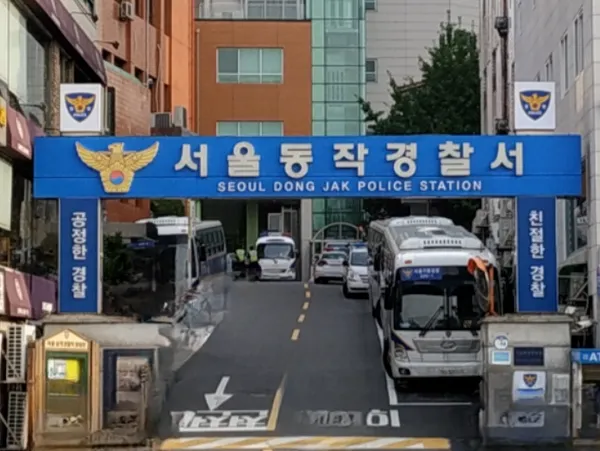
“They strangled him and forced him to lie down... It was a habit of severe drunken violence.” Police said, “It’s all false.” Police said, “Some of the evidence photos were confirmed as ‘marks of surgical procedures’… The circumstances are unclear.” A case was revealed in which a man who was booked for assaulting his girlfriend was cleared of the charges after a police investigation. On the 29th of last month, Dongjak Police Station decided not to transfer a man in his 30s, who was booked on charges of assault. He was accused of strangling Mr. B and placing him on the floor so that he could not move. Mr. B claimed that Mr. A's actions caused injuries to various parts of his body. He also submitted a complaint to the police station, saying that he often used violence when drunk. On the other hand, Mr. A refuted that there was no assault at all. At the time, Mr. B, who was drunk, caused a disturbance on the street, and injuries occurred in the process of preventing it. At the same time, he claimed that he explained the situation to the police officer who was dispatched after the incident and returned home with Mr. B. In addition, he refuted that the drunken violence was a false claim made by Mr. B based on false evidence. The police determined that Mr. A was not guilty. The police said, “Looking at the photos of the wounds and bruises submitted by the victim, it is presumed that there was a physical conflict with the suspect.” However, the police officer who responded to the report at the time stated that he could not confirm the wounds on the victim’s body and did not hear the victim talk about the assault. “Considering all of these circumstances, it is difficult to clearly determine whether the wounds on the victim’s body were caused by the suspect’s actions or occurred before the incident,” he said. “Among the photos submitted as evidence of the assault,” the police said. It was confirmed through the victim's SNS account that some of the wounds were caused by treatment or cosmetic procedures due to health problems," he added. Attorney Seung-jin Yoo of Daeryun Law Firm, who represented suspect A, said, "When Mr. A broke up with him, Mr. B was sued for posting false information on his social media, and later created false evidence and counter-sued Mr. A." He added, "The police also judged that Mr. It appears that a judgment has been made,” he explained. Law Leader Reporter Son Dong-wook twson@lawleader.co.kr Man booked on charges of assaulting lover with ‘hurt’... turns out to be ‘false evidence’ (Shortcut)
Gyeonggi Ilbo
2025-08-26
단골들과 낚시대회 열었다 '사행성 영업' 혐의…법원 판결은?
Held a fishing competition with regulars and was accused of ‘speculative business’… What is the court ruling?
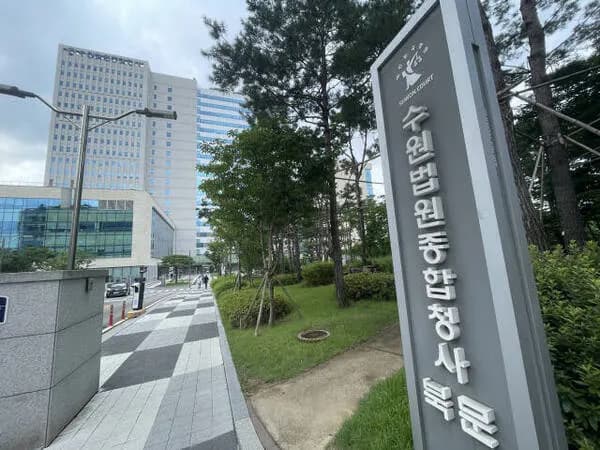
Prosecutors said, “Role of providing certificates with fish weight and rank…Decided by chance.” Court: “Seeing it as a certificate has an expanded interpretation…Efforts such as fishing skills also affect the results.” The owner of a fishing spot who was put on trial for holding a speculative fishing competition without a permit was found not guilty. According to the legal community on the 26th, the Suwon District Court on the 10th of last month indicted a man in his 50s on charges of violating the Special Act on Regulation and Punishment of Speculative Activities, etc. The man, Mr. A, was found not guilty. Mr. A was accused of holding a speculative fishing competition at the fishing spot he ran for two years starting in 2021. According to Article 30 of the Special Act on Regulation and Punishment of Speculative Activities, anyone who engages in gambling activities without permission from the authorities may be punished by imprisonment for up to 3 years or by a fine of up to 20 million won. In the competition, the ranking was determined by the total weight of the fish caught by the guests, and prizes such as free fishing tickets were awarded according to the ranking. The prosecution judged that such a contest constituted a ‘giveaway business’ under the Special Act on Regulation and Punishment of Speculative Activities. A sweepstakes business refers to a business practice that provides participants with a certificate with a rank written on it and awards prize money according to the rank written on the certificate. The prosecution believed that the weight of the fish served as a certificate. Mr. A denied the charges. The weight of the fish is only a simple evaluation standard and has no legal properties as a 'certificate'. In addition, he emphasized that the contest was conducted independently among regular customers, and that the contestant did not receive any money other than the entrance fee to the fishing spot, so there was no profit purpose. The court found Mr. A not guilty. The court said, "The act of speculative activity as defined in the Speculative Activities Control Act is an act of gathering property or property profits from several people and determining the gain or loss in a coincidental way to cause property profit or loss." “Interpreting it as a certificate is an extended interpretation that is unfavorable to the defendant,” he said. He added, “As long as the weight of the fish caught by fishing during a relatively long competition time is added up for each guest, the fishing skills, skills, and efforts of the guests can also significantly affect the results.” He added, “It is difficult to view it as a business using a method that may cause a sense of speculative behavior because it is different from the nature of a sweepstakes business in which the winner is won in a simple and immediate way by chance.” Attorney Kim Young-min of Daeryun Law Firm, who represented Mr. A, said. “The weight of the fish is only a criterion for determining whether or not to win an award, so it does not function as proof or evidence that can prove winning,” he explained. “In addition, we were able to receive a not guilty verdict from the court by emphasizing that we did not use a device to artificially manipulate the outcome of the competition on the scale that measures the weight.” Reporter Seohyun Lee (sunshine@kyeonggi.com)[View full article] Held a fishing competition with regulars and was accused of ‘speculative business’… What is the court ruling? (Shortcut)
Global Epic
2025-08-26
연인 간 대여금 분쟁…사랑의 대가인가 돌려받을 돈인가
Rent dispute between lovers... Is it the price of love or money to be returned?
“My ex-lover is asking me to return the things I gave him back. Do I really have to give them back?” It is common to see money and goods being exchanged between lovers. The forms vary widely, from everyday living expenses to expenses arising from cohabitation on the premise of marriage. The problem is when the relationship breaks down and one party demands a return of the money. From the perspective of the party requesting the return, it may be considered 'money to be returned for granted', but the law is not that simple. In order for a claim for the return of the loan to be recognized in a civil lawsuit, the plaintiff who filed it must prove the fact of the loan. It is difficult to objectively recognize the intention to lend based on simple details of the remittance, such as records of remittances to the other party, transaction details, and deposit/withdrawal accounts. In order to recognize that a rental contract has been established, substantive data regarding agreement of intent are required, such as an IOU or equivalent written text, a text message or email specifying a promise to repay, and a recording of a request for return or statement of repayment. However, in the case of romantic relationships, unlike general transaction relationships, there are rare cases where there is a clear contract or IOU on the background of money receipt. Therefore, the court also comprehensively examines the circumstances and relationship between the parties to determine whether the nature of the money belongs to a loan or a gift. In fact, this same issue was the key in the case I handled. While the defendant was dating the plaintiff, he received approximately 58 million won from the plaintiff on several occasions. However, when the relationship ended, the plaintiff filed a lawsuit demanding its return. At the time, the plaintiff claimed that the defendant borrowed money in the name of repaying the loan. However, there was no direct evidence that could prove the establishment of the contract, such as a rental contract or an IOU. First, the author consistently emphasized the basic principle of civil litigation that 'the person who claims must prove' and thoroughly passed the burden of proof to the plaintiff. It was also pointed out that between lovers, money is often provided without any special conditions. At the same time, he persuasively argued that it is reasonable to view this situation as a gift rather than a loan. In particular, he effectively refuted the plaintiff's claim by emphasizing that the plaintiff paid additional money even though the defendant had not repaid the money after providing the money, and that the plaintiff showed off his financial resources and said he wanted to help the defendant. As a result, the court also judged the plaintiff's claim of 'rental' to be insufficiently proven and dismissed the claim, freeing the defendant from a heavy financial burden. Attorney Kim Young-min of Daeryun Law Firm said, "When a dispute over rental money occurs between lovers like this, emotional judgment can only be used. “You must fully understand the relevant legal principles and establish an evidence collection strategy with a cool-headed judgment from the beginning of the case,” he said. “Only by organizing the facts by issue and constructing logical arguments through the credibility of the parties’ statements and organic interpretation of the circumstantial evidence can you reduce unnecessary disputes and defend yourself from legal liability.” Global Epic CP Lee Soo-hwan / lsh@globalepic.co.kr Rent dispute between lovers... Is it the price of love or money to be returned? (Shortcut)
Financial News
2025-08-25
명의만 빌려줬는데...'가짜 석유 판매' 공범 몰린 30대 檢 판단은
I only lent the name... The decision to make a 30-year-old accused of being an accomplice in 'selling fake oil'
A woman who was sent to the prosecution on charges of aiding and abetting the sale of fake oil was acquitted. According to the legal community on the 25th, the Daejeon District Prosecutors' Office decided not to indict Mr. A, in his 30s, on charges of aiding and abetting violation of the Petroleum and Petroleum Alternative Fuel Business Act on the 17th. In 2021, Mr. A was asked by his former lover, Mr. B, to lend him the business name needed to operate a gas station. At the time, Mr. B persuaded him by emphasizing that he had bad credit, and Mr. A reportedly responded. However, Mr. B later operated a gas station in Mr. A's name and was caught selling fake oil worth 230 million won for about two weeks starting in March of the following year. The police determined that Mr. A helped Mr. B sell fake oil in exchange for a certain amount of compensation, and handed the case over to the prosecution. Mr. A completely denied the charges. It is true that he lent his name, but he was not aware of the sale of fake oil at all. Mr. A claimed, “I first met him while working as a part-time worker at Mr. B’s business, and since we were thinking of getting married, I took the loan of the name lightly.” He added, “In fact, I did not even receive the promised profits from the business, so I asked Mr. B to close the business several times.” The prosecution found that Mr. A was not guilty. The prosecution explained, “It is confirmed that the suspect lent his name in exchange for financial compensation,” and added, “Also, there is a vague perception that the gas station business will be used for illegal purposes such as tax evasion, but when looking at various circumstances, it is difficult to say that the suspect was aware of the sale of fake oil and participated in the crime.” Kim Dong-gu, an attorney at Daeryun Law Firm who represented Mr. “It must be done,” he said. “We were able to receive an acquittal by thoroughly explaining through objective data such as communication records and bank account deposit and withdrawal details that Mr. A was not aware of the fact that fake oil was being sold.”[View full article] I only lent the name... The decision to make a 30-year-old accused of being an accomplice in 'selling fake oil'
KBC Gwangju Broadcasting
2025-08-25
'정부 관리' 예술물 철거했다 7억 원대 피소…法 "배상 책임 없다"
'Government official' sued for 700 million won for demolishing artwork... Law: “No liability for compensation”
The former representative of the officetel commercial management group, who was sued for 700 million won in damages for arbitrarily removing an art sculpture installed in the building's common space, won the case in the first trial. On the 17th of last month, the Seoul Central District Court dismissed the plaintiff's claim in a lawsuit seeking damages filed by the officetel commercial management group against four people, including former CEO Mr. In 2015, Mr. A and others demolished and discarded the art sculpture installed in front of the main entrance on the first floor of the officetel building. Later, in 2020, the district office ordered the management team to restore the demolished sculpture to its original state. This measure was taken in accordance with the old Culture and Arts Promotion Act, which stipulates that when constructing a building of a certain size or larger, an amount equivalent to a certain percentage of the construction cost must be used to install art decorations such as paintings, sculptures, and crafts. It was in accordance with Article 11, Paragraph 1. The management team that received instructions for restoration claimed that Mr. A, who was in charge of disposal at the time, demolished the sculpture without permission from the district office and caused damage to the officetel by failing to obtain the consent of more than 2/3 of the unit owners required under the Apartment Building Act. On the other hand, Mr. A and others countered that they were not responsible for compensation. According to the management regulations, they are only liable for damages when they cause damage due to intent or gross negligence, and they were responsible for damages at the time. This means that they did not neglect their duties. At the time, the sculpture was removed in response to complaints from residents, and the management director also did not notify them of legal procedures during the process. The court ruled in favor of Mr. A and others. The court said, "It is acknowledged that the defendants proposed a project and demolished it without going through the procedures set forth in the Multi-Purpose Building Act," but added, "There is a strong possibility that this act will be viewed not as a personal gain, but as a measure for the benefit of the residents, such as maintenance of old facilities and improvement of aesthetics." It also said, "The defendants are not legal experts, and unless the professional consignment management company that communicated with the defendants during the demolition pointed out the legal problem, there is no violation of their duty of care." He stated the reason for the sentencing, saying, "It is difficult to say that there was," and stated the reason for the sentencing. Attorney Park Jeong-gyu of Daeryun Law Firm, who represented the defendant, said, "The issue in this case was whether the liability requirement of 'intention or gross negligence' required by the management regulations was met." He added, "The members of the management group were 'ordinary people' who were only representatives of each neighborhood, and did not specifically know the laws related to the sculpture in this case, and it was difficult to easily understand the legal nature of the sculpture or the basis for its installation. “I gave my explanation,” he said.[View full article] 'Government official' sued for 700 million won for demolishing artwork... Law: “No liability for compensation”
Medipana
2025-08-25
[기고] 의약품허가특허 연계제도 중심으로 본 허가와 특허 교차점
[Contribution] The intersection of approval and patent with a focus on the pharmaceutical approval and patent linking system
Pharmaceutical product approval is governed by the Pharmaceutical Affairs Act and patents are separate concepts governed by the Patent Act, but in practice, the two are closely linked. Below, we will provide an overview of the patent system and the pharmaceutical product approval process and explain how they are linked.1. What is a patent?A patent is an intellectual property rights system that legally protects an inventor so that he or she can exclusively practice an invention for a certain period of time. Korea's patent law stipulates inventions with 'industrial applicability', 'novelty', and 'inventive step' as patent requirements, and provides strong exclusive effects to registered patents to prevent unauthorized use by third parties. According to various studies, drug prices plummet by more than 70-80% after patent expiration. Therefore, in the pharmaceutical industry, patent rights are a key means of recovering enormous development costs. Patents, which cost hundreds of billions of won to develop a new drug, can be said to be a factor directly related to the survival of a company.2. What is the drug approval/patent linkage system? This system is a device that connects patents and drug product approvals to protect the patent rights of original drugs and at the same time promote the legal entry of generics. Korea's approved patent linkage system consists of the following three axes: ① Patent registration: When the original company applies for product approval, related patents can be registered with the Ministry of Food and Drug Safety. These patents are taken into consideration when a generic company applies for product approval. ② Notification system and sales ban: Generic developer is obligated to notify the original company when applying for approval, and if it is judged that there is a risk of infringing on the patent, the original company can apply for a sales ban. ③ Priority sales product approval: The generic company that succeeds in patent evasion for the first time can sell alone for 9 months. This acts as a device to encourage generic development.3. The general flow of patent registration from patent application to registration, duration and extension is as follows. ① Filing: The contents of the invention are submitted to the Korean Intellectual Property Office along with the specification. ② Examination and registration decision: After application, the examination stage is entered. At this time, the patent office examiner determines whether the patent requirements are met and if it is judged to be a valid patent, it is registered. ③ Duration: Lasts for 20 years from the date of application, and in the case of pharmaceutical patents, the 'permission delay period' is Reflecting this, it is possible to extend the duration for up to 5 years. Pharmaceutical patents are usually filed in the early stages of development, before or after preclinical or phase 1 clinical trials. As explained earlier, strong exclusive effect is recognized in registered patents.4. Pharmaceutical product approval: General industrial products undergoing clinical trials from phase 1 to phase 3 can be manufactured and sold freely. However, in the pharmaceutical industry, only drugs that have received ‘item approval’ after passing phase 1 to 3 clinical trials can be sold. In other words, there is a strong hurdle called ‘approval’ in the pharmaceutical market.5. In the pharmaceutical development process where patents and approvals are linked, a patent for the 'target substance' is generally applied first, and then approval is obtained after clinical trials. These two processes are linked in the following way: patents are a means of protection, and licensing is a means of market entry. No matter how good a patent you have, you cannot sell it without permission, and conversely, even if you have permission, if you do not apply for a patent and do not have exclusive rights or the patent has expired, you cannot make a profit. Even when a generic company launches a generic drug after the original company launches a product, the approval and patent are linked. It is common for generic companies to analyze the original company's patents and establish an avoidance strategy (claim invalidity or non-infringement). Afterwards, if avoidance is deemed possible, the generic company will apply for drug product approval, and according to the patent system (license-patent linking system), the generic company must notify the patent holder of the approval application. At this time, if the original company applies for a sales ban, the Ministry of Food and Drug Safety can delay the entry of generics for a certain period of time. Conversely, there is also a system in which generic companies attack the original company. The priority sales product licensing system is an incentive to encourage patent avoidance. If the generic company successfully evades the patent, it will benefit from exclusive sales rights for a certain period of time.6. Conclusion It is no exaggeration to say that the success or failure of new drug development or generic drug development depends on ‘how to devise a patent strategy to recover the cost of new drug development,’ ‘whether a valid patent exists at the time of approval,’ and ‘whether that patent can be avoided.’ Therefore, we conclude by emphasizing that pharmaceutical companies must not only consider the simple approval process but also have a complex response strategy that includes patent strategy. | Contribution | Lee Il-hyeong, attorney at Daeryun Pharmaceutical Bio Healthcare Center[View full article] [Contribution] The intersection of approval and patent with a focus on the pharmaceutical approval and patent linking system
Pharmacy Newspaper
2025-08-25
[기고] AI ·IoT 기반 의료기 법적·윤리적 측면 도전 과제
[Contribution] Challenges in legal and ethical aspects of AI and IoT-based medical devices
Contributors and Pharmacy Newspaper 「We planned a series related to medical devices.. In this contribution AI and IoT Ethics of basic medical devices, Let’s take a look at regulatory challenges. 1. A new paradigm for medical devicesChatGPTrepresented by AI While the craze is spreading across society,, Artificial intelligence in the medical field(AI)and Internet of Things(IoT) Technology is being adopted quickly. Learned video data AI software is cancer∙Early detection of major diseases such as cardiovascular disease, IoT Patient's electrocardiogram via wearable device, blood sugar, sleep patterns 24The sight of time monitoring is no longer unfamiliar..However, these innovative changes are also accompanied by legal and ethical challenges.. "AIWho is responsible if the diagnosis made by?", "IoT How safe is the patient data collected through the device??" Questions such as these have now become an unavoidable reality.. 2. AI·IoT Characteristics of medical devices – Products that are difficult to regulate under the existing regulatory systemAI Algorithm's learning ability: Once an existing medical device receives approval, its structure and performance are fixed.. however AI·IoT The devices have fundamentally different characteristics. in other words AI The performance of the algorithm is updated as the learning data increases., Sometimes the forecasting method itself can change. frequent updates: Software patching through the above learning, Dataset replacement, Cloud updates, etc. are made and accordingly, AI Medical devices change frequently. For existing medical devices, there are almost no changes to the approval requirements after approval., Existing medical device laws are enacted to suit these characteristics.. however AI Medical devices can be difficult to regulate under existing approval systems due to frequent updates.. IoT The ambivalence of connectivity: Remote monitoring and cloud linkage are possible through continuous network connection, and the resulting convenience is considerable., As a reaction, security risks also increase.. existing medical laws-Existence of areas that are difficult to regulate through the medical device law system: With existing medical devices, the doctor is the subject of the final diagnosis, so the doctor has ultimate responsibility.. However, you can make your own judgment based on the learning data. AI For software, As medical devices can even perform diagnostics, it may become unclear who holds ultimate legal responsibility..These characteristics are AI·IoT These are factors that make regulating medical devices difficult., Accordingly, various legal, There are ethical issues involved. 3. ethical challenge – Issues of patient rights and responsibilities. Lack of transparency in the decision-making processAIThe decision-making process of 'black box'close to. In fact, research is still ongoing. ChatGPTIt is said that it is difficult for humans to explain the thought process of. in other words, AIThis means that it is difficult for us to fully understand the way of thinking of.patients and medical staff AII received a diagnosis from, It is difficult to know how the results were derived.. As a result, the patient's right to self-determination is violated or, Problems may arise where legal responsibility becomes unclear.. me. Unclear responsibilityAI The following entities are involved in diagnostic activities using medical devices:, The distribution of responsibilities between them is still unclear.• medical staff: The doctor who made the final diagnosis and treatment decision• manufacturing company: Medical device company that designed the algorithm• hospital: The organization that introduced the device and used it on the patient. Privacy and Security RisksIoT The risk of hacking inevitably follows the process of real-time data transmission through devices.. patient's electrocardiogram, When sensitive health information such as blood sugar records is leaked to the outside world, The patient's personal rights can be seriously violated..In addition, by using patients’ health information, AI Training diagnostic software, As far as the contributor understands, consent for the use of personal information has not yet been properly obtained. 'AI learning'I know that there are many cases where. Although it has not been an issue yet, In this regard, the issue of personal information infringement may also arise.. 4. Regulatory challengesIn the case of Korea 「Medical Device Act」and recently enacted 「Digital Medical Products Act」via software medical devices(SaMD)It regulates, The regulatory sandbox system is used to provide temporary permission and verification of new technologies.. but, AI algorithmic 'continuous learning'Specific regulations or previously mentioned responsibilities, Specific regulations on personal information protection issues are lacking..USA(FDA)silver AI/ML SaMD Related guidelines, etc. are disclosed on the website.. European Union(EU)The main feature of regulation is the dual regulatory approach.. European Medicines Agency(European Medicines Agency, EMA)This medical device regulation(Medical Device Regulation, MDR) and Artificial Intelligence Act(Artificial Intelligence Act, AIA)according to AI Manage basic medical devices.MDRsilver AI Design of medical devices, including basic medical devices, development, sets out requirements for clinical evaluation and post-marketing surveillance;, AIAis a risk-based classification, transparency, Defines human supervision requirements, etc..medical treatmentAI The company is USA, When entering the European market, you must meet strict standards to enter the market, so you need to prepare for this.. Additionally, domestic regulations are still being established., It seems necessary to prepare in advance for regulations that will become stricter.. 5. conclusionAI·IoT Based medical devices are already revolutionizing the lives of patients., It is clear that this trend will accelerate further.. However, the problem is that there is still a large gap between the speed of technological development and the speed of development of legal and ethical systems.. especially, The ethics discussed earlier, The reality is that no one can clearly explain how to deal with legal problems.. Medical device innovation is sustainable only when patient safety and rights are guaranteed, so ethical practices that ensure this are possible., Regulatory discussions are urgently needed.. Therefore, regulators, industry, medical staff, The contributor believes that a forum for discussion in which the legal community participates is needed..one side, big flow AI·IoT It is clear that government regulations related to medical devices will be strengthened.. Some regulations may require considerable technical difficulty., I think there is a need for related industries to prepare proactively for this.. Contributor: Attorney Lee Il-hyung(ilhyunglee@naver.com)lawyer/chemist/patent attorney/american accountant(Maine)pass the exam(前)Attorney at Celltrion Domestic Legal Team(現)law firm(finite) Daeryun Medical Pharmaceutical Group/Director of Pharmaceutical Bio Healthcare Center [View full article] [Contribution] Challenges in legal and ethical aspects of AI and IoT-based medical devices
2 places including Laurider
2025-08-21
법무법인 대륜, 한국연속성연구원·한국기업재난관리사회와 MOU
Daeryun Law Firm, MOU with Korea Continuity Institute and Korea Corporate Disaster Management Association
Providing comprehensive risk management solutions including corporate disaster management... ‘Securing business continuity’ Daeryun “We will become a strong partner for corporate customer growth through cooperation with experts” Daeryun Law Firm announced on the 21st that it signed a three-party MOU with Korea Continuity Research Institute Co., Ltd. and Korea Corporate Disaster Management Association to strengthen corporate disaster management and legal risk response. At the signing ceremony held at the Daeryun Seoul headquarters branch office on August 19, Daeryun Law Firm Management CEO Kim Kuk-il, CEO Choi Yi-seon, lawyer Son Gye-jun, Korea Continuity Research Institute and Korea Corporate Disaster Management Association CEO and Chairman Yang Jun, Vice Chairman Jang Ho-jin, and Director Park Jong-pil attended. Korea Continuity Research Institute Co., Ltd. is an organization that provides professional consulting and education for corporate business continuity, including corporate disaster management (BCMS), major civil disaster response consulting, risk assessment, and recovery strategy establishment. In particular, it helps maintain corporate operations along with immediate damage recovery in the event of a disaster, and has strengths in document work as well as establishing a practical disaster response system. The Korea Corporate Disaster Management Association is a professional organization that strengthens the capabilities of the ‘Corporate Disaster Manager’, a national professional qualification of the Ministry of the Interior and Safety, and establishes the ‘Corporate Disaster Mitigation Activities’ system, and is working to establish a policy and institutional foundation to revitalize the ‘Act on Support for Corporate Autonomous Activities for Disaster Reduction’. With this MOU, Daeryun plans to provide comprehensive risk management solutions, including corporate disaster management, and promote the development of an integrated consulting model to secure corporate business continuity. Specifically, it plans to ▲ strengthen the legal basis and risk response system for the corporate disaster management consulting process, ▲ jointly provide legal advice on the Severe Accident Punishment Act and disaster reduction activities, and ▲ assist in joint bidding for large corporations and public institutions by holding joint seminars and training. Yangjun, Korea Continuity Research Institute Co., Ltd. The CEO said, “This MOU is meaningful in establishing a system that operates in the event of an actual disaster, not just a document,” and “We will create a market where talented disaster management experts are recognized.” Kim Kuk-il, CEO of Daeryun Law Firm, said, “Through cooperation with corporate disaster management experts, Daeryun will become the strongest legal partner for the growth of corporate clients.” He added, “By combining Daeryun’s one-firm system and their expertise, we will create synergy that goes beyond the limitations of the existing market.” “We will create it,” he emphasized. Meanwhile, Daeryun Law Firm is helping major domestic companies achieve stable growth by providing advice on the Severe Accident Punishment Act, criminal response to industrial accidents, and corporate risk consulting related to information leakage incidents. Reporter Son Dong-wook, Lawleader, twson@lawleader.co.kr Law Leader - Daeryun Law Firm, MOU with Korea Continuity Institute and Korea Corporate Disaster Management Association (Click here) Money Today - Strategic three-party MOU with Korea Corporate Disaster Management Association and Daeryun Law Firm-KCI (Click here)
Have more questions?
Quick Menu

KakaoTalk