Page title background (PC version)Page title background (mobile version)

Press Coverage

Numerous media outlets recognize the expertise of Daeryun Law LLC.
Explore interviews, legal commentary, and columns by Daeryun lawyers.

Seoul Newspaper
2025-05-28
현금영수증 무단 발급 혐의 40대 항소심도 무죄…법원 “대표자 묵시적 동의”
A person in his 40s was found not guilty on the charge of unauthorized issuance of cash receipts... Court “implied consent of representative”
An employee who issued a cash receipt without the consent of the restaurant owner and was sent to trial on charges of falsifying prior self-records was found not guilty by the appeals court following the first trial by proving that the work was done under the CEO's instructions. According to the legal community on the 27th, the Suwon District Court found A, a woman in her 40s, not guilty at the appellate trial in April on charges of falsifying dictionary records. By June, he was sent to trial on charges of issuing cash receipts without the consent of Mr. B, the restaurant owner. However, Mr. A denied the charges, saying that Mr. B made him report for value-added tax and pay for four major insurances while also ordering him to issue cash receipts and tax invoices. The prosecution requested a fine of 7 million won for Mr. A, but the first trial found him not guilty. In order to issue a cash receipt, you must go through an identity verification process using a mobile phone in the name of the business representative, but this is because there is no evidence that Mr. A obtained Mr. B's mobile phone. The court also determined that Mr. B was aware of the fact that transactions were being made in the name of the company, considering that he instructed Mr. A to pay the value-added tax and attempted to receive a refund. The appellate court also found the original judgment to be correct. When a transaction occurs in the name of a corporation, the issuance of tax invoices and cash receipts is a natural process that follows, so even if there was no separate approval from the final manager, it was judged that it can be interpreted as explicit or implicit consent. Attorney Seung-seok Ko of Daeryun Law Firm, the legal representative of Mr. A, said, “For a charge of forgery of prior electronic records to be recognized, it is necessary to falsely create or change another person's electronic records, and Mr. B delegated a number of tax-related tasks to Mr. A, and this situation was well explained at the trial. He explained, “I could have been found not guilty like the original trial.” Reporter Jeong Cheol-wook[View full article] A person in his 40s was found not guilty on the charge of unauthorized issuance of cash receipts... Court “implied consent of representative” (link)
Tax Daily
2025-05-27
법무법인 대륜, '의료·미용기기 산업 대응방안' 세미나 성료
Daeryun Law Firm successfully completed the seminar on ‘Response measures for the medical and beauty device industry’
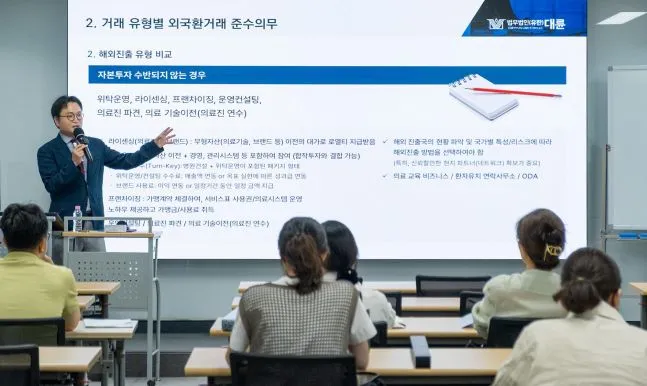
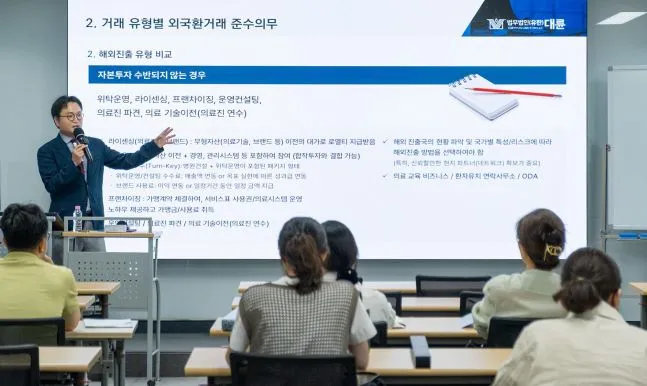
Daeryun Law Firm announced on the 26th that it successfully held a seminar with the Korea Medical Device Industry Association to discuss response measures for import and export companies such as medical and beauty devices. This seminar was held online and offline, and a total of 119 companies, including the association's partners, attended. The seminar began with greetings from attorney Gye-jun Son, head of the Daeryun Corporate Legal Group, and attorney Seo-hyung Lee, head of the Medical Pharmaceutical Group. Attorney Lee said, "Today's seminar is a very timely opportunity to consider the intersection of industrial strategy and regulatory trends beyond a simple explanation of the system," and added, "I hope this opportunity will help each company set a strategic direction." He then spoke. Customs expert Jae-ho Myung explained the changing customs investigation trends and obligations to comply with the Foreign Exchange Transactions Act by transaction type, and made a presentation on foreign exchange risks and response strategies in the medical and beauty device industry. Commissioner Myeong is a customs broker and has accumulated expertise while in charge of customs trade consulting for a number of companies. In addition, he is prominent in the customs field by working as an expert member of the International Customs and Trade Advisory Center (ICTC), an export deliberation member of the Defense Acquisition Program Administration, and an FTA consultant and full-time lecturer at the Korea Customs Service and Korea International Trade Association. Regarding the upcoming regular foreign exchange inspection, he said, "The Korea Customs Service has been selectively inspecting only illegal foreign exchange transactions, but starting this year, it is establishing and implementing a foreign exchange inspection system on a regular basis by industry," adding, "Fields such as medicine and beauty with high imports and exports are receiving intensive inspections. He then explained, "We will be a target for payment delays due to double regulation of medical devices, foreign exchange control and remittance regulations in countries subject to export and import, and prior approval based on sanctioned countries and sensitive technical information. We then introduced matters that companies should keep in mind during the import and export process," said Kim Gook-il, CEO of Daeryun, saying, "With the introduction of regular foreign exchange inspections by the Korea Customs Service, the proactive response capabilities of import and export companies have become more important than ever." “I hope this serves as an opportunity to take the lead in responding,” he said. Eunhye Lee (zhses3@joseilbo.com)[View full article] Daeryun Law Firm successfully completed seminar on ‘Response to the Medical and Beauty Device Industry’ (Click here)
Loishu
2025-05-27
전문가가 알려주는 특수상해죄…단순 합의로는 해결 어려워
Special injury crime according to experts... Difficult to resolve through simple agreement
Pursuant to Article 258-2, Paragraph 1 of the Criminal Act, the crime of special injury is committed when a person inflicts injury on another person by showing the force of a group or group of people or by carrying a dangerous object. Since this crime only provides for imprisonment without a fine, once the special injury charge is applied, efforts should be made to reduce the sentence as much as possible. The sentence is also not easy. Pursuant to this law, if you hit and injure a person with a dangerous object, you will be punished by imprisonment for not less than 1 year but not more than 10 years. In addition, depending on the severity of the damage, a prison sentence of between 2 and 20 years is possible. In particular, unlike general assault, special injury is not a crime of impunity or pro-crime, so investigation and prosecution is possible even without a complaint from the other party. The actual case I was responsible for is explained as follows. While defendant A was drinking with a work acquaintance, he overheard gossip about his family and committed violence. The problem is that Mr. A's actions did not stop at simple assault. At the time, Mr. A could not control his anger and swung a dangerous object nearby, which caused injuries to the victim's face and head. After being sent to the prosecution, Mr. A was fortunately able to reach an amicable agreement with the victim. As the victim also did not submit a medical certificate, the case appeared to be nearing completion. Although special injuries were applied, an agreement was reached and, considering that it was a first offense, a deferred indictment or summary indictment was quite possible. However, the prosecution's judgment was different. A formal trial was requested and a prison sentence was requested. Accordingly, the court was also in a situation where it could sentence a prison sentence. During the trial, the author emphasized that Mr. A confessed to all of his crimes and received forgiveness from the victim, that his family and friends were hoping for leniency, and that he may be fired from his job if he is sentenced to prison. As a result, I was able to safely receive a deferred sentence (a sentence that suspends the sentence and is exempted after a certain period of time). As in the case above, criminal proceedings cannot be avoided for special injury crimes even if an agreement is reached with the victim. Therefore, one should not hastily judge that the case will be resolved through agreement alone. Therefore, if you are accused of a special injury crime, you should try to lower the punishment as much as possible. However, this process requires a strategic approach and the assistance of experts such as special injury lawyers. Attorney Choi Hyeon-deok of Daeryun Law Firm in Pyeongtaek said, "The first thing to check with an expert is whether the other party provided a cause. If the incident occurred due to the other party's continuous insults, verbal abuse, etc., you can resolve the situation to your advantage." He added, "You should also look at justifiable defense and excessive defense. If it is acknowledged that the other party's actions were intended to protect oneself due to preemptive assault, you can expect a reversal of the situation or a reduced sentence. Other reflections and family circumstances. “We can request a reduction in the level of punishment through explanations, petitions, etc.,” he said. Reporter Jin Ga-young (lawissue) (news@lawissue.co.kr)[View full article] Special injury crime according to experts... Difficult to resolve through simple agreement (Shortcut)
14 places including Newsis
2025-05-27
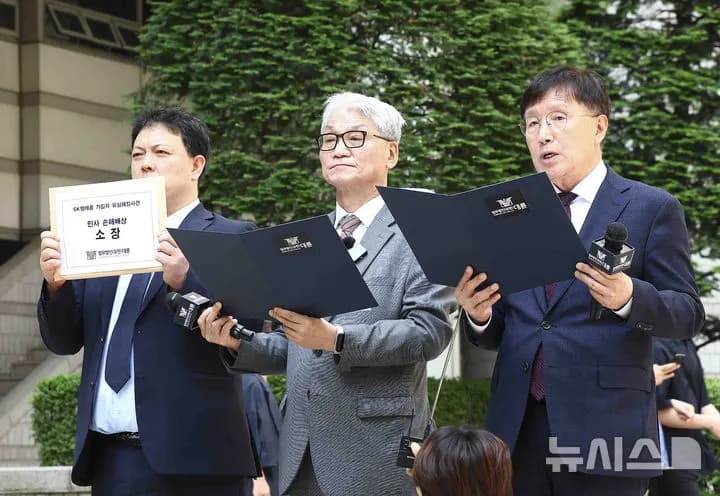
SKT이용자 235명, '유심 해킹'에 인당 100만원 민사소송 제기
235 SKT users file civil suit worth 1 million won per person over ‘USIM hacking’
Daeryun Law Firm takes charge of the class action lawsuit and sets a compensation of 1 million won per person "Public interest litigation to protect rights" 235 SK Telecom (SKT) users filed a lawsuit for damages against SKT in relation to the 'USIM hacking' incident. According to Daeryun Law Firm on the 27th, 235 plaintiffs announced that they filed a civil suit seeking compensation of 1 million won per person. The lawsuit will be overseen by lawyer Cho Young-gon, a former Seoul Central District Prosecutors' Office, and lawyer Yeo Sang-won, who will act as legal representatives. Attorneys Cho and others submitted the complaint to the Seoul Central District Court on the same day and said, "Fairness and equity in our society must be realized from trials and lawsuits," and added, "In that sense, this lawsuit is a public interest value for which we are involved." He continued, "Overseas, large law firms are taking part in consumer class lawsuits against global companies such as Google and Facebook. He added, "There are successive cases where we have taken the lead in winning lawsuits," adding, "This shows that class action lawsuits are not a battle that can never be won, and that companies have no choice but to take responsibility when the people join forces." He added, "This SKT class action lawsuit goes beyond the issue of information leaks and is a national task that asks about justice and fairness in the law." He also emphasized, "This lawsuit is a public interest lawsuit to protect the people's right to personal information." A complaint was filed on charges of breach of trust and obstruction of official duties. He then received his first police investigation as a complainant at Namdaemun Police Station in Seoul on the 21st. Daeryun explained that the reasons for setting the amount of damages were ▲ the largest scale of information leak ever, ▲ reduced security management costs, and ▲ the inconvenience suffered by subscribers due to SIM replacement. Daeryun announced that starting with this lawsuit, it plans to identify applicants and file continuous complaints. Reporter Lee So-heon (honey@newsis.com)[View full article] Newsis - 235 SKT users file a civil suit worth 1 million won per person over 'USIM hacking' (Click here) Newspim - 235 SKT users file suit for damages worth 1 million won per person for 'USIM hacking' (link) Chosun Ilbo - 235 people in ‘SKT collective damages lawsuit’ submit complaint to court (Go here) Financial News - 235 SKT users sued for 'USIM hacking', damages of 1 million won per person (Click here) The Fact - 235 victims of 'SKT hacking' sued for damages worth 1 million won per person... “Additional applications until the 30th” (link) Yonhap News TV - SKT victim's civil suit... “Alimony of 1 million won per person” (link) Money Today - SKT hacking incident lawsuit seeking compensation of '1 million won per person'... Successive legal battles (link) My Daily - SKT's first joint lawsuit over SIM hacking... “Compensate 1 million won per person” (link) ZD Net Korea - Daeryun files civil suit against SKT... Settlement of 1 million won per person as alimony (link) News Pim - 'SKT SIM hacking' class action lawsuit for 200,000 people begins in earnest... "The key is whether liability is acknowledged and compensation is about 100,000 won" (link) Financial News - Daeryun files civil suit against SKT, “We cannot ignore the damage to the people” (Shortcut) Today e-economics - 235 victims of 'SKT hacking' sued for damages worth 1 million won per person (Click here) Seoul Shinmun - ‘SKT SIM hacking’ large-scale class action lawsuit… The key issue is [Ro:Mance] (Shortcut) Economy Talk News - 5G is also a mess, telecommunications company in lawsuit... Already thinking about making money with 6G? (Shortcut)
security news
2025-05-26
SKT 고발 변호사 “KT·LGU+도 해킹 드러나면 고발”
SKT accuser: “KT and LGU+ will also be sued if hacking is revealed”
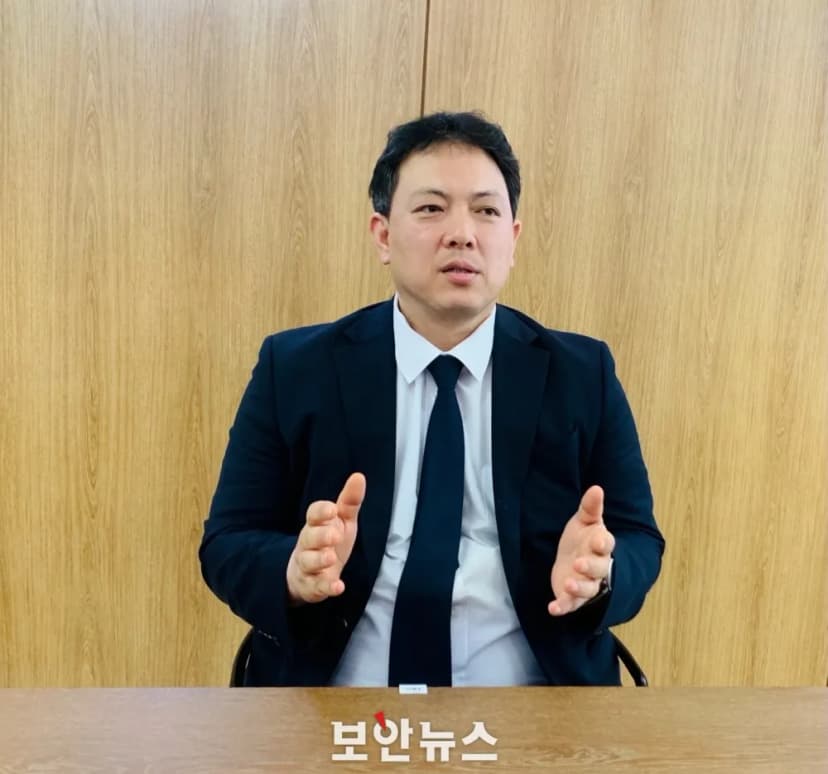
“We must impose strengthened obligations on telecommunication companies and hold them accountable if they violate them, at a level that threatens their existence.” “If not only SK Telecom but also KT or LG U+ are found to have been hacked and customer information has been leaked, we will actively consider filing a complaint for breach of trust.” Gye-Jun Son, head of the corporate legal group at Daeryun Law Firm, met with a reporter for <Security News> in Yeouido on the 26th and said this. On the 1st, Daeryun filed charges against SKT CEO Yoo Yeong-sang and the head of security for breach of trust and breach of trust. He was charged with obstruction of official duties. On the 21st, I responded to the accuser's investigation at Namdaemun Police Station. Group Leader Son is the lawyer in charge of this case. As a result of this accident, public anxiety about the information protection capabilities of not only SKT but also domestic telecommunications companies and platform companies has increased. Immediately after this paper's first report on the 21st ([Exclusive] Did BPF Door, the malicious code that attacked SKT, infiltrate KT servers as well?), the government launched a direct investigation into KT and LG U+. In addition to the two telecommunication companies, platform companies such as Naver, Woowa Brothers, Kakao, and Coupang are also subject to investigation. Group Leader Son said, “If customer information is leaked through hacking of other telecommunications carriers or platform companies other than SKT, we will hold them accountable through complaints and complaints,” and added, “They are all in the same context in terms of corporate social responsibility.” Regarding SKT’s insufficient investment in information protection, he said, “It is not illegal in itself, but it can be seen as a breach of trust.” As the No. 1 business operator, he said. The point is that SKT, which is well aware of the importance of information protection and investment costs, neglected the storage and use of subscribers' information as a person handling entrusted affairs such as storage and utilization of SIM card information. The explanation is that this can be seen as maximizing their own profits. In fact, according to the Korea Internet & Security Agency (KISA) information security disclosure, the annual information security investment amount announced by SKT in 2024, combined with its wired communication subsidiary SK Broadband, is approximately 86.7 billion won. This is 5.9% of the investment in information technology, which is lower than KT (6.4%) and LG U+ (6.6%). Government certification systems such as ISMS are insufficient for telecommunication companies... “Need to strengthen obligations” According to IANS Research, the proportion of investment in information security by American companies last year was 13.2%. All three domestic telecommunications companies are less than half of those in the U.S. Group Chairman Son mentioned the need to improve domestic information protection-related laws and systems. He said, “This accident revealed that the government certification system does not properly evaluate corporate security capabilities and does not provide good follow-up management.” In particular, the ‘ISMS/ISMS-P Simple Certification System’, which was introduced in July 2024 to ease the burden of certification acquisition for small and medium-sized businesses, is not sufficient to check the information protection posture of major telecommunication operators. He said, “There is a need for a paradigm shift from focusing on ex-post punishment to focusing on proactive prevention.” “We must impose obligations, and if they are violated, we must impose effective sanctions that threaten our existence,” he emphasized. Meanwhile, after graduating from Seoul National University, Group Leader Son passed the civil service examination and worked at the Fair Trade Commission for 10 years. After passing the bar exam, he worked at Gwangjang Law Firm and is currently working as the head of the Daeryun Corporate Legal Group. While serving at the Fair Trade Commission in 2009, he participated in sanctions related to allegations of unfair trade in code division multiple access (CDMA) chip rebates, which imposed a large fine on Qualcomm of the United States. Reporter Kang Hyun-joo (jjoo@boannews.com) SKT accusation lawyer: “KT and LGU+ will also be sued if hacking is revealed” (link)
Gyeonggi Ilbo
2025-05-26
훔친 알루미늄 매입한 고물상 대표...장부가 살렸다
The owner of a junk shop who purchased stolen aluminum... Ledger saved his life.
A ledger detailing purchase transactions of 319 tons of scrap aluminum for 600 million won over 5 years proved innocent. Mr. A, the owner of a junk shop who was sent to the prosecution on charges of purchasing waste aluminum stolen by customers for several years, was cleared of the charges thanks to the ledger that recorded the transaction details. According to the legal community on the 26th, the Suwon District Prosecutors' Office purchased 219 tons of waste aluminum scrap worth 600 million won from Mr. B, an employee of an aluminum company, last month. A non-indictment decision was made against Mr. A, a man in his 60s who was suspected of habitual acquisition of stolen property. Mr. A had been continuously buying waste aluminum for about 5 years since 2018, but later, when the item was revealed to be stolen goods from Mr. B, Mr. A was also investigated. According to Article 362 of the current Criminal Act, acquiring, transferring, or transporting stolen goods can result in imprisonment of up to 7 years or a fine of 15 million won. During the investigation, Mr. A is known to have denied the charges, saying that he was also deceived by Mr. B. The prosecution found that Mr. A was not guilty on the basis that the purchase amount and quantity were written in detail in the transaction history ledger prepared by Mr. A, and that the disposal price was transferred by bank transfer rather than cash. The prosecution said, "Considering that Mr. B, who clearly revealed his affiliation to Mr. A, actually worked at an aluminum processing company, it appears that it would have been difficult for Mr. A to recognize the aluminum in question as stolen goods." Attorney Choi Han-sik of Daeryun Law Firm, who served as Mr. A's legal representative, said “In the case of acquiring stolen property, the decision must be made taking into account all circumstances, including the personal information of the seller and the nature and type of the product,” he said. “It was difficult for Mr. A to recognize it as stolen property, but we had a good result by explaining well whether or not business negligence was recognized.” Intern reporter Jeong Ye-eun (ye9@kyeonggi.com)[View full article] The owner of the junk shop who purchased stolen aluminum... The ledger was saved (link)
2 places including Newsis
2025-05-26
전세사기 건물 다수 중개한 공인중개사, 처벌은 '솜방망이'
A licensed real estate agent who brokered a large number of buildings for lease fraud was punished 'with a soft bat'.
It is difficult to return the deposit, but reality is indicted only for 'violation of the real estate agent law'. Fine expert says, "It is difficult to prove accomplices... The level of punishment under the real estate agent law must be increased." In Busan, real estate agents and real estate assistants who were put on trial on charges of brokering a large number of buildings for lease fraud were sentenced to fines one after another. There are many voices demanding that those who provided the primary cause of the lease fraud be severely punished, but the reality is that only fines are imposed, raising criticism that the punishment should be strengthened. According to the legal community, on the 26th, Judge Beom-yong Lee of the 4th Eastern Branch of the Busan District Court sentenced five people, including a real estate agent A and a real estate agent assistant, to fines of 2 million to 7 million won each, who were indicted on charges of violating the Licensed Real Estate Act. While working as a licensed real estate agent and a brokerage assistant, the return of the deposit is not guaranteed as there is collateral for an officetel worth the price of the building, but he is accused of inducing a provisional contract by hiding this fact during the brokerage process. Afterwards, when the tenants learned about this fact on the day of the contract, Mr. A and others are accused of deceiving them again by saying, "The sale price of the officetel building is over 8 billion won, so there is no problem with returning the deposit." However, the appraised value of the building in question is 4.8 billion to 5.3 billion won. In comparison, the basic mortgage amounted to 5.2 billion won. In fact, Mr. B (40s), the officetel landlord brokered by Mr. A and others, did not return the 1.745 billion won rental deposit of 17 tenants, and the tenants introduced by them became victims of a lease fraud overnight. In addition, Mr. A and others were involved in a 18 billion won lease fraud with a group of Mr. C (40s), a 15.5 billion won lease fraudster. It is known that they also brokered dozens of buildings in the case of Mr. D (female in his 50s), who was sentenced to 15 years in prison. In this process, Mr. A and others are said to have reassured tenants by saying things like, "Mr. C's father is the CEO of a successful small business, so it is safe" or "There are several other buildings besides here. All senior loans are held by a corporation, so they are safe," and then induced them to sign real estate contracts. Afterwards, the tenants tried to sue them, but at the time of signing the contract for 2020-2023. It is known that as recordings of conversations or messages shared with licensed real estate agents disappear over time, they either failed to file a complaint, or even if they filed a complaint, most of them were acquitted. Previously, in March, Criminal Division 3 of the Western Branch of the Busan District Court sentenced real estate agents and brokerage assistants who were indicted on charges of violating the Licensed Real Estate Agents Act to fines of 2 to 5 million won. They are also known to have brokered many of the buildings in Mr. D's case, but the brokerage assistants brokered the buildings in the name of the licensed real estate agent. He was only indicted on the charge and was only punished with a fine. Victims of jeonse fraud claim that the real estate agents who provided the primary cause of the jeonse fraud should also be punished as accomplices in the jeonse fraud, but the reality is not easy. Attorney Lee Seung-chan of the Daeryun Law Firm said, “The essence of the crime of large-scale jeonse fraud is ‘fraud.’ Therefore, in order to punish a licensed real estate agent as a principal or accomplice to fraud, it must be proven that it falls under the elements of the crime of fraud, but in reality, intentionality of the fraud must be proven. “It is very difficult to prove,” he explained. “For this reason, it is not easy to punish real estate agents or assistant real estate agents who brokered a large number of buildings for lease fraud as accomplices to lease fraud.” Experts suggested raising the level of punishment under the Licensed Real Estate Act as a realistic alternative. Dong-A University Graduate School of Real Estate Kang Jeong-gyu said, “Although it is a small number, there are cases where some vicious real estate agents are abusing lease fraud,” adding, “(Jeonse fraud) crimes will be investigated in the future.” “In the interest of prevention, there is a need to strengthen the punishment provisions of the Licensed Real Estate Agent Act, and if similar cases continue to occur, there is an alternative to creating detailed punishment provisions in the Licensed Real Estate Agent Act to provide for aggravated punishment in cases related to jeonse fraud.” Reporter Kwon Tae-wan (kwon97@newsis.com)[View full article] Newsis - Licensed real estate agent who brokered a large number of buildings for lease fraud, punishment is 'a soft bat' (link) Wide Economy - Licensed real estate agent who brokered a large number of buildings for lease fraud, punishment is 'soft' (Click here)
7 places including financial news
2025-05-26
법무법인 대륜 SKT 소송전, 조영곤 전 서울중앙지검장이 총괄 지휘
Daeryun Law Firm SKT litigation, former Seoul Central District Prosecutors' Office Chief Young-Gon Cho supervises
Investigation of tax evasion by large corporations, reputation as an ‘investigative expert’… The amount of damages for ‘corporate experts’, including corporate crimes, is set at 1 million won per person… The first round of civil lawsuits was filed on the 26th. “The only class action lawsuit by a large law firm... We will correct chronic problems and protect the rights of the people.” Daeryun Law Firm, which is in the process of legal proceedings in relation to the SK Telecom (SKT) SIM information hacking incident, announced on the 26th that it will take full action by appointing lawyer Young-gon Cho, a former chief of the Seoul Central District Prosecutors' Office, to take full action. Previously, on the 1st, Daeryun accused SKT CEO Yoo Yeong-sang and the head of security for malfeasance of office. He was charged with obstruction of official duties and other charges. In addition, as mentioned at a press conference on the 22nd, they announced that they plan to file a civil suit seeking compensation of 1 million won per person at the Seoul Central District Court at 10 am on the 27th. As the security system of Korea's largest telecommunication company was disabled, Daeryun viewed it as a serious social problem that goes beyond the company's security management responsibility and selected attorney Cho Young-gon, who has extensive related experience, as the overall leader of this case. Attorney Cho was involved in the case, including the collection of slush funds from former presidents and the investigation of the Four Major Rivers while serving as chief prosecutor. It has led to major events. In particular, he led the investigation into tax evasion by large corporations and developed a reputation as a 'investigative expert.' Even after retirement, he is evaluated as an expert in various fields related to corporate crime through his consulting and litigation experience at large law firms. Furthermore, Daeryun plans to take an organized response to this incident centered on the Special Action Headquarters (Special Department), an internal strategic organization. The Special Department is an organization designed to handle medium to large-sized cases that are difficult to respond to at the individual group level, such as public issues and social disputes, and is increasing the expertise and efficiency of case handling by organizing specialized lawyers appropriate for the field. In particular, Attorney Cho is serving as the head of the Special Department, so it is expected that he will be able to respond more strategically through more organic collaboration with members of the corporate legal group who are analyzing the case. In the case of U.S. telecommunication company customers who have experienced large-scale personal information leaks in the past, large amounts of money were filed through class action lawsuits. Compensation has been received. T-Mobile, one of America's top three telecommunications companies, experienced a leak in 2021 where the personal information of 76.6 million customers was leaked. Accordingly, customers filed a lawsuit in court, and T-Mobile ended up paying $350 million (approximately 459 billion won) to customers, up to $25,000 (approximately 32 million won) per person. Daeryun Law Firm believes that the scale of this SKT personal information leak is greater than past incidents. The position is that it has caused realistic inconvenience to the public by failing to fulfill its information protection obligations as a telecommunication business operator, and that such inconvenience and anxiety will continue for a considerable period of time in the future, so this is an issue that requires stricter responsibility than past cases. Attorney Young-gon Cho said, "Although personal information leaks have been repeated for several years, actual punishment or compensation has been minimal in Korea, and as a result, the damage is being passed on to the public." “I will do my best to protect the rights and interests of the people by acting as a representative of the people to correct the structure,” he said. Reporter Park Jae-gwan (paksunbi@fnnews.com)[View full article] Financial News - Law Firm Daeryun SKT litigation, former Seoul Central District Prosecutors' Office Chief Young-Gon Cho takes overall command (Go here) Law Leader - Law Firm Daeryun SKT Litigation, former Seoul Central District Prosecutors' Office Chief Young-Gon Cho supervises (Go here) Korea Economic Daily - Former Seoul District Prosecutors' Office Chief Cho Young-gon, supervising the 'SKT hacking' lawsuit [Law & Biz Briefing] (Go here) Asia Economy - Daeryun Law Firm selects lawyer Cho Young-gon, former chief of the Central District Prosecutors' Office, to take legal action against SKT (Click here) ZD Net Korea - Daeryun Law Firm, General Manager of SKT Litigation Cho Young-gon, former Chief of Seoul Central District Prosecutors' Office (Click here) News 1 - Lawyer Cho Young-gon, former head of the Central District Prosecutors' Office, takes charge of the 'SKT 1,000 people lawsuit' (Go here) Security News - [SKT Hacking Incident] Former Central District Prosecutors' Office joins SKT lawsuit... Civil and criminal litigation management (link)
international newspaper
2025-05-26
‘경영 비리’ 대표이사 부당해고 주장…법원 “청구 이유 없어”
CEO claims unfair dismissal due to ‘management corruption’… Court: “There is no reason to file a claim”
Circumstances of misconduct such as embezzlement of public funds were discovered. Sudden litigation after 2 years of voluntary resignation: “Under the law, I am not considered an employee… 3 years have passed since the statute of limitations for severance pay.” The former CEO, who voluntarily stepped down due to management corruption, filed a lawsuit against the company claiming unfair dismissal, but it was not accepted. On the 17th of last month, the Tongyeong branch of Changwon District Court (Chief Judge Seung-won Lee) filed a lawsuit against the company by Mr. A, a former CEO of a transportation company, as the plaintiff. The case was ruled against. In addition, claims for severance pay amounting to approximately 260 million won were also dismissed. Mr. A was in charge of all administrative affairs, including general affairs, personnel, and accounting, at the company in April 2002, and became a shareholder when he acquired shares with the conversion to a corporation in March 2004. Afterwards, Mr. A served as an internal director and took office as CEO in 2015. Mr. A originally held the position and role of CEO for the designated term, but resigned as CEO in 2021 after misconduct, including embezzlement of public funds, was revealed. However, Mr. A suddenly filed a lawsuit about two years later, claiming unfair dismissal. At the same time, he requested severance pay for the period of time he worked as an employee before taking office as CEO. In addition, he mentioned the collective agreement stipulating that retired workers can be rehired as commissioned workers, and said that additional wages that he would have received while working as commissioned workers should be paid additionally. The company countered that it began raising the issue of unfair dismissal when Mr. A was investigated by the investigative agency on charges of embezzlement and other charges. The court sided with the company. Chief Judge Lee dismissed the claim, saying, “The plaintiff cannot be considered an employee as specified in the Labor Standards Act because he was not in a dependent employment relationship with the defendant during the period he served as CEO and the period immediately before his resignation and dismissal,” and “Even though his status as an employee was recognized when he worked as an executive or employee before serving as a director, there is no data showing the average wage of the plaintiff at that time, and the claim was extinguished because he did not claim severance pay within 3 years from the date of retirement.” Daeryun Law Firm, the company’s legal representative. Attorney Cho Ik-cheon explained, “At the time of his resignation, Mr. A had never applied for relief from unfair dismissal or filed a lawsuit to confirm invalidity of dismissal with the Labor Relations Commission, and he was suddenly claiming unfair dismissal two years later. However, it should be seen that Mr. A resigned voluntarily and expressed his intention to terminate the delegation contract in the relationship between management and executives.” He continued, “Accordingly, there is no reason for Mr. A to be entitled to an amount of wages or severance pay.” He added, “Company regulations also include the fact that there has been no history of severance compensation being paid to the CEO.” “It was acknowledged and the claim was dismissed,” he added. Digital Content Team[View full article] CEO claims unfair dismissal due to ‘management corruption’… Court: “There is no reason to file a claim” (Shortcut)
bridge economy
2025-05-26
[脫 기후금융 후진국②] 국민연금, 그린머니 ‘깜깜이 투자’…배출권시장 정상화 최대 ‘걸림돌’
[Underdeveloped country in climate finance ②] National pension, green money ‘blind investment’… The biggest obstacle to normalizing the emissions market
Fossil fuel investment amount and reduction target data undisclosed, sustainable carbon price signal function paralyzed… Even private investors are at a loss: ‘Converting 30% of emissions credits to paid fees, introducing Korean-style market stabilization reserve (K-MSR), and expanding the benchmark by 75%’ are the ‘surgical tools’ of the 4th reform plan put forward by the government. However, it is pointed out that no matter how sophisticated the system is, it is useless if the 420 trillion won in policy finance and 1,300 trillion won in public funds do not move based on the same data. The Bank of Korea's stress test warned that the bank's losses could amount to up to 28.7 trillion won if it does not respond to climate change. To prevent these enormous losses, a systematic response from the financial sector is essential. However, one common point is reached in data transparency, which should be the starting point of the response. It is the ‘absence of numbers’. It is pointed out that the national pension system, which manages 1,000 trillion won, is actually like sailing without one's own compass. The National Pension Service declared a coal phase-out in 2018, but the balance of fossil fuel investments, financial emissions, and reduction goals are still shrouded in mystery. In fact, the National Pension Service conducted a research service to set standards for coal phase-out, but has not even disclosed the results. A research director at a domestic ESG evaluation agency pointed out, “If the National Pension Service is quiet, other pension funds and insurance companies will also postpone investments, and eventually the carbon price signal in the capital market will turn off.” The silence of the country's largest institutional investor leads to paralysis of the entire market. The situation overseas is very different. Norway's sovereign wealth fund announced that it would disclose all emissions from its portfolio in real time and reduce intensity by 55% by 2030. Dutch pension fund ABP presented a roadmap to sell all companies with coal and tar sands sales exceeding 5% by 2025. Even Japan's GPIF releases ESG investment-related reports every year and announced that it will expand 'Scope 3 coverage' (covering indirect sources such as supply chains of a company's total greenhouse gas emissions) to 100% by 2027. It is not impossible even in Korea. Korea Investment Corporation (KIC) is transparently disclosing its green bond holdings of $4.1 billion. The transparency gap is revealed as a cold reality. When looking at whether to disclose the balance of fossil fuel investments, the National Pension Service is still silent, while all major overseas pension funds are disclosing detailed information. Choi Hwan-seok, an expert member of the National Assembly's Political Affairs Committee, said, "When the next government takes office, the specific scope and timing of fossil fuel investment and financial emissions disclosure by public funds such as the National Pension Service will need to be discussed with the financial authorities. This is an issue that requires consultation with the relevant standing committees, the Retaliation Committee and the Strategy and Finance Committee." Park Hee-jeong, head of Daeryun Law Firm's Legislative Strategy Division, said, “A lot of changes could come depending on what the Political Affairs Committee, Climate Crisis Special Committee, and Foreign Exchange Committee have in the second half of this year and the first half of next year.” If you hide the numbers, the market will price that uncertainty high. ESG funds have no choice but to set a high risk premium because they cannot obtain emissions data from large companies invested by the National Pension Service. The aftermath comes back to the deterioration of capital ratios in the financial sector. The large-scale financial losses warned by the Bank of Korea ultimately result from a lack of data transparency. International credit rating agencies are also warning, “If carbon regulations are strengthened after 2027, discounts will be applied to assets that do not disclose data.” To speed up the transition, the national pension must be opened first. As the cases of Norway and the Netherlands show, once disclosure begins, companies and asset management companies rush to improve emissions. The government is also providing policy support. The Ministry of Environment and the Exchange drew up a plan to drastically reduce the total amount during the 4th plan period, increase paid allocation, and prevent a sharp decline in prices with market stabilization reserves. However, even the huge policy finance worth 420 trillion won can become proper green capital only when the window called data is opened. Even if emissions prices become realistic and the market stabilization device operates, it is data that ultimately moves money. Only when the National Pension Service transparently discloses fossil fuel investments and financial emissions, and when the public and private sectors are able to judge risks and opportunities by looking at the same information, can the Korean capital market find a solution to becoming a ‘post-climate finance underdeveloped country.’ Reporter Kim Soo-hwan (ksh@viva100.com)[View full article] [Underdeveloped country in climate finance ②] National pension, green money ‘blind investment’… The biggest obstacle to normalizing the emissions market (link)
Have more questions?
Quick Menu

KakaoTalk