


Practice Areas
Arson
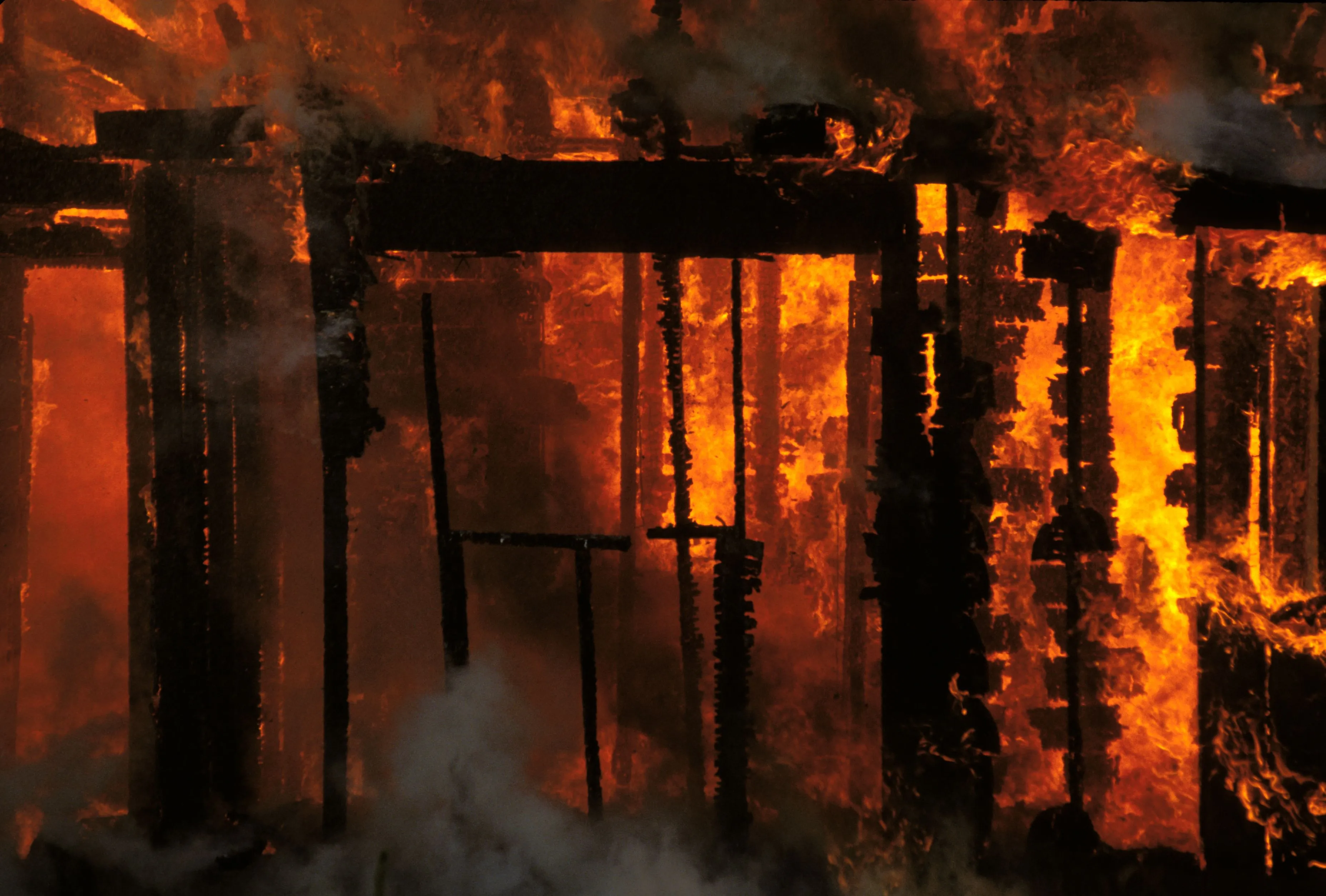
Arson is an offense established by setting a fire. When a person sets a fire and burns a building or object, arson is established, and it is a serious crime that causes harm to the life, body, and property of the public.
1. Arson | Definition

Arson is an offense established when a person sets fire to a building in which people live, a building for public use, a general object, a train, a streetcar, an automobile, a vessel, an aircraft, an underground mining facility, or the like.
Because it causes large-scale loss of life and damage to property, arson is treated as a serious crime, and its statutory penalty is also set heavily.
Not only criminal punishment but also civil liability to compensate for property damage may follow.
2. Arson | Types
Arson is classified into various forms.
Even where a person sets fire to an object of his or her own ownership but, as a result, the fire spreads to an object owned by another and becomes arson, the offense of arson may be established.
The offense is also established where a person commits arson against a building, train, automobile, vessel, or the like that is used for public or common purposes.
Arson of an Inhabited Structure
This is an offense established when a person sets a fire and burns a structure, train, streetcar, automobile, vessel, aircraft, or underground mining facility that is used by people for residence or in which people are present.
Where this causes injury to or the death of a person, the offender is subject to aggravated punishment.
Arson of a Public Structure
This offense is established when a person sets fire to and burns a structure used for public purposes or for the public interest, or a train, streetcar, automobile, vessel, aircraft, or underground mining facility.
Arson of a General Structure
This offense is established when a person sets fire to and burns a structure, train, streetcar, automobile, vessel, aircraft, or underground mining facility other than those described under arson of an inhabited structure and arson of a public structure.
In addition, even where a person sets fire to a general structure owned by themselves, they may be punished for arson of a general structure if doing so creates a public danger.
Arson of a General Object
This offense is established when a person sets fire to and burns an object other than those described under arson of an inhabited structure, arson of a public structure, and arson of a general structure, thereby creating a public danger.
For this offense as well, even where a person sets fire to a general structure owned by themselves, they may be punished for arson of a general object.
3. Arson | Punishment Standards

Arson is provided for in the Criminal Act, and the levels of punishment are as follows.
Level of Punishment
▷ Arson of an Inhabited Structure, etc.
| Criminal Act Article 164 | ① Life imprisonment or imprisonment with labor for at least 3 years |
| ② Where a person is caused bodily injury, life imprisonment or imprisonment with labor for at least 5 years; where a person is caused to die, the death penalty, life imprisonment, or imprisonment with labor for at least 7 years |
▷ Arson of a Public Structure, etc.
| Criminal Act Article 165 | Life imprisonment or imprisonment with labor for at least 3 years |
▷ Arson of a General Structure, etc.
| Criminal Act Article 166 | ① Imprisonment with labor for a definite term of at least 2 years |
| ② Where a person burns an object owned by themselves and thereby creates a public danger, imprisonment with labor for not more than 7 years or a fine not exceeding 10 million won |
▷ Arson of a General Object
| Criminal Act Article 166 | ① Imprisonment with labor for at least 1 year and not more than 10 years |
| ② Where the object is owned by the person themselves, imprisonment with labor for not more than 3 years or a fine not exceeding 7 million won |
▷ Obstruction of Fire Extinguishing
| Criminal Act Article 169 | Imprisonment with labor for not more than 10 years |
What is obstruction of fire extinguishing?
Sentencing Guidelines
General Criteria
▷ Where the actual damage is minor
▷ Mental and physical weakness
▷ The victim's wish not to punish or recovery of the damage
▷ Passive participation
▷ Efforts to extinguish the fire or otherwise prevent the spread of damage
▷ Where the defendant also suffered serious bodily injury as a result of the arson
▷ Sincere reflection
▷ No record of criminal punishment
Arson of an Inhabited Structure, etc. Causing Injury/Death
▷ Minor injury
▷ Where the result of death did not arise from the defendant's direct act
▷ Dolus eventualis as to homicide
▷ Mental and physical weakness
▷ Voluntary surrender
▷ The victim's wish not to punish or recovery of the damage
▷ Efforts to extinguish the fire or otherwise prevent the spread of damage
▷ Where the defendant also suffered serious bodily injury as a result of the arson
▷ Sincere reflection
▷ No record of criminal punishment
4. Arson | How a Suspect Should Respond
Arson is an offense that may lead to serious property damage and loss of life, and it requires careful response at each stage.
Beyond criminal punishment, civil liability must also be considered, so verifying the specific facts and establishing a defense strategy are important.
Situation Analysis and Securing Evidence
To determine whether arson is established, it is first necessary to clearly distinguish whether the act was intentional arson or a negligent fire caused by fault.
Objective materials related to the case should be gathered, and the cause of the fire and the surrounding circumstances before and after should be examined closely.
It is also necessary to specifically confirm the scope of the property damage and loss of life resulting from the fire in order to accurately organize the facts.
CCTV: confirming movement routes or nearby individuals during the time period before and after ignition
Witness statements: securing statements from third parties who witnessed the scene can serve as important material for determining whether intent existed.
Establishing a Defense Strategy
Centering on the point that there was no intent to commit arson, it may be argued that the fire was caused by negligence.
In particular, it is important to prove that there was no fact of intentionally obstructing fire extinguishing activities, or, even if there was an act of obstruction, to emphasize that intent was lacking.
In addition, factors that may be considered in sentencing, such as efforts to recover the damage, the motive for the offense, and an attitude of reflection, should be organized so that the defense strategy is constructed in a direction that increases the possibility of leniency.
Responding to Investigation and Trial Procedures
At the investigation stage, maintaining consistency between the contents of the written statement and one's testimony is important.
Unfavorable confessions or statements based on conjecture should be avoided, and the investigating authority's questioning should be handled with care.
At the trial stage, the absence of intent and grounds for consideration should be argued systematically on the basis of the evidence secured earlier, and testimony in court should also proceed calmly in accordance with the prepared content.
Tip)
Responding to Civil Liability for Damages
Property damage or loss of life resulting from arson may be subject to a civil claim for damages, separately from criminal punishment.
To respond to a claim for damages filed by the victim, it is necessary to prepare materials that can objectively prove the cause of the fire, the presence or absence of liability, and the scale of the damage.
In addition, efforts to settle with the victim, the presentation of a compensation plan, and whether the matter is handled through insurance also act as important considerations, so they need to be examined thoroughly in advance.
5. Arson | How a Victim Should Respond
When you have suffered harm from arson, securing evidence promptly and systematically is more important than anything else.
All materials that can prove the fact of harm, such as photographs of the fire scene, video, and witness statements, should be carefully collected and preserved.
Report to the police immediately upon confirming the harm, and after reporting, it is necessary to maintain accurate and consistent statements throughout the investigation process.
Item | Specific Content and Strategy |
Confirming the scale of the damage | Accurately ascertaining and recording the scope of property damage and loss of life caused by the fire |
Securing evidence | Systematically collecting and preserving objective evidence such as scene photographs and video, CCTV footage, and witness statements |
Reporting to the police and giving statements | Promptly reporting to the police and stating the facts clearly and consistently during the investigation |
Settlement and compensation negotiations | When seeking restoration of the damage and compensation for loss, reviewing the possibility of a settlement matched to the scale of the damage, and clearly documenting the conditions when settling |
Preparing a legal response | Where necessary, preparing materials to objectively prove the fact of the harm and the amount of loss for a civil claim for damages |
6. Arson | Finding the Response Difficult?
Daeryun Law Firm cooperates with its own Evidence Investigation Center to lawfully collect and thoroughly review evidence, including CCTV analysis and on-site forensic examination.
In addition, it assists with the preparation of statements and the establishment of strategy from the investigation stage, and collaborates with civil attorneys to prepare a response suited to the case in order to address civil claims for damages linked to the criminal case.
During the trial process, it supports the recovery of damage and settlement procedures, and provides tailored assistance to increase the possibility of leniency through the preparation of a letter of reflection and the organization of sentencing materials.
If you are facing punishment for arson and are finding the response difficult, we encourage you to consult with a criminal attorney at Daeryun Law Firm.


Check out video content
related to this case as well.

What should I do if a criminal case cannot be settled?
Related Information
Explore legal information related to this case.
Legal Measures to Confirm if You Have Suffered an Invasion of Privacy
If You Are Worried About a Fine for Unauthorized Intrusion upon a Habitation, the Standard for Intrusion and Whether You Refused to Leave Come First
If You Have Received a Report of Property Damage, the Punishment Standards for the Crime of Destruction of Property and the Settlement Standards You Should Confirm
Daeryun's Key Strengths


Litigation strategy using Daeryun's own AI & IT technology

More than 240 key members

1,200+ cases handled per month
* 2025년 월평균 기준
Complies with Korean Bar Association Advertising Regulations Article 4 (1)
more strengths

Book a legal
consultation with an attorney
All consultations are reviewed by a specialized attorney first,
so they are conducted by appointment only.
Phone consultation
1800-7905
Available 24 hours a day, 365 days a year


Online consultation
We provide tailored
legal services for our clients.

Chat consultation
KakaoTalk channel
Daeryun Law LLC Attorneys
Related Members
View more
YoungHeum KIM
T. 070-5221-2387
Experience as a prosecutor at the Busan High Prosecutors' Office and chief prosecutor at the Seoul Western District Prosecutors' Office

GeunSu KIM
T. 070-5221-2805
Experience as chief prosecutor of Seoul Eastern Branch and chief prosecutor of Busan District Prosecutors' Office


Key Case Studies
View more- Non-prosecution
Successful Defense Resulting in 'Non-Prosecution' on Multiple Charges Including Attempted Arson of an Inhabited Structure

- Suspended sentence
A Defendant Facing Concurrent Offenses Who Requested a Jeju Attorney Consultation Asks Daeryun for Assistance Toward a Suspended Sentence on Five Offenses
Related Practice Areas
View moreConsult in other languages


Popular Columns
View moreThe Meaning of Non-Referral, and Are There Differences Among the Types of Decisions?
Establishment of the Crime of Fraud: Determining the Requirements, Case Analysis, and Sentencing Guidelines
Criminal Record Inquiry and Expungement: How to Avoid Disadvantages
The Police Investigation Process, Methods of Response, and Tips for Giving Statements
Criminal Cases: Litigation Procedure, Types of Dispositions, and How to Respond
Do you have more questions?






