


Deals & Cases
Statute of Limitations for False Accusation | A Case of a Criminal Attorney's Response to a Charge of False Accusation That Concluded with Non-Referral
The client, who requested a consultation in order to confirm the statute of limitations for false accusation and to defend against punishment, is a case in which the client obtained a non-referral disposition regarding the charge of false accusation through the assistance of a criminal attorney.
1. Statute of Limitations for False Accusation: The Client's Account
The account of the client who requested a consultation regarding the statute of limitations for false accusation is as follows.
The Circumstances of the Case
The client had maintained a romantic relationship with Mr. A (hereinafter referred to as the complainant) for several years.
During the relationship, the complainant asked the client to lend funds for a personal business, and the client, trusting the complainant, transferred tens of millions of won.
After receiving the money, however, the complainant gradually began to deliberately avoid the client's contact.
The complainant refused to meet the client, giving reasons such as "I will contact you a little later" and "I have no time because I am busy," and shortly thereafter abruptly gave notice of a breakup.
When the client asked the complainant to return the funds that had been used for the operation of the business, the complainant blocked the client's contact information.
The client, feeling that the complainant had no intention of repayment, accordingly filed a complaint on the charge of fraud.
The complainant, however, asserted that the complainant had clearly intended to repay, and, contending that the client's filing of a fraud complaint constituted a clear false accusation, filed a complaint within the statute of limitations for false accusation.
The client accordingly came to request the assistance of a criminal attorney in order to defend against punishment.
The Criminal Attorney's Assistance
1) Negating the Elements of False Accusation Through Precedent
In the crime of false accusation, the report of a false fact means making a report with definite or dolus eventualis awareness that the reported fact is contrary to objective truth; therefore, even if the matter complained of is false in that it is contrary to objective truth, there is no intent of false accusation where there is no awareness of that falsity.
On the basis of the above decision, the criminal attorney asserted that the client had merely transferred money trusting in the complainant's intention to repay and had filed a fraud complaint because repayment was not made thereafter.
Accordingly, the attorney contended that the client's complaint could hardly be regarded as the report of a false fact and negated intent, which is one of the elements of the crime of false accusation.
2) Proving the Complainant's Intention to Repay Through Evidence
The attorney secured the records of messages between the client and the complainant and emphasized that the complainant had repeatedly expressed an intention to repay, to the effect of "I will be sure to pay it back" and "if you just lend me this money, the business can be revived."
Through this, the attorney proved that the client had not complained of a false fact but had filed the complaint on the basis of the objective fact that the complainant had not actually carried out repayment.
Conclusion with a Non-Referral Disposition
The investigative agency recognized that the client's complaint had been based on a reasonable judgment in light of the complainant's attitude and the circumstances at the time, and that it was difficult to find an intent involving awareness of a false fact.
It accordingly determined that the crime of false accusation was difficult to establish and decided on a non-referral disposition with respect to the client.
This matter, which had been raised within the statute of limitations for false accusation, was able to be concluded without punishment through the assistance of the criminal attorney.
2. Statute of Limitations for False Accusation: The Level of Punishment
The crime of false accusation is established where a person, with the purpose of having another subjected to criminal punishment or disciplinary action, reports a false fact to an investigative agency.
The content of the complaint must be a false fact contrary to objective truth, and the complaint must be filed with an investigative agency with intent and for the purpose of having another punished.
The Level of Punishment
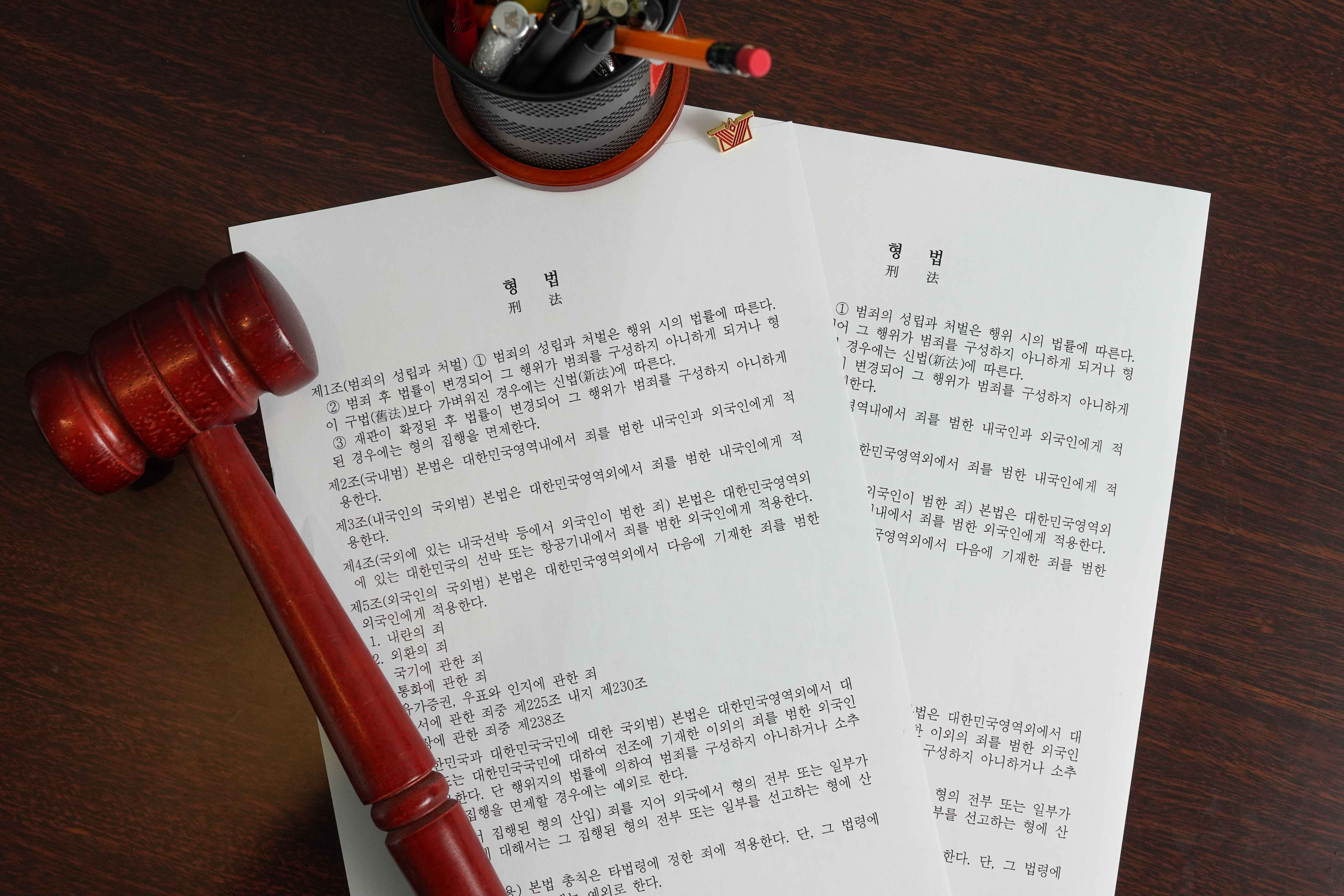
A person charged with the crime of false accusation may, under Article 156 of the Criminal Act, be subject to imprisonment for not more than ten years or a fine not exceeding 15 million won.
If a charge of false accusation arises in connection with a crime prescribed in the Act on Aggravated Punishment of Specific Crimes, the person is punished by imprisonment for a definite term of not less than three years under Article 14 of the Act on Aggravated Punishment of Specific Crimes.
• Criminal Act
• Customs Act
• Punishment of Tax Evaders Act
• Local Tax Act
• Forest Resources Management Act
• Narcotics Control Act
What Is the Statute of Limitations for False Accusation?
3. Ten years for a crime punishable by imprisonment or imprisonment without labor for a maximum term of ten years or more
The statute of limitations for prosecution is ten years under the Criminal Procedure Act, and if a suspect stays abroad for the purpose of escaping criminal punishment, the statute of limitations is suspended for that period, so that punishment may be possible even after ten years have passed.
3. Statute of Limitations for False Accusation: The Response Strategy If You Are Charged
If you have had a complaint filed against you within the statute of limitations for false accusation, the initial response is very important.
If you are unjustly charged, the key is to negate "intent," which is one of the elements of the crime of false accusation.
That is, you must make clear that you did not report knowing it to be false, but rather filed the complaint believing it to be true in light of the circumstances at the time.
Points to Note When Responding Alone
Because even a slight difference in expression in a statement can become an issue in a charge of false accusation, it can be risky to express your memory or judgment in absolute terms during the investigation.
In addition, if you attempt to rebut the other party's assertions immediately and repeat poorly organized statements, you may be misunderstood as having had intent, so an attitude that distinguishes fact from judgment in your explanation is necessary.
With the Assistance of a Criminal Defense Attorney
1) Structuring the Denial of Intent in the Crime of False Accusation
The criminal defense attorney organizes the reasoning process behind why the client filed the complaint at the time of the incident and constructs, as a matter of legal theory, the argument that the client had no intent based on an awareness of falsity.
2) Analysis of the Counterpart's Statements and Evidence
By reviewing the counterpart's statements and submitted materials, the attorney identifies contradictions or exaggerations and selects materials that support the conclusion that the client's complaint was grounded in objective facts.
3) Investigation Response and Coordination of the Direction of Statements
The attorney organizes the scope of statements required at each stage of the investigation and blocks unfavorable expressions in advance, thereby assisting the client in maintaining a consistent position.
When a complaint is filed within the statute of limitations for prosecution of the crime of false accusation, how the circumstances at the time of the incident and the question of intent are organized is of paramount importance.
A criminal defense attorney can provide comprehensive assistance ranging from setting the direction of statements to organizing evidence and developing an investigation response strategy.
🔗Legal Consultation Reservation allows you to review a response plan suited to your situation.
Daeryun, the ninth-largest law firm in the Republic of Korea (based on National Tax Service value-added tax filings for 2025), provides tailored legal services.

This content is based on actual cases handled by Daeryun Law LLC and has been partially adapted. All copyrights belong to Daeryun Law LLC.
Unauthorized reproduction, copying or distribution may result in legal action under applicable laws.


False accusation: Want a faster, more detailed consultation?
Consult aspecialized attorney
Related Information
Explore legal information related to this case.
Understanding How to Respond and the Applicable Punishment Before the Complaint Period for False Accusation Expires
The Statute of Limitations Period for the Crime of False Accusation and What to Check When Drafting a Complaint
Penalty Standards for Imprisonment for False Accusation and Types of Materials for Mitigation
Daeryun's Key Strengths


Litigation strategy using Daeryun's own AI & IT technology

More than 240 key members

1,200+ cases handled per month
* 2025년 월평균 기준
Complies with Korean Bar Association Advertising Regulations Article 4 (1)
more strengths

Book a legal
consultation with an attorney
All consultations are reviewed by a specialized attorney first,
so they are conducted by appointment only.
Phone consultation
1800-7905
Available 24 hours a day, 365 days a year


Online consultation
We provide tailored
legal services for our clients.

Chat consultation
KakaoTalk channel
Daeryun Law LLC Attorneys
Related Members
View more
GeunSu KIM
T. 070-5221-2805
Experience as chief prosecutor of Seoul Eastern Branch and chief prosecutor of Busan District Prosecutors' Office

SangSu JO
T. 070-5117-3709
Experience as Chief Prosecutor of the 5th Criminal Division of the Seoul Central District Prosecutors' Office and Deputy Chief Prosecutor of the Suncheon Branch of the Gwangju Prosecutors' Office



Key Case Studies
View moreRelated Practice Areas
View moreConsult in other languages


Popular Columns
View moreThe Meaning of Non-Referral, and Are There Differences Among the Types of Decisions?

Establishment of the Crime of Fraud: Determining the Requirements, Case Analysis, and Sentencing Guidelines
Criminal Record Inquiry and Expungement: How to Avoid Disadvantages
The Police Investigation Process, Methods of Response, and Tips for Giving Statements
Criminal Cases: Litigation Procedure, Types of Dispositions, and How to Respond

Previous
Construction Payment Litigation Case | A Strategy That Reduced Liability on Appeal in a Large-Scale Construction Payment Dispute
Next
Appeal in a Divorce Suit | Although the Client Prevailed in the First Instance of a Divorce Suit, the Appeal That Was Filed Was "Dismissed in Full"
View list
Do you have more questions?






