


Deals & Cases
Drunk Driving Offense | Requesting a Formal Trial of the Drunk Driving Summary Order and Obtaining an Acquittal
This is the story of a client who sought assistance, saying that he had received a summary order imposing a fine for the offense of drunk driving. The client was able to obtain a judgment of acquittal with the assistance of a drunk driving attorney.
1. The Client Who Received a Summary Order for the Drunk Driving Offense
This is the story of a client who sought the assistance of a drunk driving specialist attorney, stating that he had received a summary order for a fine for the crime of drunk driving.
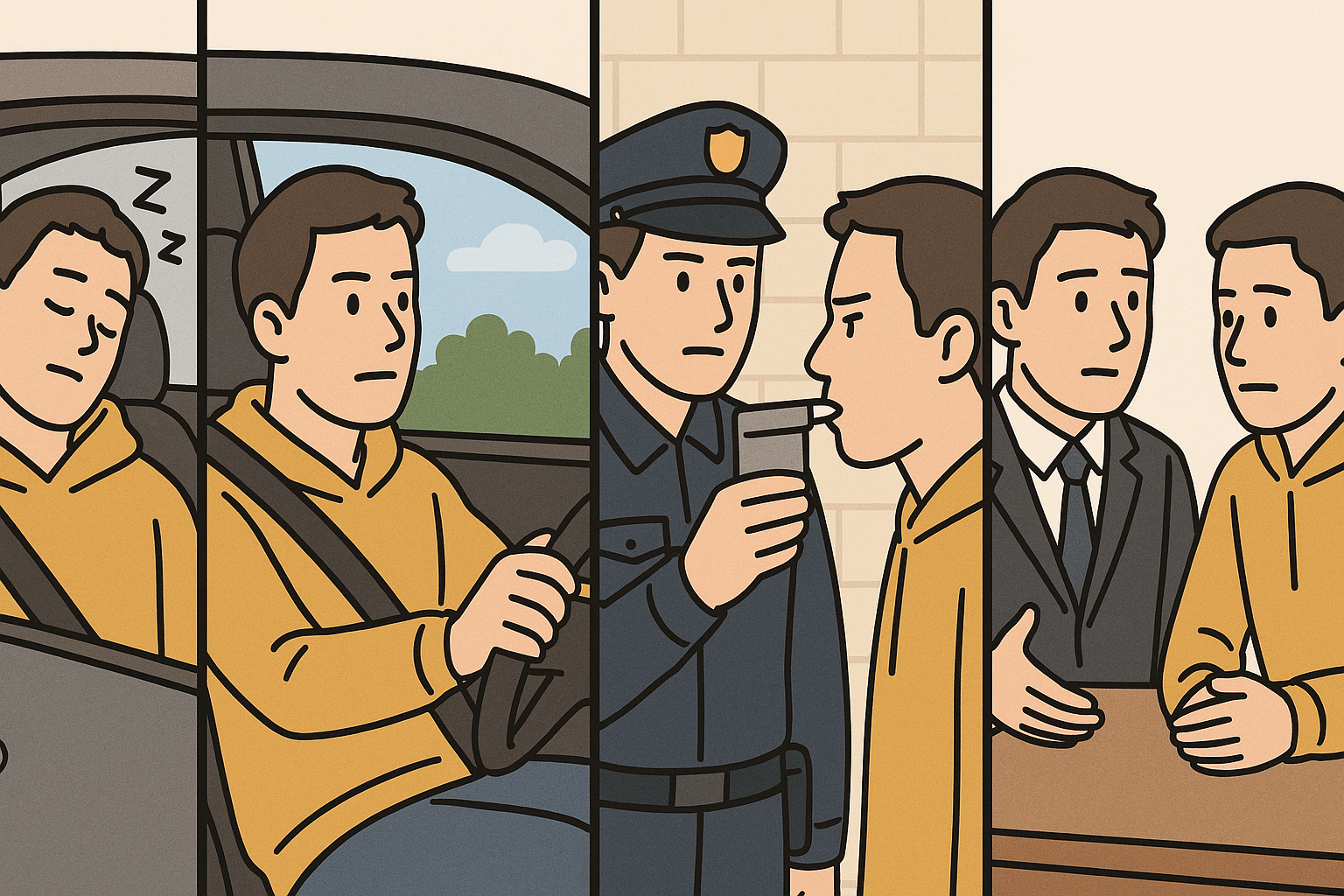
The client stated that on the day of the incident, after finishing work, he had a light drink and then tried to sleep in his car.
He then woke up and drove in order to return home, and he was measured at a blood alcohol concentration of 0.03% by police conducting a drunk driving crackdown, making him subject to punishment for the crime of drunk driving.
After being referred to the prosecutors, the client was indicted by summary indictment, and the court accepted this and issued a summary order for a fine.
Stating that there were points he found unjust, the client came to this firm and asked whether requesting a formal trial against the summary order could lead to an acquittal.
2. Explanation of the Drunk Driving Offense
🔗A drunk driving offense refers to the act of operating a car, motorcycle, bicycle, or similar vehicle while intoxicated, in violation of the Road Traffic Act.
Because the law provides that the mere fact of driving while intoxicated is punishable, a person is subject to punishment even if no traffic accident results.
Under the current Road Traffic Act, a blood alcohol concentration of 0.03% or higher is regarded as a drunk driving offense, and the administrative disposition (license suspension or revocation) and the level of criminal punishment vary depending on the reading.
Under the Road Traffic Act, an intoxicated state means a state in which normal driving is difficult, and this standard is assessed comprehensively, considering not only the blood alcohol concentration but also the judgment of the police, the condition of the driver, and similar factors.
▪ Types of drunk driving
Drunk driving accident: personal injury or property damage occurs
Fleeing after drunk driving (so-called hit-and-run)
Habitual drunk driving: aggravated punishment when detected two or more times
Penalties for the Drunk Driving Offense
The level of punishment for the crime of drunk driving is classified according to blood alcohol concentration as follows.
| Blood Alcohol Concentration | Level of Punishment |
| 0.03% or more but less than 0.08% | Imprisonment for up to 1 year or a fine of up to 5 million won |
| 0.08% or more but less than 0.2% | Imprisonment for not less than 1 year but not more than 2 years, or a fine of not less than 5 million won but not more than 10 million won |
| 0.2% or more | Imprisonment for not less than 2 years but not more than 5 years, or a fine of not less than 10 million won but not more than 20 million won |
| Refusal of a breathalyzer test | Imprisonment for not less than 1 year but not more than 5 years, or a fine of not less than 5 million won but not more than 20 million won |
If a person commits the crime of drunk driving two or more times within 10 years, the level of punishment becomes higher, so caution is required.
3. The Attorney Who Took On the Drunk Driving Offense Response
This firm’s attorney responded as follows in order to obtain an acquittal for the client in a drunk driving offense.
The Possibility of Being in the Rising Phase of Blood Alcohol Concentration
The attorney argued that the possibility could not be excluded that, up to the time the client drove and the time the blood alcohol concentration was measured, the blood alcohol concentration had been in its rising phase.
Although there are individual differences, blood alcohol concentration is known to reach its peak between 30 and 90 minutes after drinking, and thereafter to decrease by an average of about 0.015% per hour.
The attorney emphasized that, during the time between the client's final drinking and the breath test, the client's blood alcohol concentration is presumed to have still been rising.
The attorney therefore argued that, because the blood alcohol concentration of 0.03% measured for the client exceeded the punishment threshold of 0.03% by only 0.003%, it cannot be conclusively determined that the client's blood alcohol concentration at the actual time of driving exceeded the punishment threshold.
In a Criminal Trial, a Conviction Requires Proof Beyond a Reasonable Doubt
According to Supreme Court Decision 2010Do5852, rendered on September 9, 2010, and other precedents, a finding of guilt in a criminal trial must be based on evidence with probative value sufficient to give the judge a conviction that the charged facts are true beyond a reasonable doubt.
If there is no evidence to form such a degree of conviction, then even if suspicion of guilt arises, the matter must be decided in favor of the defendant.
Citing this precedent, the attorney argued that the blood alcohol concentration measured at the time of the client's incident alone was insufficient to find that the charged fact that the client had driven while intoxicated had been proven beyond a reasonable doubt.
4. Result of the Response to the Drunk Driving Offense

As a result of the drunk driving attorney's response to the client's drunk driving offense by requesting a formal trial, the client received an acquittal.
The client faced a fine for the drunk driving offense and the risk of having the license suspended, but with our firm's assistance, the client was able to obtain an acquittal and retain the license.
In the case of drunk driving offenses, strict punishment is imposed in that they may pose a significant risk to society.
Our firm provides a one-stop response service for drunk driving cases, including defense against punishment for drunk driving offenses and license relief.
If you are facing the risk of punishment for a drunk driving offense and need legal assistance, please consider making a 🔗legal consultation reservation.
Our firm will prepare a strategy tailored to the client's case and work toward a favorable result for the client.

This content is based on actual cases handled by Daeryun Law LLC and has been partially adapted. All copyrights belong to Daeryun Law LLC.
Unauthorized reproduction, copying or distribution may result in legal action under applicable laws.


Drunk driving: Want a faster, more detailed consultation?
Consult aspecialized attorney
Related Information
Explore legal information related to this case.
Penalty Points for a Fatal Accident: Disposition Standards a Traffic Accident Offender Should Confirm
A Vehicle-to-Pedestrian Accident: A Guide to Responding When Determining the Level of Punishment and Calculating the Settlement Amount
Sentencing Guidelines for Drunk Driving: Can Sentencing Materials Make a Reduction of Punishment for Drunk Driving Possible?
Daeryun's Key Strengths


Litigation strategy using Daeryun's own AI & IT technology

More than 240 key members

1,200+ cases handled per month
* 2025년 월평균 기준
Complies with Korean Bar Association Advertising Regulations Article 4 (1)
more strengths

Book a legal
consultation with an attorney
All consultations are reviewed by a specialized attorney first,
so they are conducted by appointment only.
Phone consultation
1800-7905
Available 24 hours a day, 365 days a year


Online consultation
We provide tailored
legal services for our clients.

Chat consultation
KakaoTalk channel
Daeryun Law LLC Attorneys
Related Members
View more
SangSu JO
T. 070-5117-3709
Experience as Chief Prosecutor of the 5th Criminal Division of the Seoul Central District Prosecutors' Office and Deputy Chief Prosecutor of the Suncheon Branch of the Gwangju Prosecutors' Office




Key Case Studies
View moreRelated Practice Areas
View moreConsult in other languages


Popular Columns
View moreSentencing for Drunk Driving: the Severity of Punishment by Blood Alcohol Concentration and the Mandatory Ignition Interlock Device

The Twelve Categories of Gross-Negligence Traffic Accidents (twelve serious traffic-law violations under the Act on Special Cases concerning the Settlement of Traffic Accidents): From Insurance Compensation Rules to the Standards for Fines and Actual Custodial Sentences in Car Accidents
A Complete Guide to Methods for Calculating Fault Ratios in Automobile Accidents and Dispute Resolution Approaches
Examining the Strengthened Punishment Standards for Hit-and-Run and First-Offense Cases
Examining the Penalties for Property-Damage Hit-and-Run and How to Reach a Settlement

Previous
Ordinary Wage Dispute Case | An Ordinary Wage Dispute over Whether Paid Holidays Are Included, Winning the Case
Next
Forgery of Private Documents | A Case of Obtaining an Acquittal Despite Multiple Charges Including Forgery of Private Documents
View list
Do you have more questions?






