


Case Analysis / Legal Updates
Final-Appeal Counsel | Supreme Court Judgment Strictly Assessing Whether a Person Subject to Electronic Monitoring Violated a Curfew Compliance Condition
This case, handled by our final-appeal counsel, concerned whether a defendant subject to an electronic monitoring attachment order who returned home later than the curfew time committed a violation of the Electronic Monitoring Act. The Supreme Court reversed and remanded the lower judgment, which had entered an acquittal. (Supreme Court, Decision of December 24, 2025, 2024 Do 3387)
1. Overview of the Case as Reviewed by Final-Appeal Counsel
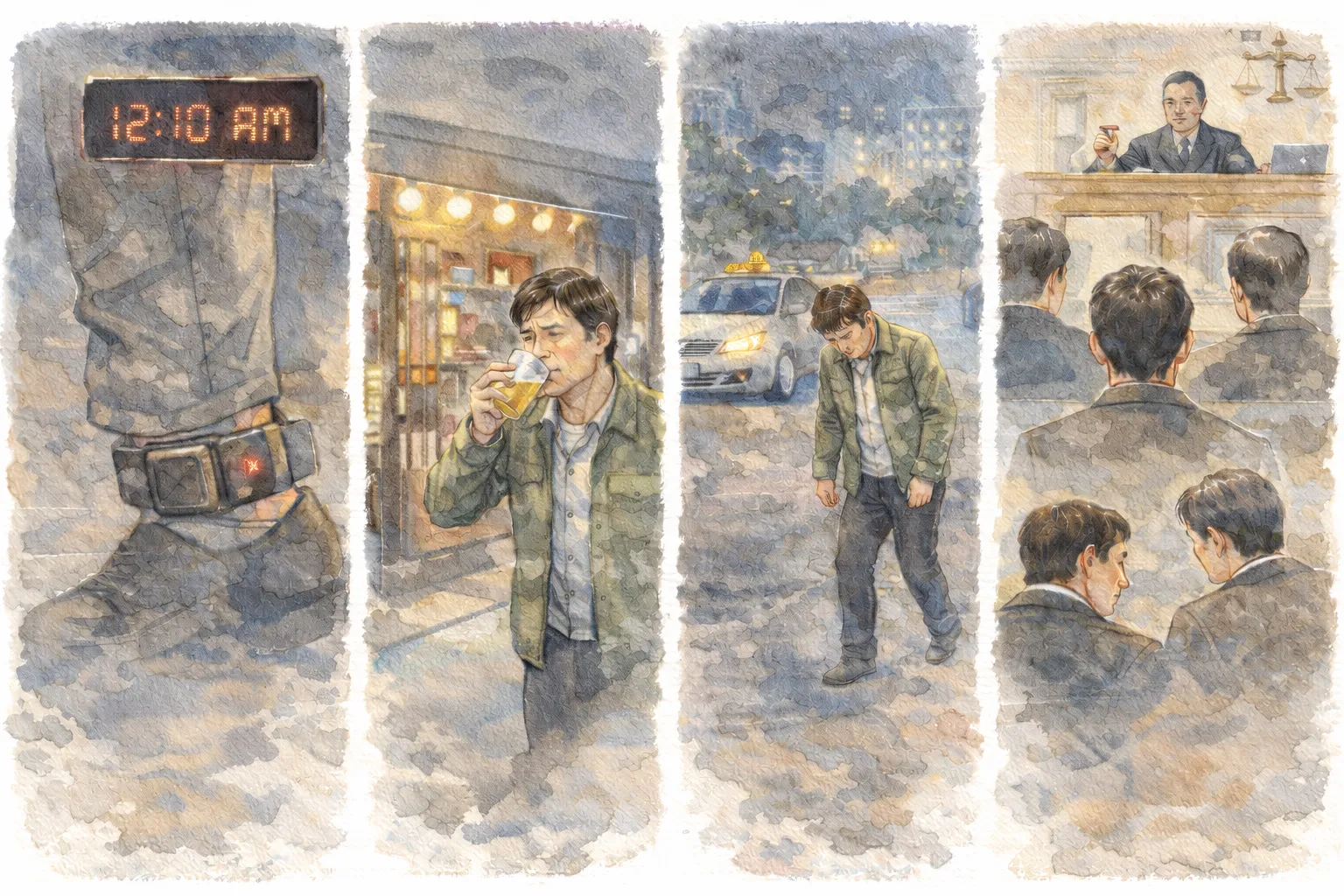
In this case reviewed by our final-appeal counsel, the defendant, while an order attaching a location-tracking electronic device was being enforced, was assigned by the court a curfew compliance condition requiring him to refrain from leaving his residence between 00:00 and 06:00 each day during the attachment period.
Nevertheless, after drinking at a bar, the defendant was unable to take a taxi on his way home and traveled on foot, and as a result he returned home approximately 10 minutes after 00:00, the time at which the curfew began.
The prosecutor indicted him for a violation of Article 9-2(1)1 of the Electronic Monitoring Act.
The Lower Court's Determination
The court of first instance found it difficult to conclude that the defendant had violated the curfew compliance condition, citing the circumstance that he returned home late on only a single occasion and by approximately 10 minutes.
It also found it difficult to conclude that the defendant had the intent to violate the compliance condition, considering, among other things, that he had contacted the probation office shortly before the curfew time, and it accordingly entered an acquittal.
The appellate court likewise upheld the first-instance determination.
The appellate court determined that, even considering the purpose of the curfew compliance condition, it was difficult to find that the defendant's conduct amounted to a case in which he had "failed to refrain from" leaving during the curfew, and that the intent to commit the violation was likewise difficult to recognize.
2. The Supreme Court's Determination as Analyzed by Final-Appeal Counsel
The Supreme Court did not accept the lower court's determination.
From the perspective of final-appeal counsel, the Supreme Court interpreted the text and legislative purpose of the curfew compliance condition very strictly.
1. A curfew during specified time periods, such as nighttime or the commuting hours of children and youth
The Supreme Court held that the curfew compliance condition imposed under Article 9-2(1)1 of the Electronic Monitoring Act means that "during the designated time periods, the person must, in principle, remain at the residence."
This is an interpretation premised on the proposition that being outside the residence for even a few minutes during the curfew time period may, in principle, constitute a violation of the compliance condition.
The Supreme Court further held, with respect to the standard for determining the "justifiable grounds" provided in Article 39(3) of the Electronic Monitoring Act, that mere inconvenience or personal circumstances alone cannot constitute justifiable grounds.
The Supreme Court determined that the defendant, although he had received sufficient guidance in advance on the procedure for applying to adjust the curfew, did not make use of it, and the circumstance that his return home was delayed after drinking at a bar was difficult to regard as a justifiable ground.
In addition, considering that the defendant was fully aware of the content of the curfew compliance condition and the possibility of punishment in the event of a violation, the Supreme Court found that the intent to violate the compliance condition could likewise be recognized.
The Supreme Court ultimately found that the lower court had misunderstood the legal principles concerning the elements for establishing a violation of the curfew compliance condition and the assessment of intent, and it reversed and remanded the lower judgment.
The Significance of This Judgment
From the perspective of final-appeal counsel, this judgment may be assessed as one that clarified the standard for determining a violation of a compliance condition in electronic monitoring cases.
It made clear that a curfew compliance condition is not a recommendation or a relaxed obligation but a strong norm of conduct requiring the person to remain at the residence during the designated time periods.
In particular, by making clear that a short duration of the violation, or mere inconvenience arising in the course of returning home, is unlikely on its own to negate unlawfulness or to negate intent, the judgment appears likely to serve as an important standard for lower courts in similar cases going forward.
3. The Concept of the Final-Appeal Proceeding as Explained by Final-Appeal Counsel
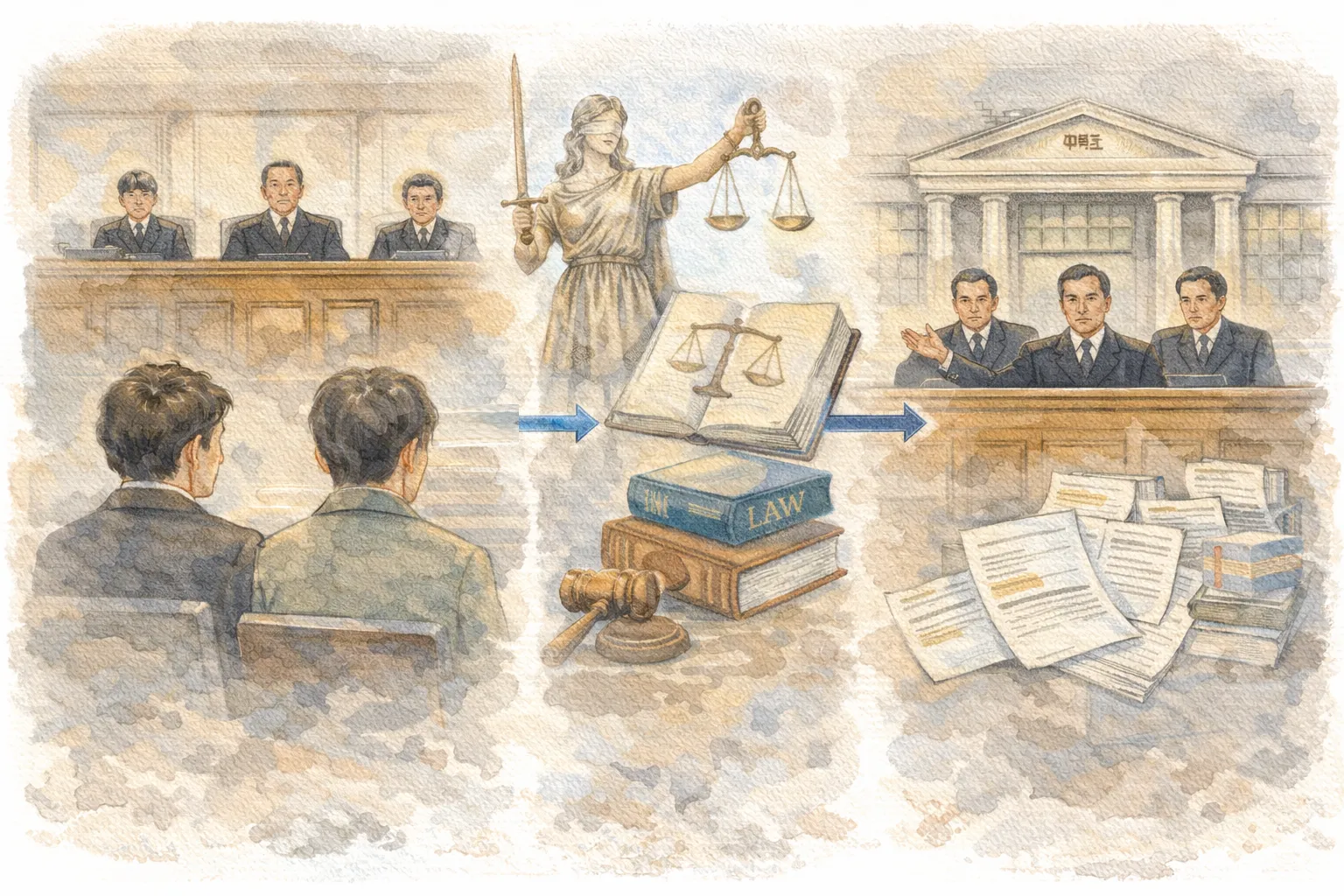
The final appeal is the stage of legal review that conclusively adjudicates a case after the first-instance and second-instance judgments.
In the final appeal, the facts are not re-examined and evidence is not newly examined; rather, the review centers on whether there was an error in the interpretation or application of statutes in the lower judgment.
In other words, the final appeal is the stage that determines "whether the judgment conforms to the legal principles," and the Supreme Court focuses on the uniformity and legitimacy of statutory interpretation rather than on the finding of specific facts itself.
Given these characteristics, the final appeal generally cannot overturn a result merely by appealing to a sense of grievance or by repeatedly asserting the facts, and a professional response that accurately structures and presents the legal principles at issue is required.
Why a Final Appeal May Be Necessary
The final appeal is the last opportunity to have the legal direction of a case fundamentally reexamined.
From the perspective of final-appeal counsel, the reasons the final appeal can be particularly important are as follows.
First, it is the stage at which errors can be corrected where the lower court applied statutory provisions formalistically or failed to sufficiently reflect the purpose of existing precedents.
Second, it can clarify the standard for assessing identical or similar cases and thereby influence the direction in which future cases are handled.
Third, in criminal cases, where a determination of legal principles underlying the assessment of guilt or innocence or the premise for sentencing is overturned, the conclusion of the case itself may change.
In particular, in areas requiring strict statutory interpretation, such as electronic monitoring, sexual offenses, violent crimes, and violations of compliance conditions, disputes over legal principles at the final-appeal stage not infrequently determine the outcome of the judgment.
Forms of Assistance That Final-Appeal Counsel Can Provide
Premised on the distinctive nature of the final appeal, final-appeal counsel assist with a case in the following ways.
· Analysis of Supreme Court precedent trends: analyzing Supreme Court precedents on similar matters and recent trends in judgments to establish the most persuasive legal framework for the case
· Reorganizing the standards for assessing intent and unlawfulness: in criminal cases, reorganizing the standards for assessing intent, justifiable grounds, and grounds for negating responsibility among the elements of an offense in line with Supreme Court legal principles
· Preparation of the statement of grounds for final appeal and supplementary briefs: preparing a legal-principle-centered statement of grounds for final appeal and supplementary briefs in accordance with the form and mode of argumentation required in the final appeal
· Establishing a strategy centered on the prospect of reversal and remand: predicting full reversal, partial reversal, and the scope of remand, and setting a strategic direction for the final appeal that takes into account the substantive advantages and disadvantages of the case
In a case involving an electronic monitoring attachment order, if it is found that the person remained outside the residence for even a few minutes during the curfew time period, that fact alone may give rise to criminal liability.
Accordingly, a defense strategy should be established by systematically organizing whether an application to adjust the curfew was made, the specific circumstances leading to the violation, the content of any prior communication with the probation officer, and the unavoidability of the conduct at the time of the violation.
In particular, at the final-appeal stage, it is important to develop precise arguments centered on the interpretation of legal principles and the standards for assessing intent, rather than on disputes over the facts.
Accurately organizing the issues in the case with the assistance of final-appeal counsel and responding in accordance with the structure of legal principles required by the Supreme Court may be a key factor that determines the outcome going forward.
If you need the assistance of final-appeal counsel, you are welcome to make a 🔗legal consultation reservation at any time.
Related Information
Explore legal information related to this case.
The Likelihood of a Suspension of Indictment Under the Act on the Protection of Children and Youth Against Sexual Abuse and a Response Strategy for Each Stage of the Police Investigation
Will a Fine for Sexual Molestation Also Leave a Criminal Record? A Look at the Level of Punishment and Response Measures
Suspended Sentence for Sexual Molestation | Standards for First-Time Offenders, Sentencing Criteria, and an Analysis of the Prospects for a Suspended Sentence
Daeryun's Key Strengths


Litigation strategy using Daeryun's own AI & IT technology

More than 240 key members

1,200+ cases handled per month
* 2025년 월평균 기준
Complies with Korean Bar Association Advertising Regulations Article 4 (1)
more strengths

Book a legal
consultation with an attorney
All consultations are reviewed by a specialized attorney first,
so they are conducted by appointment only.
Phone consultation
1800-7905
Available 24 hours a day, 365 days a year


Online consultation
We provide tailored
legal services for our clients.

Chat consultation
KakaoTalk channel
Daeryun Law LLC Attorneys
Related Members
View more



Related Practice Areas
View moreConsult in other languages


Popular Columns
View moreThe Meaning of Non-Referral, and Are There Differences Among the Types of Decisions?

Establishment of the Crime of Fraud: Determining the Requirements, Case Analysis, and Sentencing Guidelines
Criminal Record Inquiry and Expungement: How to Avoid Disadvantages
The Police Investigation Process, Methods of Response, and Tips for Giving Statements
Criminal Cases: Litigation Procedure, Types of Dispositions, and How to Respond

Previous
Customs Act | Supreme Court Judgment Holding That the Point in Time for Applying the Korea-Australia FTA Preferential Tariff Is the ‘Time of Acceptance of the Import Declaration’
Next
Violation of the Foreign Exchange Transactions Act | Korea Customs Service to Conduct Year-Round Standing Intensive Inspections of "Illegal Trade and Foreign Exchange Transactions in Response to High Exchange Rates"
View list
Do you have more questions?






