


Case Analysis / Legal Updates
Disputes over Liability Continue Even After the Warranty Liability Period Ends | Defect Management Risks That Construction Companies Should Review
Even after the warranty liability period has ended, a construction company may face a situation in which it bears legal liability.
In the construction industry, establishing a defect-response framework and a corporate liability structure has recently emerged as an important management issue.
1. The Current State of Warranty Defect Disputes | Changes in the Liability Structure of Construction Companies
Recently, defect issues in apartment housing have expanded into matters that require construction companies to review their liability structures and risk management frameworks.
A report by the Korea Research Institute for Construction Policy pointed out that, in the course of handling apartment warranty liability, the prime contractor's poor management and shifting of responsibility, as well as the burden of defect liability for subsequent work types, recurrently become problematic.
This structure may give rise to disputes over responsibility between the prime contractor and the subcontractor, leading to delays in defect resolution and the expansion of disputes.
Major Types of Disputes
According to the report, problems related to warranty liability appeared concentrated in the following types.
Major Problem Type | Proportion |
Prime Contractor's Poor Management and Shifting of Responsibility | 29% |
Burden of Defect Liability for Subsequent Work Types | 21% |
In some cases, after completing defect repairs, the prime contractor filed a reimbursement (indemnity) claim lawsuit against the subcontractor.
Subcontractors sometimes accept such demands for reasons such as maintaining the business relationship, and as a result, a problem arises in which the defect liability structure is maintained in an unbalanced form.
Under this structure, a situation may arise in which residents' requests for defect repairs go unresolved for a long period.
In addition, an environment is forming in which defect-response capability is linked to a company's quality management level and its management evaluation factors.
Accordingly, some construction companies have recently been strengthening their defect management frameworks by operating resident support centers or customer-response organizations.
These moves show that defect response is increasingly recognized as an important management task even in the post-construction management domain.
2. The Legal Structure of Warranty Liability
The Multi-Family Housing Management Act defines a defect as a flaw that arises during the construction process.
It refers to a condition in which cracking, settlement, breakage, lifting, water leakage, or the like occurs due to a fault in construction, thereby impairing the safety, function, or appearance of the building or facility.
Such defects are broadly divided into defects in load-bearing structural parts and defects in facility construction.
A defect in a load-bearing structural part refers to a flaw such as cracking or settlement that may cause part or all of the structural frame of the multi-family housing to collapse or that may pose a structural safety hazard.
Load-bearing structural parts include columns, beams, load-bearing walls, floors, roof frames, and main staircases.
A defect in facility construction refers to a flaw arising in each work type, such as equipment or finishing, and includes water leakage, malfunction, faulty grounding, and piping defects.
Standards for the Warranty Liability Period
The warranty liability period for multi-family housing is prescribed differently by type of construction work under Appended Table 4 of the Enforcement Decree of the Multi-Family Housing Management Act.
The principal liability periods are as follows.
Type of Construction Work | Warranty Liability Period |
Load-Bearing Structural Parts and Ground Works | 10 years |
Waterproofing Work | 5 years |
Reinforced Concrete Work | 5 years |
Roofing Work | 5 years |
Finishing Work | 2 years |
Equipment Work | 2 to 3 years |
The project proponent bears responsibility for defect repairs during the relevant period.
Under Article 36 of the Multi-Family Housing Management Act, if a serious defect arises in a load-bearing structural part within the warranty liability period, the project proponent also bears responsibility for compensating for the loss caused by the occurrence of the defect.
The Commencement Date of the Liability Period
The commencement date of the liability period is also clearly prescribed by law.
Category | Commencement Date |
Exclusively Owned Portion | The Date of Delivery to the Resident |
Common Portion | The Date of the Use Inspection |
The exclusively owned portion refers to the interior space of an individual unit, and the common portion refers to facilities used jointly, such as staircases, corridors, exterior walls, and the structural frame.
3. Why Liability Remains at Issue Even After the Warranty Liability Period
The existence of a warranty liability period does not mean that all liability disappears at the same time as that period ends.
In actual disputes, there are not a few cases in which whether liability exists becomes an issue even after the warranty liability period has passed.
Delayed Discovery of Structural Defects
Structural defects may not become apparent immediately after completion.
For example, problems such as internal cracking in a concrete structure or ground settlement are often confirmed only after a certain period of time has passed.
If the nature of a defect is judged to be a problem related to the structural safety of the building, the scope of liability may be re-examined, so caution is needed.
Latent Defects and the Issue of the Time of Discovery
Some defects do not become outwardly apparent for a long time and are discovered only belatedly.
Defects such as flaws in a waterproofing layer or piping leaks sometimes appear in the form of actual leakage or functional abnormality only after a certain period has passed.
In such situations, a time gap exists between the time the defect arises and the time it is discovered, and this point is treated as an important issue in the course of a dispute.
Issues of Fault in the Design and Construction Management Process
A liability issue may also arise where managerial fault is confirmed in the design or construction process.
If an error that occurred during the construction management process affected the safety or function of the building, liability for damages under the Civil Act may be examined.
In such a case, the scope of liability may be discussed separately from whether the warranty liability period has elapsed.
4. The Structure of Disputes over Responsibility Seen in Defect Disputes
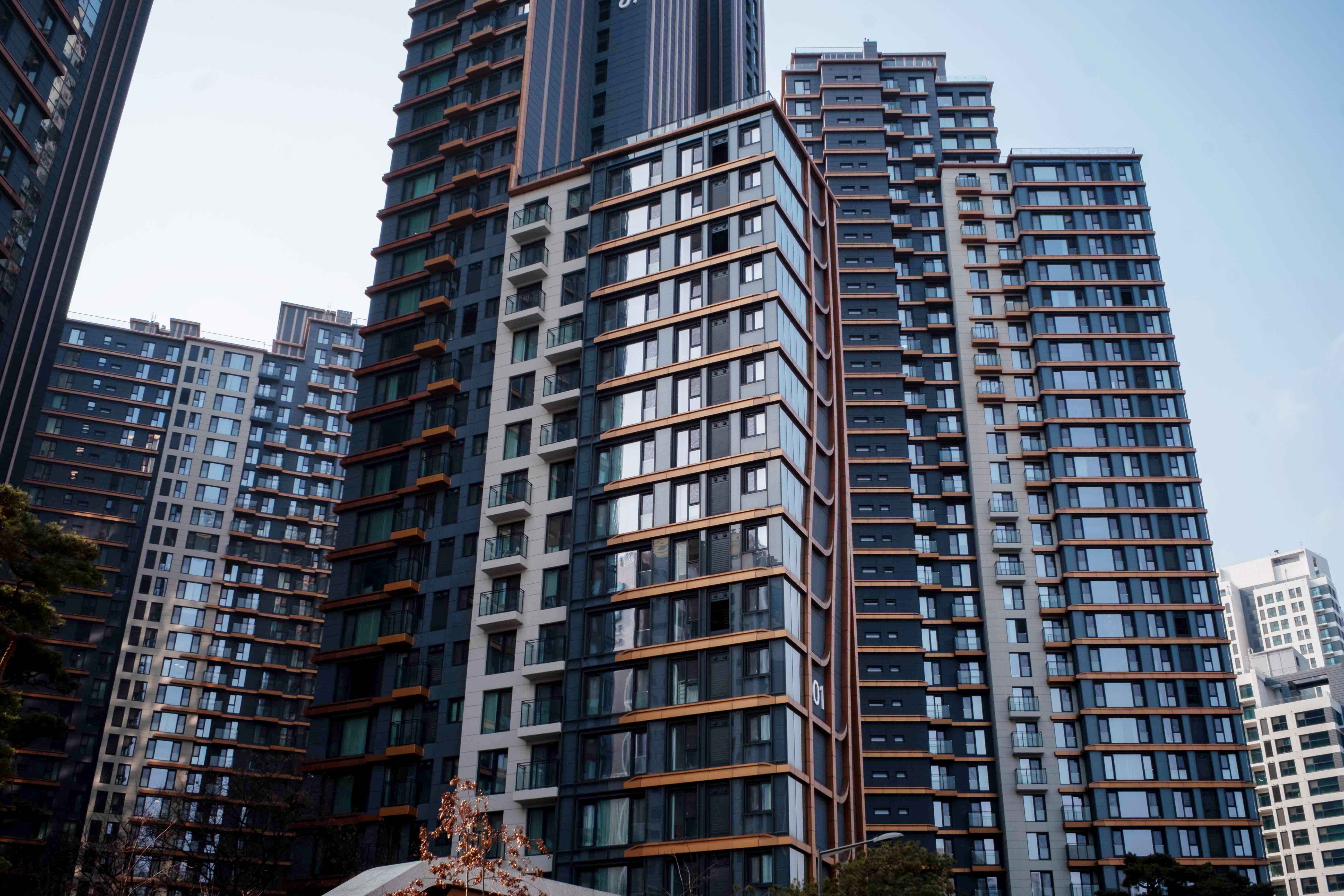
In actual defect disputes, the following liability structure recurrently appears.
2. The prime contractor asserts the subcontractor's construction liability.
3. A reimbursement (indemnity) dispute arises between the prime contractor and the subcontractor.
4. A structure leading to prolonged litigation forms.
During this process, situations may arise in which defect repairs are delayed or the scope of liability is not clearly settled.
In particular, where structural defects or large-scale repairs are required, the dispute period may become prolonged.
Why Defect Disputes Expand into Corporate Risks
In the construction industry, a trend is appearing in which the issue of responding to multi-family housing defects is linked to a company's liability management and management evaluation factors.
This is because multi-family housing defect issues reflect not only construction quality but also a company's reliability and its level of responsible management.
In its report titled "Directions for Establishing ESG Management at Construction Companies Centered on Apartment Warranty Liability," published by the Korea Research Institute for Construction Policy, the need to introduce ESG management indicators related to multi-family housing warranty liability was raised.
The report suggests that it may also be necessary to consider a plan to treat construction companies that have established a defect-response framework and a resident-response organization as evaluation targets and to provide them with incentives.
This discussion shows that construction companies should recognize a defect management framework as a management domain at the corporate level.
Vulnerable Points in Defect Management That Construction Companies Should Review
The vulnerable points repeatedly confirmed in the course of advising construction companies are as follows.
(2) Unclear standards for allocating responsibility between the prime contractor and subcontractors
(3) Insufficient review of the possibility of long-term defects
(4) Lack of an organized process for responding to defect disputes
(5) Insufficient resident-response system
These factors can become causes that slow response time and expand the scale of a dispute when one arises.
5. The Defect Management Framework That Construction Companies Should Establish

Construction companies need to establish an advance management framework to prepare for defect disputes.
Response Strategies
Representative response strategies are as follows.
• Building a defect management database
• Organizing a resident-response process
• Clarifying the subcontractor liability structure
• Preparing a manual for responding to defect disputes
In particular, parts where long-term defects may arise, such as structural frames or equipment, should be managed through an advance inspection framework.
Such a management framework helps with both dispute prevention and corporate risk management.
Daeryun Law Firm LLP, Advance Review of Defect Disputes
In construction defect disputes, structural safety issues, managerial responsibility in the design and construction process, and the contractual relationship between the prime contractor and subcontractors operate together.
Accordingly, a company needs to examine technical issues and legal liability at the same time.
At Daeryun Law Firm LLP, attorneys experienced in construction matters, attorneys with experience as in-house counsel at large construction companies, and attorneys handling fair trade matters collaborate to support a comprehensive response to multi-family housing defect issues.
By conducting legal review and technical analysis together, the firm provides advice so that companies can review defect issues in advance and establish a management framework.
• Analyzing legal risks related to warranty liability
• Reviewing the liability structure between the prime contractor and subcontractors
• Responding to construction defect litigation
• Advising on housing complex safety inspections and dispute prevention
Multi-family housing defect issues can lead to disputes even years after completion.
Therefore, from the standpoint of a construction company, organizing a management framework through advance inspection is more important than responding after a defect has arisen.
Daeryun provides legal advice together with technical review so that construction companies can establish a defect management process and a dispute-response framework.
If you need a more detailed review of responding to apartment warranty liability disputes or of establishing a construction defect management framework, you are welcome to review the relevant matter with Daeryun through the 🔗real estate attorney legal consultation reservation.
Related Information
Explore legal information related to this case.
Villa Rental Fraud: Procedures for Recovering the Deposit and Legal Responses When Harm Occurs
Procedures and Response Methods for Recovering a Deposit and Down Payment after Contract Fraud
If You Are Facing a Real Estate Funding-Source Investigation, the Funding Plan Statement You Should Verify
Daeryun's Key Strengths


Litigation strategy using Daeryun's own AI & IT technology

More than 240 key members

1,200+ cases handled per month
* 2025년 월평균 기준
Complies with Korean Bar Association Advertising Regulations Article 4 (1)
more strengths

Book a legal
consultation with an attorney
All consultations are reviewed by a specialized attorney first,
so they are conducted by appointment only.
Phone consultation
1800-7905
Available 24 hours a day, 365 days a year


Online consultation
We provide tailored
legal services for our clients.

Chat consultation
KakaoTalk channel
Daeryun Law LLC Attorneys
Related Members
View more
JungKyu Park
T. 070-7510-2014
Experience as a judge in the Construction Department of the Seoul High Court and as a chief judge in the Ansan branch of the Suwon District Court.



Related Practice Areas
View moreConsult in other languages


Popular Columns
View moreGuide to the Procedure for a Jeonse Funds Return Lawsuit, Securing Evidence, Points to Note, and How to Pursue Compulsory Execution

Standards and the Punishment Provisions for Violations of the Fair Transactions in Subcontracting Act
What Is the Procedure for Applying for an Order to Register a Lease Right When the Deposit Is Not Returned?
Procedure for Demolition of an Illegal Building: How to Respond if There Is an Illegal Building on Your Land
Guide to the Procedure for Applying for a Provisional Injunction Prohibiting Disposal of Real Estate and Methods for Assessing the Requirements

Previous
From a Court Receivership Application to the Risk of Delisting: Corporate Rehabilitation Seen Through a Construction Company's Crisis
Next
Defect Repair Guarantee Insurance | Supreme Court Judgment Recognizing the Insurer's Liability Even Where the Failure to Repair Defects Occurred After the End of the Insurance Period
View list
Do you have more questions?






