




Companies are in crisis due to successive rulings saying, “Performance bonuses must also be paid to hired interns.”

2024-12-02
Two similar cases this year after the first ruling in 2022
Specify payment when performing the same work as a full-time employee
As legal precedents increase, corporate regulations are revised
Shorten the period and prepare the basis for payment
Courts continue to rule that if hired interns perform the same work as regular workers during their working period, they should be paid the same performance bonus. The idea is that since people do the same work, they should not be treated differently in performance bonus payments. There are observations that the court decision may result in changes to each company's internship system regulations in the future. This means that a clear direction can be shown, such as reducing the number of interns themselves or establishing new bonus payment regulations.
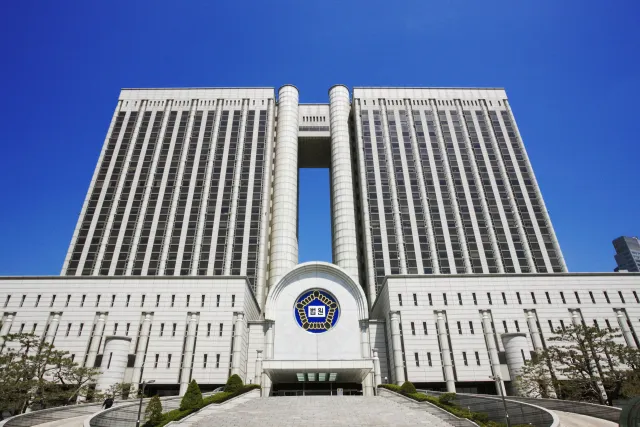
According to the legal community on the 1st, the Civil Settlement Division 48 of the Seoul Central District Court ruled in a lawsuit for damages due to discriminatory treatment filed by Mr. A and 416 others against the Korea Minting and Minting Corporation last October, “Pay approximately 2.8 to 5.3 million won and interest to the plaintiffs whose discrimination was acknowledged.”
The Mint and Minting Corporation operated an experiential internship system from 2009 to 2013. Afterwards, in accordance with government guidelines, the ‘Recruitment Intern’ system was introduced in 2014. Every year, the corporation paid performance bonuses to its employees in accordance with the compensation regulations. However, when interns and contract workers were excluded from payment, Mr. A and others filed a lawsuit, saying, “Even though we performed the same work as regular workers, performance bonuses were not paid during the internship period.” This is because failure to pay bonuses for doing the same work is a violation of Article 6 of the Labor Standards Act or Article 8 of the Fixed-Term Contract Act.
The issue was whether the target of comparison for hired interns should be regular employees of the construction company. The court judged hired interns to be temporary workers, different from general trainees. The court pointed out that there was no essential difference from the work performed by regular workers, saying, “Recruited interns were assigned independent tasks like regular workers when they joined the corporation, and performed the same tasks even after being converted to full-time workers after completing the internship period.” The court ruled that the construction company violated the fixed-term law. Article 8, Paragraph 1 of the Fixed-Term Contract Act stipulates that “an employer shall not discriminate against workers on the grounds that they are fixed-term workers compared to workers who have entered into an indefinite-term employment contract engaging in the same or similar work at the relevant business or workplace.”
A month earlier, in September, the 13th Civil Division of the Daegu District Court also ruled in favor of some of the plaintiffs in a claim for damages due to discrimination brought by 330 of the company's interns against the Korea Real Estate Board, with a similar effect to the Mint Corporation ruling. The Daegu District Court also ruled that the workers subject to comparison for hired interns are regular workers. The 12th Civil Division of the Daegu District Court also sided with the interns in the lawsuit filed by interns employed by Korea Gas Corporation against the corporation in 2022. This was the first case where it was ruled that it was natural for hired interns to be paid performance bonuses if they had continued to perform work similar to that of regular employees.
Lim Dong-han, a lawyer and spokesperson for Dongin Law Firm, explained, “Recruited interns can be thought of as an intermediate step in converting to full-time employees, whether at private or public companies,” and added, “The rulings are clearly stated to have discriminated against temporary workers without any reason, as they are considered to be in violation of the anti-discrimination law.”
Bang In-tae, lawyer at Daeryun Law Firm, predicted, “Employment rules or regulations that do not provide any allowances to hired interns who performed work similar to regular employees become illegal company regulations and become ineffective. Ultimately, due to the violation of Article 8, Paragraph 1 of the Fixed-Term Act regarding non-payment of performance bonuses, this will become a claim for compensation for illegal acts, creating a risk that the corporation or the company will have to compensate.” He went on to suggest, “If there is a move to file a lawsuit like the Mint and Minting Corporation did, it is most realistic to consult with labor unions in advance to prevent litigation costs.”
Some say that these rulings may lead to a series of proactive measures by companies. In fact, some construction companies are moving towards clarifying the basis for payment by creating a new clause in the intern employment contract regarding whether performance bonuses will be paid. On the other hand, there is also the possibility of a reduction in the hiring internship system. From a company's perspective, this system is implemented because it needs a period of time to screen excellent employees before converting them to full-time employees, but as it has been decided that the recruitment-type internship period is viewed along the same lines as regular employees, the period can be shortened as much as possible.
[View full article] - Businesses in emergency due to successive rulings saying, “Performance bonuses must be given to hired interns” (Shortcut)


Do you have more questions?






In-Person Consultation Booking
If you have legal concerns, consult with a specialist attorney at the nearest office.
