



Draw it in the ‘Ghibli style’!... AI copyright controversy raised by ‘ChatGPT’

2025-04-16
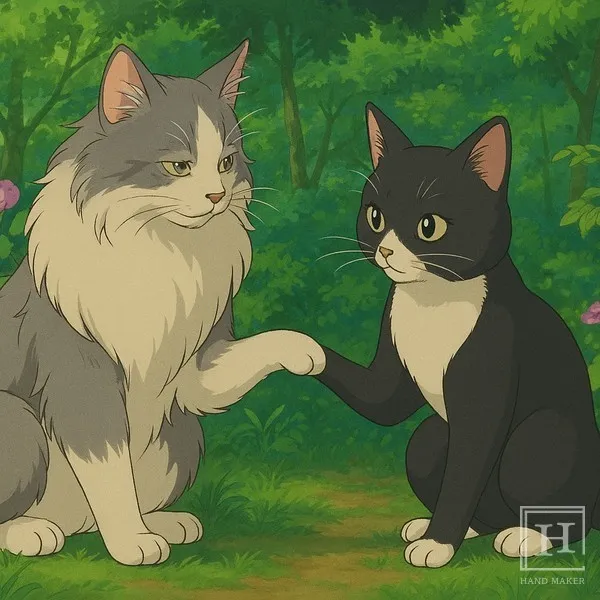
Recently, an increasing number of people are posting ‘Ghibli-style’ images rather than actual photos on social media. These are images that have been converted from actual photos into Studio Ghibli's animated drawing style, and this is a phenomenon that has emerged as OpenAI's newly introduced image generation AI model has become popular.
As Ghibli-style images gained attention, posts about selling them even appeared online. Not only was a specific painting style applied, but some people also raised questions about the fact that the results that can be obtained just by entering a simple prompt are being traded for a fee.
Now that artificial intelligence (AI) such as ChatGPT has naturally been incorporated into our daily lives, from diet management to psychological counseling and fortune telling, we looked at the use of AI in the arts and creative fields and the resulting problems from a legal and ethical perspective.
OpenAI unveils new image generation AI model
OpenAI unveiled the image generation AI model ‘ChatGPT-4o Image Generation’ on the 25th of last month (local time). It is an image creation model combined with OpenAI's signature multimodal, ChatGPT-4o, and is the first model to integrate text and images.
ChatGPT-4o image creation, which is known to create images more elaborately than OpenAI's existing image model, DALL-E, attracts attention in that it creates high-quality images with just a simple prompt input. Previously, you had to enter prompts one by one to create the desired image, but the new model generates images by understanding the user's intent.
The ability to create images combined with text has also become more sophisticated. For example, when asked to create an ‘infographic detailing Newton’s prism experiment,’ a useful image is created by inserting text at the correct location along with the visual image. He is also good at creating menus that explain the ingredients of dishes in detail and four-panel comics that require dialogue.
In addition, it can learn in context through conversations and analyze and integrate images uploaded by users to reflect them in creating new images. It is also possible to create a new image while maintaining character consistency in the process of refining the image through natural conversation.
“Draw it in Ghibli style”… Animated Image Creation Popularity
OpenAI announced on the 1st (local time) that the number of ChatGPT subscribers exceeded 500 million as of the end of last month. According to many media reports, the rapid increase in ChatGPT users is interpreted as the result of Open AI introducing a large number of new AI models this year.
The popularity of the newly introduced ChatGPT-4o image creation is even more surprising. Sam Altman, CEO of OpenAI, said on the 27th of last month through As image creation became more popular, excessive traffic flooded the server.
Also, on the 31st of last month, he said, “1 million users were added in the last hour,” demonstrating the popularity of the new image creation model. It is said that it took 5 days to launch ChatGPT and reach 1 million initial users.
The reason why OpenAI's newly released image creation model is so popular is because image conversion in various animation styles such as Ghibli, Disney, and Pixar is attracting attention. If a user uploads a photo taken in their daily life and inputs a request to draw it in a specific animation style, they can receive a high-quality result in about a minute.
Among them, the drawing style of Ghibli animation is what receives the most attention. Anyone can become the protagonist of an animation by uploading a photo of their daily life and entering a simple prompt to draw it in Ghibli style. It is gaining popularity at home and abroad in that personal daily photos are reborn with a delicate and warm Ghibli sensibility.
‘Ghibli Pictures’ craze sparks debate among netizens
CEO Sam Altman's X profile photo on the 10th was also a Ghibli-style image. With the advent of OpenAI's smarter image generation AI model, it has become possible to create useful and practical images needed in everyday life, but unexpectedly, Ghibli-style image conversion is becoming very popular.
In particular, in Korea, ‘Ghibli Profile Pictures’ created using these functions are popular. If you look at your KakaoTalk friend list recently, you'll see a lot of profile pictures converted to Ghibli drawings. Even people who normally don't change their profile pictures are joining the Ghibli profile picture wave.
As this phenomenon becomes a trend, other disagreements are also emerging. Online, many people are pointing out that Studio Ghibli's actions are infringing on copyright, while opposing opinions are being raised in support of this.
First, the opinion is that the results generated by an AI model by imitating the drawing style of a specific animation studio cannot be recognized as a creative work. The issue is that if the AI model learned Ghibli's animation and used it to create images, it may constitute some copyright infringement.
Of course, there are opposing opinions as well. It is argued that this is an era where anyone can freely create through AI models, and that current animation image conversion is just part of the trend. In addition, some experts argue that the drawing style or style itself is not subject to copyright protection.
Is Ghibli-style image conversion a copyright infringement?
So, are there any legal issues with converting photos into Ghibli-style images using an AI model? We sought advice from attorney Kim Tae-hwan of Daeryun Law Firm on whether the drawing is eligible for copyright protection and whether using it as a profile photo is a violation of copyright.
First, as to whether the drawing is subject to copyright protection, the answer is ‘no.’ Attorney Kim Tae-hwan said, “The principle is that drawings are not subject to copyright protection,” and added, “Article 2, No. 1 of the Copyright Act protects expression by saying that the subject of protection under the Copyright Act is ‘creative expression of thought or emotion,’ so ideas, techniques, and styles such as drawings are not subject to protection.”
How about converting an image into a specific animation drawing style using an AI model and then using it? Regarding this, he said, “Currently, copyright for works is recognized only for those created by ‘humans,’ so there is a lot of controversy about who the rights should belong to when an image is formed through an AI model.”
He continued, “In Korea, there have not been any specific cases of disputes regarding AI copyright yet, so if an image is created through an AI model, legal issues can be raised and judged in the future, so we can have clearer guidelines on AI copyright issues.”
However, it is said that this will not be a problem as the current copyright law considers private use as not infringing on the copyright holder's rights. However, he added that using it commercially could be problematic.
Attorney Kim noted, “The Ghibli animation image itself falls within the realm of expression of the work, so the extent to which the image was copied may be an issue.” However, he added, “It is believed that it will take a considerable amount of time for legal issues to arise in the future to create Ghibli-style photos of individuals, family members, or friends as has been done recently.”
In addition, data learning of AI models is said to have a close relationship with copyright infringement. He explained, “AI’s learning is based on temporarily storing and analyzing copyrighted works through web crawling, etc., which is an act of copying under copyright law.”
However, it was also pointed out that cultural development could be hindered if all acts of copying are regulated as an infringement of the copyright holder's rights. For this reason, it is necessary to put a brake on the unlimited exercise of rights, and one of them is fair use. Fair use is a system that allows the use of copyrighted works for reasonable, non-profit purposes under certain conditions without the permission of the copyright holder.
Regarding the determination of fair use, Attorney Kim said, “We determine whether it is fair use by comprehensively considering factors such as whether AI learning is non-profit and has the purpose of promoting creation, whether it substantially damages the copyright holder’s market, and whether the scope of use is part or all of the total.”
He added, "If the AI model's learning of Ghibli animation data is non-profit, only partially learned, and not competitive in the copyright holder's market, it may be recognized as fair use and may not be a copyright infringement. However, on the contrary, if the learning of Ghibli animation data has a commercial purpose, core parts are used, and a competitive relationship in the market can cause substantial damage to the copyright holder, it is no longer fair use and copyright infringement may be established."
Infringement of the rights of the original author... From an ethical perspective
Last week, a post titled “A post expressing my frustration over the indiscriminate use of AI illustrations” was uploaded to the neighborhood life section of Carrot Market, a used goods trading platform. The author said, “Many aspiring writers work hard for years to have a cartoon-like drawing style suitable for comics and illustrations,” and “AI’s highly sophisticated drawings are the result of unauthorized learning from the hard work of countless artists.”
Hayao Miyazaki, Japanese animation director and co-founder of Studio Ghibli, is also known to have negative views on working with AI.
In the 2016 NHK documentary
The demo tape contains specific grotesque movements generated through artificial intelligence. In response, Hayao Miyazaki pointed out that this cannot be said to be funny if you think about a friend with a disability, and that the person who makes this has no idea what pain is. He also said that he would never introduce the technology into his work.
An anecdote about Eiji Yamamori, one of the animators from Ghibli who worked with Hayao Miyazaki, also helps us understand some of the public's negative views on the use of AI models. He revealed that it took him 1 year and 3 months to complete each scene in the animation The Wind Rises (2013), which he drew entirely by hand. The scene lasts about 4 seconds and depicts people in a crowd making individual movements.
Ask ChatGPT about AI ethics
Recently, controversy arose when a post selling Ghibli-style images created using ChatGPT-4o images was posted on a used goods trading site. Accordingly, second-hand trading platforms are imposing sanctions on this.
So, how does ChatGPT ethically view the act of AI creating images by imitating a specific animation drawing style? When I asked ChatGPT directly about this, the answer was, “I think there is definitely a possibility of copyright infringement.” He also added, “Imitating the unique art style of a specific animation studio goes beyond simple imitation of the style, and can be an act that infringes on the creator’s integrity and brand assets. In particular, if it is combined with commercial use, I believe it is no longer a gray area ethically and legally.”
While various unexpected problems are being discussed, such as the creation of fake receipt images and the infringement of portrait rights due to the possibility of facial data collection, attention is being paid to how the use of new image creation AI will spread in the future and whether legal regulations can be established for this.
[View full article]
Draw it in the ‘Ghibli style’!... AI copyright controversy raised by ‘ChatGPT’ (Go here)

Do you have more questions?






In-Person Consultation Booking
If you have legal concerns, consult with a specialist attorney at the nearest office.
