




“I thought it was a government-supported project… I was deceived by exaggerated advertisements” File a lawsuit for return of sale price… What are the results?

2025-09-02
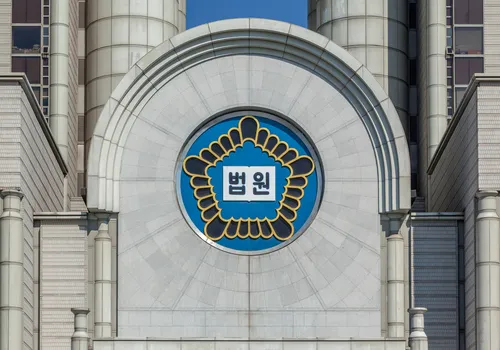
Plaintiff claims obligation to terminate commercial sale contract and restore original condition
Court: “The important promotional content, including the purpose of the business, is consistent with the facts... It is not enough to lead to a mistake.”
The court ruled that even if exaggerated promotional material was used during the sale of a commercial property, it did not constitute an act of deception. This is because even if there are somewhat exaggerated expressions, it cannot be concluded that it is a false or exaggerated advertisement.
On July 24, the 2nd Civil Affairs Division of the Ansan Branch of the Suwon District Court dismissed the plaintiff's claim in a lawsuit filed by Mr. A, a commercial buyer, and others against the developer for the return of the sale price.
Previously, Mr. A and others received a commercial unit in a large-scale commercial facility located in Siheung-si, Gyeonggi-do. It is known that at the time of sale, the developer promoted through catalogs, etc. that the mall was a public-private joint venture and that business safety and economic feasibility were guaranteed.
However, after the completion of the shopping mall, Mr. A and others learned that the shopping mall they had received was not included in the government project.
Accordingly, they filed a lawsuit, claiming that they had been deceived into signing a contract by the developer's false and exaggerated advertisements. It was argued that not only should the contract be canceled due to a mistake, but the entire sale price should be returned.
The developer countered, saying, “We have never claimed or advertised that there is budget support for any of the buildings,” and added, “Therefore, the related advertisements only conform to the facts and cannot be viewed as false and exaggerated advertisements.”
The court also ruled that it could not be said that there was an act of deception at the time of the sales promotion. The court ruled, “After comprehensively reviewing all promotional materials, including catalogs, it is difficult to say that the entire building in this case was promoted with the intention of guaranteeing stability as a public-private joint venture or a national project. Therefore, it cannot be concluded that the developer deceived the plaintiffs through promotional materials.”
Attorney Im Ha-yeon of Daeryun Law Firm, the developer's legal representative, explained, "Most of the publicity claims that the potential buyers claimed were deceptive practices were not carried out on their own, and were merely projections made by analyzing the building by unrelated real estate officials. Even in the official promotional materials, only a law was written to the effect that if financial support from the government was deemed necessary, a portion of the funds could be subsidized or technical support could be provided."
Attorney Lim said, "Above all, in reality, the developer was selected as the final business operator in the government project contest and was scheduled to receive project cost support. Although the scope and conditions changed somewhat later, this was not false," adding, "Therefore, the developer does not bear the obligation to return the sale price or compensate for damages."
Reporter Kim Jong-cheol (jckim99@sportsseoul.com)
[View full article]
“I thought it was a government-supported project…I was deceived by exaggerated advertisements” Filed a lawsuit for return of sale price… What are the results? (Shortcut)

Do you have more questions?






In-Person Consultation Booking
If you have legal concerns, consult with a specialist attorney at the nearest office.
