




'Shadow executive' Kim Beom-seok's younger brother, why did Coupang not want to reveal it?

2026-01-02
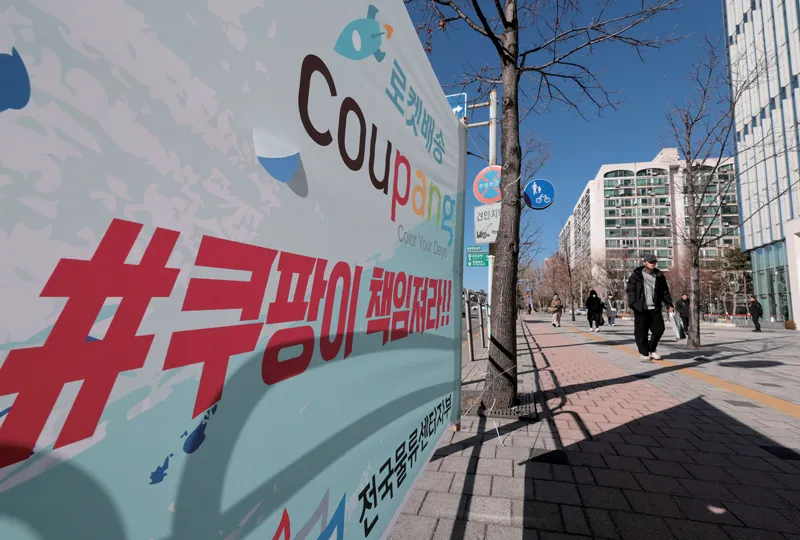
Trying hard to ‘protect brother Kim Beom-seok’… Coupang's aim to swindle the Korean government and consumers
Attempts to defend US stock market prices and minimize litigation risks... The size of the bill for ‘sanctions, class action lawsuits, and consumer defection’ grows larger
The unprecedented joint hearing of six standing committees of the National Assembly targeting the 'Coupang incident' ended in chaos. The direction of Coupang's response, which is increasing confusion with half-baked follow-up measures, ultimately points to 'protecting Chairman Kim Beom-seok's brothers', 'defending stock prices', and 'minimizing litigation risk'. However, the devices that Coupang and the Chairman Kim brothers have prepared to avoid various regulations and judicial risks are actually increasing the level of sanctions and the possibility of large-scale lawsuits at home and abroad.
The biggest variable in 'Kim Beom-seok's designation as head' is his younger brother, Kim Yu-seok.
What was clearly revealed by Coupang's large-scale personal information leak was that Chairman Kim's younger brother, Vice President Kim Yu-seok, was the executive in charge of the delivery camp management division at the Korean corporation. Coupang Inc, which was listed on the New York Stock Exchange (NYSE) in the United States in 2021, has revealed in public reports submitted to the New York Stock Exchange (NYSE) over the past five years that Vice President Kim, who is a 'specially related person' to Chairman Kim, is affiliated with Coupang. However, his title was not disclosed, and he was listed as one of the employees dispatched from the U.S. headquarters to the Korean corporation. In its report, Coupang described Vice President Kim (English name Yoo Kim) as 'the brother of Chairman Kim Beom-seok and his spouse also works at Coupang.'
It was written that Vice President Kim's role was 'related to strategy and operations' and that his compensation was set at the same level as other employees. According to the disclosure, Vice President Kim received an annual salary of $430,000 (about 620 million won) and 74,401 shares of restricted transfer stock (RSU) from Coupang in 2024. Applying the current stock price of $23 per share, it is worth about 2.4 billion won. RSU is paid when an employee satisfies the conditions set by the company, such as performance and longevity. Vice President Kim received over 3 billion won in cash and stocks in 2024 alone, and the cumulative payment according to the report released after listing (receipts for 2021-24) is over 14 billion won.
Industry and political circles believe that although Vice President Kim is an unregistered executive, he has been with Coupang since 2014 and has played a significant role, including being involved in the company's major management activities and decisions along with his older brother, Chairman Kim. An industry official said, "The mere fact that Kim Yu-seok did not want to reveal that he was a vice president shows that he already has considerable influence and decision-making power within the company. Depending on Kim Yu-seok's role and status, the designation of Kim Beom-seok as head could lead to completely different results, so it appears that they tried to separate external and internal positions for risk management purposes."
The existence of Vice President Kim is considered a key variable in determining whether Chairman Kim is designated as the same person (head: a person or corporation that actually controls a large conglomerate). The Fair Trade Commission designated Coupang as a large conglomerate in 2021, but designated Coupang Corporation as the same person, saying there was insufficient evidence to designate Chairman Kim, a U.S. citizen, as the same person. At the time, this decision was controversial, and the Fair Trade Commission later made it possible for foreigners to designate the same person and specified the requirements and exception provisions for designating the same person for corporations. Afterwards, Chairman Kim, a foreigner, avoided being designated as the same person by being recognized with exceptions such as having no shares in domestic affiliates, no relatives participating in management, and no financial transactions with the company. The authorities considered Vice President Kim to be 'a member of Coupang, but there is no basis to judge that he is participating in management.'
However, during the large-scale personal information leak incident and hearing in December 2025, it was confirmed that he was serving as vice president and received a significant amount of compensation and stock incentives, and it is analyzed that this will also affect the screening of the same person scheduled for May this year.
Joo Byeong-ki, chairman of the Fair Trade Commission, pointed out that "an investigation is needed to determine whether Kim Beom-seok's younger brother, Kim Yu-seok, is participating in management and how much bonus and remuneration he is receiving," and pointed out that legal amendments should follow to "prevent tricks" and avoid institutional loopholes. Chairman Joo emphasized, "Even if (Chairman Kim Beom-seok) is designated as the same person, the provisions for actual punishment under the current legal system are too weak," and added, "A new law must be prepared to regulate the expropriation of private profits and even the benefit of relatives by receiving excessive bonuses."
Coupang denies the suspicion that he is working as a 'shadow executive', saying, "Vice President Kim is not in a position to make management decisions or directly carry out management activities, and is not receiving particularly higher salary or compensation compared to those in the same or similar positions."
“If false disclosure was made, the expansion of the U.S. lawsuit is inevitable.”
The appearance of interim CEO Harold Rogers, who became the head of the Korean corporation due to a personal information leak, and Coupang's bizarre response, which was criticized as a 'mockery of the Korean government and people', are becoming negative news that further increases the risk. While a joint public-private investigation was in progress, Coupang made a surprise announcement of information that was close to self-exoneration, and countered by citing the National Intelligence Service, saying, "We followed the instructions of the authorities." Representative Rogers also attempted to change the frame of this self-investigation by publicly saying, “It is a successful example of cooperation, but the Korean government is not properly informing the public.” At the same time, Coupang also presented a compensation plan of '50,000 won per person purchase voucher' for the 33.7 million victims of the information leak, but when the lid was opened, it was in fact nothing more than a '5,000 won coupon.' Complaints poured in about the 'smishing behavior that crossed the line' in marketing Coupang's subsidiaries to victims.
Even though the reactions of our government and domestic consumers could have been predicted, the analysis that US stock market investors are behind the repeated claims that are inconsistent with the first compensation plan lends weight to the analysis. In fact, the data submitted by Coupang to the U.S. Securities and Exchange Commission (SEC) ahead of the joint hearing contained information that the Korean government did not confirm, such as identifying the culprit of the leak, confirming that the culprit accessed 33 million accounts but actually stored only about 3,000 data, and confirming that it was deleted without sharing with a third party. It was also indicated that coupons worth 1.685 trillion won would be paid to consumers. In the English apology that Chairman Kim Beom-seok issued 40 days after the incident, it is pointed out that the intention was to reduce the risk of lawsuits from investors, even though he used terms such as "false insecurity" and "falsely accused" that are different from the Korean language. Even though Coupang cooperated with the Korean government as much as possible and took proactive measures, it seemed to have put all its efforts into conveying the message that the authorities were excessively pressuring and harassing American companies.
Coupang, which has shown a wide range of actions against US politics and relations by spending more than 15 billion won in lobbying funds from 2021 to the third quarter of 2025 when it was listed on the New York Stock Exchange, faced its biggest crisis since listing due to its half-baked response to this incident. The number of local law firms pursuing class action lawsuits against Coupang is increasing. Levy & Kolshinki law firm located in New York City announced, "We are launching a class action lawsuit for shareholders who suffered damage from Coupang's information leak." To date, it is understood that there are at least five law firms that have announced the recruitment of plaintiffs for class action lawsuits related to Coupang. Law firms have also appeared to encourage 'whistle-blowing' by introducing SEC regulations that pay rewards (10-30% of the collected amount) to insiders who report meaningful non-public information. If the number of shareholders claiming damages from the personal information leak, the insincere disclosure of Vice President Kim Yu-seok, and the decline in stock prices due to false disclosures to minimize the situation increases, the size of the lawsuit and the amount of compensation could grow to an astronomical scale.
A class action lawsuit against Chairman Kim and Coupang Inc is already in progress. The representative plaintiffs are shareholders of the New York City Public Pension, which consists of the New York City Public Employees' Pension and the Police and Teachers' Pension. Shareholders claimed that Coupang concealed the risk of overwork and death due to poor working conditions during the IPO process, and that it hid information about manipulating search results and forcing suppliers to price, and that the stock price plummeted after being investigated by Korean authorities after listing, and defined this as a 'gravely false and deceptive act.' The first trial ruled that the case could not be reopened and was dismissed, but the plaintiff appealed and faced additional legal judgment. While the lawsuit is currently in progress, a personal information leak occurred and suspicions arose against Vice President Kim Yu-seok, leading to a drop in stock prices on the U.S. stock market and a class action lawsuit that Coupang was trying to defend.
Dong-hu Son, a New York attorney at SJKP (Daeryun Law Firm, USA), who is leading a class action lawsuit for victims of Coupang's personal information leak in the U.S., said, "If there is a discrepancy between the main content announced by Coupang through public disclosure and the reality, and if there is something intentionally omitted or hidden, it will be verified (primarily) through internal documents and decision-making structure at the discovery stage." “The issue is whether the governance and decision-making risks have been sufficiently disclosed. If Kim Yoo-seok, a related party, made a disclosure that reduced or omitted the fact that he had a meaningful influence on the company’s decision-making or control structure, it could become the subject of a dispute and additional litigation would be inevitable,” he explained.
Coupang's stock price, which had plummeted due to the information leak, rebounded by more than 6% after an announcement was made attempting to minimize the situation, recovering to $24 per share. However, as the Korean government announced stronger investigation and follow-up measures against Coupang, it fell 1.36% and 2.24% for consecutive days on December 30 and 31 last year, remaining at $23.59.
■ There is also the possibility of cooperation with the U.S. Internal Revenue Service amid the special prosecutor’s speed war over ‘external pressure on Coupang investigation’
The permanent special prosecutor and the National Tax Service are also targeting Coupang. Coupang, which had recruited people from the prosecution, the courts, the Ministry of Employment and Labor, the Fair Trade Commission, the National Tax Service, the police, and the National Assembly, is in a state of 'vegetable government' as the government issued a 'ban on contact with Coupang', warning of 'disgrace to the company'. If Coupang's systematic illegal response or collusive relationship is revealed in the permanent special investigation team's investigation, the fallout is expected to be significant.
On December 31 last year, the Permanent Special Prosecutor Ahn Kwon-seop's team summoned and investigated Kim Jun-ho, a public interest informant on the 'Coupang Blacklist', as a witness. Mr. Kim worked as a member of the human resources team at Coupang Fulfillment Service (Coupang CFS) Protection Logistics Center for five months starting in November 2022, and was in charge of excluding job applicants using blacklist documents. The special prosecutor's team is investigating the main case of Coupang's non-payment of severance pay, as well as suspicions of unfair external pressure that arose during the investigation and reporting of this case.
The suspicion of external pressure on the investigation, sparked by the revelations of Chief Prosecutor Moon Ji-seok, who was in charge of the case, inevitably leads to the expansion of the investigation to include collusion not only within the prosecution but also between officials of the Ministry of Employment and Labor and Coupang. Coupang CFS changed its employment rules in a way that was unfavorable to workers in May 2023, and the Seoul Eastern Branch of the Ministry of Employment and Labor at the time approved this. The special prosecutor's team is checking the overall process of the prosecution's investigation into Coupang and the acquittal after approval from the Ministry of Employment and Labor. The legal community believes that securing physical evidence to support the suspicion of external pressure during the investigation will be key.
The National Tax Service, which detected Coupang's alleged offshore tax evasion and launched a high-intensity special tax investigation, hinted at the possibility of cooperation with the U.S. Internal Revenue Service (IRS). The political world believes that the US Congress's 'life-saving efforts' or the authorities' passive response will not be effective, given that this incident may have caused damage to domestic investors, such as exposing Coupang to a large-scale class action lawsuit. Lee Hae-min, a member of the Korea Reform Party, pointed out, "Since Coupang is not providing the data (requested by the Korean government and the National Assembly), we have come to the conclusion that it will take a bombshell from the US IRS to make a move." He added, "I wonder whether Coupang will lobby beyond the Office of the US Trade Representative (USTR) to the IRS. The cost of lobbying will also be significant."
Meanwhile, the National Assembly Science, Technology, Information, Broadcasting and Communications Committee plans to file charges against Chairman Kim, Vice President Kim, and former CEO Kang Han-seung (North American Business Manager), who failed to appear at the hearing for two consecutive days, on charges such as non-appearance under the National Assembly Testimony Act. CEO Rogers, former CEO Park Dae-jun, Vice President Cho Yong-woo, and Auditor Yoon Hye-young were included in the list of indictments on charges of perjury and other charges under the National Assembly Testimony and Evaluation Act.
Reporter Lee Hye-young zero@sisajournal.com
[View full article]
'Shadow executive' Kim Beom-seok's younger brother, why did Coupang not want to reveal it? (Shortcut)

Do you have more questions?






In-Person Consultation Booking
If you have legal concerns, consult with a specialist attorney at the nearest office.
