
CONTENTS
- 1. Obstruction of Traffic | Meaning

- - Object of the Conduct
- - Manner of the Conduct
- 2. Obstruction of Traffic | Types
- - General Obstruction of Traffic
- - Obstruction of the Traffic of Trains, Vessels, and the Like
- - Overturning of Trains and the Like
- 3. Obstruction of Traffic | Resulting in Death or Injury
- - Obstruction of Traffic Causing Injury
- - Obstruction of Traffic Causing Death
- - Case Recognizing Obstruction of Traffic Causing Death or Injury
- 4. Obstruction of Traffic | Negligence and Gross Negligence
- 5. Obstruction of Traffic | Attempt and Preparation or Conspiracy
- - Attempt
- - Preparation or Conspiracy
- 6. Obstruction of Traffic | Response Methods
- - If You Need Assistance

1. Obstruction of Traffic | Meaning
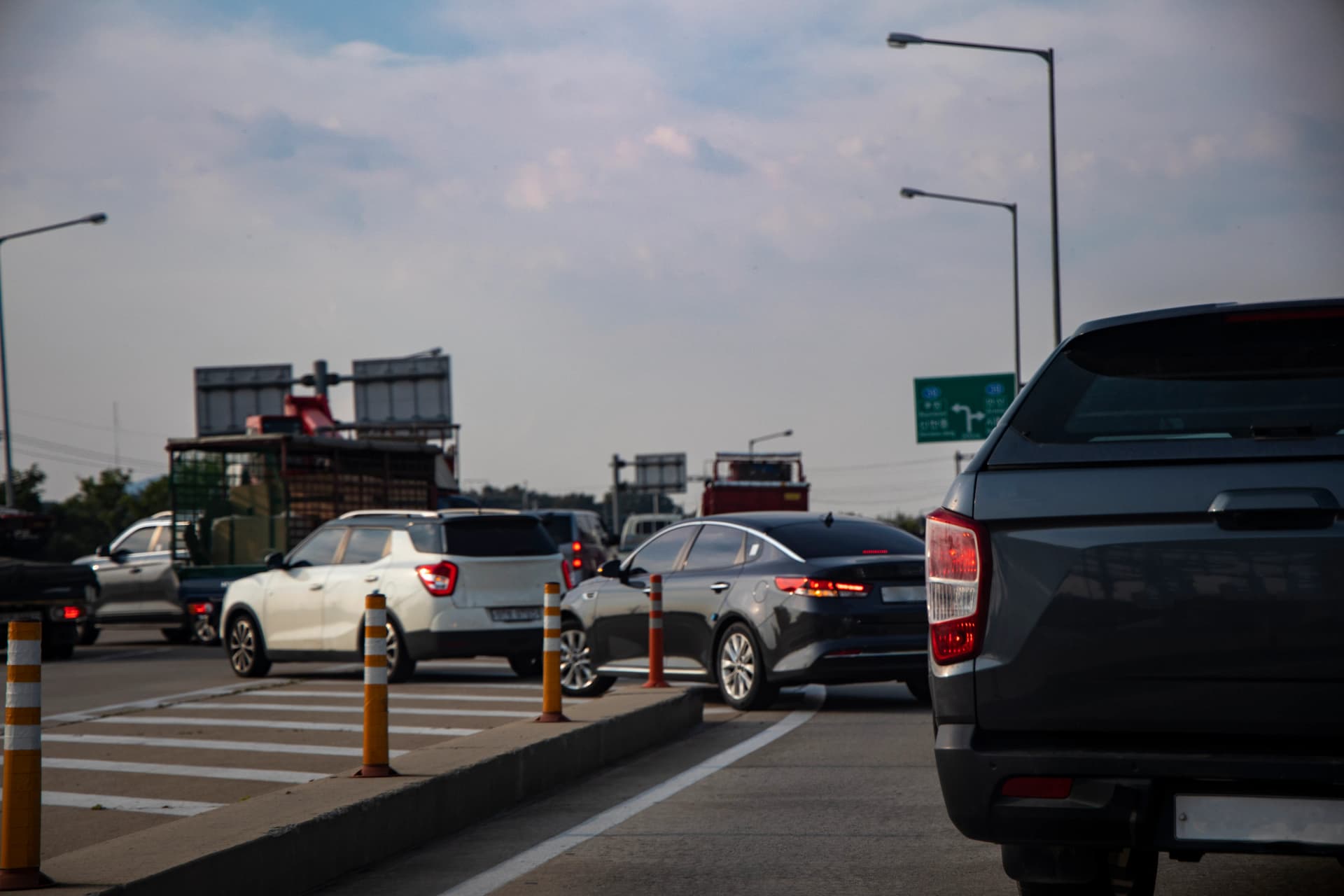
Obstruction of traffic is a crime under the Criminal Act that punishes conduct blocking or interfering with the roads people use to move about freely.
It is established when a person obstructs traffic by various means, such as damaging a land route, waterway, or bridge, or blocking passage.
This offense goes beyond mere traffic delay; the law exists to protect public safety and the life, body, and property of the public.
Even if no actual harm occurs, a situation that may pose a danger to passage can be subject to punishment.
 Object of the Conduct
▶ Land Route
Regardless of the road's size or owner, any place open to public passage is regarded as a land route.
However, vacant lots that people temporarily use as a shortcut are not included.
▶ Waterway
Narrow straits and certain routes on the high seas may also be subject to obstruction of traffic.
▶ Bridge
Both pedestrian overpasses and ordinary bridges are included, while railway bridges that form part of a track are excluded.
Manner of the Conduct
The methods of obstructing traffic fall broadly into three categories.
2. Blockage: Conduct that installs obstacles or prevents vehicles or people from passing
3. Other methods: Conduct that blocks passage by force or obstructs traffic by erecting false signs
For example, completely blocking a road without a report, or seriously hindering the movement of vehicles, constitutes a crime.
By contrast, traffic delays arising from a demonstration held within a lawfully reported scope do not fall under this offense.
For obstruction of traffic to be established, the actor must have the intent to obstruct traffic.
Clear intent is not necessarily required, however; willful (conditional) intent (dolus eventualis), in which the actor foresees the result to some degree and yet accepts it, is sufficient.
In addition, whether a public danger actually arose is not a required condition for the crime to be established.


2. Obstruction of Traffic | Types
Obstruction of traffic can be divided into several types according to the object and method of the conduct.
Representative examples include general obstruction of traffic, obstruction of specific means of transportation such as trains and vessels, and the overturning or destruction of a means of transportation.
General Obstruction of Traffic
General obstruction of traffic is provided for in Article 185 of the Criminal Act.
This refers to obstructive conduct occurring on passageways that people use in daily life, such as land routes, waterways, and bridges.
Cases that fall under this include blocking a road, damaging a bridge or waterway, or installing obstacles to make passage difficult.
It may also apply in situations such as assemblies or demonstrations.
According to [Supreme Court Decision 2018Do11408], even a lawfully reported assembly or demonstration may constitute general obstruction of traffic where it greatly exceeds the originally reported scope, or seriously violates the reporting conditions and thereby makes passage on a road impossible or markedly difficult.
However, only a participant who actually took part in the obstructive conduct, or who joined in the conspiracy, is subject to punishment.
▶ Level of Punishment
General Obstruction of Traffic (Article 185 of the Criminal Act) | Imprisonment for up to 10 years or a fine of up to 15 million won |
Obstruction of the Traffic of Trains, Vessels, and the Like
Obstruction of the traffic of trains, vessels, and the like is provided for in Article 186 of the Criminal Act and concerns cases that obstruct the operation of specific means of transportation, such as trains, streetcars, automobiles, vessels, and aircraft.
Conduct that damages a track, lighthouse, or sign, or that blocks operation by other methods, is included.
▶ Level of Punishment
Obstruction of the Traffic of Trains, Vessels, and the Like (Article 186 of the Criminal Act) | Imprisonment for a definite term of at least one year |
Overturning of Trains and the Like
This constitutes a crime targeting means of transportation such as trains, streetcars, automobiles, vessels, or aircraft.
It involves actually overturning, burying, causing the fall of, or destroying a means of transportation, and because the danger to public safety is very great, it is classified as a serious crime.
▶ Level of Punishment
Overturning of Trains and the Like (Article 187 of the Criminal Act) | Life imprisonment or imprisonment for at least three years |
3. Obstruction of Traffic | Resulting in Death or Injury

The crime of obstruction of traffic does not end with the simple act of blocking a road or waterway.
When this results in injury or death, the liability and the sentence are substantially increased.
In addition, even without intent, a person who commits the offense through negligence or an occupational mistake may be subject to punishment.
For this reason, the crime of obstruction of traffic is strictly regulated in order to protect both public safety and individual safety.
Obstruction of Traffic Causing Injury
This includes cases in which obstruction of traffic causes a vehicle accident or injures a pedestrian.
For example, this applies when a road is blocked without authorization, a vehicle cannot avoid it, and a collision results in injury.
When injury occurs, a heavier sentence applies than for ordinary obstruction of traffic.
▶ Level of Punishment
Obstruction of Traffic Causing Injury (Article 188 of the Criminal Act) | Life imprisonment or imprisonment for at least 3 years |
Obstruction of Traffic Causing Death
When obstruction of traffic results in a fatal accident, the most severe punishment applies.
For example, this applies when obstructing the operation of a vessel causes a fatal accident, or when a rollover accident on a road results in a death.
▶ Level of Punishment
Obstruction of Traffic Causing Death (Article 188 of the Criminal Act) | Life imprisonment or imprisonment for at least 5 years |
Case Recognizing Obstruction of Traffic Causing Death or Injury
An actual case shows how liability for death or injury caused by obstruction of traffic is recognized.
In [Supreme Court Decision 2014Do6206], the defendant abruptly cut in front of a vehicle in the first lane while driving in the second lane of an expressway, then came to a stop, causing the following vehicles to collide in a chain.
As a result, one person died and several others were injured, and the court found that there was a substantial causal relationship between the defendant's act of obstructing traffic and the resulting death and injuries, recognizing the crime of obstruction of traffic causing death or injury.
This precedent shows that liability may be recognized when the act of obstructing traffic is not only a direct cause but the resulting harm is ordinarily foreseeable, even where it is connected to a third party's driving habits or the traffic situation.
4. Obstruction of Traffic | Negligence and Gross Negligence
The crime of obstruction of traffic may be established not only by intent but also through negligence. In other words, even without intent, a person may be held liable if a failure to exercise due care causes obstruction of traffic.
Depending on the degree of negligence and the circumstances, it is divided into simple negligence, occupational negligence, and gross negligence, and the applicable sentence varies accordingly.
▶ Simple Negligence
▶ Occupational Negligence and Gross Negligence
For example, this includes cases in which neglecting safety measures at a construction site causes a traffic accident.
▶ Level of Punishment
Simple Negligence (Article 189 of the Criminal Act) | A fine not exceeding 10 million won |
Occupational Negligence/Gross Negligence (Article 189 of the Criminal Act) | Imprisonment without labor for up to 3 years or a fine not exceeding 20 million won |
5. Obstruction of Traffic | Attempt and Preparation or Conspiracy
The crime of obstruction of traffic may be punishable even when traffic is not actually obstructed, where the commission of the offense has begun or remains at the preparatory stage.
The law separately addresses such cases by distinguishing between attempt and preparation or conspiracy.
Attempt
An attempt refers to a case in which the commission of the offense has begun but the obstruction of traffic was not fully carried out.
For example, this applies when an obstacle is set up to block a road but the police intervene in advance, so that passage is not actually cut off.
An attempt is also subject to punishment, and so long as intent is established, the offender bears the same criminal liability as for the ordinary crime of obstruction of traffic.
▶ Attempt (Article 190 of the Criminal Act)
An attempt under Articles 185 through 187 shall be punished.
Preparation or Conspiracy
Preparation or conspiracy refers to the stage of planning or preparing in advance to commit a crime.
- Conspiracy: resolving to commit the crime and conspiring or planning with others
For example, this applies when part of a railroad track is damaged in advance to obstruct train operation, or when a plan is formed with another person to block the operation of a vessel.
Under Article 191 of the Criminal Act, even acts at this preparatory stage may be punishable by imprisonment for up to 3 years.
6. Obstruction of Traffic | Response Methods
When you are involved in the crime of obstruction of traffic, criminal liability can vary considerably depending on the circumstances, so a prompt and strategic response matters.
1. Assess the Situation Immediately
You should organize as clearly as possible whether an accident actually resulted from the obstruction of traffic, the extent of any harm, and the surrounding circumstances.
2. Securing Evidence and Defense Strategy
With respect to the occurrence of an accident, all factors, such as the circumstances of the accident, the traffic environment, and whether others were at fault, may be used in the defense strategy.
3. Negotiation and Settlement
During the settlement process, it is important to give full consideration to the other party's position and to proceed carefully without being swayed by emotion.
4. Responding at the Investigation and Trial Stages
Where the case involves an attempted offense or negligence, organizing and responding to the situation promptly can improve the chances of reducing liability and the sentence.
If You Need Assistance
The crime of obstruction of traffic can arise in a wide range of situations, from a simple mistake to intentional conduct, and the legal assessment and scope of liability vary considerably depending on the circumstances.
In particular, when accidents occur in a chain or when there is a victim, the sentence and liability for the loss can vary considerably, so a prompt and strategic response is needed.
Drawing on the practical experience accumulated through handling numerous traffic-related criminal cases, our firm comprehensively reviews the characteristics and risk factors of each case and designs an appropriate response strategy.
Through this, we assist clients with tailored strategies suited to the circumstances, from the initial response to settlement and through the investigation and trial stages.
If you are facing allegations of obstruction of traffic and need legal assistance, we encourage you to work with a criminal law attorney at any time to prepare a response strategy.