
CONTENTS
- 1. Military Sexual Assault | Concept

- - Military Sexual Assault | Severity of Punishment
- 2. Military Sexual Assault | Representative Types
- - Examining Actual Cases of Military Sexual Assault
- 3. Military Sexual Assault | Methods of Response
- - Methods of Response from the Suspect's Perspective
- - Methods of Response from the Victim's Perspective
- 4. Military Sexual Assault | Practical Guide to Evidence Collection

1. Military Sexual Assault | Concept
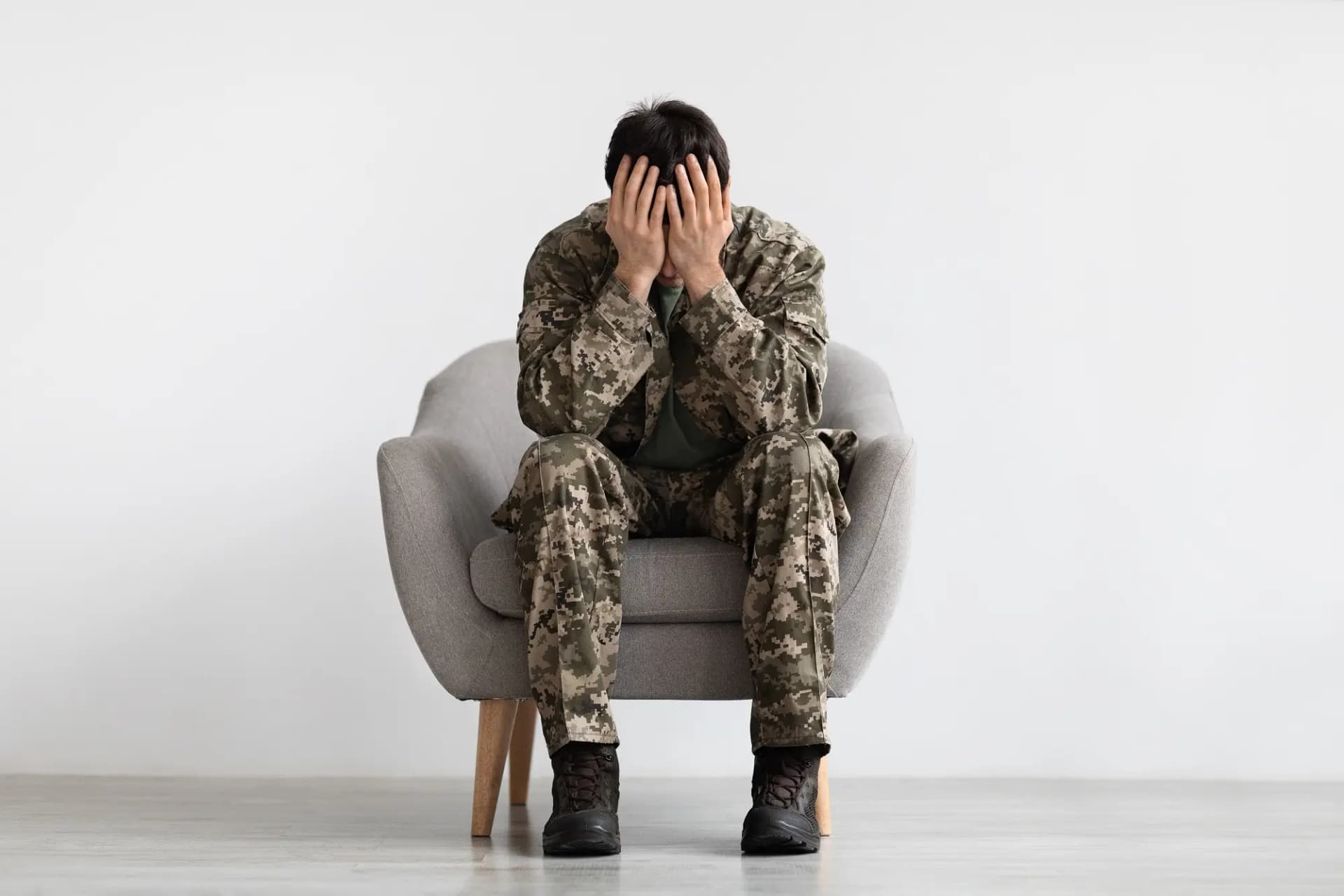
Military sexual assault refers to a service member committing the offense of sexual assault against another service member within the military.
Because the military is separated from society, incidents of military sexual assault that occur internally are sometimes not disclosed to the outside and may lead to manipulation or concealment.
Military sexual assault may also occur between members of the same sex, and because the Military Criminal Act applies to military sexual assault cases, severe punishment is imposed.
 Military Sexual Assault | Severity of Punishment
In military sexual assault cases, the Military Criminal Act provides only for imprisonment, without any fine, so an actual custodial sentence is often imposed even on first-time offenders.
The severity of punishment for military sexual assault is as follows.
| Rape, Quasi-rape | Imprisonment for a definite term of at least 5 years |
| Imitative rape | Imprisonment for a definite term of at least 3 years |
| Indecent act by compulsion | Imprisonment for a definite term of at least 1 year |


2. Military Sexual Assault | Representative Types
Military sexual assault cases are divided into the following types according to how they arise, and the scope of punishment and the method of proof may differ for each case.
-Sexual assault by deceit or coercion
-Sexual violence between members of the same sex
-Sexual assault occurring while intoxicated
-Sexual violence within the training center or barracks
Examining Actual Cases of Military Sexual Assault
Let us examine actual cases in which military sexual assault occurred.
CASE 1. Air Force Colonel Referred to Prosecution on Suspicion of Attempted Sexual Assault of a Female Officer
Air Force Colonel A was referred to the prosecution without detention on suspicion of attempting to sexually assault a female officer.
Colonel A is suspected of having attempted to sexually assault a female officer who had given him a ride to his quarters after a company dinner.
CASE 2. Female Noncommissioned Officer Found Dead After Leaving a Note Saying She Had Been Sexually Assaulted
In 2023, female noncommissioned officer B, in her forties, was found dead in a military apartment.
In her note, the deceased B disclosed that she had been sexually assaulted by a superior officer in the past.
CASE 3. Former Navy Noncommissioned Officer Admits Charge of Sexually Assaulting an Intoxicated Superior
D is suspected of dragging an intoxicated female superior to an accommodation establishment and sexually assaulting her after a company dinner while deployed to a naval unit.
D denied the facts charged, but was found guilty based on mobile phone usage records, the victim's hospital prescription records, and other evidence.
3. Military Sexual Assault | Methods of Response

Let us examine the methods of response from the perspectives of the suspect and the victim in military sexual assault cases.
Methods of Response from the Suspect's Perspective
If a person is named as the suspect in a sexual assault case within the military, a prompt and strategic defense is necessary.
A simple denial of the statement alone cannot mount a defense; active collection of evidence and proactive proof from the investigative stage are important.
✅ Step 1: Organizing the Structure of the Case and Securing Materials
-The victim's assertions and the facts are organized based on the content of the complaint.
-It is useful to organize, in the form of a journal, the relationship during military service, the frequency of conversations, changes in mutual feelings, and the atmosphere at the time.
-An attempt is made to secure the daily schedule for the day of the incident, the barracks log, the duty log, call records, mobile phone GPS records, and witness statements.
✅ Step 2: Reviewing the Legal Principles and Building a Defense Logic
-Moving beyond a simple denial, it is necessary to examine, on legal grounds, whether the relevant provisions of the Military Criminal Act apply.
-The position that the relationship was consensual or that there was no sexual contact is difficult to make persuasive if asserted without evidence.
-It is necessary to structure the reasoning as to whether a power relationship within the military organization actually influenced the sexual relations.
✅ Step 3: Preparing Sentencing Factors and a Remorseful Attitude
-Even where one is convinced that no actual offense occurred, an attitude of expressing regret for the victim's misunderstanding or displeasure may operate favorably.
-Materials regarding the suspect's diligence and service attitude, such as conduct during military service, commendation records, and the commander's assessment, are also submitted.
-Petitions from acquaintances, family, and superiors and the suspect's own letter of reflection are prepared in a specific and sincere manner.
-It is advisable that the letter of reflection also describe a concrete plan of conduct showing that there is no likelihood of reoffending.
✅ Step 4: Efforts to Reach a Settlement With the Victim
-If a settlement is possible, contact through a third party and the preparation of a written settlement agreement should be conducted carefully; excessive persuasion or repeated contact may be mistaken for intimidation and so requires caution.
✅ Step 5: Trial Strategy and Review of an Appeal
-At the trial stage, it is important to submit logical and concrete supporting evidence to the court rather than simply stating that one has been wronged.
-If an actual custodial sentence is imposed at the first instance, whether to appeal is reviewed on grounds such as improper sentencing, mistake of fact, and procedural illegality.
-At the appellate stage, a strategy of raising the possibility of a reduced sentence through the submission of new evidence, reinforcement of the letter of reflection, and securing additional petitions is required.
Methods of Response from the Victim's Perspective
Even after an incident occurs, victims of military sexual assault often hesitate to report it due to burdens such as organizational culture, fear of retaliation, and secondary harm.
However, in order to receive legal protection, the promptness of the initial response is key, and a strategic, step-by-step approach is needed throughout the subsequent investigative, trial, and civil proceedings.
✅ Step 1: Deciding to File a Complaint and Organizing the Facts of the Harm
-The first thing to do is to organize, as objectively as possible, the facts of the harm one has suffered.
-One records, in chronological order, when, where, by whom, and in what manner the harm was inflicted.
-If it is difficult to prepare the complaint oneself, one should entrust the filing of the complaint to a legal professional, and it is important to organize the content of the complaint in line with the legal structure.
-A written statement describing mental suffering such as sexual humiliation, fear, and distress can have a significant impact at the early investigative stage.
✅ Step 2: Securing Key Evidence and Using Digital Forensics
-Text messages, KakaoTalk messages, call recordings, and social media content exchanged with the perpetrator can be preserved as legal evidence through digital forensics procedures.
-Clothing worn at the time of the harm, injuries remaining on the body, hospital records, and psychiatric counseling records are also collected as evidence.
-An attempt should also be made to secure, in parallel, materials such as CCTV footage near the scene of the incident, barracks entry records, and the barracks log.
✅ Step 3: Responding to the Investigative Process and Requesting Protective Measures
-Once the military police investigation begins after the report, the victim goes through a process of repeating statements several times.
-At this point, submitting a written opinion to the investigative agency through counsel helps secure the credibility and legitimacy of the victim's statements.
-Formal victim protection measures may be requested through the Ministry of National Defense sexual violence counseling center, the Center for Military Human Rights, the military hospital counseling office, and the like, and a request for personal protection is also possible.
✅ Step 4: Participating in the Trial and Responding to the Sentencing Procedure
-Once the trial begins, the victim may appear as a witness on the trial date or, if necessary, may have counsel appear on the complainant's behalf.
-To prevent unnecessary secondary harm, requests such as the installation of a screen, a closed trial, and the submission of a written statement may be made.
-On the sentencing date as well, it is possible for counsel to hear the sentencing outcome on the victim's behalf and report it, without the victim attending in person.
✅ Step 5: Filing a Civil Claim for Damages Against the Perpetrator
-Separately from criminal punishment, the victim may file a claim for damages against the perpetrator.
-If there is a criminal conviction, proving civil consolation money becomes very advantageous.
-Damages include treatment costs, consolation money, and mental harm, and the circumstances at the time of the harm, treatment records, medical certificates, and written statements become important materials.
✅ Step 6: Determining Whether to Settle and Reviewing the Risk of a False Accusation Response
-Situations may arise in which some on the suspect's side try to coax or threaten the victim under the pretext of settlement money. In such cases, one should not negotiate alone but must consult with a professional.
-Even if a settlement is reached, criminal punishment itself is not exempted, but whether to settle should be decided based on clear legal advice.
-Conversely, where the suspect's side threatens to file a counter-complaint for false accusation, this too is a common means of secondary harm, so one should not be intimidated and should focus on legitimately proving the harm.
4. Military Sexual Assault | Practical Guide to Evidence Collection
Establishing the substantive truth in a military sexual assault case is determined by securing evidence at an early stage.
Accordingly, the following evidence may operate favorably from the perspectives of both the victim and the suspect.
▶Evidence to be secured from the suspect's perspective
-Messages and conversation logs showing a consensual atmosphere with the victim or ordinary everyday conversations
-The victim's preemptive contact, external statements, conduct, and the like after the incident
-Statements of third parties within the unit at the time of the incident and witness testimony
▶Evidence to be secured from the victim's perspective
-KakaoTalk messages, recording files, and call records immediately after the sexual assault
-Counseling records within the unit, medical records, and hospital opinions after the incident
-CCTV at the time of the incident, barracks location records, the guard duty log, and the like
The firm forms a task force response team consisting of attorneys experienced in military matters, attorneys experienced in sex crime cases, and specialists in evidence investigation and digital forensics to provide a defense strategy tailored to the client's situation.
If you have any inquiries regarding military sexual assault, please book a legal consultation.