




CONTENTS
- 1. Regional Housing Association | Definition

- - Differences from Improvement Projects
- 2. Regional Housing Association | Membership Eligibility Requirements
- - Home Ownership Requirement
- - Residency Requirement
- - Requirement Prohibiting Duplicate Membership
- - Exceptions
- 3. Regional Housing Association | Project Procedures
- - Recruitment Report
- - Association Establishment Authorization
- - Approval of the Project Plan
- - Commencement of Construction and Unit Sales
- - Liquidation and Dissolution
- - Stage-by-Stage Risks
- 4. Regional Housing Association | Points to Note When Joining
- - Major Cases of Harm
- 5. Regional Housing Association | How to Withdraw
- - Basic Procedure for Withdrawal from the Association
- - Lawsuit for Return of Unjust Enrichment
- - Lawsuit for Refund of Paid Amounts
- 6. Regional Housing Association | Checklist
- - Support System of Construction-Law Specialist Attorneys

1. Regional Housing Association | Definition
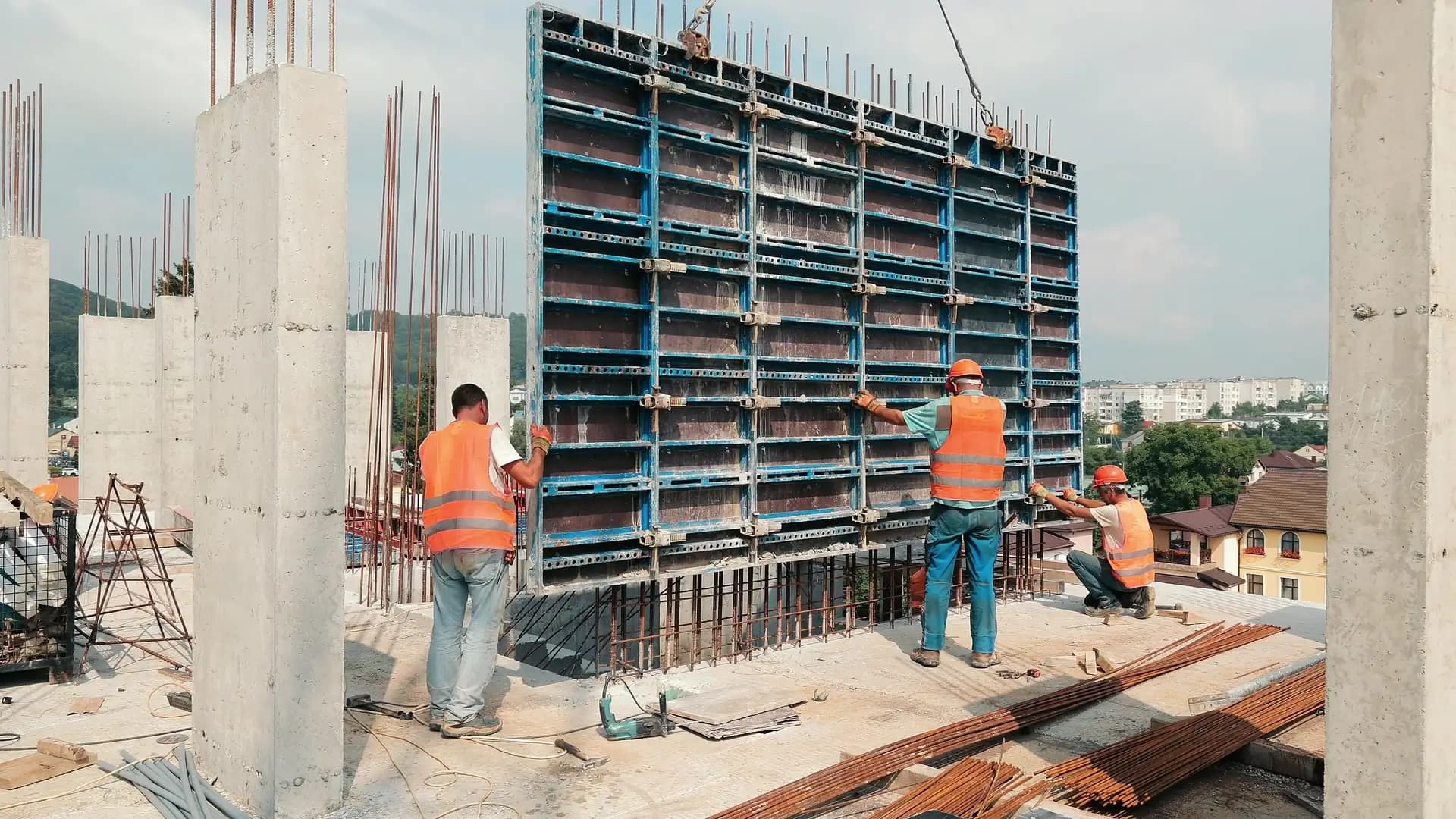
A regional housing association refers to an association formed by a number of members residing in a designated area for the purpose of securing housing.
It is a system under which housing is supplied to qualified members—heads of households who either own no home or own a single dwelling with an exclusive residential floor area of 85 square meters or less—regardless of whether they hold a housing subscription savings account, provided that they meet the prescribed eligibility requirements.
 Differences from Improvement Projects
A regional housing project led by a regional housing association is structured such that the recruiting entity begins by recruiting members before securing ownership of the land at the planned project site.
Under this approach, land is secured from the early stages of the project on the basis of members' contributions, after which the licensing/permitting and construction processes proceed.
By contrast, in improvement projects (redevelopment and reconstruction), the association is formed with the landowners or building owners of the relevant zone at its center, and the project generally proceeds with ownership of the land or buildings already secured.
As a result, a regional housing association carries relatively greater project risk, and there is also the possibility of prolongation or collapse of the project due to delays in securing land and obtaining licenses and permits.


2. Regional Housing Association | Membership Eligibility Requirements
To become a member of a regional housing association, one must satisfy all three requirements set out in Article 21(1)1 of the Enforcement Decree of the Housing Act.
The following are the detailed requirements that constitute membership eligibility.
Home Ownership Requirement
From the date of application for authorization to establish the association (※ for a speculative overheating zone, measured from one year prior) until the date on which occupancy of the relevant association housing becomes possible, one of the following must be satisfied.
: All household members, including the head of the household, must own no housing, and the applicant must be the head of the household.
※ Household members include a spouse not registered on the resident registration record and that spouse's household.
∙ Head of a household owning one home of 85㎡ or less
: The applicant may be the head of a household in which only one member, including the head of the household, owns a single dwelling with an exclusive residential floor area of 85㎡ or less.
※ Here, 'home ownership' also includes the 'status of a person selected in a housing sale lottery' under Article 2(7) of the Regulations on Housing Supply, so a person who has been selected or who has succeeded to such status should take note.
Residency Requirement
As of the date of application for authorization to establish the association, the applicant must be a person who has resided continuously for at least six months in the Si/Gun/Gu to which the relevant association belongs, among the following regions.
2) Daejeon Metropolitan City, Chungcheongnam-do, and Sejong Special Self-Governing City
3) Chungcheongbuk-do
4) Gwangju Metropolitan City and Jeollanam-do
5) Jeonbuk Special Self-Governing Province
6) Daegu Metropolitan City and Gyeongsangbuk-do
7) Busan Metropolitan City, Ulsan Metropolitan City, and Gyeongsangnam-do
8) Gangwon Special Self-Governing Province
9) Jeju Special Self-Governing Province
※ This regional condition varies according to the specific administrative district in which the association is established, so the recruitment notice for the relevant association must be checked without fail.
Requirement Prohibiting Duplicate Membership
Neither the applicant nor the applicant's spouse may fall under any of the following.
2. A member of a workplace housing association
※ However, this also includes a spouse who is not registered as part of the household on the resident registration record.
※ If this requirement is violated, membership eligibility will not be recognized, and this may lead to subsequent disputes over termination of the sale contract and refunds.
Exceptions
A person who has succeeded to the status of a member upon the member's death may become a member regardless of the above requirements.
In addition, even where there is a temporary loss of head-of-household status due to reasons such as work, study abroad, medical treatment, or marriage, membership eligibility is maintained if the Mayor/County Governor/Head of the Gu so recognizes (Article 21(2) of the Enforcement Decree of the Housing Act).
3. Regional Housing Association | Project Procedures
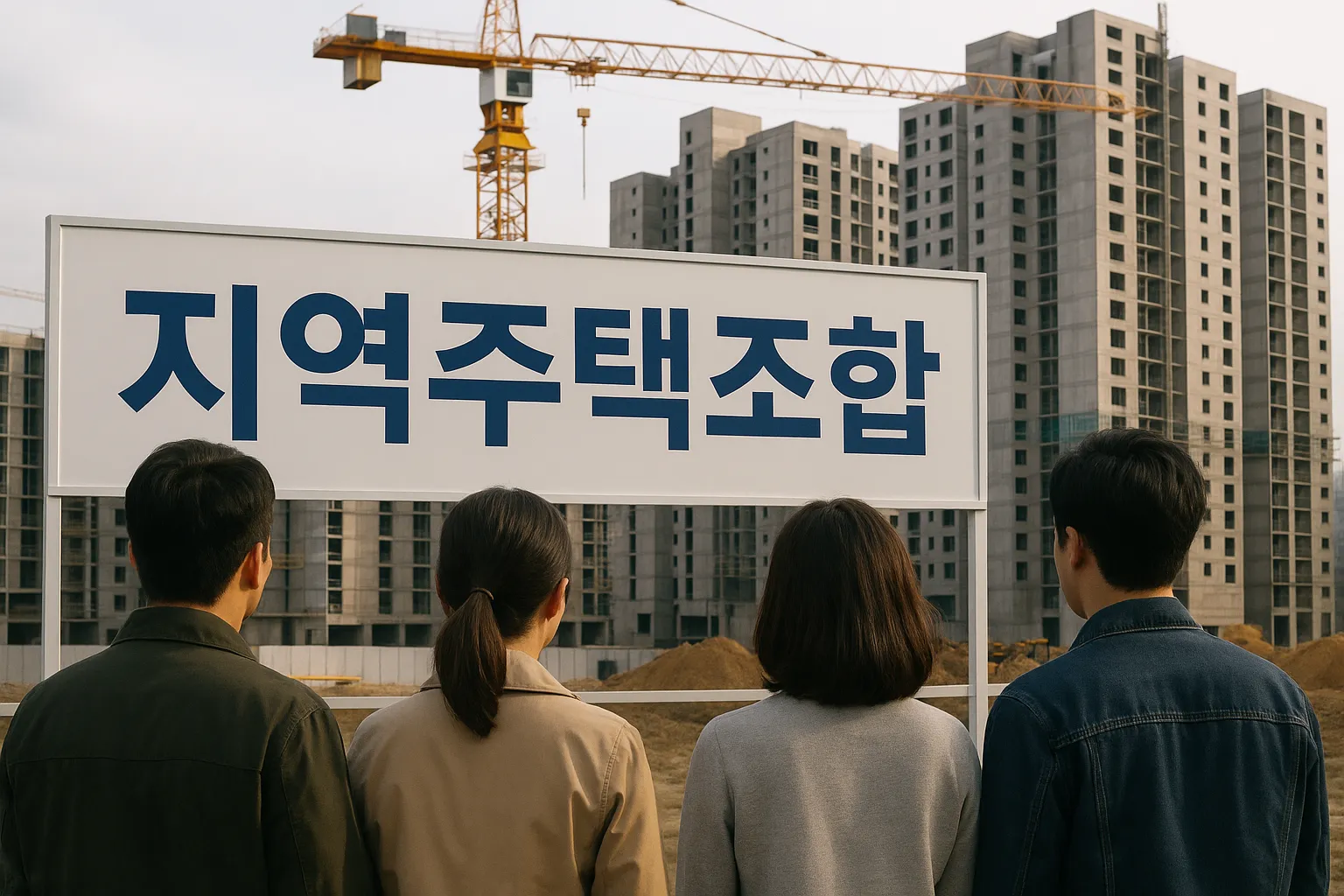
A regional housing association follows a series of staged procedures as set out below.
Recruitment of members → Establishment of the association → Approval of the project plan → Commencement of construction and unit sales → Liquidation and dissolution
Whether this process moves forward depends on the level of land secured, and members need to carefully examine whether the legal requirements at each stage have been met.
Recruitment Report
In order to file a recruitment report, the right to use at least 50% of the land planned for housing construction must have been secured.
- Securing the right to use at least 50% of the land planned for housing construction
(sale and purchase agreement, letter of consent to use, etc.)
∙ Procedure
- Submission of a 'member recruitment report' to the competent local government (Si/Gun/Gu office)
- After approval, members may be recruited from the general public
In this regard, the proportion of land secured requires substantive contracts, not merely a nominal figure.
Association Establishment Authorization
To formally establish an association, the requirements for securing the right to use and ownership must be satisfied, and the association must be composed of at least a certain number of members.
- At least 20 members
- Securing members for at least 50% of the total number of units
- Securing the right to use at least 80% of the land for housing construction / securing ownership of at least 15%
∙ Procedure
1. Holding the inaugural general meeting and enacting the association's bylaws
2. Electing the association president and officers
3. Applying for establishment authorization
= authorization by the competent local government
Until establishment authorization is granted, the entity remains a mere preparatory committee with limited project authority.
Approval of the Project Plan
After the association is established, the procedure for approval of the project plan for the actual construction project is commenced.
- Securing ownership of at least 95% of the land for housing construction
(for the remaining land of less than 5%, a demand for sale may be made under Article 16 of the Housing Act)
The documents that must be submitted in this regard are as follows.
- Housing layout plan and floor plans
- Design documents for ancillary and welfare facilities
- Site preparation works plan, etc.
An application for approval of the project plan may be filed with the competent Mayor/County Governor/Head of the Gu, and approval is granted after consultation with the relevant departments and related agencies.
However, after approval, additional individual licensing and permitting procedures, such as review of the sale price and environmental impact assessment, may be required.
Commencement of Construction and Unit Sales
After obtaining approval of the project plan, the association enters into a contract with the construction company and commences construction, and the priority sale to members and the general sale proceed together.
- Completion of approval of the project plan
- Report on commencement of construction and building permit
- Selection of the construction company and conclusion of the construction contract
∙ Unit Sales
- Priority supply to members
- Remaining units may be sold to the general public
In this regard, when entering into a contract with the construction company, matters such as increases in construction costs, conditions for termination of the contract, and liability for defect repairs must be reviewed without fail.
In addition, internal agreement within the association on the criteria for distributing the proceeds of the unit sales is also important.
Liquidation and Dissolution
Once construction is completed and occupancy is concluded, the association undergoes liquidation procedures and is then dissolved.
2. Settlement of remaining funds and holding of the liquidation general meeting
3. Report of dissolution of the association
In this regard, accounting-related disputes may arise during the liquidation process, such as in the refund of remaining funds and the settlement of operating expenses.
Accordingly, transparent accounting throughout the process is essential.
Moreover, because claims for defect repairs and other disputes may still arise even after the association is dissolved, legal review is essential.
Stage-by-Stage Risks
Stage | Key Requirements | Points to Note |
Recruitment Report | Securing the right to use 50% | Caution regarding recruitment of unqualified persons |
Association Establishment Authorization | - Right to use 80% - Ownership 15% - At least 20 members | Prohibition of false composition of members |
Approval of the Project Plan | Securing 95% ownership | Possibility of licensing and permitting delays |
Commencement of Construction and Unit Sales | Construction company contract and commencement of construction | Disputes over construction cost increases |
Liquidation and Dissolution | Occupancy and settlement | Accounting settlement and disputes over remaining funds |
4. Regional Housing Association | Points to Note When Joining

Although a regional housing association is a system aimed at 'securing one's own home,' particular caution is required because members are recruited at the early stage of the project, while matters such as securing the land and the construction plan have not yet been finalized.
The following are matters that must be carefully noted before joining as a member.
(in particular, the building/unit number and the sale price are finalized only after project approval)
▷ The construction company appearing in promotional materials may not be the actual construction company
▷ You must check without fail whether the contract and the association's bylaws contain any unfavorable provisions
▷ You must check whether the conditions for refunding the admission fee and contributions are clearly stated
▷ You must directly review the status of the land use rights and ownership secured
▷ Funds must be managed in an account held in the name of the trust company
(if the funds are held in the name of the preparatory committee or an individual, there is a risk of misappropriation)
▷ Once you join the association, it is difficult to withdraw easily
▷ If the project collapses, the members bear the losses directly
▷ Design changes and delays in licensing and permitting frequently occur during the project
(as a result, contributions may increase or the schedule may be delayed)
▷ Note that the plans shown in advertisements may be changed
Major Cases of Harm
Cases of false or exaggerated advertising based on information that has not been finalized
- Misleading the public into believing that the construction company is confirmed, such as by using the logo of a well-known construction company
- Exaggerated advertising suggesting that the entire complex has already been purchased
(when in reality only the down payment has been paid)
Cases of recruiting members at a location where the project is impossible from the outset
- Presenting land on which construction is impossible under the urban planning as the proposed association site
- Recruiting members by including land that cannot be purchased, such as state- or publicly-owned land, cultural heritage protection zones, and improvement zones
Cases of illegality and violations in the recruitment of members
- Not responding to requests to rescind or terminate the contract after it has been concluded
- Inducing the conclusion of contracts by presenting a false schedule and exaggerated project progress
- Inducing the conclusion of contracts through false explanations that designation of building/unit numbers is possible
5. Regional Housing Association | How to Withdraw

Because of their lengthy project periods, frequent changes to the project, and delays in securing land, it is not uncommon for individual members of a regional housing association to consider voluntary withdrawal.
However, withdrawal from the association is not accomplished by mere notice, and caution is required because disputes relating to the refund of paid amounts or to damages may arise after withdrawal.
Basic Procedure for Withdrawal from the Association
∙ The association's acceptance of the withdrawal or its notification
∙ Claim for the refund of the remaining settlement amount or paid amounts
∙ The criteria for processing withdrawal differ depending on the association's bylaws or the resolution of the general meeting
※ Because some associations refuse withdrawal or do not refund paid amounts, legal remedies through the filing of a lawsuit may be pursued in parallel.
Lawsuit for Return of Unjust Enrichment
If, after withdrawal from the association, the association does not refund all or part of the paid amounts, one may respond through a claim for return of unjust enrichment filed with the court.
This applies to a situation in which a member has not obtained any substantive benefit from the progress of the association's project yet has been unable to recover the paid amounts.
Requirements | ① The withdrawal from the association was carried out lawfully |
② The member did not substantively obtain any benefit from the association's project | |
③ The association is in a state of unjust enrichment by holding the member's funds | |
Principal Arguments | - The unavoidability of withdrawal due to the uncertainty or prolongation of the project's realization |
- Lack of transparency in the association's operation or failure to disclose information | |
- Infringement of equity among members |
There are cases in which the court, comprehensively considering the association's fault and the need to protect members, has rendered a judgment ordering the refund of a portion of the amount.
Lawsuit for Refund of Paid Amounts
This is a lawsuit to recover contributions, charges, and the like already paid to the association after the loss of member status or after voluntary withdrawal.
Even where the association's bylaws contain a non-refundable provision, there are precedents recognizing the refund of a portion where the association's fault is clear; however, refunds are not guaranteed in all cases.
Subject of the Claim | Member contributions |
Amounts paid in advance, such as business operating expenses and development costs | |
Strategy | Proving the association's fault, such as project delay and false advertising |
Arguing the invalidity of unfair provisions in the association's bylaws |
In this regard, the following evidentiary materials may be required.
∙ The association's bylaws and articles of association
∙ Notice of withdrawal or materials evidencing the loss of member status
6. Regional Housing Association | Checklist
A regional housing association project requires thorough verification at each stage.
The key matters should be checked so that the procedures can proceed safely.
Stage | Item to Check | Key Points |
Member Recruitment | Verification of member eligibility | Verification of no home ownership or ownership of one home of 85㎡ or less |
Securing land use rights | Whether the right to use at least 50% has been secured | |
Verification of promotional content | False/exaggerated advertising and whether the construction company is confirmed | |
Verification of the contract and bylaws | Verification of unfavorable provisions and refund conditions | |
Verification of fund management | Management in an account held in the name of the trust company is essential | |
Establishment of the Association | Securing land | Securing at least 80% use rights and at least 15% ownership |
Composition of members and documents | At least 20 members, with documents complete | |
Approval of the Project Plan | Securing land ownership | Securing at least 95% ownership is required |
Submission of the project plan | Verification of document accuracy and the progress of licensing and permitting | |
Commencement of Construction and Unit Sales | Report on commencement of construction and contract | Review of the start of construction and the construction company contract |
Verification of sale conditions | Designation of building/unit numbers and finalization of the sale price | |
Verification of construction progress | Verification of construction progress and fund transparency | |
Liquidation and Dissolution | Financial settlement | Verification of the settlement of remaining assets, liabilities, and contributions |
Completion of dissolution procedures | Legal report of dissolution and compliance with procedures |
Support System of Construction-Law Specialist Attorneys
This law firm has on its roster a number of construction-law specialist attorneys registered with the Korean Bar Association, as well as specialist attorneys with an average of more than 10 years of experience.
Accordingly, it provides professional and systematic legal support for a wide range of issues relating to regional housing associations, including construction, contracts, disputes, and licensing and permitting.
If you need assistance with the procedures for joining or withdrawing from a regional housing association, please feel free to request the assistance of a construction-law specialist attorney at any time.


Watch related video content
for this case study.

What are the things you need to know before joining or leaving a local housing association?










