
CONTENTS
- 1. Military Criminal Act | The Concept and Purpose of the Military Criminal Act

- - The Characteristics of the Military Criminal Act That Differ From the General Criminal Act
- 2. Military Criminal Act | Main Crime Types Under the Military Criminal Act and Practical Responses
- - Desertion
- - Insult of a Superior Officer and Assault of a Superior Officer
- - Insubordination
- - Military Supplies Offenses
- 3. Military Criminal Act | Response Strategies by Procedural Stage When a Case Arises
- - Practical Response Tips: Preparation Methods You Can Handle on Your Own
- - Military Criminal Act Institutional Reforms
- 4. Military Criminal Act | Why a Military Law Specialist Attorney Is Needed
- - Military Criminal Cases, Defense Points

1. Military Criminal Act | The Concept and Purpose of the Military Criminal Act
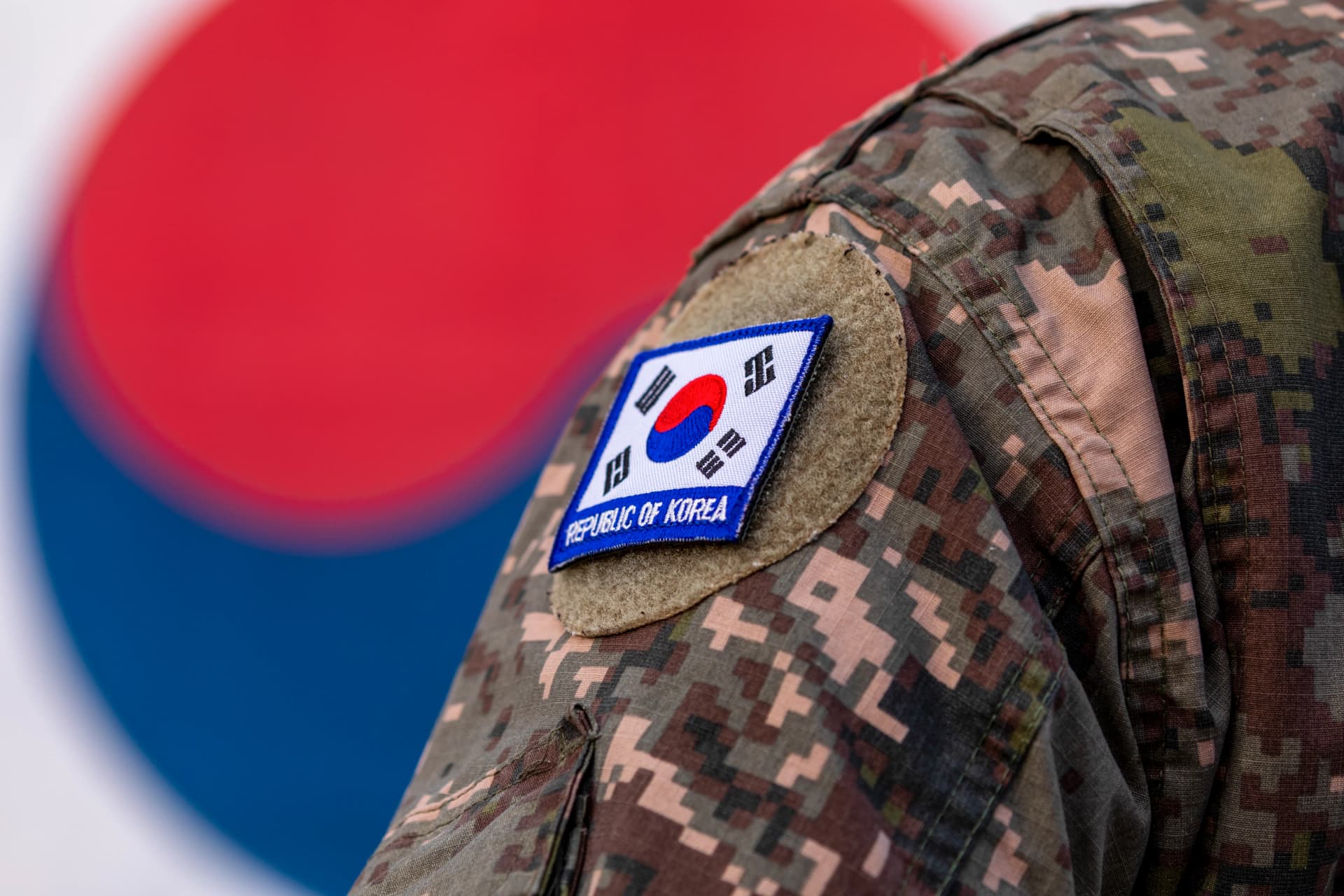
The Military Criminal Act, a law enacted in 1962, applies to officers, noncommissioned officers, enlisted personnel, civilian military employees, military school students, and others who serve in or are closely connected with the military.
Because it does not stop at simply punishing crimes but also aims to maintain the order, chain of command, and combat capability of the military, it has a distinctive character that sets it apart from the general Criminal Act.
▶Persons subject to the Act
-Active-duty service members: officers, warrant officers, noncommissioned officers, enlisted personnel, and the like
-Civilian military employees: public officials affiliated with the military
-Cadets and military school students
-Mobilized reserve forces and the like: reservists, supplementary service members, labor service members, and others serving in time of war or incident
 The Characteristics of the Military Criminal Act That Differ From the General Criminal Act
The Military Criminal Act has the following special characteristics that distinguish it from the general Criminal Act.
First, it separately defines crime types unique to the military.
The Military Criminal Act defines as crimes certain internal military acts that are not treated as crimes in general society.
These are called "purely military crimes," and they are independent offenses that apply only to the military in order to maintain the discipline and chain of command of the military organization.
Representative types of purely military crimes are as follows.
-The crime of desertion
-The crime of insubordination
Second, the level of punishment is higher than under the general Criminal Act.
Because the Military Criminal Act aims to maintain military order and combat capability, it tends to punish the same type of crime more heavily than the general Criminal Act.
In fact, the statutory penalties prescribed in the Military Criminal Act are mostly imprisonment with labor, imprisonment without labor, or heavier, and in some cases even the death penalty is prescribed.
For example, assault in the civilian context may be punished with a fine, but assault against a superior within the military is subject to aggravated punishment of imprisonment or heavier.
Third, the crime types prescribed in the specific provisions of the Military Criminal Act are very diverse and strongly military in character.
The specific provisions of the Military Criminal Act prescribe crimes such as the following.
-Abuse of command authority, and a commander's surrender or flight
-Desertion, abandonment of post, and neglect of military duty
-Insubordination, violation of orders, and disgracing
-Violent crimes such as assault, intimidation, bodily injury, and murder
-Embezzlement, destruction, and abandonment of military supplies
-Plunder, prisoner-of-war-related crimes, and the like
In this way, the Military Criminal Act systematically classifies crime types around the military character that is directly connected to national security.
Fourth, an important characteristic is that crimes by service members are tried in military courts.
Crimes committed by service members and civilian military employees are, in principle, under the jurisdiction of military courts.
See More


2. Military Criminal Act | Main Crime Types Under the Military Criminal Act and Practical Responses
The following looks at the main crime types under the Military Criminal Act, along with their elements and key issues.
Representatively, this examines the elements and practical responses for the crime of desertion, the crimes of insulting and assaulting a superior, the crime of insubordination, and military supplies crimes.
Desertion
Desertion is the most frequent type of offense under the Military Criminal Act, and it is commonly referred to as going AWOL.
-In time of war, civil disturbance, or in a martial law area: imprisonment for a definite term of not less than 5 years
-In other cases: imprisonment for not less than 1 year and not more than 10 years
-Where a person leaves the unit or duty and fails to return to the unit or duty without justifiable grounds, the penalty is also death, life imprisonment, or imprisonment for not less than 10 years
▶You should secure provable justifiable grounds and prepare specific supporting materials explaining the circumstances of the departure.
Insult of a Superior Officer and Assault of a Superior Officer
The offense of insulting a superior officer involves contemptuous expressions, words, or conduct toward a superior, while the offense of assault involves physical contact.
Insulting a superior officer and assault are acts that seriously violate military discipline, and because they are grave matters that shake the order and hierarchy of the military, they are subject to strict punishment.
Where a person assaults or threatens a superior, the matter is a serious one that may carry imprisonment for not less than 1 year and not more than 10 years in the presence of the enemy, and imprisonment for not more than 5 years in other cases.
▶Preparing a statement of circumstances and a letter of reflection, reaching a settlement with the affected superior, and securing a statement requesting leniency are important.
▶Analyzing the circumstances, location, and context of the remarks, and reviewing the possibility of denying intent to insult, are necessary.
Insubordination
The offense of insubordination is established where a person defies or refuses to obey the order of a superior.
-Whether the order is unlawful: where an order is clearly unlawful, there is no duty to obey
-The manner of disobedience: a distinction is drawn between mere noncompliance and active resistance
If an order is unlawful or improper, refusing it may not be punishable as insubordination.
▶If the conduct amounts to improper abuse of authority, the legitimacy and lawfulness of the order can be raised as an issue to contest its unlawfulness.
▶By documenting the circumstances before and after the refusal of the order through recordings, text messages, records of work instructions, and the like, and by securing statements from a senior or colleague who was present at the scene, you can effectively prove that the resistance was based on justifiable grounds.
Military Supplies Offenses
Offenses such as the embezzlement, destruction, or abandonment of military supplies are treated as serious crimes because they are directly connected to national security and the efficiency of military operations.
-Embezzlement of military supplies: where military equipment or materials are diverted for personal use
-Abandonment of military supplies: including cases where items are lost through intent or negligence
3. Military Criminal Act | Response Strategies by Procedural Stage When a Case Arises
Unlike ordinary criminal procedure, a case involving a violation of the Military Criminal Act proceeds in the order of military police → military prosecution → military court → disciplinary committee.
The key response strategies at each stage are as follows.
1. Military police investigation stage
-Caution before writing a statement: when asked to write it by hand, you may temporarily hold off by saying you will write it after careful consideration
-Be wary of questions designed to induce a confession: be cautious of suggestive phrasing such as "it all ends if you just admit everything"
-Request a copy of the investigation record: always request and keep a copy of the statement
2. Referral to military prosecution and determination of whether to indict
-Submission of materials addressing the suspicion: a letter of reflection, a written statement, and a superior's petition for leniency may be submitted
-Legal review of the elements of the crime: an opinion statement may be submitted after legally reviewing whether each element is met
3. Military court trial stage
-A request for witness examination is possible: a witness or victim may be summoned to confirm the facts
4. Disciplinary response upon a final conviction
-Preparation of materials for mitigating the disciplinary action: unit reputation, service attitude, a commander's petition, and the like may be submitted
-Participation in the disciplinary proceedings: you may appear before the disciplinary committee and present your case
Practical Response Tips: Preparation Methods You Can Handle on Your Own
Item | Practical Response Points |
| Letter of reflection | Acknowledge the facts of the offense → genuine reflection → promise to prevent recurrence → assessment by those around you |
| Written statement | Clearly set out the circumstances of the case → minimize statements that are disadvantageous → exclude emotionally charged expressions |
| Settlement agreement | The victim's signature and seal are required → expressly state the phrase "does not wish for punishment" |
| Petition | Secure a handwritten petition from a superior or a senior → include a reference note for the personnel record |
| Service evaluation | Organize a history of unit commendations, awards, and exemplary cases, and attach supporting certificates |
Military Criminal Act Institutional Reforms
A military court is a special court that adjudicates crimes committed by military personnel, and it is distinguished from ordinary courts in that it belongs not to the judiciary but to the Ministry of National Defense.
This means that the military court structurally carries the limitation of being subject to the influence of the executive branch, and questions about its independence have therefore been raised over a long period.
In fact, in the past, there were the convening authority system and the lay judge system, under which the commander of the unit where the military court was established could be directly involved in the military trial, allowing the commander to decide the appointment and designation of military judges and military prosecutors.
This was pointed out as a major cause of infringement on the neutrality and independence of trials.
In addition, there has been steady criticism that, unlike ordinary criminal courts, military court trials are conducted within the closed structure of the military, so the defense rights of the defendant, who is a service member, are not sufficiently guaranteed.
To improve these structural problems, the High Military Court was abolished in 2022.
This amendment is regarded as an institutional reform aimed at substantively guaranteeing the human rights of service members in peacetime and at securing the independence and fairness of military trials.
Together with the abolition of the High Military Court, the main amended contents are reviewed below.
1. Cases such as sexual offenses are transferred to civilian courts
2. Abolition of the High Military Court and transfer of appellate review to civilian courts
3. Integration of the military court structure and reorganization by region
4. Abolition of the ordinary prosecution division and reorganization of the military prosecution command system
5. Composition of judicial panels centered on military judges
4. Military Criminal Act | Why a Military Law Specialist Attorney Is Needed
A Military Criminal Act case unfolds within a special structure that is entirely different from an ordinary criminal case.
This is because, within a closed organizational culture, a chain of command based on obedience to superiors, and a military justice system separated from the civilian system, the investigation, indictment, and trial procedures proceed relatively quickly.
Accordingly, the assistance of defense counsel specialized in the Military Criminal Act is absolutely important from the early stage of the case.
A Military Criminal Act case usually begins with an investigation by the military police.
The content of statements made at this point is used as key evidence in the subsequent military prosecution indictment and military court trial, and it effectively determines the direction of the case.
If a guilty verdict is rendered in a Military Criminal Act case, serious disadvantages may arise that go beyond mere criminal punishment, such as delayed discharge, ineligibility for promotion, a disciplinary record, and registration of a criminal record, affecting the service member's entire military service and social life.
Military Criminal Cases, Defense Points
A case involving a violation of the Military Criminal Act requires an entirely different approach from an ordinary criminal case because of the military's distinctive organizational culture and justice system.
For a service member with the status of a suspect to exercise the right of defense effectively, an accurate understanding of military justice procedures and a consistent response from the initial statement onward are essential.
The following are the main defense points that must be considered in practice in cases involving a violation of the Military Criminal Act.
This firm has organized a task force of military law specialist attorneys who can respond to both military courts and civilian courts at the same time, and it does its utmost to protect the rights and interests of clients.
Item | Strategic Response Points |
1. Response to initial statements in the case | -Caution regarding questions designed to induce a confession |
2. Guaranteeing the suspect's right of defense | -Guiding the review and correction of the military police investigation statement |
3. Analysis of the elements of the crime | -Legal analysis of whether the elements are met |
4. Organizing sentencing factors | -Submission of a letter of reflection, unit reputation, service attitude, and the like |
5. Protecting the military service record and career | -Proposing measures to minimize disadvantages after the case concludes |