
CONTENTS
- 1. Financial Statement Review and Audit Inspection | Concept and Differences

- - Financial Statement Review
- - Financial Statement Audit Inspection
- - Comparison of Differences
- 2. Financial Statement Review and Audit Inspection | Review Procedure
- - Selection of Review Subjects
- - Conducting the Review
- - Correction Recommendation and Handling of Results
- - Measures Based on the Review Results
- 3. Financial Statement Review and Audit Inspection | Audit Inspection Procedure
- - Cases Subject to an Audit Inspection
- - Commencement of the Audit Inspection and On-Site Investigation
- - Explanation and Question-and-Answer During the Audit Inspection
- - Handling of the Audit Inspection Results and Measures
- 4. Financial Statement Review and Audit Inspection | Types and Levels of Audit Inspection Measures
- - Types of Audit Inspection Measures
- - Criteria for Determining the Level of Measures
- - Criteria for Determining Intent
- - Criteria for Determining Gross Negligence
- - Limitation Period for Sanctions
- 5. Review and Audit Oversight of Financial Statements | Response Strategies for Companies and Auditors
- - Advance Response
- - Response by Written Explanation
- - Response to Attendance at the Audit Oversight Committee
- - Response After Sanctions
- 6. Review and Audit Oversight of Financial Statements | Support System

1. Financial Statement Review and Audit Inspection | Concept and Differences

Financial statement review and audit inspection is a system for examining whether a company's financial statements conform to accounting standards.
A 'review' is conducted in cases such as those involving minor errors or risks, while an 'audit inspection' is conducted where there is a possibility of a serious violation.
 Financial Statement Review
A financial statement review is a system in which the supervisory authority directly examines whether there is a violation of accounting treatment standards in a company's financial statements, and recommends a correction of the financial statements where it determines that there is a problem.
In the past, audit inspections were conducted primarily on the basis of the external auditor's audit report, but since 2018, direct supervision of the financial statements themselves has become possible through reviews.
Reviews are carried out through sampling or on a suspicion basis, and companies with a high possibility of a violation or with a past history of error corrections, among others, become the subjects.
Where the violation is serious, or where the company does not implement the correction recommendation, the matter is converted to an audit inspection, and additional investigation and measures are carried out.
Financial Statement Audit Inspection
A financial statement audit inspection is a procedure that, where a violation is found, identifies where responsibility lies and imposes sanctions on the company and the external auditor.
Where the violation is intentional or of significant materiality, heavy sanctions, such as a penalty surcharge, suspension of duties, or notification to the prosecutors' office, may be imposed.
In addition, where the unlawful act arose from a lack of oversight by an executive or the audit committee, responsibility for that may also follow.
Comparison of Differences
The two systems differ in their purpose, procedures, and the seriousness of their subjects.
Category | Review | Audit inspection |
Purpose | Determining whether there are accounting treatment errors | Identifying whether there has been a violation of accounting treatment standards |
Subject | Companies with possible minor accounting treatment errors | Companies with indications of a serious violation |
Conducting body | Korea Accounting Institute, Korean Institute of Certified Public Accountants | Financial Supervisory Service |
Procedure | Primarily a documentary review | Documentary + on-site audit inspection possible |
Result | Primarily findings and recommendations | Sanction measures (penalty surcharge, recommendation of dismissal, etc.) possible |


2. Financial Statement Review and Audit Inspection | Review Procedure

A financial statement review is a procedure in which the supervisory authority examines whether a company's financial statements have faithfully followed accounting standards, and recommends a correction of the financial statements where there are errors or violations.
In a review, the subjects are selected according to certain criteria, and whether there has been a violation of accounting standards is judged through a primarily documentary examination procedure.
Where the violation is serious, or where the company does not implement the correction recommendation, the matter may be converted to an audit inspection.
Selection of Review Subjects
Review subjects are largely selected through either a sampling method or a suspicion-based method.
Sampling
Sampling is a method of selecting companies with a high possibility of violating accounting treatment standards and examining their financial statements.
At this stage, the possibility of a violation is judged based on numerical analysis, past review history, and similar factors, and some companies are selected at random.
Companies with issues that raise a significant concern of a violation of accounting standards also become a focus of examination.
Suspicion-based
On a suspicion basis, the following companies become review subjects.
▷ Companies for which a report has been made, or for which a central administrative agency (such as the prosecutors' office) has requested an inspection
▷ Companies for which a suspected violation was discovered while the Financial Supervisory Service was performing other work, among others
However, where the suspicion is specific or serious, the audit inspection procedure begins immediately without a review.
Conducting the Review
The supervisory authority collects DART disclosure data, credit information, corporate information, and similar materials to examine the basic data, and, where necessary, requests the company to submit related materials.
The company must submit explanatory materials, supplementary materials, and similar documents related to its accounting treatment, and the completeness of the disclosures in the notes to the financial statements is also a major subject of the review.
Accordingly, beyond simple numerical errors, the company must thoroughly check whether the notes related to accounting policies, accounting estimates, and risks have been prepared in accordance with the standards.
Correction Recommendation and Handling of Results
When a violation of accounting treatment standards is found, the Financial Supervisory Service notifies the company of the substance of and grounds for the violation, and recommends a correction of the financial statements.
The company must review this, consult with the external auditor to decide whether to make the correction, and report the result to the supervisory authority.
However, where the company voluntarily makes the correction before or during the review, the matter may be closed without a separate recommendation.
By contrast, where the company does not comply within the deadline, or where it fails to comply without a reasonable plan, the matter may be converted to an audit inspection.
Measures Based on the Review Results
In the following cases, the matter is converted to an audit inspection, and a stronger sanction procedure proceeds.
▷ Where a company that has received 2 or more warnings within the most recent 5 years commits a further violation
▷ Where the company does not implement the Financial Supervisory Service's correction recommendation within the deadline
For other general violations, if the company implements the correction recommendation, the review is closed with a warning or caution from the Governor of the Financial Supervisory Service.
All measures are notified through a prior notice, which also provides guidance on the procedures for objecting.
3. Financial Statement Review and Audit Inspection | Audit Inspection Procedure

Among financial statement review and audit inspection, an audit inspection is a system under which a direct factual investigation and the pursuit of responsibility are carried out where there is a possibility of a serious violation of accounting treatment standards in the financial statements, or where there are indications that the external auditor performed the audit improperly.
Cases Subject to an Audit Inspection
▷ Where a specific and serious suspected accounting violation is confirmed from the outset (an audit inspection is conducted immediately)
Recently, as the importance of the internal accounting management system has been strengthened, audit inspections of it are also being conducted in parallel.
Commencement of the Audit Inspection and On-Site Investigation
When an audit inspection commences, the supervisory authority, including the Financial Supervisory Service, conducts the audit inspection on the basis of the following powers.
Contents of the audit inspection
Item | Details |
Inspection of books | The company's accounting books and documents may be inspected |
On-site investigation | An on-site visit and inspection may be conducted |
Investigation of the auditor | The external auditor's audit documentation and accounting-standards application materials may be requested |
Audit inspection of the internal accounting management system | A parallel audit inspection may be conducted where the operation of internal controls is insufficient (for example, where an opinion of a weakness has been submitted) |
At this stage, if there is no violation, the matter is closed as no suspicion of crime, and if a violation is found, an opportunity to confirm the facts and provide an explanation is given.
Explanation and Question-and-Answer During the Audit Inspection
Where there are indications of an accounting treatment violation, a question-and-answer document or a questionnaire is sent to the company or the external auditor.
▷ The supervisory authority closely examines the facts on this basis and reaches a determination.
The opportunity to provide an explanation may be expanded beyond document submission to include an oral statement or attendance at the Audit Inspection Committee, among other means.
Handling of the Audit Inspection Results and Measures
When the audit inspection is completed, if there is a violation, the supervisory authority notifies the company and the auditor of the result through a prior notice.
Flow of the measures procedure
2. Deliberation of the proposed measures by the Audit Inspection Committee
3. Final resolution by the Securities and Futures Commission
4. Notice of the measures to the company and the auditor
(procedures for objecting are available)
The parties' right to submit opinions
The company or the auditor subject to the audit inspection may submit opinions in the following ways before the measures are finalized.
Method | Recipient institution |
Submission of a written opinion | Chairman of the Financial Services Commission, Chairman of the Securities and Futures Commission, Chairman of the Audit Inspection Committee, the supervisory authority |
Presentation of an oral opinion | Possible through attendance at a meeting of the Audit Inspection Committee, among other means |
See More
4. Financial Statement Review and Audit Inspection | Types and Levels of Audit Inspection Measures

Where a violation of accounting treatment standards or auditing standards is confirmed through a financial statement review and audit inspection, sanction measures are imposed on the relevant parties, including the company, its executives, and the external auditor.
The type and level of the measures vary according to the intentionality, materiality, motive, influence, and similar factors of the violation.
Types of Audit Inspection Measures
The main sanction measures imposed based on the audit inspection results are as follows.
Main sanction means by subject of the measures
Subject | Contents of the sanction |
Company | - Penalty surcharge (up to 20% of the violation amount) |
- Warning, caution, corrective request, etc. | |
Officers and employees | - Penalty surcharge (up to 10% of the company's penalty surcharge) |
- Suspension of duties, recommendation of dismissal, etc. | |
External auditor | - Penalty surcharge (up to 5 times the audit fee) |
- Restriction on auditor designation, caution and warning, suspension of duties |
※ The criterion for imposing the penalty surcharge varies greatly depending on ‘whether the violation was intentional or grossly negligent’.
Criteria for Determining the Level of Measures
The level of the measures is judged according to the following criteria (Article 27 of the Regulations on External Audit and Accounting, Etc.).
Motive of the accounting treatment violation
: Subject to the highest level of sanction
∙ Gross negligence
: Lower than intentional, but a penalty surcharge and administrative sanctions are possible
∙ Simple negligence
: A relatively low level, such as a warning or caution
Beyond this, measures are imposed taking into account the materiality of the unlawful act.
Criteria for Determining Intent
If any one of the following applies, intent may be presumed.
Types of Conduct Treated as Intentional | Examples |
Manipulation or concealment of financial statements | Recording of fictitious assets, omission of liabilities, and similar acts |
Forgery or alteration of supporting documents | Manipulation of accounting books and slips, forgery or alteration of electronic data, and similar acts |
Obstruction of the external audit | False submission of materials requested for the audit, and similar acts |
Unlawful acts for corporate gain | Creation of slush funds, embezzlement, breach of trust, money laundering, and similar acts |
Manipulation related to listing | Possibility of failing to meet listing requirements if accounting is corrected |
Unfair trading | Cases connected to violations under the Financial Investment Services and Capital Markets Act |
However, intent may not be found where the party provides a reasonable explanation.
Criteria for Determining Gross Negligence
Gross negligence is found where both of the following two conditions are met.
▷ The judgment applying accounting standards is markedly unreasonable
▷ Internal control procedures were not performed or were handled only as a formality
▷ A marked failure of professional duty of care under generally accepted standards
② Criteria for assessing the materiality of the information
▷ The amount in violation exceeds four times the materiality threshold amount
▷ The item in violation constitutes a key audit matter
▷ Cases that may have a significant social or economic impact
The requirements for gross negligence may also be explained, and they may be excluded where there is an acceptable reason.
Limitation Period for Sanctions
In the event of a violation of the accounting standards, measures such as a penalty surcharge may be imposed only within eight years from the time the violation occurred.
5. Review and Audit Oversight of Financial Statements | Response Strategies for Companies and Auditors
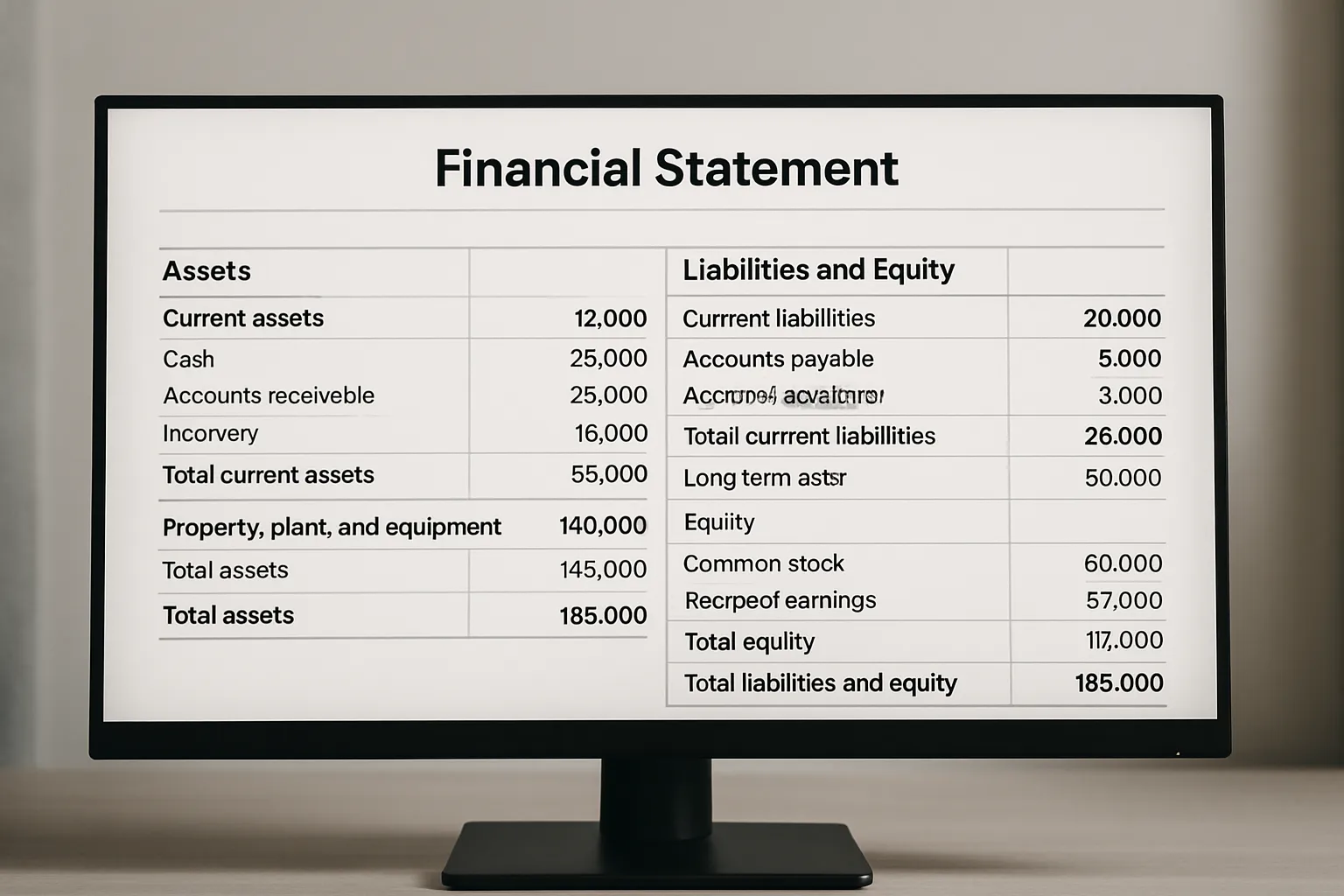
The review and audit oversight of financial statements goes beyond a simple check for errors, and is a procedure that evaluates the reliability of a company's accounting and the appropriateness of an auditor's performance of duties.
Accordingly, companies and auditors should establish a thorough strategy spanning from the initial response to the submission of written explanations and attendance at the audit oversight committee.
Advance Response
To prepare for audit oversight, a company should review in advance any matters that may involve a violation of accounting standards and, where necessary, obtain a review by an outside expert to secure the appropriateness of its accounting treatment.
The company can also reduce advance risk by focusing on the following items.
▷ Review of past review and audit oversight findings
▷ Securing the effectiveness of the internal accounting control system
▷ Regular advance consultation with the external auditor
In addition, the Financial Supervisory Service publishes audit oversight findings each year.
Reviewing these closely and strengthening the internal control system in advance can also be of considerable help.
Response by Written Explanation
During the review or audit oversight process, an opportunity is given to explain the appropriateness of the accounting treatment.
At this stage, the company should submit sufficient supporting evidence centered on the facts, including not only the interpretation of the accounting standards but also the management judgment at the time, the relevant documents, and the records of outside advice.
In the case of the auditor, the auditor should specifically explain the records of audit evidence obtained and the basis for judgments made at the stages of planning and performing the audit.
Vague intuition or general opinions are unlikely to be accepted.
Response to Attendance at the Audit Oversight Committee
Where a party must attend the audit oversight committee to make statements directly or respond to questions, both the legal procedures and the accounting interpretation play an important role.
Accordingly, a strategy should be prepared in the following manner.
▷ Gathering precedents contrary to the opposing position and materials for logical rebuttal
Response After Sanctions
Where a violation is confirmed as a result of audit oversight, a sanction is imposed for it.
At this point, the company and the auditor may respond as follows.
: Actively asserting factors that may be taken into account, such as a mistake rather than intent and efforts to improve
▷ Objection
: An objection may be filed with the Financial Services Commission or the Securities and Futures Commission within 30 days from the date of receiving notice of the measure
6. Review and Audit Oversight of Financial Statements | Support System
The review and audit oversight of financial statements is not a procedure that merely examines accounting errors, but a significant procedure that, depending on the judgment of the financial supervisory authorities, may lead to administrative sanctions and even criminal punishment.
Accordingly, companies and auditors should have in place a specialized response system that combines accounting, tax, and legal expertise.
Area of Support | Main Roles and Expected Effects |
Advance diagnosis and internal analysis | - Advance review of whether the accounting treatment is justified |
- Identification of vulnerable accounts and the possibility of errors | |
- Diagnosis of the possibility of audit oversight being initiated | |
Initial response when audit oversight is initiated | - Response to notice of being subject to audit oversight |
- Organizing substantive supporting evidence within the reply deadline | |
- Analysis of the context of the Financial Supervisory Service's questions and design of the company's position | |
Response to questions and replies from the Financial Supervisory Service | - Interpretation by point for each question and comparative analysis of authoritative interpretations |
- Comprehensive response including footnote disclosures and the internal accounting control system | |
- Construction of arguments to eliminate or mitigate the possibility of disadvantage | |
Strategy for mitigating the level of audit oversight measures | - Coordinating whether and when to make a voluntary correction |
- Adjusting the scope of responsibility, such as measures against officers and employees and measures against the auditor | |
- Establishing a response strategy after comparative analysis of cases of the same type | |
Response to the deliberation of measures by the Financial Services Commission | - Preparation of a reply to the advance notice of the measures to be taken |
- Preparation of written statements and explanatory materials | |
- Design of explanatory materials to mitigate the level of the measures | |
Response to administrative litigation and criminal complaints | - Legal analysis in preparation for a revocation lawsuit against an administrative disposition or an accusation case |
- Formation of a defense team of attorneys with accounting expertise where the matter proceeds to criminal proceedings | |
- Rebuttal of whether the grounds for accusation apply and assertion of the absence of intent or gross negligence |
Our law firm has a substantial number of professionals, including specialized attorneys with an average of ten or more years of experience as well as certified public accountants and tax accountants.
If you need assistance with the review and audit oversight of financial statements, you may request support from an attorney specializing in accounting audit oversight at any time.
See More
Related News


Watch related video content
for this case study.

Meet Daeryun Law Firm’s corporate legal and tax administration experts!