
CONTENTS
- 1. Product Liability | Concept and Legislative Intent

- - Legislative Background and Purpose of Introduction
- - Scope and Subjects of Application of the Product Liability Act
- 2. Product Liability | Key Provisions of the Product Liability Act
- - Types of Product Defects
- - Requirements for Liability for Damages
- 3. Product Liability | Differences From the Recall System
- 4. Product Liability | Legal Risks in the Event of a Violation of the Product Liability Act
- - A Comprehensive Strategy for Preventing Corporate Product Liability Risk
- - Corporate Product Liability Legal Risk Checklist

1. Product Liability | Concept and Legislative Intent

Product liability (hereinafter the "PL Act") is a statute providing that when damage occurs to the life, body, or property of a consumer or a third party because of a defect in a product, the manufacturer or supplier is held liable to compensate for that damage.
The Product Liability Act is intended to strengthen consumer protection beyond the tort liability under the existing Civil Act and to define the manufacturer's liability more clearly.
In particular, the PL Act is distinguished from the liability for damages under the Civil Act in that it adopts, as a principle, the doctrine of no-fault liability, under which liability arises once a causal relationship between the product's defect and the damage is established, regardless of the victim's fault or the manufacturer's intent or negligence.
 Legislative Background and Purpose of Introduction
Traditionally, a consumer had to bring a claim against a manufacturer for harm caused by a product defect under the tort liability of the Civil Act (Article 750) or contractual liability for nonperformance of obligations.
However, it was difficult for the victim to prove the manufacturer's negligence and difficult to prove the amount of damage, so effective remedies for their rights were hard to obtain.
Accordingly, advanced countries such as the United States, Japan, and the EU adopted product liability legal regimes at the international level, and Korea likewise enacted the statute in order to strengthen consumer protection, clarify manufacturers' quality-control duties, and give effect to the principle of risk liability in an industrial society.
Scope and Subjects of Application of the Product Liability Act
The Product Liability Act imposes liability on persons who fall under the following requirements, and it applies to virtually all products, including manufactured goods, food, pharmaceuticals, cosmetics, electrical and electronic products, vehicles, and construction materials.
① Manufacturers
② Importers
③ Persons indicated as the manufacturer on the product's labeling
④ Persons who may be mistaken for the manufacturer
However, real estate (land and buildings) is excluded from the scope of application of the Act, while prefabricated houses, furniture, and similar items manufactured as a single item are included.
2. Product Liability | Key Provisions of the Product Liability Act

The key provisions of the Product Liability Act are as follows.
Types of Product Defects
For a manufacturer's liability to be recognized, a defect in the product must exist, and the Product Liability Act classifies such defects into the following three types.
① Manufacturing Defect
This is a case in which the product was made in the manufacturing process in a way that does not conform to the design drawings or manufacturing standards, resulting in a lack of safety.
Example) A vehicle in which, unlike a normal product, the airbag sensor was defectively installed
② Design Defect
This is a case in which the design itself has a safety problem that creates a risk in use.
Example) A case in which a vehicle's fuel tank is installed in a position with a high risk of explosion in a collision
③ Labeling Defect
This is a case in which the precautions for use or the warning labels and instruction manual regarding the product's dangers are insufficient or misleading, resulting in an accident.
Example) A case in which an electric shock warning is omitted from an electrical appliance for children
Requirements for Liability for Damages
For a manufacturer to be held liable, all of the following requirements must be satisfied.
② Damage to life, body, or property caused by that defect
③ A causal relationship between the defect and the damage
However, a manufacturer may also be exempt from liability in the following cases.
② If the manufacturer proves that, at the time the product was supplied, it manufactured and supplied the product in accordance with mandatory provisions of statutes
③ If the damage occurred due to the consumer's intent or gross negligence
However, the burden of proof rests with the manufacturer, and if it fails to demonstrate these matters, liability is recognized.
The right to claim product liability is extinguished if it is not exercised within 3 years from the day on which the victim or the victim's legal representative became aware of the damage and the manufacturer, or within 10 years from the day on which the manufacturer supplied the product.
Because the extinctive prescription and the exclusion period coexist, a protection period of effectively up to 10 years applies for the protection of consumers.


3. Product Liability | Differences From the Recall System
The Product Liability Act and the recall system have in common that they both prevent consumer harm caused by product defects and protect consumers, but they differ in their mechanism of operation, legal nature, and means of remedy.
| Category | Product Liability Act (PL Act) | Recall System |
|---|---|---|
| Legal Nature | Ex post civil system for compensation of damages | Ex ante measure system for the prevention of harm |
| Triggering Requirements | Occurrence of damage, a defect, and a causal relationship | Confirmation of a defect or awareness of the possibility of harm |
| Method | Compensation upon the victim's claim | Voluntary action by the business or an administrative order |
| Legal Effect | Monetary compensation, criminal punishment, and administrative sanctions possible | Recovery, repair, or refund, with sanctions for violations |
| Applicable Law | Product Liability Act | Laws relating to each individual product |
From a company's perspective, it should put in place insurance, contract management, and a risk management framework to prepare for claims for damages under the Product Liability Act, and with respect to the recall system, it should comply with a prompt recall process and its obligations to report to the government and notify consumers.
Confusing the two systems or omitting either of them can give rise to compound risks such as penalty surcharges, damages, criminal punishment, and harm to brand image, so manufacturers, importers, and distributors all need to establish an ongoing review system.
4. Product Liability | Legal Risks in the Event of a Violation of the Product Liability Act
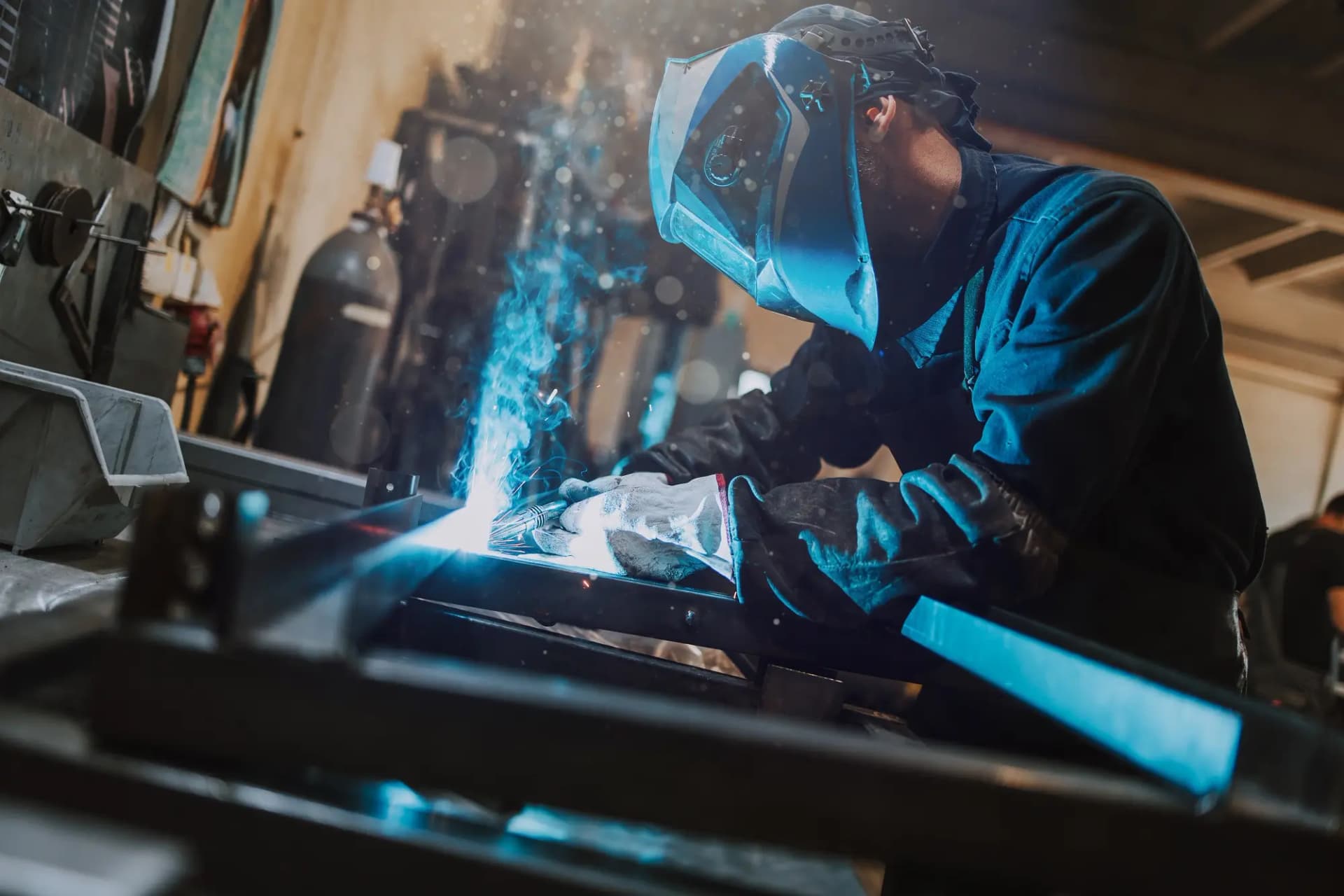
If a product defect accident occurs due to a violation of the Product Liability Act, not only civil liability but also criminal liability and administrative sanctions become linked to it, giving rise to the following legal risks.
▶Criminal Liability : Possible application of charges of occupational negligence resulting in death or injury
▶Administrative Sanctions : Possible recall orders, business suspension, and imposition of penalty surcharges
▶Harm to Corporate Image and Credibility : Long-term deterioration of corporate competitiveness and a decline in ESG management ratings
A Comprehensive Strategy for Preventing Corporate Product Liability Risk
Product liability risk can arise across the entire process, from design to manufacturing, distribution, sales, and customer service.
To manage this systematically, a company should establish a comprehensive strategy such as the following.
Documenting manufacturing and quality inspection processes and managing records
Conducting regular reviews of the legal compliance of labels and instruction manuals
Building protocols for customer claims and accident response
Securing an ongoing operating system for PL insurance and recall processes
Conducting regular legal risk assessments and PL training
Corporate Product Liability Legal Risk Checklist
Category | Items to Check | Checked |
|---|---|---|
Manufacturing Process Management | Whether a system to prevent defects in the manufacturing process is in place |
|
Design Verification | Whether the safety of the product design and risk factors have been analyzed |
|
Labeling and Warning System | Adequacy of precautions for use and hazard labeling |
|
Recall Response Manual | Whether a reporting and handling process is in place in the event of a recall |
|
Contract Review | Whether damages liability clauses relating to product liability are reflected |
|
Insurance Coverage | Whether product liability insurance has been obtained |
|
Legal Advisory System | Whether a system for advice from attorneys experienced in PL law is in place |
|


Watch related video content
for this case study.

Essential Guide to the Severe Accident Punishment Act A to Z