
CONTENTS
- 1. The Client Who Came to the Gunsan Law Firm

- - How the Client Came to the Gunsan Law Firm
- 2. School Violence Statutes Explained by the Gunsan Law Firm
- 3. Assistance Provided by the Gunsan Law Firm
- - Gunsan Law Firm Emphasizes That the Client's Assault Lacked Intent
- - Gunsan Law Firm Emphasizes That the Client Is Remorseful
- - Gunsan Law Firm Emphasizes That the Client's Parents Also Seek Leniency
- 4. The Court's Decision on the Gunsan Law Firm's Arguments
- - If You Need Assistance from the Gunsan Law Firm

1. The Client Who Came to the Gunsan Law Firm
The client who came to the Gunsan law firm was an offender in a school violence matter who had inflicted a total of 65 instances of harm on the victim, including physical violence and verbal violence, and had received a school violence measure.
The client, considering the disposition to be excessive, requested the assistance of the Gunsan law firm.
 How the Client Came to the Gunsan Law Firm
The client in this case is a high school student in the same class as the affected student.
The client had helped the affected student with studying and, since the affected student was somewhat quiet, had deliberately struck up conversations and joked around with the affected student.
One day, the client wrapped the affected student's hand with tissue and proposed that the affected student would be slapped if the affected student failed to answer the questions the client posed.
When the affected student failed to answer the questions, the client struck the affected student's cheek several times.
The client was alleged to have caused 65 instances of harm in total, including assault, intimidation, and insult, to the affected student, and was subjected to a school violence measure.
Considering that the school violence disposition imposed on the client was somewhat excessive, the client requested assistance from the Gunsan law firm.
2. School Violence Statutes Explained by the Gunsan Law Firm
Act on the Prevention of and Countermeasures against Violence in Schools, Article 17-3 (Administrative Litigation)
(1) An affected student or that student's guardian who objects to a measure taken by the superintendent of education under Article 16 (1) and Article 17 (1) may file an administrative litigation under the "Administrative Litigation Act."
(2) An offending student or that student's guardian who objects to a measure taken by the superintendent of education under Article 17 (1) may file an administrative litigation under the "Administrative Litigation Act."
(3) The superintendent of education shall notify the affected or offending student or that student's guardian, as well as the school to which the affected or offending student belongs, of the fact that an administrative litigation under paragraphs (1) and (2) has been filed, and
shall provide written guidance on matters concerning participation in the litigation under Article 16 of the "Administrative Litigation Act."
Filing Period
The litigation must be filed within 90 days from the date on which the party became aware that the disposition was made, and it cannot be filed once one year has passed from the date the disposition was made.
(Where an administrative litigation is filed after an administrative appeal, the period is calculated from the "date of receipt of the certified copy of the written ruling on the administrative appeal.")
Types
Revocation litigation, litigation to confirm invalidity or the like, and litigation to confirm illegality of omission
3. Assistance Provided by the Gunsan Law Firm

The Gunsan law firm analyzed the case together with the client and developed a course of action.
The Gunsan law firm emphasized the following points.
Gunsan Law Firm Emphasizes That the Client's Assault Lacked Intent
The Gunsan law firm emphasized that, for assault to be established,
the objective element of "exercise of physical force against another person's body" and the subjective element of "intent to commit assault" must both be satisfied.
The firm emphasized that, although the act in which the client and the affected student set penalties for each other and played a game involved a mutual exercise of physical force against each other's bodies,
there was no intent to commit assault, so the elements of assault were not satisfied.
Gunsan Law Firm Emphasizes That the Client Is Remorseful
The Gunsan law firm emphasized that the client had reflected on the client's own conduct,
and was deeply remorseful that, contrary to the client's intentions, the conduct could have caused another person discomfort.
The firm emphasized that, resolving through this experience to adopt a more considerate and respectful attitude toward others, the client had written a letter of apology.
Gunsan Law Firm Emphasizes That the Client's Parents Also Seek Leniency
The Gunsan law firm emphasized that the client's parents had also deeply apologized to the affected student and promised to make efforts to guide the client more properly,
and that, in conveying sincere apologies to the affected student and the affected student's parents, they earnestly sought leniency.
4. The Court's Decision on the Gunsan Law Firm's Arguments
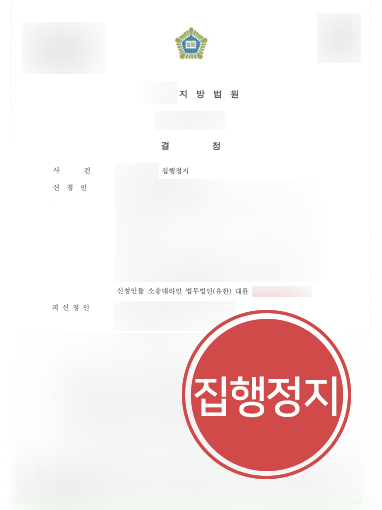
The court, accepting the Gunsan law firm's arguments, "The execution of the measure decision made by the respondent against the applicant shall be stayed until the day that falls 14 days after the date of pronouncement of judgment in the case seeking revocation of that measure." issued this ruling.
If You Need Assistance from the Gunsan Law Firm
The above case was an instance in which a client, with the assistance of the Gunsan law firm, obtained a stay of execution of a school violence disposition.
At Daeryun, an attorney specializing in school violence cases conducts careful consultations with clients and provides assistance in this manner.
If, as in this case, an excessive disposition has been imposed and you require the assistance of an attorney specializing in this area,
please consider Daeryun.
This content is based on actual case studies of Daeryun Law LLC with some adaptations, and the copyright belongs to our firm.
Unauthorized reproduction, duplication, or distribution and other copyright infringements may result in legal action under applicable laws.