CONTENTS
- 1. The Client Who Sought Out the Patent Attorney

- 2. The Concept of Patents Explained by a Patent Attorney
- - Patent Requirements
- - Sentencing Levels for Patent Right Infringement
- 3. The Issues of the Case as Analyzed by the Patent Attorney
- - Emphasizing That the Complainant's Patented Product Lags Behind Current Market Trends
- - Emphasizing That the Complainant Had Instructed the Client to Use the Complainant's Manufactured Device
- - Emphasizing That the Complainant Filed the Complaint to Restrain the Client
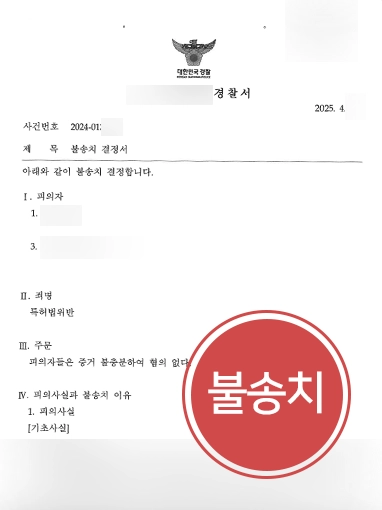
- 4. Patent Attorney's Defense Outcome, "Non-Referral"

1. The Client Who Sought Out the Patent Attorney
The client sought assistance from the firm's attorney, stating that he was under suspicion of a violation of the Patent Act.
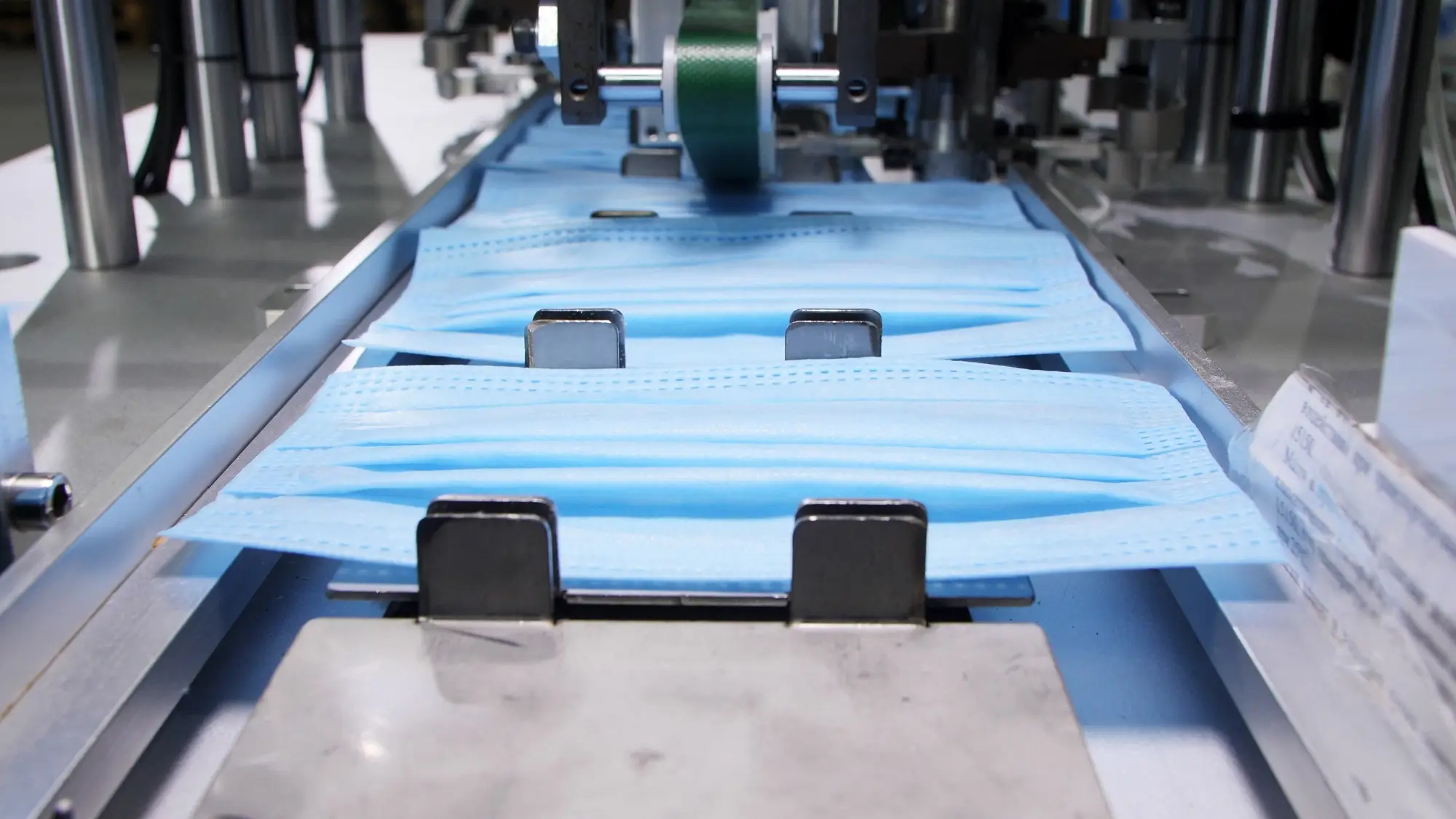
The client had worked for 10 years at the complainant, a mask sales company, before leaving and acquiring the complainant company's factory to establish his own company.
The original agreement provided that the complainant company's mask manufacturing equipment at the factory would also be taken over, but due to the complainant's objection, the agreement was concluded in a form that left ownership of the manufacturing equipment with the complainant.
After establishing the company, for several years he produced a substantial portion of his total mask output according to orders from the complainant company.
However, after the COVID-19 pandemic subsided, the volume of orders from the complainant decreased sharply.
The client could not produce masks without the complainant's orders, yet he maintained the production equipment and workforce as they were and bore the costs of rent and repairs.
The client continued to request orders from the complainant, but the complainant did not respond at all and ultimately told him to use his own mask manufacturing equipment to make up for the shortfall in the complainant's orders.
However, after COVID-19 subsided, there were no suitable customers and it was not easy to conduct independent sales, so in order to establish an independent basis for survival, he sought to build his own manufacturing equipment rather than the complainant's equipment.
Accordingly, he conducted testing for the introduction of new equipment using the complainant's manufacturing equipment, then commissioned a manufacturing equipment company to build it.
The complainant then filed this complaint, claiming that the client had infringed its patent rights by using its manufacturing equipment and the method for producing its patented product to manufacture its patented product.
The client, feeling distressed, sought out a patent attorney to respond to the patent infringement case.
2. The Concept of Patents Explained by a Patent Attorney
In the patent infringement that was the charge against the patent lawyer's client, a patent refers to a state-recognized exclusive and exclusionary right recognized for an invention, a type of intellectual property right.
The patent system has the purpose of promoting the development of national industry by protecting and encouraging inventions.
 Patent Requirements
🔗A patent, in order to be granted, must satisfy the following three requirements.
(1) Industrial applicability
The filed invention must be capable of being used in industry.
(2) Novelty
It must not be a technology already known before the patent application.
(3) Inventive step
Even if it differs from prior art, it must be something that cannot be easily conceived of from that prior art.
Sentencing Levels for Patent Right Infringement
Under the Patent Act, infringement of a patent right is punishable by imprisonment for not more than 7 years or a fine not exceeding 100 million won.


3. The Issues of the Case as Analyzed by the Patent Attorney
The patent attorney examined the issues to resolve this case.
The issue in this case was whether there was conduct constituting a violation of the Patent Act.
The patent attorney, focusing on this, set out to defend the client as follows.
Emphasizing That the Complainant's Patented Product Lags Behind Current Market Trends
Before beginning the defense in earnest, the patent attorney emphasized that the complainant's patented product is a product that lags behind the current trend.
The attorney argued that the masks the complainant manufactures are far from the masks that customers currently want, so the client had no need to deliberately choose outdated equipment such as the device manufactured by the complainant.
Emphasizing That the Complainant Had Instructed the Client to Use the Complainant's Manufactured Device
The patent attorney emphasized that the complainant had told the client to produce masks using the device manufactured by the complainant and to conduct business.
To prove this, the patent attorney obtained a written statement from an employee of the complainant's company and submitted it as evidence.
In addition, the attorney argued that, although the client had used the device manufactured by the complainant, this was solely for the purpose of testing for the future introduction of new equipment, and that the client did not conduct business using the masks it had made.
Emphasizing That the Complainant Filed the Complaint to Restrain the Client
The patent attorney emphasized that the complainant had filed this complaint in order to keep the client in check.
The attorney argued that the complainant's company is currently preparing for a new listing, and that from the complainant's standpoint, it appeared to regard the client's company, which was seeking to install new equipment, as a competitor.
1. Where the patent is an invention of a product: the act of producing, transferring, leasing, or importing an article used exclusively for producing that product, or offering to transfer or lease that article
On these grounds, the patent attorney requested that a non-referral decision be issued, since the client had not committed any act of patent infringement under the Patent Act.
4. Patent Attorney's Defense Outcome, "Non-Referral"

As a result of the patent attorney's defense of the client, the police issued a non-referral decision to the client.
The client faced the risk of punishment on a wrongful charge of patent infringement, but with the assistance of the patent attorney, the case was able to be concluded at the police investigation stage.
In the case of patent infringement, severe punishment is prescribed in that it infringes the rights of the patent holder.
Therefore, even if the charge is not true, it is necessary to seek the assistance of a patent attorney and prepare a response strategy in order to have a chance of clearing the charge.
This firm's patent attorney, drawing on experience in resolving related cases, will prepare a tailored strategy that can lead to a result favorable to the client.
If you are in a situation requiring the assistance of a patent attorney, please proceed with a 🔗legal consultation reservation.
This content is based on actual case studies of Daeryun Law LLC with some adaptations, and the copyright belongs to our firm.
Unauthorized reproduction, duplication, or distribution and other copyright infringements may result in legal action under applicable laws.