
CONTENTS
- 1. Client Seeking to File a Loan Return Lawsuit

- - The Client's Concerns
- 2. Extinctive Prescription in a Loan Return Lawsuit
- - Procedure of a Loan Return Lawsuit
- 3. Attorney Who Filed the Loan Return Lawsuit
- - Collecting Evidence for the Loan Return Lawsuit
- - Sending a Certified Content Notice
- - Filing the Lawsuit
- 4. Result of the Loan Return Lawsuit: "Granted in Full"

1. Client Seeking to File a Loan Return Lawsuit
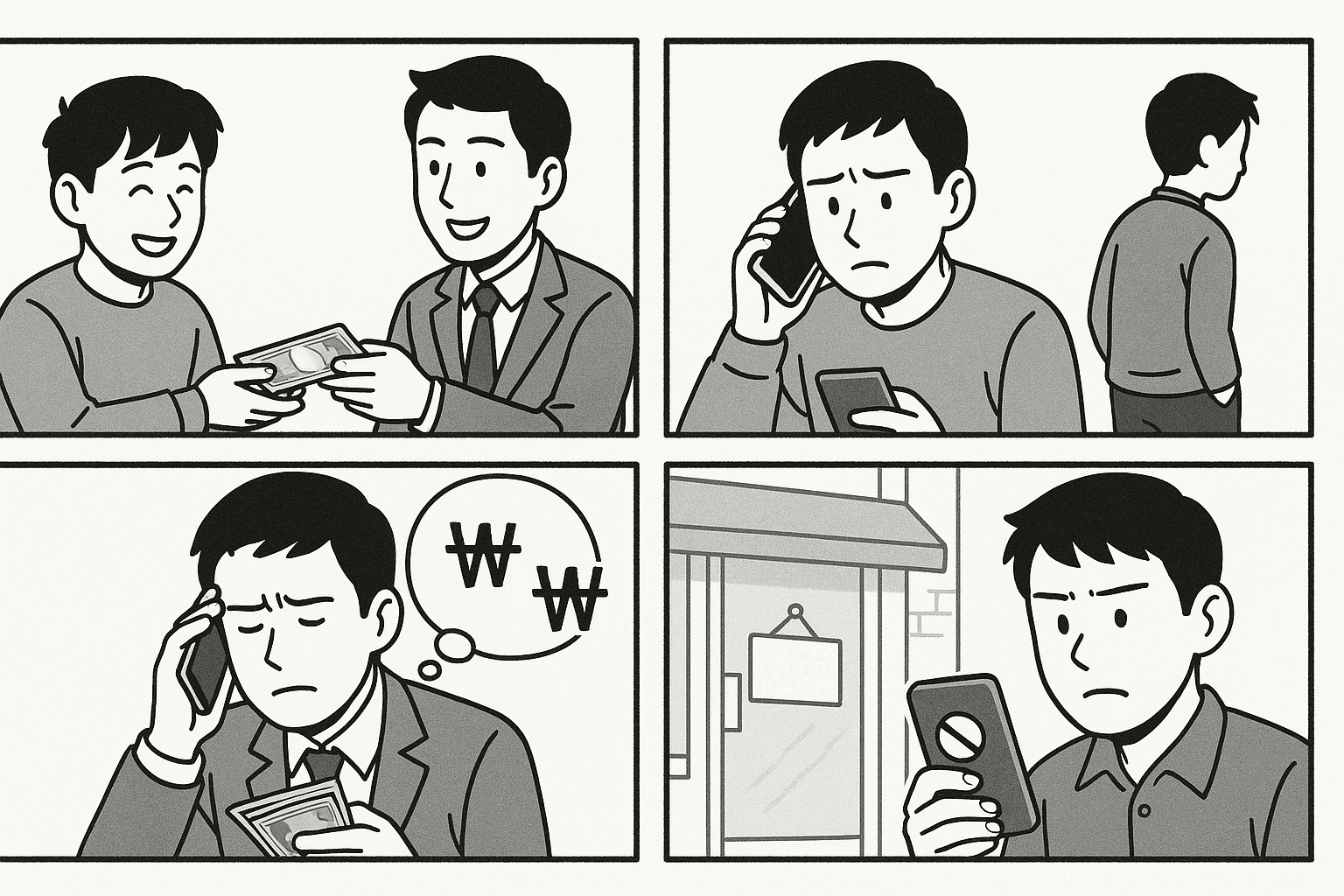
This is the story of a client who came to this firm seeking an attorney's help in filing a claim for return of a loan.
The client stated that they had lent a total of about 40 million won to a close younger acquaintance.
At first, the younger acquaintance was grateful and repaid the client in small amounts, but as time gradually passed, they began to ignore the client's contact attempts.
The client stated that about 30 million won of the loan currently remained and asked for help in being able to recover that money.
The younger acquaintance who had borrowed money from the client had even blocked all of the client's contact details at that point.
 The Client's Concerns
Ahead of filing the lawsuit for return of a loan, the client said that she had a few concerns.
First, she said that it was about 3 years ago that she had lent the money to her younger sibling, so a great deal of time had passed.
In addition, she also expressed concern, saying that, because her sibling had run a business and failed, it seemed she might not be able to recover the money.
2. Extinctive Prescription in a Loan Return Lawsuit
To the client, who was worried about not recovering money lent 3 years earlier ahead of filing a loan recovery lawsuit, the specialized attorney explained as follows.
Under the Civil Act, a claim has an extinctive prescription period of 10 years, so the client may certainly file a loan recovery lawsuit.
Extinctive prescription is a system that extinguishes a right where the right holder, despite being able to exercise that right, does not exercise it for a certain period.
Procedure of a Loan Return Lawsuit
If you are unable to recover money you lent, that is, a loan, you may file a 🔗claim for return of a loan in accordance with the following procedure.
1. Filing the complaint
A complaint seeking return of the loan is filed with the court.
2. Filing the answer
The court serves a copy of the complaint on the defendant, and the defendant files an answer.
3. Pleadings
Both parties submit briefs and proceed through the pleading dates.
4. Judgment
The court renders a judgment after the pleading dates.
At this point, sending the other party a 🔗certified mail before filing the complaint can serve as evidence that you demanded repayment of the loan and requested its return.
Moreover, filing a provisional attachment in parallel before bringing the lawsuit, in order to prevent the other party from concealing assets, can be advantageous.


3. Attorney Who Filed the Loan Return Lawsuit
The attorney provided the following assistance to help the client file a lawsuit claiming return of a loan.
Collecting Evidence for the Loan Return Lawsuit
The attorney collected evidence favorable in the client’s case in cooperation with the Evidence Investigation Center and the Digital Forensics Center.
The types of evidence that this firm collected for the client are as follows.
2. Loan certificate
3. Account transfer records
Sending a Certified Content Notice
The specialized attorney sent a certified letter of content to the defendant in the client's case on the client's behalf.
The certified letter of content contained the money the client had lent, the repayment deadline, and a statement that legal measures would be taken in the event of non-repayment.
Filing the Lawsuit
Even after the certified content mail was sent, the client was unable to recover the loaned money, so the specialist attorney set out to file a lawsuit.
The specialist attorney sought a judgment ordering the defendant to pay the client 30 million won, and submitted the collected evidence, namely the loan certificate and the transfer records.
The purport of the claim that the specialist attorney drafted in the complaint was as follows.
2. The costs of the litigation shall be borne by the defendant.
3. Paragraph 1 may be provisionally executed.
A judgment to this effect is sought.
4. Result of the Loan Return Lawsuit: "Granted in Full"

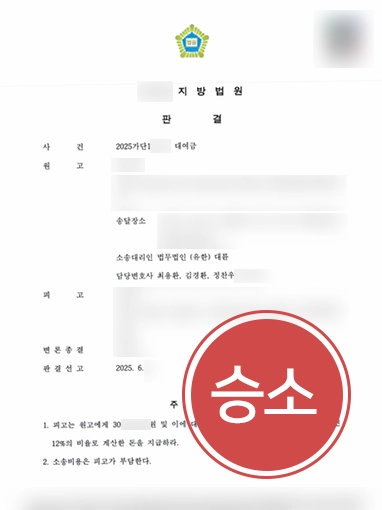
As a result of the attorney filing a claim for return of a loan on behalf of the client, the court rendered a judgment ordering the defendant to pay the client 30 million won.
In addition, the court ruled that the defendant would bear all of the costs incurred in filing this lawsuit.
The client in this case visited our firm with considerable worry about the loan that had not been repaid.
With the attorney's assistance, the client was able to ease that worry and recover the full amount lent, and expressed gratitude.
If adequate evidence is not gathered when filing a claim for return of a loan, a person may be unable to recover the money.
Therefore, we recommend that you make a 🔗legal consultation reservation with our firm, where an attorney and the evidence investigation center can provide one-stop support, and proceed with the claim for return of a loan.
Our firm will prepare a response strategy tailored to the client.


Watch related video content
for this case study.

Can I be sued for fraud if I don't receive the money I lent for 'for the first time in my life'?
This content is based on actual case studies of Daeryun Law LLC with some adaptations, and the copyright belongs to our firm.
Unauthorized reproduction, duplication, or distribution and other copyright infringements may result in legal action under applicable laws.