
CONTENTS
- 1. Overview of the Medical Litigation Client's Case

- - Matters Discussed in Consultation with the Client
- - Criteria for Calculating Damages in a Medical Death Case
- 2. The Medical Attorney Who Analyzed the Issues in the Medical Litigation
- - Medical Litigation Procedure From the Patient's Standpoint
- 3. The Strategy of the Attorneys Who Assisted With the Medical Litigation
- - Argument for a Heightened Duty of Care of the Nursing Hospital Based on the Deceased's Medical History
- - Proving the Medical Staff's Ability to Recognize the Femoral Fracture Based on the Pre-Transfer Medical Records
- - Arguing, Based on the Post-Transfer Medical Records, That the Fracture and Abscess Dated to the Period of Admission at the Defendant Hospital
- 4. Medical Litigation Case Result, a KRW 50 Million Damages Judgment

1. Overview of the Medical Litigation Client's Case
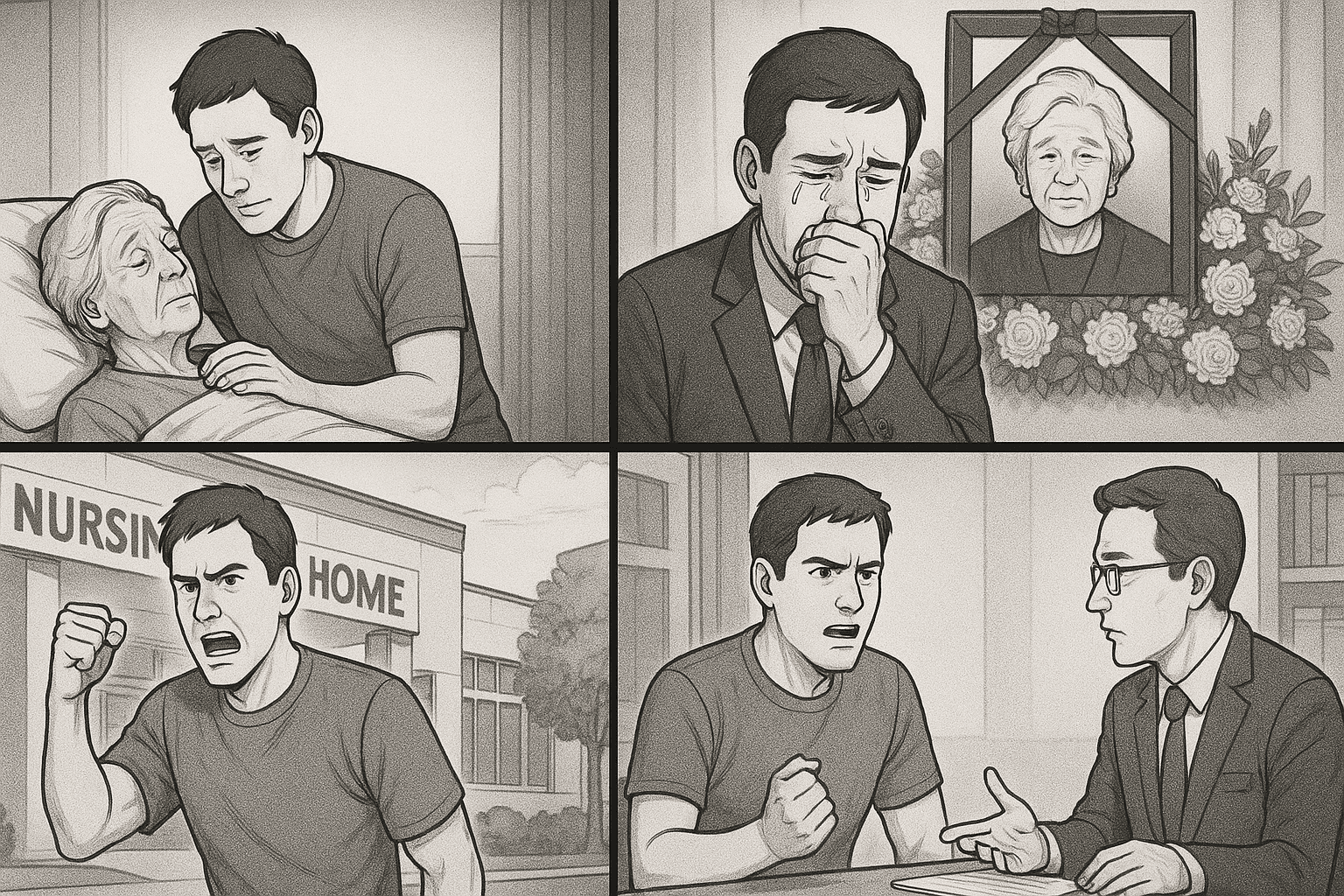
This is the story of a client who sought assistance in filing medical litigation.
The client's mother had been hospitalized long-term at a nursing hospital.
However, when her condition worsened and she showed symptoms of pneumonia, the medical staff transferred her to another hospital.
As a result of a detailed examination conducted immediately after the transfer, an intertrochanteric fracture of the right femur and a deep abscess were discovered, and she ultimately received treatment for osteomyelitis of the femur.
However, her condition gradually deteriorated, and it is reported that she died as multiple organ failure due to colon cancer and aspiration pneumonia overlapped.
 Matters Discussed in Consultation with the Client
The client claimed that her mother died because the nursing hospital failed to fulfill its occupational duty of care.
Accordingly, she requested help in filing medical litigation so that she could obtain damages.
Criteria for Calculating Damages in a Medical Death Case
Those who have become surviving family members in a medical death case are bound to wonder about the criteria for calculating damages arising from the death. In this regard, the categories of loss can be organized into lost earnings, funeral expenses, consolation money (solatium), and other losses.
| Damages Category | Description by Category |
| Lost earnings | Income that would have been earned but for the death - Basis: the victim's actual income or the Statistics Korea average household income of urban workers - Working capacity period: it is common to recognize it up to age 60 - Living expenses: typically one-third is deducted |
| Funeral expenses | Usually recognized as a fixed amount in case law |
| Consolation money (solatium) | The category that accounts for the largest portion in a death case - Comprehensively considers the victim's age, social status, relationship to the surviving family, and the circumstances of the accident |
| Other losses | - Tuition for minor children, special nursing expenses, etc. (separate proof required) |
| Surviving family consolation money | Consolation money is recognized individually for lineal family members (spouse, children, parents, etc.) (usually in the range of tens of millions of won) |
2. The Medical Attorney Who Analyzed the Issues in the Medical Litigation
The medical attorney began analyzing the issues immediately upon accepting the case. There were largely two key issues in this case.
The first was whether the femoral fracture and abscess discovered after the transfer had in fact occurred during the period of hospitalization at the nursing hospital.
The second was whether the nursing hospital fulfilled its duty to promptly detect and properly treat such injuries, that is, whether there was a delay in diagnosis and treatment.
Medical Litigation Procedure From the Patient's Standpoint
The client entrusted the case to this firm in order to clearly ascertain the circumstances of her mother's death and the difference in her condition before and after the transfer.
The medical attorney secured all of the medical records issued by the nursing hospital and the hospital to which she was transferred, and went through a medical evaluation procedure.
Thereafter, from the client's standpoint, the medical litigation proceeded through the following steps.
1. Organizing the facts : chronologically systematizing the patient's medical history, the course of hospitalization, the time of transfer, and the time the fracture was discovered
2. Securing evidence : collecting the medical records, imaging materials, nursing logs, and records relating to whether a fall occurred at the two hospitals
3. Requesting a medical evaluation : evaluating the time the femoral fracture occurred and whether the medical institution breached its duty of care
4. Preparing the pleadings : focusing the argument on the point that the nursing hospital's breach of the duty of care and the delay in treatment were among the causes of death
5. Conducting the trial : submitting rebuttal materials and expert opinions in response to the nursing hospital's denial


3. The Strategy of the Attorneys Who Assisted With the Medical Litigation
This firm formed a task force composed of a medical attorney registered with the Korean Bar Association and a medical attorney with experience in arbitration at the Korea Medical Dispute Mediation and Arbitration Agency, and responded to the case by establishing the following medical litigation strategy.
Argument for a Heightened Duty of Care of the Nursing Hospital Based on the Deceased's Medical History
The medical attorney, in cooperation with the evidence investigation center, collected all medical records concerning the deceased's past medical history of cerebral infarction sequelae, right-sided hemiplegia, and reduced muscle strength.
In addition, the attorney secured rehabilitation treatment records, physical therapy records, and a neurologist's written opinion, and focused on objectively proving that the patient belonged to a group at risk of falls.
Based on these materials, the medical attorney argued that the defendant nursing hospital had a legal and professional duty to monitor and manage more strictly a patient with diminished motor function due to cerebral infarction sequelae.
The attorney also concentrated on proving that the hospital had neglected the relevant duties by closely analyzing whether the medical records and nursing logs showed that proper management and preventive measures had been taken regarding the patient's risk of falls.
Proving the Medical Staff's Ability to Recognize the Femoral Fracture Based on the Pre-Transfer Medical Records
The medical attorney secured all medical records and nursing logs prepared at the defendant nursing hospital and precisely analyzed the records of the patient's condition.
In particular, the attorney intensively reviewed records that could suggest a fracture, such as fall incident reports, records of complaints of pain, physicians' written opinions, and physical examination results.
Through this, the attorney proved the circumstances indicating that complaints of pain or restricted movement suggestive of a fracture, as well as examination results of the pelvis and femur, could have been sufficiently discovered prior to the time of transfer.
During the trial, based on those records, the attorney emphasized that the nursing hospital's medical staff had sufficient grounds to recognize the abnormality in the patient's femur.
In addition, the attorney argued that the medical staff, despite recognizing the fracture, failed to take appropriate measures, resulting in a delay in diagnosis and treatment, thereby clearly establishing liability for negligence.
Arguing, Based on the Post-Transfer Medical Records, That the Fracture and Abscess Dated to the Period of Admission at the Defendant Hospital
The medical attorney secured and analyzed the imaging materials taken at the hospital to which the patient was transferred, along with the medical records, surgical records, and medical certificates prepared there.
On this basis, the attorney prepared supporting materials to argue that the fracture had occurred not immediately after the transfer but during the period of admission at the nursing hospital before the transfer.
The attorney also analyzed the progression of the abscess and the osteomyelitis treatment records together, proving that the condition had not deteriorated after the transfer but was already a substantially advanced lesion.
By attaching such medical evaluation reports, the attorney emphasized to the court, through a comparison of the medical records before and after the transfer, that the fracture and abscess had occurred during the period of admission at the nursing hospital.
4. Medical Litigation Case Result, a KRW 50 Million Damages Judgment

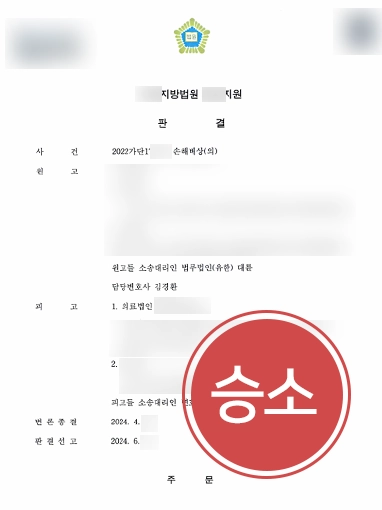
The court sided with the medical attorney's arguments. It determined that the defendant nursing hospital had failed to detect and treat the patient's fall and fracture in a timely manner, and that this negligence contributed in part to the deterioration of the patient's condition and her death.
As a result, the court rendered a judgment ordering the nursing hospital to pay the client approximately KRW 50 million in damages.
The client conveyed her gratitude, saying that although the deceased's life could not be converted into money, it was only because of the assistance of this firm's medical attorney that she could receive at least this measure of solace.
In medical litigation, the patient's side bears the burden of proving that medical negligence or the like occurred, so an individual may feel considerable pressure at the prospect of filing suit against a medical practitioner or hospital.
This firm's medical and pharmaceutical group forms its team with medical attorneys who can deeply understand the feelings of the victims of such medical accidents, and accompanies them through all the legal procedures that follow.
Through the one-stop legal service provided by medical attorneys registered with the Korean Bar Association and medical attorneys holding qualifications as physicians, pharmacists, or oriental medicine doctors, together with an evidence investigation expert task force, we will help lighten your heavy burden.
If you have any inquiries, please schedule a 🔗Consultation with a Medical Attorney.
This content is based on actual case studies of Daeryun Law LLC with some adaptations, and the copyright belongs to our firm.
Unauthorized reproduction, duplication, or distribution and other copyright infringements may result in legal action under applicable laws.