
CONTENTS
- 1. What Are the Strategic Goals Samsung Biologics Pursues Through a Factory Acquisition?

- 2. Legal Issues in a Factory Acquisition: Not a Simple Sales Contract?
- - Choosing the Acquisition Structure: Share Transfer vs. Asset Transfer
- 3. Factory Acquisition: Three Reasons It Fails
- - Looking Only at Price and Not at Structure
- - Misunderstanding the Succession of Licenses
- - Acquiring Without a Post-Acquisition Integration Plan
- - Five Things to Review Before Acquisition Negotiations

1. What Are the Strategic Goals Samsung Biologics Pursues Through a Factory Acquisition?
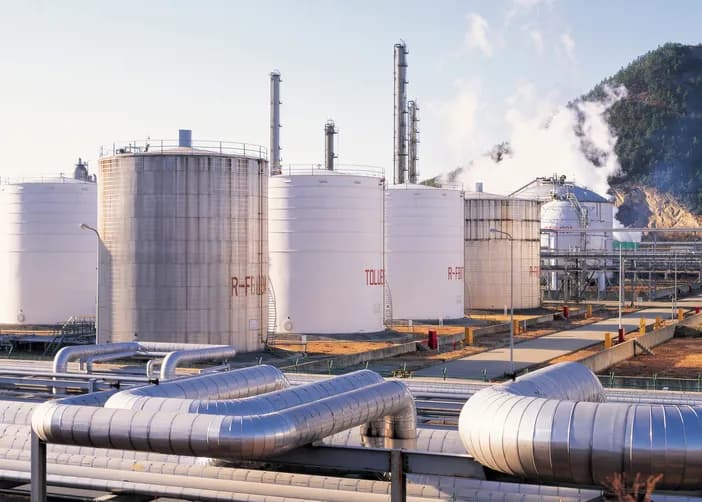
Samsung Biologics, which has undertaken a factory acquisition, has recently been developing a plan to acquire an already operating plant in the United States and thereby secure a production base within the U.S. market.
This move carries several important implications.
First, the United States is a core regulatory and consumer market for pharmaceuticals and biopharmaceuticals worldwide, and the FDA regulatory framework, together with access to local production facilities, has a direct effect on contractual competitiveness with global clients.
By securing a local plant, Samsung Biologics will immediately obtain production capacity within the United States and be positioned favorably to maintain and expand production contracts with its clients.
Second, it is also advantageous in terms of supply chain stability.
As global supply chains are being reorganized worldwide and an increasing number of companies seek to secure production capacity within major markets, the acquisition of overseas production facilities serves as a means of strengthening the ability to respond to raw material procurement, logistics risks, and exchange rate fluctuations.
Third, expanding production capacity within the United States is also connected to the goal of enhancing competitiveness in contract manufacturing services.
As global biotechnology companies move to diversify their production facilities, there are still few cases in which a domestic company has secured large-scale production capacity overseas.
Through this, Samsung Biologics appears to be pursuing the strategic goal of strengthening its base in the global contract manufacturing market and expanding its market share.
As a result, this factory acquisition by Samsung Biologics can be assessed as a central pillar of a long-term strategy of expanding its global production network, securing supply stability, and strengthening market influence.


2. Legal Issues in a Factory Acquisition: Not a Simple Sales Contract?
Because a factory acquisition is not a simple sales contract, it entails the following compound legal issues in practice.
① Issues of Succession of Licenses and Regulatory Status
In the pharmaceutical and biotechnology fields in particular, various regulatory requirements such as manufacturing licenses, GMP certification, and FDA approval status constitute core assets.
When an acquisition is carried out through an asset transfer, existing licenses may not be automatically succeeded to, so structuring the transaction is important.
② Environmental and Industrial Safety Liability
A factory site may carry potential environmental liabilities such as soil contamination, waste disposal, and industrial safety issues.
These are representative contingent liabilities that can lead to substantial additional costs after the acquisition.
At the due diligence stage, the scope of environmental liability and the indemnification provisions must be designed with precision.
③ Succession of Employment and Labor Risks
Whether existing employees' employment is succeeded to is also an important issue in a factory acquisition.
Where the transaction is assessed as a transfer of business, the employment relationships may be comprehensively succeeded to, and in that case potential liabilities such as retirement allowances and unpaid wages may be transferred together.
④ Succession of Contracts and Retention of Key Clients
Long-term supply contracts and dealings with major clients are the substantive value of a factory.
However, where a contract contains a change-of-management-control clause, there may be a risk of contract termination after the acquisition.
 Choosing the Acquisition Structure: Share Transfer vs. Asset Transfer
A factory acquisition is broadly carried out in two ways.
- Share transfer: acquiring the corporation itself and succeeding to all of its assets and liabilities
- Asset transfer: selectively acquiring only specific factories, equipment, and contracts
A share transfer involves relatively simple procedures, but it carries the risk of succeeding to all contingent liabilities, whereas an asset transfer allows risks to be screened but requires separate procedures to transfer individual licenses and contracts.
Because the succession of regulatory status is central to a factory acquisition given the nature of the industry, legal and tax review should be conducted in parallel from the structuring stage.
In an Era of Supply Chain Reorganization, a Factory Acquisition Is a 'Defensive Strategy'
Amid each country's industrial protection policies and the trend of supply chain reorganization, a factory acquisition has become both an aggressive expansion strategy and, at the same time, a defensive strategy.
In particular, securing a production base within major markets such as the United States and Europe serves as a means of responding to changes in tariffs, regulations, and government procurement policies.
In addition, by securing production facilities, a company can stably maintain the long-term contracts of major clients, and this has a direct effect on the valuation of the enterprise.
A Factory Acquisition Is a 'Transformation of Corporate Structure'
A factory acquisition is a comprehensive management decision that redesigns production strategy, global expansion strategy, governance, tax structure, and employment structure all at once.
In the biotechnology, pharmaceutical, and manufacturing sectors in particular, a factory acquisition involves a complex entanglement of licensing, environmental liability, succession of employment, and tax risks, so prior due diligence and the design of the contract structure are indispensable.
If you are considering a factory acquisition, conducting the structural design and risk analysis before negotiating the sale price is the starting point for protecting the value of the enterprise.
3. Factory Acquisition: Three Reasons It Fails
A factory acquisition can lead to failure if the structure is designed incorrectly.
The types of failure that recur in practice are as follows.
Looking Only at Price and Not at Structure
There are many cases in which a contract was concluded based only on revenue and financial statement multiples, but the actual return on investment then plummeted because environmental remediation costs, additional capital expenditure investments, and quality improvement costs arose.
A factory acquisition is not a matter of "price negotiation" but a matter of structural design.
Misunderstanding the Succession of Licenses
In an asset transfer structure, a manufacturing license or GMP certification may not be automatically succeeded to.
Where a separate re-approval procedure is required after the acquisition and operations are delayed, there is a risk that the expected revenue will not materialize.
Acquiring Without a Post-Acquisition Integration Plan
If a contract is concluded before establishing organizational integration, quality system integration, ERP transition, and a brand strategy, internal confusion will arise within six months after the acquisition.
A factory acquisition is not a contract but a project that also encompasses an integration strategy.
Five Things to Review Before Acquisition Negotiations

For a factory acquisition, the following five items must be settled before they come to the negotiating table.
② Scope of Liability: it must be made clear who bears contingent liabilities such as past environmental contamination, litigation, and tax assessments.
③ Limits on Warranties and Indemnification: if the limit on damages and the claim amount for a breach of representations and warranties are not set, disputes may become prolonged.
④ Environmental Liability Structure: where remediation costs arise, the scope and period of the seller's liability must be specified in the contract.
⑤ Scale of Capital Injection After Acquisition: additional capital requirements such as those reflected in the financial statements, equipment upgrades, and the cost of retaining personnel must be calculated in advance so that the actual return on investment can be assessed.
A factory acquisition is a means of strategic expansion, but it is at the same time a high-difficulty transaction that entails structural risks.
The point that an acquiring company must keep in mind is that the success or failure of a factory acquisition is determined not by the sale price but by the design of the structure and the ability to control risks.
Conducting a comprehensive review by legal, tax, environmental, and labor professionals in parallel from the stage before the contract is concluded is the starting point for protecting the value of the enterprise.
If you would like to receive assistance from professionals in the relevant areas of law, you are welcome to arrange a 🔗legal consultation reservation with a corporate attorney at Daeryun.