
CONTENTS
- 1. Executive of Company H Indicted for Violation of Environmental Law

- - Company H, Sentenced to Imprisonment in the First Instance, Charged with Violation of the Water Environment Conservation Act
- 2. Company G, in Violation of Environmental Law, Breached Regulations 14 Times Over Five Years
- - Company G's Regulatory Violations
- 3. Cases of Environmental Law Violations: What Are the Implications?

1. Executive of Company H Indicted for Violation of Environmental Law
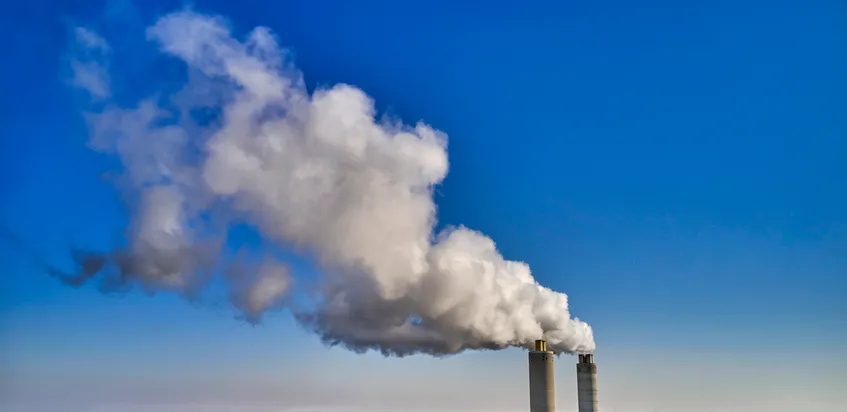
The former representative director of Company H, a private oil-refining company indicted for violation of environmental law, was sentenced to one year and six months' imprisonment in the first instance.
The corporation, charged with discharging wastewater, was sentenced to a fine of 50 million won.
Company H immediately filed a notice of appeal on the matter of its violation of the Water Environment Conservation Act.
 Company H, Sentenced to Imprisonment in the First Instance, Charged with Violation of the Water Environment Conservation Act
Company H was indicted on charges of discharging approximately 2.76 million tons of phenol-containing wastewater without proper treatment from its D Plant in Chungnam between October 2016 and October 2022.
The phenol content of the wastewater was 2.5 mg/L, exceeding the legally permitted standard of 1 mg/L.
Company H argued that it was not subject to punishment because it used the wastewater as cooling water for gas-scrubbing facilities, but the court did not accept this argument.
In particular, it was found that, of the wastewater generated at the D Plant, Company H sent 330,000 tons to a subsidiary's plant for use as cooling water for gas-scrubbing facilities and sent 1.13 million tons to another subsidiary's plant for use in crude-oil desalting facilities.
An additional charge was that, between June 2017 and October 2022, the company evaporated and discharged 1.3 million tons of wastewater into the atmosphere through a stack at the Company H plant without any prevention facilities.
The court found that Company H committed the above offenses in order to save the cost of constructing a new wastewater treatment plant and the industrial-water costs of its subsidiaries, amounting to 45 billion won.
The Seoul Central District Court, which tried the case at first instance, determined that Company H had committed an organized and planned crime to cut costs, and held that "if a facility is installed to discharge wastewater without passing through prevention facilities, it is subject to punishment regardless of whether environmental pollution occurs."
The court sentenced three former and current executives who were jointly indicted to between nine months and one year and two months' imprisonment, and imposed a fine of 50 million won on Company H as a corporation.
In 2023, Company H was also notified that a penalty surcharge of 150.9 billion won would be imposed on it for discharging wastewater containing phenol above the standard level.
Relevant Provisions of the Water Environment Conservation Act
Under the Act, where a person operating discharge facilities or prevention facilities discharges water pollutants exceeding the permissible discharge standards, an order may be issued to suspend operations, to revoke the installation permit, or to close the facility.
Where the suspension of operations itself is likely to significantly impair the public interest, such as credit, employment, or prices, a penalty surcharge of 5 percent of revenue may be imposed in lieu of the suspension order.
In addition, a business operator or operator may be sentenced to imprisonment of up to five years or a fine of up to 50 million won.


2. Company G, in Violation of Environmental Law, Breached Regulations 14 Times Over Five Years
We also examine the case of Company G, an oil-refining company that has become the subject of controversy for violations of environmental law.
Company G was found to have violated environmental law a total of 14 times between 2019 and July 2023.
Company G's Regulatory Violations
∙2019: 3 violations in total
-Violation of the Clean Air Conservation Act (false recording of self-measurement results for air discharge facilities)
-Violation of the Chemicals Control Act (failure to wear safety equipment by handlers of hazardous chemicals; failure to report subcontracting of hazardous-chemical handling)
-Violation of the Soil Environment Conservation Act (exceedance of the soil-contamination concern level - order to remediate contaminated soil)
∙2020: 4 violations in total
-Violation of the Clean Air Conservation Act (exceedance of permissible standards for air-pollutant discharge facilities; failure to maintain operation logs for air discharge and prevention facilities; leaving air-pollution discharge facilities unattended without justifiable grounds)
-Violation of the Soil Environment Conservation Act (order to remediate at soil-pollution prevention facilities)
∙2021: 4 violations in total
-Violation of the Clean Air Conservation Act (leaving discharge facilities corroded, worn, or broken; failure to comply with management standards for fugitive-emission facilities; violation of waste-treatment standards; leaving machinery and equipment of prevention facilities broken or damaged; inadequate self-measurement records
-Violation of the Soil Environment Conservation Act (exceedance of the soil-contamination concern level)
∙2022: 2 violations in total
-Violation of the Malodor Prevention Act (exceedance of permissible standards for malodor discharge facilities)
-Violation of the Clean Air Conservation Act (failure to report changes to air discharge facilities)
∙2023: 1 violation in total
-Violation of the Chemicals Control Act (inadequate safety management of hazardous chemicals; failure to report the occurrence of a chemical accident)
Company G received warning dispositions together with administrative fines for its violations of environmental law.
Beyond these, administrative sanctions, including violations of the Chemicals Control Act, reached 31 cases in total, yet the actual dispositions amounted to no more than administrative fines.
3. Cases of Environmental Law Violations: What Are the Implications?
We have examined the cases of major corporations that received criminal punishment and administrative dispositions, such as administrative fines, for violations of environmental law.
In particular, executives of Company H received an actual custodial sentence and detention in court at first instance, together with a penalty surcharge against the corporation, drawing attention as a case in which legal responsibility for environmental protection was strengthened.
🔗As the importance of ESG management is emphasized, corporate compliance with environmental regulations is expected to take on greater importance.
This is because violations of environmental law do not stop at administrative fines or criminal fines but also affect a company's credibility and sustainability.
Daeryun Law Firm LLP provides systematic legal advice and response strategies so that companies can thoroughly comply with environmental law.
You are welcome to obtain the assistance of an 🔗attorney providing corporate legal advisory, which offers corporate legal services and counsel, to develop a tailored strategy for environmental-law issues.