




France also suffered... The power of ‘Super 301 trillion’ summoned by Coupang

2026-01-26
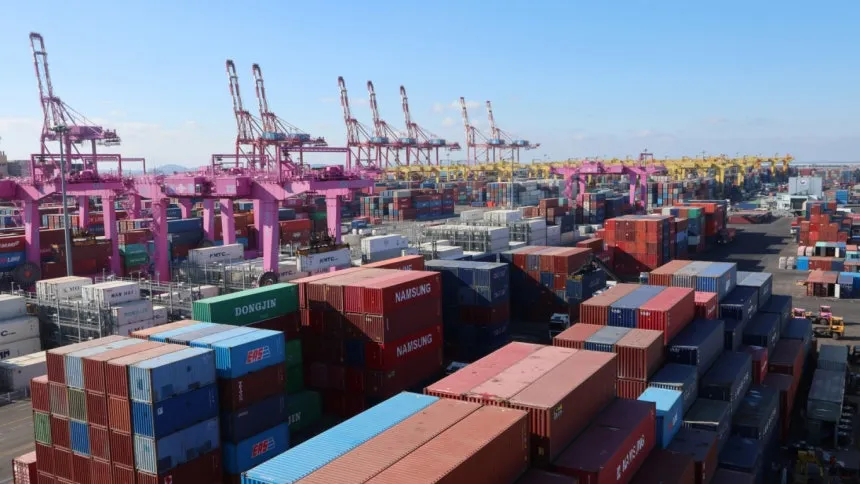
In the case of a digital tax dispute in France, tax deferral is promoted through retaliatory tariffs.
“The most effective pressure”… “A cool-headed diplomatic solution is needed.”
Coupang's U.S. investment company, venture capital (VC) Greenox and Altimeter, submitted a letter of intent to arbitrate in an international investment dispute (ISDS) on the 22nd (local time) in opposition to the Korean government's personal information leak regulation measures. They officially requested the Office of the United States Trade Representative (USTR) to investigate the Korean government and impose trade sanctions, including the imposition of tariffs.
What American investment companies presented as the basis for the USTR investigation is Article 301 of the Trade Act, so-called ‘Super Article 301’. This is a legal means through which the United States can impose sanctions, such as retaliatory tariffs, under presidential authority against unfair trade practices of trading partners, and has been used as a core basis for major trade disputes in the past.
Section 301 of the Trade Act was the main instrument of trade policy during the Trump administration. In 2018, the United States initiated a Section 301 investigation and imposed retaliatory tariffs on Chinese products due to China's infringement of intellectual property rights. This served as a means not only to resolve the U.S. trade deficit but also to demand system changes in other countries. In 2019, tariffs were imposed on aircraft and wine from the European Union (EU) due to subsidies for Airbus.
The industry generally analyzes that this issue has a similar structure to the ‘French Digital Service Tax (DST) Dispute’ in 2019. At the time, when France imposed taxes on American IT companies, USTR considered it an act of discrimination and opened an investigation. Afterwards, they announced the imposition of tariffs on French champagne, etc. and brought about a postponement of taxation. Coupang investment companies also define the Korean government's actions as 'discrimination against American companies', so the USTR's judgment in the future is attracting attention.
Experts advise that we must keep in mind the possibility that this incident will spread beyond the individual Coupang issue and spread to Korea's major industries as a whole. Dong-hoo Son, an American lawyer at SJKP, said, “The essence of Article 301 is to find the most effective point of pressure to bring about policy changes in the other country’s government,” and analyzed, “It is a sufficiently realistic scenario for Korean semiconductors or automobiles to be placed on the retaliation list, as was the case in France.” He continued, “Article 301 has a strong tendency to be a political sword, and ISDS can be said to be a legal shield, but going through both procedures at the same time appears to be a diversionary operation,” and expressed concern that “the risk of retaliation and astronomical compensation will act as a psychological and political binding force on policymakers.”
Some point out that the structural peculiarities of Korea's data management system could become an issue in this dispute. Songcheon Moon, professor emeritus at KAIST Graduate School of Business, known as a world-renowned scholar on cyber DB security and the first national doctor of computer science, pointed out, “The U.S. claim is based on self-defense, and from their point of view, it is legal and reasonable.” Professor Moon advised, "The government will have to sufficiently prove that the weight and severity of damage from personal information leaks due to system differences between the two countries are different," and added, "The United States does not have a resident registration number, but Korea has a structure that has a lot of food for hackers due to the 'absolute ring' resident registration number."
Some say that we should focus on diplomatic solutions rather than overly interpreting the issue. Lee Jeong-hee, a professor of economics at Chung-Ang University, expressed caution, saying, "There has always been a trade controversy about foreign companies being disadvantaged, but in practical terms, there are not many cases where trade has become a major problem due to one specific company. It remains to be seen whether the U.S. government will actually take action." He emphasized, “We must continue to make people understand that we are not trying to diplomatically disadvantage specific companies, but rather hold them accountable for domestic damage.”
Reporter Hwang Jeong-won (jwhwang@mt.co.kr)
[View full article]
France suffered too... The power of ‘Super 301 trillion’ summoned by Coupang (Shortcut)

Do you have more questions?






In-Person Consultation Booking
If you have legal concerns, consult with a specialist attorney at the nearest office.
