Seocho inheritance lawyer: “Areas that require legal assistance, such as division of inherited property and return of retained shares.”
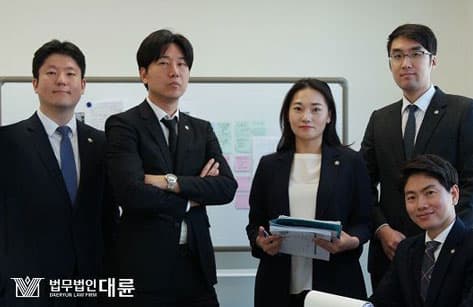
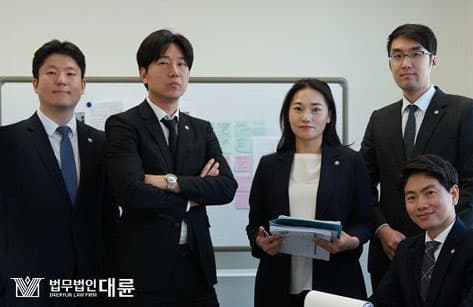
Recently, legal disputes related to inheritance and gifts have been increasing. According to the National Court Administration, the number of requests for division of inherited property is increasing every year, with 1,233 cases in 2016, 1,430 cases in 2017, and 1,710 cases in 2018, and the number of requests for return of retained assets also increased by about 4.6 times over the past 10 years, from 295 cases in 2008 to 1,371 cases in 2018. In the event of death, surviving family members become heirs who can inherit the property rights of the deceased. At this time, if there is no will of the deceased, the heirs must reach an agreement among all co-heirs to divide the inherited property through consultation to determine how the inherited property will be distributed. If there was a gift or bequest to the inherited property, the heir who did not inherit can claim his or her share of the other heirs' inherited property and secure a minimum share of the inheritance. According to the Daeryun Law Firm's Inheritance Dispute Team, there are various situations, such as when the heirs fail to reach an agreement, when a specific heir claims his/her contribution and seeks to receive more property divided, or when one of the co-heirs conceals the inherited property in an unreasonable way before the start of inheritance. There are cases where it is difficult to reach an agreement between heirs, so legal assistance is required. There is no statute of limitations for the division of inherited property, and the right to claim the return of the reserved portion must be claimed within 1 year from the date the holder of the reserved inheritance became aware of the commencement and gift of inheritance or the commencement of inheritance and bequest, and within 10 years from the date of commencement of inheritance. A lawyer from the Daeryun Inheritance Dispute Team at Law Firm said, “Disputes that arise when one of the co-heirs steals the inherited property also arises. “There are many cases where the client’s father died and the stepmother, who was a co-heir, donated the real estate before the death of the deceased and insisted on excluding it from the inheritance while the ownership transfer registration was completed.” “At the time, it was discovered that the deceased was incompetent at the time of signing the gift contract, and a lawsuit was filed requesting cancellation of ownership transfer registration, a request for an injunction to prohibit real estate disposal, and a lawsuit requesting return of retained assets to determine the size of the inherited property. “We recalculated and restored the client’s inheritance share and rights,” he explained. “In an inheritance dispute, the key is to accurately determine the size of the inherited property and calculate the degree of violation of one’s rights.” He also advised, “A multi-faceted review and analysis, such as identification of the decedent’s basic property, contributions, special profits of co-heirs, borrowed-name property, etc., has limitations that can be resolved by an individual, so legal assistance is needed.” Daeryun Law Firm, which provided assistance, currently provides assistance. It said it has offices in Seoul, Busan, Daegu, Incheon, Gwangju, Daejeon, Ulsan, Suwon, Changwon, Cheongju, Jeonju, Uijeongbu, Chuncheon, Jinju, and Jeju. The inheritance dispute team explained that it provides professional legal services necessary for inherited property division adjudication, contribution share, reserve share, limited approval of inheritance, renunciation of inheritance, inheritance recovery, will, denial of paternity, inheritance lawsuit, and cancellation of ownership transfer registration. View the original article by Reporter Seunghan Lee - https://news.naver.com/main/read.nhn?mode=LSD∣=sec&sid1=103&oid=241&aid=0003018698