CONTENTS
- 1. Act on Contracts to Which the State Is a Party | Why Construction Companies Should Pay Attention

- - The Scope of Contracts to Which This Law Applies
- - Why Is It Especially Important for Construction Companies?
- 2. Act on Contracts to Which the State Is a Party | Key Obligations of Construction Companies
- - Bidding and Contracting Stage
- - Construction and Performance Stage
- - Completion and Settlement Stage
- 3. Act on Contracts to Which the State Is a Party | Sanctions for Violations
- - Restriction of Qualification to Participate in Bidding
- - Liquidated Damages for Delay
- - Rescission or Termination of the Contract and Forfeiture of the Contract Guarantee Deposit
- 4. Act on Contracts to Which the State Is a Party | Points Frequently Overlooked in Practice
- - Failure to Carry Out the Re-Approval Procedure When Changing Subcontracting
- - Omission of an Application to Extend the Contract Period in the Event of Delayed Completion
- - Informal Coordination With Other Companies Before Bidding
- - Partial Correction or Supplementation of Contract Documents
- 5. Act on Contracts to Which the State Is a Party | Daeryun's System of Advance and Subsequent Support

1. Act on Contracts to Which the State Is a Party | Why Construction Companies Should Pay Attention
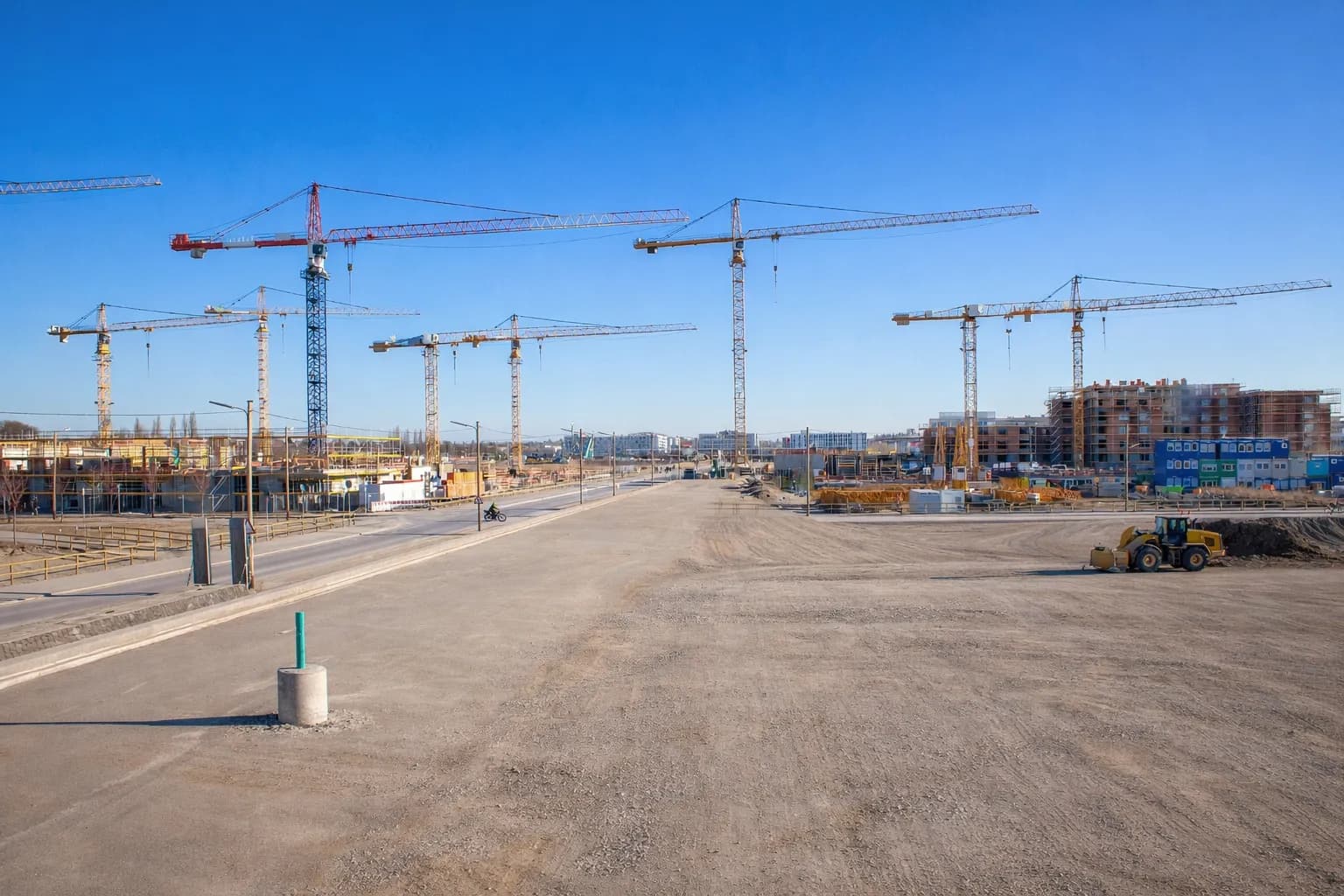
The Act on Contracts to Which the State Is a Party is a law that governs all construction, service, and goods contracts placed by the State, and it takes priority over other statutes such as the Civil Act and the Commercial Act.
The full process of bidding for, winning, and building public works falls under this law.
The trouble is that many construction company staff assume that "good construction is enough," only to face unexpected sanctions over procedural violations or document problems.
 The Scope of Contracts to Which This Law Applies
The Act on Contracts to Which the State Is a Party covers contracts to which the State is a party in general, including government procurement contracts under international bidding.
Construction placed by a local government is governed by a separate Local Contract Act, but its substantive structure and the way it imposes sanctions are nearly identical to those of the Act on Contracts to Which the State Is a Party.
Any construction company that has taken part in public works even once already falls under this law.
Why Is It Especially Important for Construction Companies?
When a company breaches an obligation under the Act on Contracts to Which the State Is a Party, it faces dispositions such as a restriction on its qualification to participate in bidding.
The difficulty here is that once one agency imposes a restriction disposition, that fact is reported at once to every central government agency, which in practice shuts the company out of the entire public procurement market for a set period.
A violation of the law can therefore decide the survival of a construction company that draws a substantial part of its revenue from public works.


2. Act on Contracts to Which the State Is a Party | Key Obligations of Construction Companies
The Act on Contracts to Which the State Is a Party sets out, stage by stage, the obligations that a construction company must observe from bidding through the period after completion.
Bidding and Contracting Stage
A construction contract is, as a rule, carried out through open competitive bidding, and the contract must clearly state the following matters.
Matters Required to Be Stated When Preparing a Contract
∙ Contract amount
∙ Performance period
∙ Contract guarantee deposit
∙ Allocation of risk
∙ Liquidated damages for delay
∙ Other necessary matters
In the following cases, however, the parties may omit the preparation of a contract.
▷ Where the matter is put to auction
▷ Where, in the sale of goods, the buyer immediately pays the price and takes delivery of the goods
▷ Where a contract is concluded between national agencies and local governments
▷ Where, by its nature, the preparation of a contract is unnecessary, such as a supply contract for electricity, gas, or water
When the contract is concluded, the parties must also conclude an integrity contract.
This is an agreement not to give or receive money, valuables, or entertainment throughout the entire process of bidding, awarding, concluding, and performing the contract, and a violation of it constitutes grounds for cancellation of the bid or award or for rescission or termination of the contract.
Construction and Performance Stage
The construction must be completed within the completion deadline set in the contract, and any subcontracting must obtain the approval of the ordering agency.
Subcontracting without approval, or changing a subcontract so that it differs from the approved conditions, is in itself subject to sanctions.
Performing a contract in a defective, shoddy, or improper manner during construction, along with causing loss to the State by fraud or other improper means, also draws severe sanctions.
Completion and Settlement Stage
The payment for the construction is made after the completion inspection or the preparation of the inspection report.
Even after completion, the agency may review compliance with the integrity contract, and if the contract is rescinded or terminated, an obligation arises to repay any unsettled balance of the advance payment together with interest.
3. Act on Contracts to Which the State Is a Party | Sanctions for Violations

The sanctions that a construction company may face for a violation of the Act on Contracts to Which the State Is a Party fall broadly into three groups: a restriction on the qualification to participate in bidding, the imposition of liquidated damages for delay, and rescission or termination of the contract together with forfeiture of the guarantee deposit.
Restriction of Qualification to Participate in Bidding
The most direct sanction is a restriction on the qualification to participate in bidding for a period of not less than one month and not more than two years.
As soon as the disposition is issued, it is reported to every central government agency and results in exclusion from the entire public procurement market, which, for a construction company that depends heavily on public works, amounts in practice to a near-suspension of business.
Violation |
Defective, shoddy, or improper construction, or improper conduct |
Collusion on bid prices or awarded volumes, or conspiracy in selecting the successful bidder |
Subcontracting without the approval of the ordering agency, or an unauthorized change of conditions |
Where loss is caused to the State by fraud or other improper means |
Offering a bribe to a relevant public official |
Forgery or alteration of bidding or contract documents |
Death of two or more workers due to a violation of safety and health measures |
Liquidated Damages for Delay
If the company exceeds the completion deadline without justifiable reason, liquidated damages for delay are imposed according to the formula below.
Liquidated damages for delay = Contract amount × 0.001 (rate of liquidated damages for delay) × Number of days of delay
Liquidated damages for delay may run up to 30% of the contract amount.
For a construction project worth 10 billion won, that comes to as much as 3 billion won.
However, periods of delay caused by reasons not attributable to the contractor, such as typhoons, floods, war, or infectious disease, and periods of delay caused by reasons attributable to the ordering agency are excluded from the number of days of delay.
Where unavoidable circumstances exist, the company needs to confirm whether the requirements are met.
Rescission or Termination of the Contract and Forfeiture of the Contract Guarantee Deposit
Where the liquidated damages for delay reach an amount equal to the contract guarantee deposit, or where performance of the contract is deemed impossible for reasons attributable to the contractor, the contract is rescinded or terminated and the contract guarantee deposit reverts to the National Treasury.
In that case, if any unsettled balance remains from the advance payment already received, the contractor must return it with interest added.
4. Act on Contracts to Which the State Is a Party | Points Frequently Overlooked in Practice
Most violations of the Act on Contracts to Which the State Is a Party stem from "not knowing" or from "assuming it was customary practice."
Failure to Carry Out the Re-Approval Procedure When Changing Subcontracting
Although subcontracting conditions commonly shift with on-site circumstances, changing them without the approval of the ordering agency can in itself trigger sanctions.
Omission of an Application to Extend the Contract Period in the Event of Delayed Completion
Even where grounds for an extension exist, such as a natural disaster or reasons attributable to the ordering agency, a failure to file a written application with a revised process schedule attached within the deadline means those days cannot be excluded from the calculation of the number of days of delay.
Informal Coordination With Other Companies Before Bidding
Although practice often treats it lightly, any consultation regarding the bid price or awarded volume can give rise to a collusion problem.
Partial Correction or Supplementation of Contract Documents
Even where the content is minor, correcting or supplementing documents related to a contract may be found to be forgery or alteration.
See More
5. Act on Contracts to Which the State Is a Party | Daeryun's System of Advance and Subsequent Support
Cases under the Act on Contracts to Which the State Is a Party often involve administrative sanctions, civil disputes, and criminal investigation unfolding at the same time.
Because resolving any single one of these does not close the matter, a company needs to see the whole picture and set a response strategy from the early stage.
Advance Prevention
∙ Legal advice on the lawfulness of subcontracting contracts and changes
∙ Review of whether the requirements for extension of the contract period or adjustment of the contract amount are met
Subsequent Response
∙ Objections and litigation responses against excessive imposition of liquidated damages for delay
∙ Disputes over the lawfulness of rescission or termination of a contract and claims for the value of completed work
∙ Responses to Fair Trade Commission investigations and criminal investigations related to collusion allegations
∙ Responses to civil disputes such as claims for and defense against damages related to a contract
Disputes over public works combine technical facts with legal procedures.
After a sanction disposition has issued, the time and options for response narrow quickly, so it helps to review the situation together with professionals at the early stage, when warning signs first appear.
Daeryun has many construction-focused attorneys with experience advising on public contracts.
On that footing, it can provide the professional legal advice that public contracts call for, both before and after they are made.
If you need legal advice on the Act on Contracts to Which the State Is a Party and public contracts, you may use the 🔗Construction-Specialized Attorney Legal Consultation Reservation to have your case reviewed.