
CONTENTS
- 1. Traffic Accident Disputes | Meaning

- 2. Traffic Accident Disputes | Drunk Driving and Traffic Accidents
- - Criminal Punishment
- - Civil Liability
- 3. Traffic Accident Disputes | Fault Ratio
- - Civil Litigation
- 4. Traffic Accident Disputes | Litigation Against Insurers
- - Reimbursement (Indemnity) Claim
- 5. Traffic Accident Disputes | How to Respond
- - Securing Evidence Immediately After an Accident
- - Claim for Damages
- - Developing a Strategy

1. Traffic Accident Disputes | Meaning

A traffic accident dispute refers to a conflict concerning damages, insurance proceeds, criminal punishment, and similar matters arising from a traffic accident.
Traffic accidents occur in a wide range of forms, from a simple fender bender to a serious accident resulting in severe injury or death.
Because a single accident can give rise to disputes in the civil and criminal spheres at the same time, the initial response is more important than anything else.


2. Traffic Accident Disputes | Drunk Driving and Traffic Accidents
Unlike ordinary accidents, a drunk driving traffic accident is a dispute in which criminal, civil, and administrative liability arise at the same time.
In particular, where the accident results in personal injury or loss of life, it is difficult to regard it as a mere mistake, and severe punishment and liability for damages may follow.
 Criminal Punishment
Where a person causes a traffic accident while under the influence of alcohol, the person becomes subject to criminal punishment under the 「Road Traffic Act」 and the 「Act on Aggravated Punishment of Specific Crimes」.
Where a person drives a vehicle while intoxicated and causes injury to or the death of another, the person may be punished as follows.
▶ Act on Aggravated Punishment of Specific Crimes, Article 5-11 (Dangerous Driving Causing Death or Injury)
| Where a person is caused to suffer injury | Imprisonment for not less than 1 year and not more than 15 years, or a fine of not less than 10 million won and not more than 30 million won |
| Where a person is caused to die | Life imprisonment or imprisonment for not less than 3 years |
Where a person, after causing a traffic accident and creating a victim, flees without taking any aid measures, the person may be punished as follows,
▶ Act on Aggravated Punishment of Specific Crimes, Article 5-3 (Aggravated Punishment of Drivers of Fleeing Vehicles)
Where the driver causes the victim's death and flees, or the victim dies after the driver flees | Life imprisonment or imprisonment for not less than 5 years |
| Where the driver causes the victim injury | Imprisonment for a definite term of not less than 1 year, or a fine of not less than 5 million won and not more than 30 million won |
Where the driver causes the victim's death and, after moving the victim from the accident site, abandons the victim and flees | Life imprisonment or imprisonment for not less than 5 years |
Where the driver causes the victim injury and, after moving the victim from the accident site, abandons the victim and flees | Imprisonment for a definite term of not less than 3 years |
Civil Liability
The perpetrator of a drunk driving traffic accident bears civil liability to the victim for compensation for both pecuniary loss and emotional harm.
The perpetrator bears liability to compensate for actual pecuniary losses, such as medical expenses, vehicle repair costs, and lost business income, and where the degree of injury is serious, consolation money (solatium) of tens of millions of won or more may be recognized.
In addition, where the victim suffers serious injury or is left with a permanent disability, the matter may develop into long-term litigation for damages.
Because drunk driving constitutes intent or gross negligence, coverage under automobile insurance may be limited, or the driver may become subject to a reimbursement (indemnity) claim by the insurer.
3. Traffic Accident Disputes | Fault Ratio

One of the most frequently occurring traffic accident disputes is a conflict over the fault ratio.
The fault ratio is a numerical assessment of the degree of each party's fault in the accident, and it serves as a key standard for determining the scope of civil liability for damages.
When an accident occurs, the parties initially negotiate the proportion of fault through their insurers, but in many cases the parties' positions differ greatly, or a party does not agree with the insurer's assessment.
In such cases, the parties may go through mediation by a dispute mediation committee or by the Financial Supervisory Service, but where a party cannot agree with all of these decisions, the party may seek a court's judgment directly through civil litigation.
Civil Litigation
In civil litigation, the court comprehensively reviews the circumstances at the time of the accident to determine the fault ratio.
For example, even if the other party's vehicle violated a traffic signal, partial fault may be recognized if the person exceeded the speed limit or neglected safe driving.
Because the fault ratio directly affects the calculation of the amount of damages, accurate evidence collection and a legal response strategy are very important.
Materials such as the following are used as important evidence for determining fault.
▶ Key evidence
Photographs of the accident scene
Police investigation records
Traffic accident appraisal reports and expert opinions
Systematically collecting and organizing such evidence plays an important role in proving the fault ratio favorably in civil litigation.
4. Traffic Accident Disputes | Litigation Against Insurers
One of the most common disputes related to damages following a traffic accident is conflict with an insurer.
When a disagreement arises after an accident over whether insurance proceeds will be paid or over the amount, the matter may develop into a claim for insurance proceeds or a reimbursement (indemnity) claim against the insurer.
Reimbursement (Indemnity) Claim
One of the most confusing situations in a dispute with an insurer after a traffic accident is a reimbursement (indemnity) claim.
This refers to a lawsuit that an insurer files in order to claim, from the perpetrator, an amount that the insurer first paid to the victim as insurance proceeds.
▶ Typical situations in which a reimbursement (indemnity) claim arises
An intentional accident or a hit-and-run accident
An accident while driving without a license or with a revoked license
An accident falling under a coverage exclusion of one's own vehicle insurance
A reimbursement (indemnity) claim is a serious dispute that can go beyond a simple insurance dispute and lead to civil liability of tens of millions of won.
For this reason, it is necessary to accurately identify the exclusion clauses of the insurance policy from the early stage of the accident, and to respond strategically in preparation for the possibility of future litigation.
5. Traffic Accident Disputes | How to Respond
Traffic accident disputes involve various intertwined issues, such as the fault ratio, damages, payment of insurance proceeds, and whether criminal punishment applies, and the initial response has a significant effect on the eventual outcome.
The following are basic response measures that should be considered when a traffic accident dispute arises.
Securing Evidence Immediately After an Accident
It is easy to become flustered immediately after a traffic accident, but the most important thing is to secure evidence.
This is because it forms the basis of all subsequent procedures, including disputes over the fault ratio, claims for insurance proceeds, and damages.
The items of evidence that must be secured are as follows.
Photographs of the scene
Photographing the vehicle's stopping position, the damaged areas, the road conditions, and similar details from various angles can work favorably in the assessment of fault.
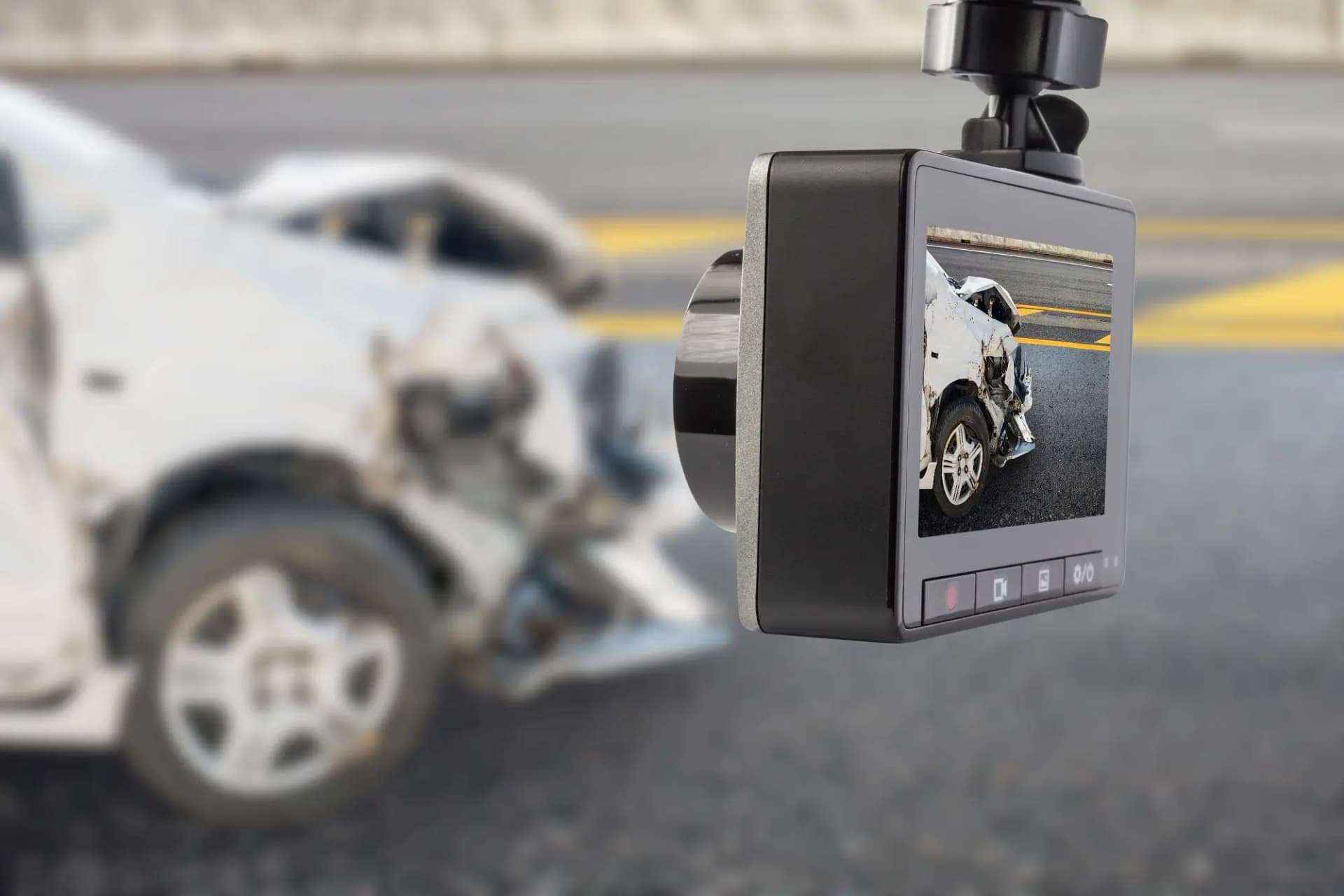
Dashcam footage
Dashcam footage capturing the circumstances before and after the accident can be decisive evidence, so it is important to back it up quickly before it is automatically deleted.
CCTV materials
If the accident was captured on CCTV at shops or public facilities near the accident site, a request to secure the footage should be made promptly before the footage is deleted.
Witness statements
An objective statement from a third party can be key evidence in a dispute over the fault ratio.
Claim for Damages
If you intend to pursue litigation for damages arising from a traffic accident, it is very important to organize all items of loss accurately and without omission, including medical expenses, lost business income, consolation money (solatium), and vehicle repair costs.
Specific items of loss and the related supporting documents must be prepared systematically so that an appropriate amount of compensation can be calculated and a settlement can proceed smoothly.
If the other party's insurer unreasonably delays or reduces a settlement or compensation, you should respond actively and consider filing civil litigation.
Developing a Strategy
Traffic accident disputes involve a complex combination of various legal issues, such as the calculation of the fault ratio, the scope of damages, problems with the payment of insurance proceeds, and the possibility of criminal punishment, which makes it very difficult to respond on one's own.
In particular, because the laws and precedents that apply vary depending on the circumstances of the accident, and because prompt and accurate action is required at each stage, it is not easy to make appropriate judgments and take appropriate measures without professional legal knowledge and experience.
For this reason, analyzing the situation closely with a professional from the early stage of the dispute and establishing a stage-by-stage response strategy can be of considerable help in resolving the dispute.
Drawing on many years of experience in resolving traffic accident disputes, this firm provides systematic legal support for various types of traffic accident cases through strategies tailored to each matter.
The firm also works closely with professionals in the civil, criminal, and administrative fields to build a multifaceted response system covering the calculation of the fault ratio, insurance proceeds disputes, criminal litigation, and other matters.
Those experiencing difficulty due to a traffic accident dispute may wish to establish a careful response strategy together with a 🔗traffic accident attorney.
See More


Watch related video content
for this case study.

What if the ‘traffic accident fault ratio’ cannot be recognized? A lawyer's solution!