CONTENTS
- 1. Obstruction of Official Duties | Definition

- - Requirements for Establishment
- - Main Types
- 2. Obstruction of Official Duties | Special Cases
- - Levels of Punishment for Obstruction of Official Duties
- - Sentencing Guidelines for Obstruction of Official Duties
- 3. Obstruction of Official Duties | Methods of Response
- 4. Obstruction of Official Duties | Response Measures
- - What If You Admit the Charge?
- - If You Deny the Charges?
- - If You Need Related Assistance?

1. Obstruction of Official Duties | Definition

Obstruction of official duties is a crime that punishes acts of obstructing a public official's performance of duties while the official is carrying them out.
Specifically, an act committed to obstruct, or with the intent to obstruct, a public official who is lawfully performing official duties constitutes obstruction of official duties.
 Requirements for Establishment
② Where the public official is performing lawful official duties
③ Where the perpetrator commits assault or intimidation for the purpose of obstructing the performance of official duties
Main Types
Obstruction of official duties can be established in various situations, and it frequently occurs in particular while a person is intoxicated.
| Where a person verbally abuses or assaults a police officer while intoxicated
| Where a person grabs a police officer by the collar or pushes the officer during an enforcement action
| Where a person strongly resists while refusing arrest as an offender caught in the act
| Where a person spits at or inflicts physical harm on a public official
| Where a person creates a disturbance, claiming that the arrest or enforcement action was unlawful


2. Obstruction of Official Duties | Special Cases

Special Obstruction of Official Duties
Special obstruction of official duties is a crime that is established when official duties are obstructed by displaying the collective force of a group or a crowd, or while carrying a dangerous object.
Special Obstruction of Official Duties Resulting in Death or Injury
Special obstruction of official duties resulting in death or injury is a crime that is established when, while displaying the collective force of a group or a crowd or carrying a dangerous object, a person commits assault or intimidation in order to obstruct a public official's performance of duties and thereby inflicts injury on the official or causes the official's death.
Obstruction of Official Duties by Deceit
Obstruction of official duties by deceit is a crime that punishes the act of notifying false facts or deceiving a public official in order to obstruct the official's performance of duties.
Levels of Punishment for Obstruction of Official Duties
| Criminal Act Article 136 (Obstruction of Official Duties) | Imprisonment with labor for up to 5 years or a fine of up to 10 million won |
| Criminal Act Article 137 (Obstruction of Official Duties by Deceit) | |
| Criminal Act Article 144 (Special Obstruction of Official Duties) | Aggravated by up to one half of the sentence |
Where the public official is caused injury, imprisonment for a definite term of 3 years or more Where death is caused, life imprisonment or imprisonment with labor for 5 years or more |
Sentencing Guidelines for Obstruction of Official Duties
Obstruction of Official Duties
▷ A motive for the offense that warrants consideration
▷ Mental and physical weakness
▷ Voluntary surrender
▷ Passive participation
▷ No record of criminal punishment
▷ No wish for punishment or substantial recovery from harm (including deposit with an official depository)
Special Obstruction of Official Duties Resulting in Death or Injury
▷ Where the resulting death was not caused by the defendant's direct act
▷ Mental and physical weakness
▷ Voluntary surrender
▷ Passive participation
▷ Aid and transport after the offense
▷ No record of criminal punishment
▷ No wish for punishment or substantial recovery from harm (including deposit with an official depository)
3. Obstruction of Official Duties | Methods of Response
▶ Early Case Response
When you receive notice of the charge, it is important to remain calm rather than panic and to ascertain the circumstances of the case.
It is advisable to avoid unnecessary statements or confessions and, where necessary, to exercise the right to remain silent and the right to refuse to make statements.
Record and secure the circumstances at the time of the incident and the related evidence objectively.
▶ Police Investigation Stage
During the police investigation, rather than denying everything outright, it is important to answer accurately based on the facts.
Maintaining composure and conveying the situation clearly is the appropriate approach.
▶ Trial Stage
At trial, the facts should be explained clearly, and justifiable grounds or factors for mitigation of the sentence should be actively asserted.
Showing an attitude of remorse and submitting a written statement seeking leniency can also be of help.
If necessary, prepare to secure surrounding witnesses or objective evidence and submit them to the court
4. Obstruction of Official Duties | Response Measures
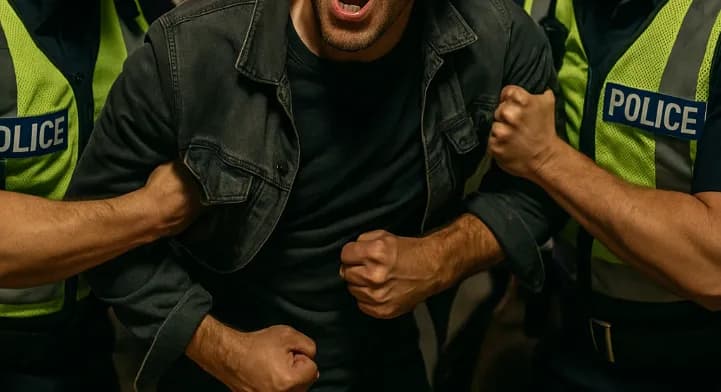
In an obstruction of official duties case, the response strategy and the outcome differ greatly depending on whether the charge is admitted or denied.
What If You Admit the Charge?
Where the charge of obstruction of official duties is admitted, active remorse and a sincere attitude may be considered favorably in sentencing.
First, it is important to submit a genuine letter of apology to the court.
It is advisable for the letter of apology to include the circumstances of the offense, the psychological state at the time, deep remorse, and a concrete plan to prevent reoffending.
In addition, an attempt to reach a settlement with the victim may also be a factor for reduction of sentence; however, because the victim in an obstruction of official duties case is a public official, a settlement itself is often difficult due to constraints on the official's status or the policies of the agency.
In such situations, it is necessary to actively prepare materials for favorable consideration of the circumstances.
If You Deny the Charges?
When denying the charges, a simple denial alone is not sufficient. The key is to prove one's innocence by securing objective and specific evidence.
Gathering Evidence
CCTV footage from the time of the incident, vehicle dashcam recordings, and mobile phone video footage should be secured to reconstruct the circumstances of the incident.
Securing statements from nearby witnesses can also be one approach.
The secured evidence should be promptly subject to a preservation application so that it is not altered or damaged, and submitted to the court as evidence when necessary.
If You Need Related Assistance?
Daeryun Law Firm has a number of attorneys registered as criminal law practitioners with the Korean Bar Association, and responds carefully from the early stages of a case.
From the police investigation stage, advance simulations are conducted to prevent unnecessary mistakes, and strategic response measures are prepared.
In addition, by collaborating with its own Evidence Investigation Center, the firm works to protect the client's rights through the securing and analysis of objective evidence.
If you are facing difficulties from involvement in obstruction of official duties, please request assistance from a criminal attorney at Daeryun Law Firm.
See More


Watch related video content
for this case study.

Criminal Deposit Q&A 🔎 Ask anything! 👀