
CONTENTS
- 1. Division of Inherited Property | Need for It

- - Resolving the Co-Heirs' State of Joint Ownership
- - Clarifying the Heirs' Rights
- - Preventing Disputes
- 2. Division of Inherited Property | Subject of Division
- - Inherited Property Subject to Division
- - Property Not Subject to Division
- 3. Division of Inherited Property | Methods of Division
- - Designated Division
- - Division by Agreement
- - Division by Adjudication
- - When New Property Emerges
- 4. Division of Inherited Property | Effects of Division
- - Retroactive Effect of Division
- - Warranty Liability of Co-Heirs
- - Warranty of Solvency to Creditors
- - Apportionment Among Co-Heirs for an Insolvent Co-Heir
- - Claim of New Heirs Such as an Affiliated Child
- 5. Division of Inherited Property | Checklist
- - Support System of the Inheritance Attorney

1. Division of Inherited Property | Need for It
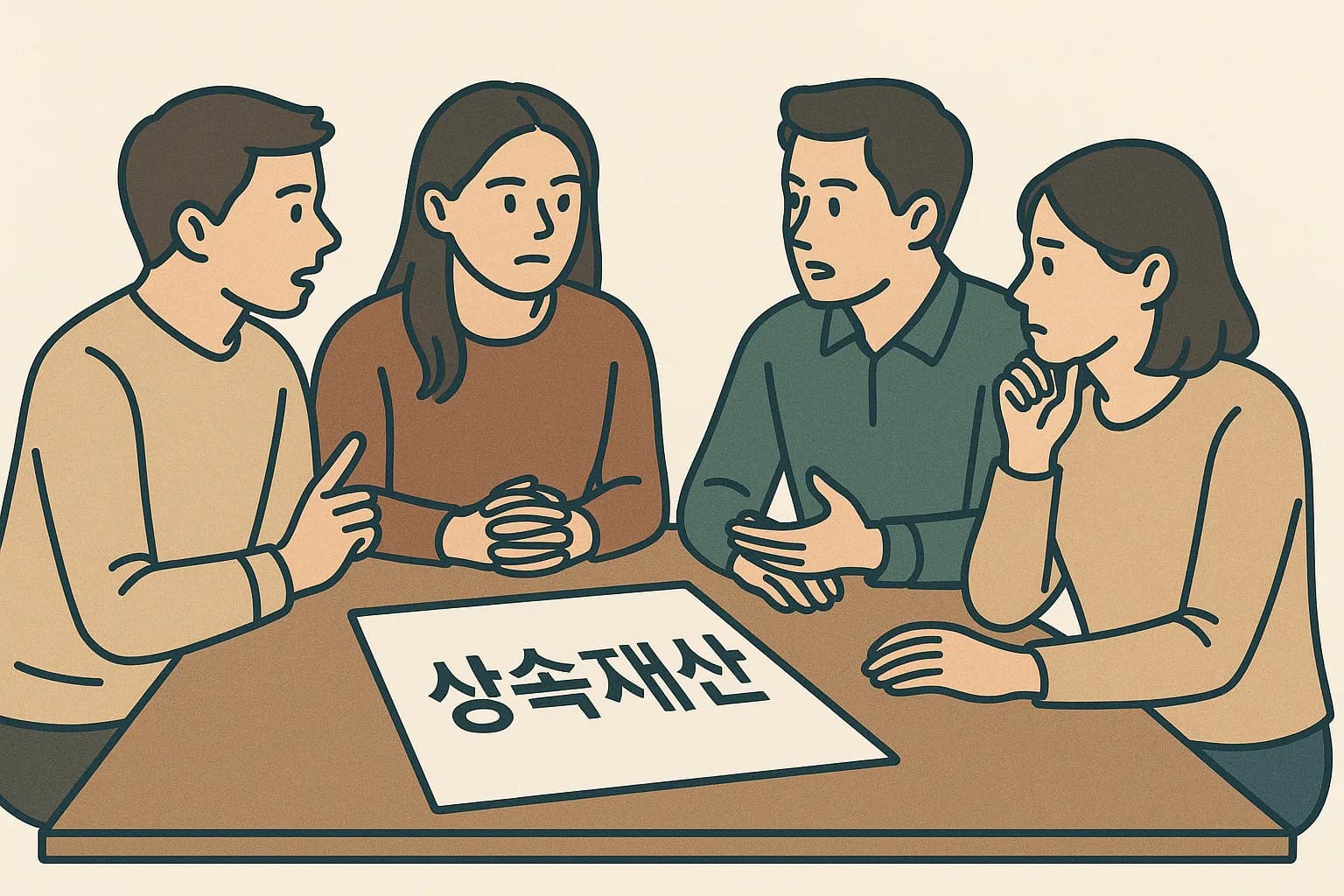
Division of inherited property is the procedure by which all co-heirs divide the inherited property held in joint ownership.
For the following reasons, division of inherited property may be necessary after the commencement of inheritance.
 Resolving the Co-Heirs' State of Joint Ownership
When inheritance commences upon the death of the decedent, the decedent's property becomes jointly owned by all the co-heirs (Articles 1006 and 1007 of the Civil Act).
At this point, because it is difficult for each heir to exercise their rights while the property remains jointly owned, division is necessary to resolve this state.
Clarifying the Heirs' Rights
Through division of inherited property, each heir's share is determined.
Accordingly, each heir may dispose of, use, or take profits from the property as their own right.
Preventing Disputes
To reduce disputes that may arise over division after death, it is advisable to make matters clear through division of inherited property.


2. Division of Inherited Property | Subject of Division
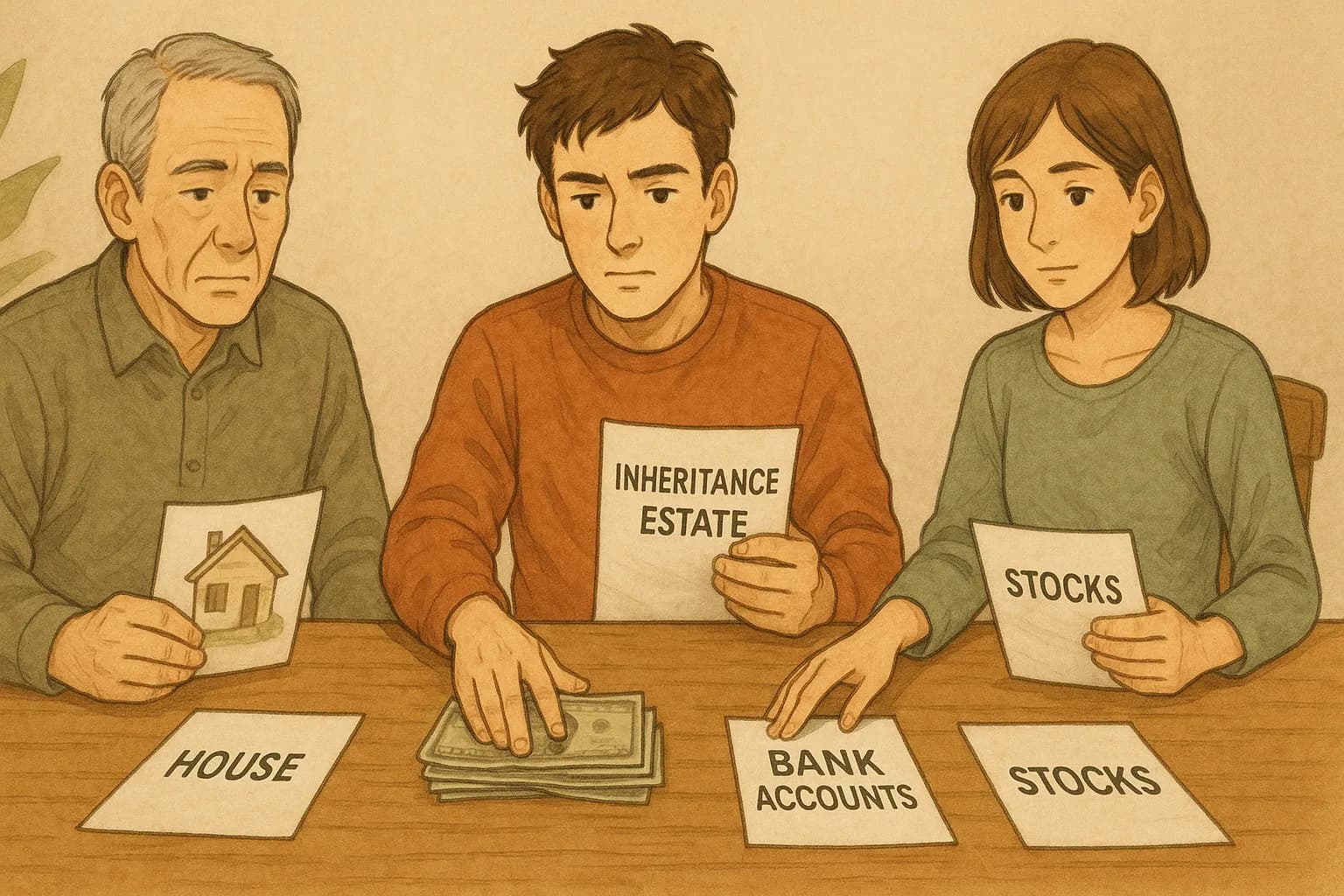
The subject of division of inherited property is that portion of the decedent's property, comprehensively transferred to the heirs, which is in a state of joint ownership.
However, not all property is subject to division, and certain exceptions exist.
Inherited Property Subject to Division
In principle, all inherited property is subject to division.
Here, inherited property refers to all objects and rights of monetary value that the decedent held during their lifetime, and it includes all tangible and intangible assets of economic value.
The co-heirs' jointly owned property may be divided into each person's share, and it is valued on the basis of its value at the time of division or at the time of adjudication.
At this point, specific items such as real estate, securities, vehicles, and antiques may be divided in various ways, including division in kind, division by proceeds, and division by value.
Property Not Subject to Division
Property of a divisible nature, such as money (divisible claims and divisible obligations), is automatically divided and succeeded to according to the statutory inheritance shares at the same time as the commencement of inheritance.
Accordingly, it does not separately become subject to division of inherited property (see Supreme Court Decision 97Da8809, June 24, 1997).
Statutory Order of Inheritance
Order | Heir | Remarks |
1 | Lineal descendants of the decedent (children, grandchildren, and the like) | Always becomes an heir |
2 | Lineal ascendants of the decedent (father, mother, grandparents, and the like) | Becomes an heir where there are no lineal descendants |
3 | Siblings of the decedent | Becomes an heir where there are no heirs in the 1st or 2nd order |
4 | Collateral relatives of the decedent within the fourth degree (uncles, aunts, and the like) | Becomes an heir where there are no heirs in the 1st, 2nd, or 3rd order |
※ Here, the decedent's legal spouse becomes a co-heir together with the decedent's lineal descendants or lineal ascendants where such heirs exist, and becomes the sole heir where there are no heirs who are lineal descendants or lineal ascendants of the decedent.
Here, a divisible claim refers to a claim that retains its effect even when divided, and a divisible obligation means one that may be divided among several heirs and performed.
3. Division of Inherited Property | Methods of Division

Division of inherited property may proceed in various ways, depending on the agreement of all heirs or a decision of the court.
Where there is a will of the decedent, division in accordance with that will is also possible.
Designated Division
Where the decedent has determined the method of dividing the inherited property by a will made during their lifetime, the property is divided in accordance with the contents of that will (Article 1012 of the Civil Act).
Methods of Division by Designation
: A method of dividing the inherited property in its original form
∙ Division by proceeds
: A method of converting the property into cash and dividing the amount
∙ Division by value
: A method by which one of the heirs pays the others' shares in money and holds sole ownership
Division by designation is possible only where there is a will or where the method of division has been entrusted to a third party by will, and it must be followed unless the designated method of division is legally void or violates a mandatory provision.
Division by Agreement
This is a method of dividing the inherited property by the free agreement of all co-heirs (Article 1013(1) of the Civil Act).
It is possible only where the decedent's will contains no provision prohibiting division.
(however, to prevent disputes, preparing a written division agreement is recommended)
▷ All heirs must participate
(if any are omitted or an unqualified person is included, the agreement is void)
At this point, if the co-heirs include a minor, a special representative must be appointed for the agreement to be valid.
In addition, a declaration of intent to enter into the agreement made by fraud, duress, or mistake may be revoked (Articles 109 and 110 of the Civil Act).
Division by Adjudication
Where no agreement is reached, a claim for division of inherited property may be filed with the family court (Article 1013(2) of the Civil Act; Article 2(1)2(b)10 of the Family Litigation Act).
② Where conciliation fails, the court adjudicates directly
At this point, an adjudication of division may be filed by one or more of the heirs against all the other heirs.
If there is a concern that the value of the property may be substantially impaired, the court may order an auction instead of division in kind (Article 269(2) of the Civil Act).
Contents of the Petition for Adjudication of Division of Inherited Property
∙ The respondent's name, resident registration number, and address
∙ The decedent's (the deceased's) name, resident registration number, registered domicile, and last address
∙ Purport of the claim
∙ Cause of the claim
∙ Attached documents
1. One copy each of the petitioner's family relation certificate (detailed) and resident registration record
2. One copy each of the decedent's removed family register or closed basic certificate (detailed) and family relation certificate (detailed)
3. The decedent's cancelled resident registration record
4. A document proving any special relationship
5. A copy of the adjudication appointing an administrator of the inherited property
6. The public notice for the search of heirs
7. Other supporting materials
∙ A list of heirs and a list of property
When New Property Emerges
New inherited property may emerge even after division, in which case the existing agreement may be rescinded and a new agreement reached.
However, the consent of all heirs is required, and the rights of a third party acquired before the rescission may not be prejudiced (Supreme Court Decision 2002Da73203, July 8, 2004).
4. Division of Inherited Property | Effects of Division

Once division of inherited property is completed, each heir holds the legal status of an exclusive property holder rather than a co-owner.
As a result, the scope of rights becomes clear, and various legal effects arise.
Retroactive Effect of Division
Once division of the inherited property is completed, each heir's ownership is recognized retroactively as of the time inheritance commenced (Article 1015 of the Civil Act).
In other words, each heir is deemed to have owned the property acquired by them from the date of commencement of inheritance.
As an exception, the rights of a third party may not be prejudiced, and if a third party acquired a right before the division of inherited property, that right is protected.
Warranty Liability of Co-Heirs
Where there is a defect in the divided inherited property, the other co-heirs also bear a certain degree of liability (Article 1016 of the Civil Act).
Warranty of Solvency to Creditors
Where the property acquired by another co-heir includes a claim, the other co-heirs must warrant the debtor's ability to pay (solvency) (Article 1017 of the Civil Act).
In addition, for a claim whose due date has not yet arrived, they must warrant that solvency will be maintained when that date arrives.
Apportionment Among Co-Heirs for an Insolvent Co-Heir
Where some of the co-heirs are unable to fulfill their warranty liability, the other solvent heirs must share the burden (Article 1018 of the Civil Act).
However, a person at fault may not make a claim for apportionment.
Claim of New Heirs Such as an Affiliated Child
If, after division of inherited property, there is a child who is also recognized as an heir (through affiliation and the like), that person cannot directly claim the existing inherited property, but may demand the amount corresponding to their inheritance share (Article 1014 of the Civil Act).
However, this right must be exercised within 3 years from the date on which the person learned of having been excluded from the inheritance (Article 999(2) of the Civil Act).
See More
5. Division of Inherited Property | Checklist

To carry out the division of inherited property smoothly, the rights of each heir must be accurately identified.
In addition, advance preparation that clearly organizes the property subject to division, its value, and any debts is necessary.
In particular, because a division by agreement is valid only with the consent of all heirs, organizing the underlying records and coordinating opinions before division is the most important step.
Item of Preparation | Main Content |
Confirming the Scope of Heirs | Confirm all heirs through the family relation register, the removed family register, and similar records (also review acknowledged children, divorce or remarriage, and the like) |
Preparing the List of Inherited Property | Organize all property, including real estate, deposits, vehicles, stocks, and debts (divisible property such as claims is excluded from the division) |
Valuation of Property | Value the property as of the time of agreement or of the adjudication of division (an appraisal may be used) |
Organizing Debts and Deductible Items | Confirm deductible items such as the decedent's debts and funeral expenses |
Agreement on the Method of Division | Decide on division in kind, division by sale proceeds, or division by price (agreement among all heirs is required) |
Preparing and Confirming the Division Documents | Prepare the agreement on division of inherited property or documents related to conciliation or adjudication (if a minor is involved, a special representative must be appointed) |
Registration and Change of Title After Division | Real estate registration, change of title for financial assets, transfer of vehicles, and the like (confirm the necessary documents, such as the agreement or the adjudication decision) |
Support System of the Inheritance Attorney
This law firm includes specialist attorneys with an average of more than 10 years of experience, as well as a number of inheritance specialist attorneys registered with the Korean Bar Association.
As a result, comprehensive support is available, from preparing the list of inherited property to assistance with the procedures according to the method of division, the subsequent registration procedures, and the payment of inheritance tax.
If you need legal assistance regarding the division of an inheritance, you may request assistance from an inheritance attorney at any time.