
CONTENTS
- 1. Serious Industrial Accident | Imposition of Obligations on Employers and Managers

- 2. Serious Industrial Accident | Definition and Scope
- - Occupational Diseases Constituting a Serious Industrial Accident
- - The Duty of Employers and Managing Officers to Ensure Safety and Health
- - Substantive and Specific Measures
- 3. Serious Industrial Accident | Obligations in Contracting, Service, and Consignment Relationships
- 4. Serious Industrial Accident | Criminal Punishment and Joint Penalty Provisions for Violations of Obligations
- - Analysis of Guilty Verdicts Under the Serious Accidents Punishment Act
- - Liability for Damages and Victim Protection
- - Victim Protection and Special Provisions for Trial Procedure
- 5. Serious Industrial Accident | A Practical Checklist for Workers
- - Steady Response Through a Task Force of Attorneys and Labor Affairs Consultants

1. Serious Industrial Accident | Imposition of Obligations on Employers and Managers

A serious industrial accident refers to an accident that, among industrial accidents, has caused serious harm.
Out of the awareness that the existing Occupational Safety and Health Act alone had limits in preventing the large-scale accidents that recur at industrial sites, Korea enacted the 「Act on the Punishment of Serious Accidents, etc. (hereinafter the 'Serious Accidents Punishment Act')」 and has been fully implementing it since 2022.
The purpose of this Act is to impose more substantial and specific safety and health management duties on business owners and responsible managing officers and, where a serious accident occurs in violation of these duties, to simultaneously strengthen criminal liability and liability for damages, thereby maximizing the preventive effect.
In particular, the Serious Accidents Punishment Act regulates "serious industrial accidents" and "serious civic accidents" separately.
Through this article, we wish to summarize the key content with a focus on serious industrial accidents.


2. Serious Industrial Accident | Definition and Scope
An industrial accident refers to a situation in which a person providing labor dies, is injured, or contracts a disease as a result of construction works, equipment, raw materials, gases, vapors, dust, and the like related to the work, or as a result of the work or other duties.
The Serious Accidents Punishment Act classifies accidents into 'serious industrial accidents' and 'serious civil accidents.'
Among these, a serious industrial accident applies where an 'industrial accident' under the Occupational Safety and Health Act meets any one of the following requirements.
In other words, because even a single fatality results in immediate recognition as a 'serious industrial accident,' it should be noted that the scope of the management official's responsibility is set very broadly.
However, small-scale workplaces with fewer than 5 full-time employees (limited to individual business operators) are excluded from the application of the Act.
 Occupational Diseases Constituting a Serious Industrial Accident
Occupational diseases that qualify as serious industrial accidents are as follows.
- Acute poisoning of the central nervous system from exposure to vinyl chloride and other substances
- Acute poisoning from exposure to lead, mercury, chromium, benzene, other organic compounds, and similar substances
- Acute poisoning such as loss of consciousness, apnea, pulmonary edema, and olfactory nerve paralysis arising from exposure to hydrogen sulfide
- Legionellosis arising from contaminated cooling water
- Health disorders caused by exposure to high or low atmospheric pressure
- Oxygen deficiency arising in a place with insufficient oxygen concentration in the air
- Acute radiation sickness or aplastic anemia arising from exposure to ionizing radiation
- Heatstroke accompanied by a rise in core body temperature arising from high-heat work or work in a place exposed to extreme heat
The Duty of Employers and Managing Officers to Ensure Safety and Health
In order to prevent serious industrial accidents, the law imposes a duty to secure safety and health on business owners and chief executive officers.
The principal duties are as follows.
- Establishing and implementing a safety and health management system, including the personnel and budget necessary for accident prevention
- Promptly investigating the cause and establishing measures to prevent recurrence when an accident occurs
- Faithfully implementing improvement orders and corrective measures ordered by relevant agencies such as the Ministry of Employment and Labor or local governments
- Other managerial measures to fulfill the duties under safety and health-related statutes
Substantive and Specific Measures
Merely establishing a formal manual or organization within the workplace cannot be regarded as fulfilling the obligation.
The obligation is recognized as faithfully performed only where, in practice, safety training for workers, equipment inspections, and the removal of harmful and dangerous factors are carried out at the site.
3. Serious Industrial Accident | Obligations in Contracting, Service, and Consignment Relationships
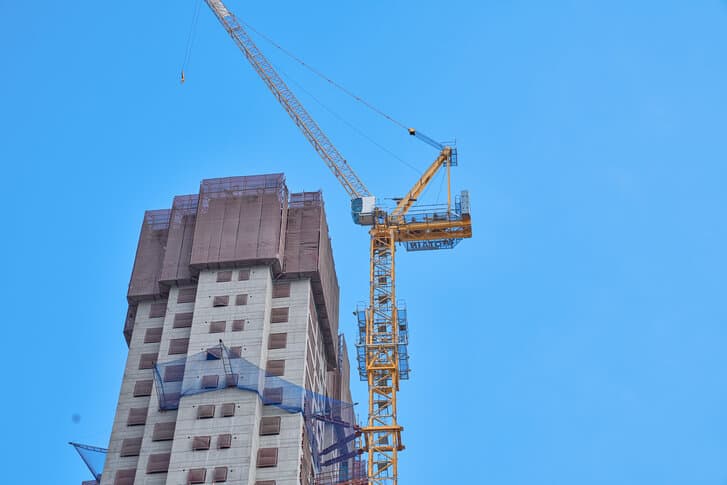
By their nature, industrial sites are often operated through a subcontracting structure.
In practice, a considerable number of serious industrial accidents occur in the intertwined structure of prime contractors and subcontractors.
Accordingly, Article 5 of the Serious Accidents Punishment Act requires that, where the prime contractor (the ordering party) or the business manager has entrusted a third party with a contract, service, consignment, or the like, the same obligation to secure safety and health applies so that a serious industrial accident does not occur to the workers of the contractor.
However, in this case, the obligation is limited to arising only with respect to the facilities, equipment, places, and the like that the ordering party or prime contractor substantially controls, operates, and manages.
4. Serious Industrial Accident | Criminal Punishment and Joint Penalty Provisions for Violations of Obligations
If a serious industrial accident occurs because a business owner or responsible managing officer fails to fulfill the duty to ensure safety and health, criminal punishment is imposed.
- Worker fatality : imprisonment for at least one year or a fine of not more than 1 billion won
- Serious injury or illness : imprisonment for not more than 7 years or a fine of not more than 100 million won
- Same violation within 5 years : sentence increased by one half
- Joint penalty provision : in addition to the responsible managing officer who commits the violation, a separate fine is imposed on the corporation or institution (not more than 5 billion won in the event of death, and not more than 1 billion won in the event of injury or illness)
- Completion of training : the responsible managing officer of the corporation or institution must complete safety and health training (an administrative fine of not more than 50 million won applies for non-completion)
- Failure to report an accident : an administrative fine of not more than 30 million won applies for failing to report or for falsely reporting a serious accident
Analysis of Guilty Verdicts Under the Serious Accidents Punishment Act
Since the Serious Accidents Punishment Act took effect, numerous serious accident cases have been adjudicated by the courts.
Over the three years since the Act took effect, 33 guilty verdicts were handed down, of which actual custodial sentences of imprisonment totaled 5 cases and suspended sentences of imprisonment totaled 26 cases.
The reasons for the actual custodial sentences are as follows.
- Frequent occurrence of industrial accidents in the past
- Prior convictions of the same kind by the representative director
- Disregard of warnings from the safety inspection agency
- Failure to take safety measures
- Absence of an attitude of remorse
Liability for Damages and Victim Protection
When a serious industrial accident occurs, if the business owner or the responsible managing officer violated the duty to ensure safety and health through intent or gross negligence, they must compensate up to 5 times the amount of the loss.
In calculating the amount of compensation, the court considers the following matters.
- The degree of intent or gross negligence
- The type and content of the act of violating the duty, and its duration and frequency
- The scale of the harm that occurred
- The economic benefit derived from the violation
- The financial condition of the business owner, corporation, or institution
- Efforts toward remedying the harm and preventing recurrence
This is a strong sanction intended to provide substantial compensation to victims while raising awareness on the part of businesses.
Victim Protection and Special Provisions for Trial Procedure
In criminal trials concerning serious industrial accidents, the law allows the court to examine the victim or the bereaved family as a witness on its own authority.
In such a case, a specialist adviser may be brought in to enhance expertise, with the aim of ensuring the fairness and effectiveness of the trial.
In addition, the government must establish and implement comprehensive preventive measures to prevent serious industrial accidents, analyze the causes of accidents, provide technical support to workplaces, and carry out education and public awareness efforts.
The government is required to report regularly to the National Assembly on the status of implementation related to the prevention of serious industrial accidents.
In addition, once a sentence for a serious industrial accident crime becomes final, the authorities may notify the head of the relevant administrative agency and may also publicly disclose the fact of the occurrence, including the name of the workplace where the serious industrial accident occurred, the date, time, and place of occurrence, and the content and cause of the accident.
5. Serious Industrial Accident | A Practical Checklist for Workers

In relation to the occurrence of serious industrial accidents, workers too must give thorough attention to site inspection and safety in order to protect themselves.
Steady Response Through a Task Force of Attorneys and Labor Affairs Consultants
A serious industrial accident can no longer be dismissed as merely 'an accident that happens at the site.'
A manager as an individual may now receive an actual custodial sentence, and a company may lose social trust along with substantial fines.
A company should go beyond the minimum obligations under the law, establish a safety and health management system that operates in practice, and continue ongoing inspections so that the safety of both primary contractor and subcontractor workers is ensured.
From the worker's standpoint as well, workers should recognize their own rights and exercise the right of refusal without hesitation in dangerous situations.
A safe workplace is a common task that workers, managing officers, and the government must build together.
When a dispute over a serious industrial accident arises, the firm's labor and industrial accident group forms a task force of labor and criminal attorneys and labor consultants to respond to the matter.
Consultation is also available on weekends and public holidays at a nearby branch office of the firm regarding the resolution of matters related to serious industrial accidents.
See More