
CONTENTS
- 1. ESG Management | Conceptual Overview

- - E (Environmental)
- - S (Social)
- - G (Governance)
- 2. ESG Management | Reasons for the Growing Attention
- - ESG Management Implementation Strategy
- 3. ESG Management | Diagnostic Items
- - E (Environment) Diagnostic Items
- - S (Social) Diagnostic Items
- - G (Governance) Diagnostic Items
- 4. ESG Management | Related Legal Risks
- - Legal Risks in the E (Environment) Area
- - Legal Risks in the S (Social) Area
- - Legal Risks in the G (Governance) Domain

1. ESG Management | Conceptual Overview

ESG management is a new management approach that encompasses not only a company's financial performance but also its non-financial aspects, focusing on fulfilling corporate social responsibility and pursuing sustainable growth.
The term ESG was formed from the first letters of Environmental, Social, and Governance, and it was first used in a UN report.
Since then, ESG management has established itself as an important management paradigm in the global economy, and it is actively used as a criterion for corporate investment, particularly among investors.
ESG management has become important because investors have begun to make investment decisions by considering not only a company's financial performance but also non-financial factors such as environmental protection, social responsibility, and corporate governance.
ESG is a standard that comprehensively evaluates a company's non-financial performance across the three pillars of Environmental, Social, and Governance.
S (Social) : Labor rights, human rights, diversity, safety, social contribution, and relationships with customers and local communities
G (Governance) : Board composition, management transparency, ethical management, shareholder rights, and the level of compliance
Recently, ESG has gone beyond environmental protection and social responsibility to become an essential evaluation score for investors and consumers, and many analyses suggest that companies with sound ESG metrics can secure long-term growth and brand competitiveness.
 E (Environmental)
E (Environmental) refers to managing the impact a company has on the environment in the course of its business activities and building a sustainable environment through responses to climate change.
In the past, a company's environmental management was limited to waste disposal and pollution prevention, but in recent years it has expanded into a wide range of areas such as reducing carbon emissions, transitioning to renewable energy, conserving water resources, and developing eco-friendly products.
In particular, with the strengthening of global environmental regulations, such as the introduction of the EU CBAM (carbon border tax) and the approaching deadlines for achieving carbon neutrality, environmental management has become a factor that can determine a company's survival.
A company should establish targets for measuring and reducing carbon emissions and prepare a carbon neutrality declaration and roadmap to achieve them.
It should also adopt renewable energy, conserve water resources, and reduce waste, and it must report performance transparently in accordance with international disclosure standards such as the GRI (Global Reporting Initiative) and the TCFD (Task Force on Climate-Related Financial Disclosures).
Going forward, companies that are passive about environmental management cannot avoid direct disadvantages in the market, such as exclusion from investment, restrictions on deliveries, and damage to their image.
S (Social)
S (Social) is a factor that evaluates how a company manages its relationships with its officers and employees, customers, partners, local communities, and society as a whole, and how it fulfills its responsibilities.
It calls for the active practice of social responsibility, including protecting labor rights, respecting human rights, securing diversity and inclusion, building a safe and healthy environment, and contributing to local communities.
Recently, the level of a company's social responsibility has had a direct impact on brand preference and purchasing decisions.
A company should prevent social risks such as gender discrimination, excessive working hours, industrial accidents, and human rights violations, and it should establish diversity and inclusion policies to implement systems such as gender equality, expanded employment of older workers and persons with disabilities, and mandatory safety and health training.
In addition, inspecting the labor and human rights conditions of partners, operating CSR (social contribution) programs, and contributing to local communities also serve as important criteria in ESG evaluations.
A company that neglects the social area may face serious risks such as labor union conflicts, social criticism, consumer boycotts, and the termination of contracts by business partners, so proactive management is required.
G (Governance)
G (Governance) is an area that evaluates the soundness of governance, including a company's decision-making structure, management transparency, level of ethical management, protection of shareholder rights, and internal control systems.
A company can be evaluated as a genuine ESG company only when there is not merely a board composition but also the effectiveness of the internal audit function, mechanisms to check management, a compliance monitoring framework, and transparent communication with stakeholders.
Recently, both at home and abroad, cases in which management's abuse of power, internal corruption, and a lack of governance transparency have had a fatal adverse effect on corporate value have occurred frequently, so improving corporate governance has emerged as a core task of ESG management.
Accordingly, a company should establish an ESG committee within the board and expand the proportion of independent outside directors, while also building ethical management and compliance frameworks to prevent internal corruption and legal violations.
It should also link ESG KPIs (key performance indicators) to the management compensation system to enhance their effectiveness, and it should pursue in parallel the expanded participation of women, young people, and experts on the board, as well as stronger disclosure to secure transparency in management decision-making.
If ethical violations, internal corruption, or accounting fraud occur, serious sanctions may follow, such as a downgrade of the financial institution's ESG rating, withdrawal of investment, and the risk of delisting, so proactive management is necessary.
2. ESG Management | Reasons for the Growing Attention
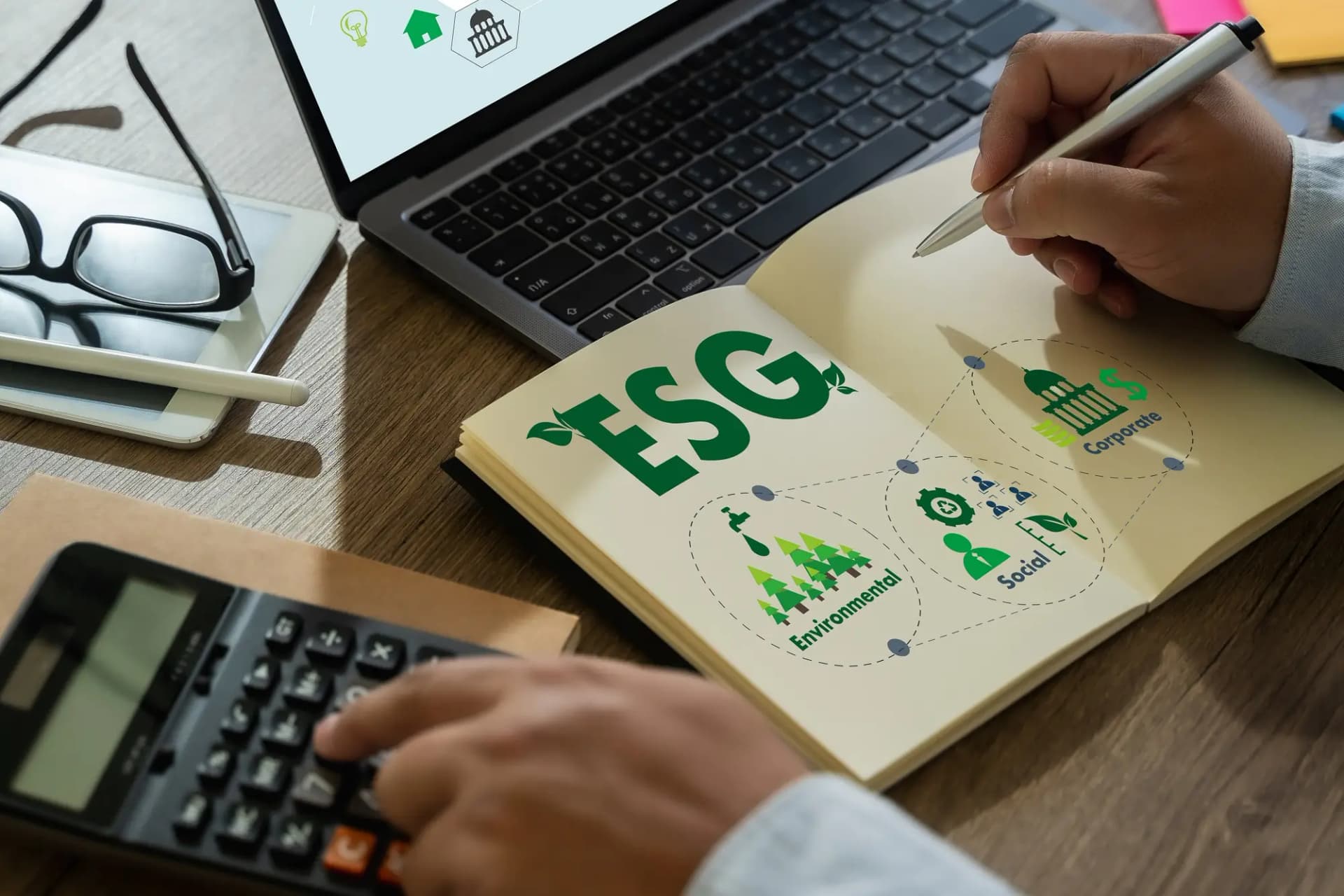
The reasons the ESG management approach is drawing attention are as follows.
① Worsening environmental problems : As carbon neutrality and responding to the climate crisis have emerged as core tasks for global companies, ESG has become an indispensable strategy.
② Consumption trends centered on social value : Led by the MZ generation, a consumption trend favoring the products of companies that practice ethical management, fair labor, and social contribution is spreading.
③ Stronger global regulation and market pressure : With the introduction of the EU CBAM, a carbon tax, and mandatory green bond disclosure, the risk of companies that fail to implement ESG being pushed out of the market has increased.
④ Securing a company's long-term value and sustainability : Analyses showing that companies that practice ESG perform better on long-term return and corporate value metrics are accumulating.
ESG Management Implementation Strategy
▶E (Environmental) Strategy
Transition to renewable energy (solar, hydrogen, and wind) and a carbon neutrality declaration
Waste reduction, water resource conservation, and adoption of eco-friendly materials
Compliance with ESG disclosure standards such as GRI, TCFD, and CDP
▶S (Social) Strategy
Gender equality among officers and employees, compliance with working hours, and safety and health training
CSR programs (employment of vulnerable groups and contribution to local communities)
Inspection of partners' human rights and labor conditions, and joint campaigns
▶G (Governance) Strategy
Building internal control and ethical management systems (anonymous reporting and reward programs)
Linking ESG KPIs to management compensation
Strengthening the compliance officer system and the internal audit framework


3. ESG Management | Diagnostic Items
We recommend that you use the items below to review the current status of your ESG management and identify areas for improvement.
E (Environment) Diagnostic Items
Review Item | Confirmation |
|---|---|
Do you operate a system for measuring carbon emissions? | □ |
Do you set annual carbon emission reduction targets? | □ |
Have you established a plan for transitioning to renewable energy, such as RE100 or a carbon neutrality declaration? | □ |
Do you operate a plan to manage and reduce the amount of waste generated? | □ |
Are you implementing a program to measure and reduce water resource usage? | □ |
Have you conducted an environmental impact assessment and an environmental risk diagnosis of major business sites? | □ |
Do you regularly review compliance with environmental laws and regulations? | □ |
Do you transparently disclose information in accordance with ESG environmental disclosure standards (for example, TCFD, CDP, or GRI)? | □ |
S (Social) Diagnostic Items
Review Item | Confirmation |
|---|---|
Have you established and disclosed policies for protecting labor rights and human rights? | □ |
Do you regularly provide officers and employees with training on the prevention of sexual harassment and discrimination, the protection of human rights, and labor law? | □ |
Do you regularly conduct due diligence on the human rights and labor conditions of partner companies? | □ |
Do you operate hiring policies for a diverse workforce (women, persons with disabilities, young people, older workers, and others)? | □ |
Do you provide employee welfare programs (parental leave, flexible work arrangements, and the like)? | □ |
Do you operate a community contribution (CSR) program? | □ |
Have you built and do you operate channels for gathering the opinions of customers, local residents, and stakeholders? | □ |
Do you operate a framework for managing safety and health risks and provide training to prevent industrial accidents? | □ |
G (Governance) Diagnostic Items
Review Item | Confirmation |
|---|---|
Do you establish and operate specialized committees within the board, such as an ESG committee? | □ |
Do you secure diversity in the composition of the board (the proportion of women and outside directors)? | □ |
Do you secure transparency in the matters resolved by the board and in the disclosure of management information? | □ |
Have you adopted a written ethical management pledge or a code of conduct for management and directors? | □ |
Do you operate an internal reporting system (such as a helpline) for ethical violations and legal risks? | □ |
Do you have a compliance monitoring organization or a dedicated department? | □ |
Do you review compliance with ESG-related laws and regulations and have you established a system for follow-up measures? | □ |
Do you reflect ESG performance in KPIs and link it to management compensation? | □ |
4. ESG Management | Related Legal Risks

The legal risks that may arise in the course of a company's ESG management are not limited to environmental problems or social contribution issues. A violation of legal obligations in each area can lead to civil and criminal liability, administrative dispositions, and even reputational risk.
Below, we systematically organize the main legal risks related to ESG management by the E, S, and G areas.
Legal Risks in the E (Environment) Area
ESG management in the environmental field must comply with various environmental laws and international norms, and a violation may result in substantial penalty surcharges, criminal punishment, the revocation of licenses and permits, and liability for damages.
▶Main Risks
Violation of laws on environmental pollution and waste disposal : Illegal discharge of wastewater, soil contamination, and illegal disposal of waste
Violation of the environmental impact assessment law : An inadequate environmental impact assessment when obtaining a business license or permit, or unauthorized development
Invalidation of ESG certifications such as RE100 and ISO14001, and false disclosure
Claims for damages under the law on the adjustment of environmental disputes : Civil lawsuits by local residents and environmental groups
▶Response Measures
Managing carbon emission allowances and preparing a CBAM response roadmap
Legal review of environmental impact assessments and waste disposal
Building a framework for the advance handling of environmental complaints and disputes
Legal Risks in the S (Social) Area
Legal violations relating to social responsibility, such as labor, human rights, consumer protection, and dealings with partners, are fatal risks because they can expand into investigations by the Ministry of Employment and Labor, the Fair Trade Commission, the Personal Information Protection Commission, the police, and the prosecutors.
▶Main Risks
Violation of the Serious Accidents Punishment Act : Criminal punishment of the responsible manager when an industrial accident occurs
Violation of the Personal Information Protection Act : Leakage of and inadequate management of the personal information of customers and employees
Violation of the Monopoly Regulation and Fair Trade Act : Abusive conduct toward subcontractors, unfair trade, and abuse-of-power issues
Inadequate response to an anti-discrimination law (if enacted) : The absence of regulations on diversity and human rights protection
False or exaggerated CSR disclosure
▶Response Measures
Building a serious accident response manual and a safety management framework
Legal review of ESG social contribution reporting materials
Reviewing fair trade and partner contracts, and diagnosing unfair trade risks
Legal Risks in the G (Governance) Domain
Securing transparency in corporate governance and fairness in board operations is central to ESG management, and a violation of legal obligations may give rise to criminal punishment of management, liability for damages, and liability for disclosure violations.
▶Key Risks
Infringement of shareholder rights and improper board operations : failure to resolve key ESG-related decisions, procedural violations
Failure to secure board diversity and independence
Violation of fair disclosure obligations and omission of ESG disclosures
Inadequate ethical management rules and weak internal controls
▶Response Measures
Preventing conflicts of interest among management and introducing a voluntary fair-trade compliance program
Legal review of ESG performance disclosure materials and management of disclosure risks
Establishing ethical management and internal control rules
ESG management is not merely an environmental or social-contribution campaign but a management system that calls for legal obligations and a risk management framework.
A violation of obligations concerning the environment, labor, human rights, fair trade, governance, or disclosure may lead to civil and criminal penalties, penalty surcharges, damages, and investor class actions, and it can severely damage a company's image and value.
A company therefore needs a tailored diagnosis of ESG legal risks, the establishment of a management framework, and a regular advisory arrangement with a law firm.


Watch related video content
for this case study.

Risk prevention is essential for ESG management