
CONTENTS
- 1. Information Protection | The Need for Legal Advice

- - Contents of Corporate Information Protection Consulting
- 2. Information Protection | Personal Information Protection Rules
- - Criminal Punishment and Administrative Dispositions
- 3. Information Protection | Major Risks to Bear When Management Is Inadequate
- - Damage to External Image and Loss of Trust
- - Risk of Termination of Transaction Contracts and Business Interruption
- - Liability for Damages Arising From Leaks of Industrial and Trade Secrets
- 4. Information Protection | Not a Choice but an Obligation
- - Checklist for Preventing Corporate Legal Risk in Information Protection

1. Information Protection | The Need for Legal Advice
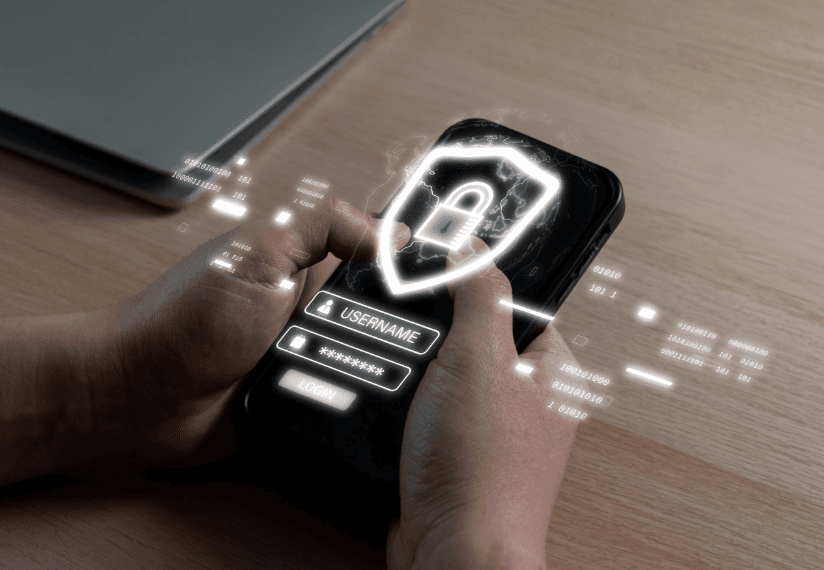
Information protection has moved beyond a mere legal obligation to become a strategic element of corporate management.
With the acceleration of the Fourth Industrial Revolution and digital transformation, data has become a core corporate asset, and the importance of information protection is accordingly being emphasized more than ever.
In particular, information protection laws such as the Personal Information Protection Act, the Network Act (Information and Communications Network Act), and the Credit Information Use and Protection Act require companies to take proactive measures and build systematic compliance regarding information protection.
Companies should analyze the civil, criminal, and administrative risk factors related to information protection in an integrated manner and develop a practical legal strategy.
Information protection goes beyond a mere legal obligation and is a key element in securing corporate trust and sustainability.
Accordingly, this is a time when each company needs not only systematic preparation for the risk of information protection class actions, but also a strategic approach to protecting the company's reputation and strengthening its competitiveness.
 Contents of Corporate Information Protection Consulting
For information protection, companies should carry out the following.
1. Review and improvement of internal personal information protection policies
Review of the suitability of the personal information processing policy and internal regulations
Inspection and refinement of procedures for the collection, use, and destruction of personal information
Conducting a Privacy Impact Assessment (PIA) and preparing a results report
2. Establishment of a legal response strategy and response to administrative dispositions
Preparation of measures to respond to administrative dispositions such as penalty surcharges, administrative fines, and corrective orders
Consulting on personal information dispute conciliation and responding to administrative litigation
3. Provision of information protection training and programs to raise employee awareness
Training on the Personal Information Protection Act and related laws
Training on personal information leak cases and response manuals
4. Response to personal information leak incidents and establishment of a response system
Establishment of emergency response procedures in the event of a personal information leak incident
Support for incident investigation and root cause analysis
Preparation of measures for victim notification, reporting, and follow-up
5. Advice on IT and security systems for personal information protection
Advice on the design of security policies and access control systems
Preparation of measures for personal information encryption and access rights management
6. Review and drafting of contracts and forms related to personal information protection
Review of personal information processing policies and personal information collection and use consent forms
Legal review of non-disclosure agreements
Legal advice on internal policies and manuals
2. Information Protection | Personal Information Protection Rules
The government and public institutions have established rules for personal information protection.
2. Do not process sensitive information such as resident registration numbers and health information without a statutory basis.
3. Do not use personal information for a purpose different from the one for which it was collected, or provide it to third parties.
4. When processing personal information, disclose the personal information processing policy.
5. Ensure security so that personal information is not leaked through hacking or other means.
6. When accepting website membership registration, introduce a means to substitute for the resident registration number.
7. Destroy personal information immediately once the purpose of its collection has been achieved.
8. If personal information is leaked, notify the data subject within five days.
9. When operating CCTV, install a notice board stating the purpose of installation, the scope of recording, the operating policy, and similar information.
If the information protection obligations are violated and personal information is leaked, the following levels of punishment are imposed.
Criminal Punishment and Administrative Dispositions
| Act | Level of Punishment |
| Providing personal information to a third party without the consent of the data subject | Imprisonment with labor for up to 5 years or a fine of up to 50 million won |
| Using personal information beyond the scope to which the data subject consented for a commercial or wrongful purpose |
In addition, a company that does not fulfill its information protection obligations will be subject to the following administrative dispositions.
| Act | Administrative Disposition |
| Leak of resident registration numbers and violation of safety measures | Imposition of a penalty surcharge not exceeding 3% of total revenue Very serious violations: 2.1% or more and 2.7% or less Serious violations: 1.5% or more and less than 2.1% General violations: 0.9% or more and less than 1.5% |
| When there is a concern that harm such as infringement of personal information may occur | Corrective measure |
| When improvement of the personal information protection status is needed | Recommendation for improvement |


3. Information Protection | Major Risks to Bear When Management Is Inadequate

If a company fails to properly comply with its information protection management system or legal obligations, the resulting risks are serious enough to threaten the very survival of the company, not only through criminal punishment and administrative dispositions.
The following provides a detailed explanation by item.
Damage to External Image and Loss of Trust
When an information protection incident occurs, the corporate brand and reputation suffer serious damage.
Customers and business partners may directly link personal information leaks and hacking incidents to a decline in the company's credibility, imposing severe disadvantages such as suspension of transactions, termination of contracts, and withdrawal of investment.
Once trust is damaged, it is very difficult to recover, and it leads to long-term declines in revenue and deteriorating management.
The damage is especially great in industries that handle a great deal of personal information, such as finance, healthcare, and education.
Risk of Termination of Transaction Contracts and Business Interruption
When outsourcing external IT services such as cloud services and AI platforms, information protection clauses are always included, and a violation may result in immediate termination of the contract and suspension of the service.
This can spread not only to service disruptions but also to restrictions on access to customer data, claims for damages, and additional legal disputes.
Therefore, compliance with the information protection obligations set out in the contract is central to ensuring business continuity.
Liability for Damages Arising From Leaks of Industrial and Trade Secrets
If industrial technology, trade secrets, customer information, or similar data managed within a company are leaked, they may cause serious harm to competitors, and a civil lawsuit for damages may be filed.
In particular, if the leak is intentional or results from poor management, the court will recognize a substantial amount of damages.
Such cases lead to a weakening of corporate competitiveness and a loss of trust in the market.
4. Information Protection | Not a Choice but an Obligation
Ultimately, information protection is not merely the work of the IT department or a technical issue; it is a core management risk directly tied to a company's sustainable management.
The information protection legal framework surrounding companies today, including personal information protection, information and communications network security, AI data ethics, and industrial secret protection, is highly complex and changing rapidly, and failing to understand and comply with it accurately can lead to serious disadvantages such as substantial penalty surcharges, criminal punishment, suspension of transactions, and reputational loss.
Accordingly, companies should systematically review information protection laws and regulations and establish internal guidelines and security systems that conform to the latest laws, while also thoroughly reviewing the information protection clauses in outsourcing contracts.
In addition, companies should carry out effective risk management in parallel through information protection training for all employees, inspection of personal information processing processes, and the operation of an information protection compliance review system.
A company's information protection capabilities are now an essential element of competitiveness and a foundation for trust-based management.
Companies should clearly recognize that building an information protection framework and managing legal risk is a strategy for securing the trust of customers and society and protecting corporate value, and they should proactively manage legal risk through a systematic management framework.
Checklist for Preventing Corporate Legal Risk in Information Protection
Key Items to Check | Check Result (O/X) |
Confirm the legality of personal information collection and use consent forms |
|
Refine the criteria for retention and destruction of personal information |
|
Check the appropriateness of the disclosure and operation of the personal information processing policy |
|
Check whether Information Security Management System (ISMS) certification is maintained |
|
Prepare a response manual for personal information leak incidents |
|
Check the information protection management status of partner companies and consignees |
|
Conduct information security vulnerability diagnostics and penetration testing |
|
Confirm personal information protection measures for AI and cloud systems |
|
Comply with user consent and notification requirements under the Network Act |
|
Whether information protection training is conducted for employees and developers |
|
Related News


Watch related video content
for this case study.

‘Right to request transmission of personal information’ fully implemented... The need for data utilization is increasing compared to companies and institutions