
CONTENTS
- 1. The Client Who Requested a Defense Against Hidden-Camera Punishment

- - The Client Charged With Illegal Filming Using a Camera
- 2. The Strategy for Defending Against Hidden-Camera Punishment
- - The Fact That the Victim Was Also Aware of the Filming
- - Collecting Sentencing Materials to Obtain an Exemption From the Employment Restriction Order
- - Proving the Client's Suffering
- 3. The Result of the Hidden-Camera Punishment Case, a Minor Fine
- 4. The Standard for Hidden-Camera Punishment
- - Level of Punishment
- - If You Need Assistance
- - Criminal Defense Attorney FAQ

1. The Client Who Requested a Defense Against Hidden-Camera Punishment
The client who requested a defense against hidden-camera punishment was a university student who had been implicated in a case of illegal filming using a camera and was at risk of an actual custodial sentence. However, with the assistance of a criminal attorney, the client received a minor fine and was able to bring the case to a close.
 The Client Charged With Illegal Filming Using a Camera
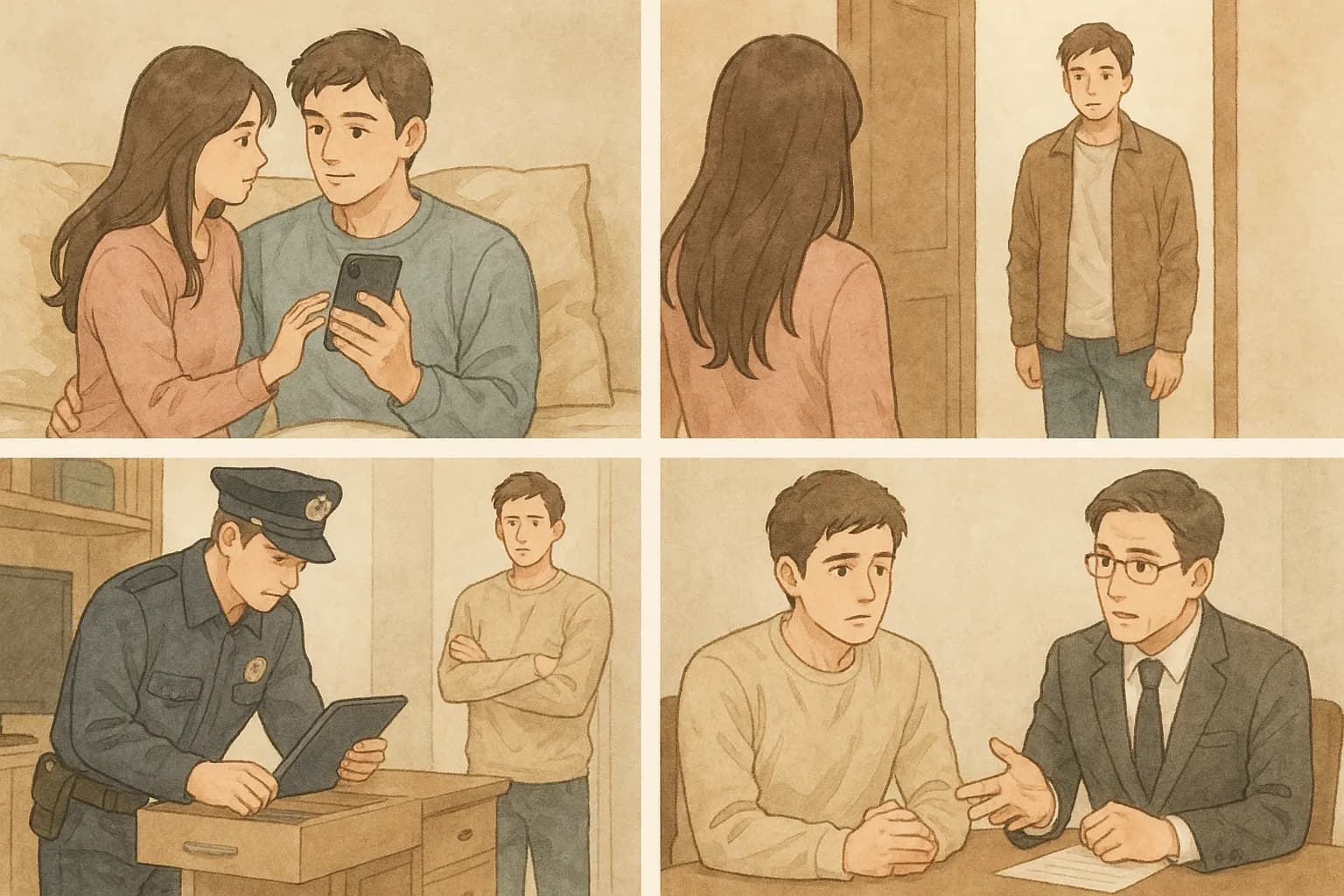
During the period of the relationship, the client filmed scenes of sexual relations with his girlfriend on two occasions.
The two later broke up, and the girlfriend personally deleted the videos.
However, the girlfriend reported to the police that the client had secretly filmed her with a hidden camera, and the police conducted a search and seizure of the client's residence.
Amid anxiety over the sudden investigation and examination schedule, the client requested a criminal attorney to defend against the hidden-camera punishment.


2. The Strategy for Defending Against Hidden-Camera Punishment

In order to help the client, who faced hidden-camera punishment, receive leniency, the following issues were identified and assistance was provided.
· Whether the purpose and circumstances of the filming were legitimate
· Whether leniency was possible through sentencing factors
The Fact That the Victim Was Also Aware of the Filming
The client stated that he had filmed the video in question with his girlfriend's consent.
Accordingly, the criminal attorney submitted the KakaoTalk conversation history as evidence and, through the overall flow of the conversation, specifically proved that the girlfriend had been aware of the filming.
The actual conversation contained content to the effect that she would "delete it herself," which served as important grounds supporting that the girlfriend was aware of the existence of the video.
Collecting Sentencing Materials to Obtain an Exemption From the Employment Restriction Order
Considering that, in a sexual offense case, an employment restriction order may be imposed with respect to institutions related to children and youth, the criminal attorney systematically collected the following sentencing materials in order to obtain an exemption from such an order.
Based on these materials, the attorney actively demonstrated to the court the client's genuine remorse and the low likelihood of reoffending.
· Letters of appeal from family members and acquaintances
· A written opinion specifically explaining the motive and circumstances of the offense
Proving the Client's Suffering
After being accused of hidden-camera filming, the client continued his daily life despite the unfair situation and did his best in his studies and activities.
This year, he also sought to take on a significant role within his school, but other students engaged in behavior that obstructed these efforts or called them into question.
Accordingly, the criminal attorney submitted written statements from friends at the same school as evidence, demonstrating to the court the psychological suffering and difficulties the client had experienced and actively assisting so that the client could receive leniency.
3. The Result of the Hidden-Camera Punishment Case, a Minor Fine

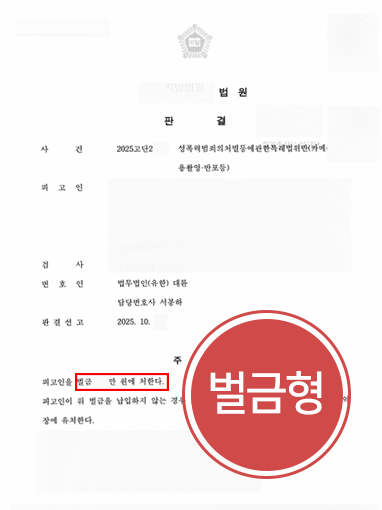
The client was under great anxiety from the early stages of the case, but with the systematic assistance of the criminal attorney, the circumstances of the offense, the victim's awareness, and the sentencing materials were submitted to the court.
As a result, the court took these matters into comprehensive consideration and sentenced the client to a minor fine.
In addition, the client was able to bring the case to an amicable conclusion without any substantial disadvantages, including an exemption from the employment restriction order.
4. The Standard for Hidden-Camera Punishment
If you are facing hidden-camera punishment, you are charged with a violation of the Act on Special Cases concerning the Punishment of Sexual Crimes (illegal filming using a camera).
The crime of illegal filming using a camera provides for the punishment of the act of filming another person's body against that person's will.
It also includes the case of distributing, selling, leasing, or publicly displaying or screening filmed material using a camera or any other mechanical device with a similar function.
Here, "filmed material" means a video or photograph in which another person's body has been filmed, and the court has ruled on this as follows.
Supreme Court Decision 2009Do7973, rendered on October 29, 2009
"That filmed material" means a video that captures another person's body capable of arousing sexual desire or shame, filmed against that person's will, and it is interpreted that material filmed with the other person's consent is not included.
Level of Punishment
If the crime of illegal filming using a camera is established, the following punishment applies.
In addition to criminal punishment, social and substantial disadvantages such as an employment restriction order may also be incurred.
Therefore, if you are implicated in a matter such as hidden-camera punishment, you must respond promptly from the early stages of the case.
Level of Punishment
| Article 14 of the Act on Special Cases concerning the Punishment of Sexual Crimes (illegal filming using a camera) | Imprisonment for up to 7 years or a fine of up to 50 million won |
If You Need Assistance
Daeryun LLC has many attorneys with expertise in sex crime cases, including illegal filming using a camera, which allows for systematic assistance from the initial response in the early stages of a case through to investigation and evidence collection, accompaniment during police and prosecutorial questioning, and the development of a trial strategy.
In addition, by cooperating with our in-house evidence investigation center, we secure objective materials regarding the case as a whole, such as KakaoTalk conversations, whether video material has been deleted, and statements from those nearby, and we prepare a defense strategy on this basis.
If you require a response to illegal filming using a camera in a situation such as the above, please feel free to request assistance from Daeryun LLC through the 🔗legal consultation booking at any time.
Criminal Defense Attorney FAQ
A. Whether the other party consented at the time of filming is an important factor in establishing the offense, but where the consent is not clear or there is dispute over the circumstances of the filming, it is difficult to conclude that there is no possibility of punishment whatsoever.Frequently Asked Questions about Illegal Filming Using a Camera #1
Q. Can a person still be punished even if the other party consented at the time of filming?
The court makes its determination by considering the circumstances and the evidence as a whole.
A. Deleting the filmed material does not cause the offense itself to disappear.Frequently Asked Questions about Illegal Filming Using a Camera #2
Q. Can a person still be punished even after deleting the filmed material?
This is because the fact that the filming was already carried out against another person's will at the time of the offense still exists.
However, the fact of deletion, the degree of remorse after the incident, and the likelihood of reoffending may serve as factors that lead the court to decide on a lighter sentence.
See More

This content is based on actual case studies of Daeryun Law LLC with some adaptations, and the copyright belongs to our firm.
Unauthorized reproduction, duplication, or distribution and other copyright infringements may result in legal action under applicable laws.