
CONTENTS
- 1. Details of the Damages Specialist Attorney Case

- 2. Assistance Provided by the Damages Specialist Attorney
- - Proving That the Client Was a Victim Deceived by the Fraud Organization
- - Constructing the Argument of Non-Establishment of Aiding Liability Based on Supreme Court Precedents
- - Demonstrating 'No Intent or Negligence' Through the Criminal Non-Referral Decision
- - Arguing the Severance of the Proximate Causal Relationship Even If Some Negligence Were Recognized
- 3. Result of the Damages Specialist Attorney Case
- 4. How to Respond to a Lawsuit, as Explained by a Damages Specialist Attorney
- - One-Stop Response Assistance of Daeryun Law Firm
- - Attorney FAQ

1. Details of the Damages Specialist Attorney Case
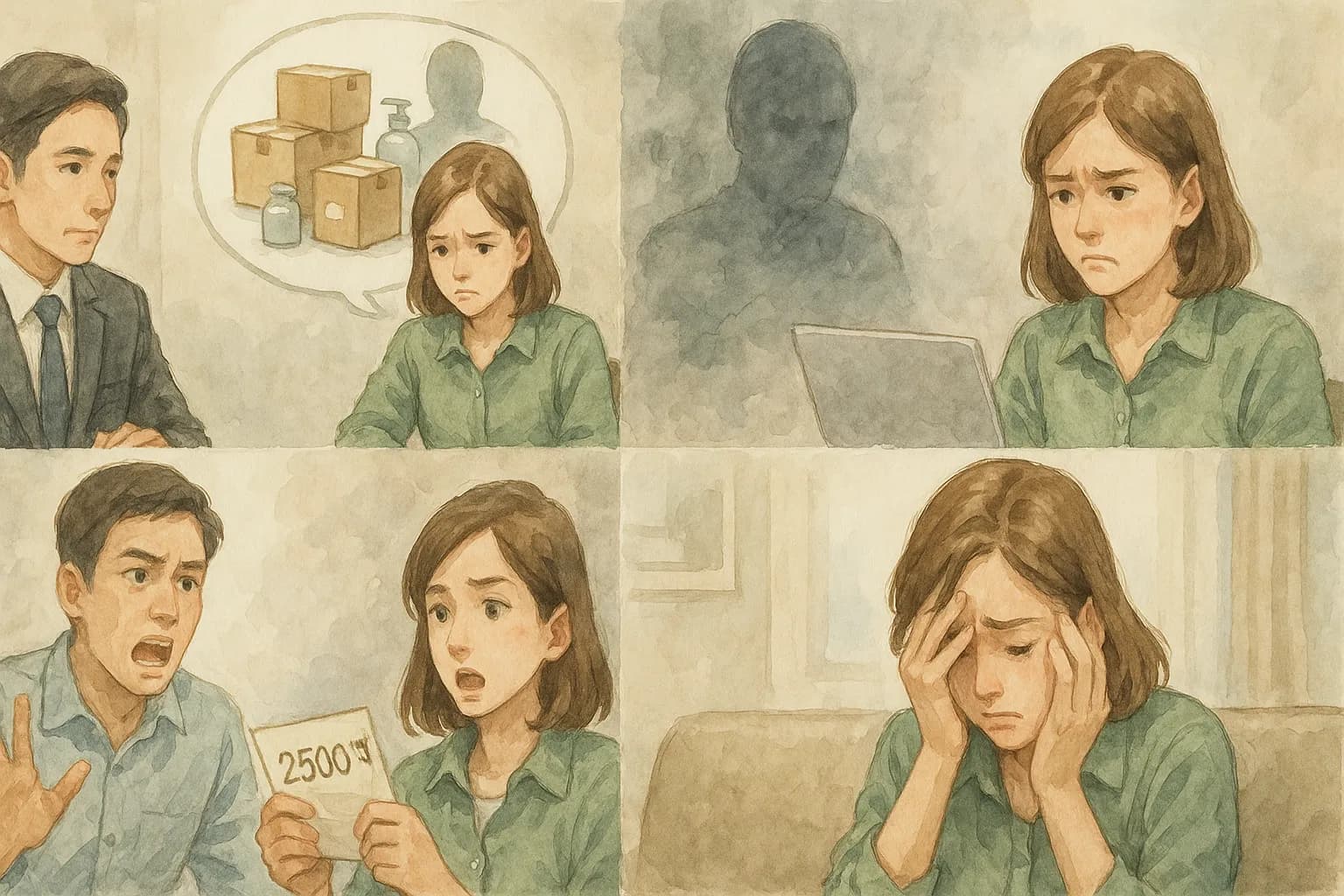
The client, who said the assistance of a damages specialist attorney was needed, had taken charge of setting up and operating a website selling household goods at the direction of a fraud organization.
In a state of economic hardship, the client was deceived by the words "We will help you run the business and guarantee your profits," took out various loans, and thereby came to bear a debt of approximately 100 million won or more, and set up the website and account in the manner demanded by the fraud organization.
In the course of this, an unidentified third party deposited 25 million won into the client's website, and the victim subsequently filed a 25 million won claim for damages, alleging that the client had conspired with the fraud organization to defraud the victim of the money.
The victim's argument was that the client had been the account intermediary for the voice phishing organization and had defrauded the victim of the deposited funds by disguising them as business proceeds.
Even though the client had received a non-referral decision in the criminal proceedings with the assistance of a Daeryun criminal specialist attorney, when the civil claim for damages followed, the client pleaded that it was unfair and requested help from the damages specialist attorney at Daeryun Law Firm.
2. Assistance Provided by the Damages Specialist Attorney
Based on the result of the criminal non-referral decision, the damages specialist attorney carefully argued that civil liability also did not arise.
 Proving That the Client Was a Victim Deceived by the Fraud Organization
The damages specialist attorney submitted as evidence the client's economic situation, the loans, and the entire process of setting up the website.
The client was deceived by the fraud organization's representation that it would "guarantee profits," took out loans, and merely created the website and account, and had no 'foreseeability' that the account would be misused for telecommunications-based financial fraud.
The attorney emphasized that this was a key element showing the complete absence of intent or conspiracy.
Constructing the Argument of Non-Establishment of Aiding Liability Based on Supreme Court Precedents
Based on Supreme Court Judgments 2015Da53568 and 2013Da91597, the damages specialist attorney developed the following argument.
For liability for a joint tort to be recognized, • there must be aiding by negligence, • there must be a proximate causal relationship between that negligence and the occurrence of the loss, • foreseeability and the degree of contribution to the occurrence of the harm must also be comprehensively considered, and • liability must not be excessively expanded.
The attorney emphasized that there was no direct causal relationship between the client's conduct (setting up the account) and the occurrence of the victim's loss, and that there were no circumstances showing that the client had substantially contributed to defrauding the victim of money.
Demonstrating 'No Intent or Negligence' Through the Criminal Non-Referral Decision
By submitting the police's notice of investigation results as evidence, the attorney emphasized that there was no basis to find that the client recognized or foresaw the voice phishing crime, and that the client was merely a victim who had been deceived without any intent to participate.
The attorney argued that the fact that even the criminal authorities acknowledged "the absence of both intent and negligence" was a decisive basis for proving the non-existence of liability for a tort under civil law.
Arguing the Severance of the Proximate Causal Relationship Even If Some Negligence Were Recognized
The damages specialist attorney argued that the act of the client setting up the account, by itself, did not directly cause the victim's monetary loss.
In addition, the attorney argued for the severance of the proximate causal relationship on the grounds that • the fraud organization independently carried out the deceptive act, and • the victim could also have sufficiently verified the risk before transferring the funds to the account.


3. Result of the Damages Specialist Attorney Case
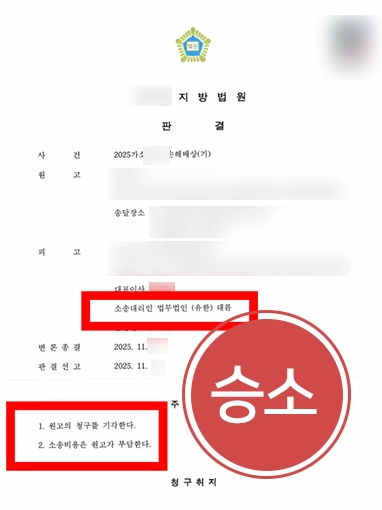
The court recognized all of the following: • that the client was a victim who had been deceived into setting up the account by the fraud organization, • that there was no causal relationship between the client's conduct and the victim's loss, and • that the absence of intent and negligence had already been confirmed in the criminal non-referral decision.
As a result, the 25 million won claim for damages was dismissed in its entirety.
This outcome was made possible by Daeryun's systematic assistance, extending from the criminal non-referral to the civil damages response.
4. How to Respond to a Lawsuit, as Explained by a Damages Specialist Attorney

Telecommunications-based financial fraud refers broadly to crimes that deceive others using telecommunications means such as telephone, text messages, and the internet to defraud them of money.
Voice phishing is a crime in which the perpetrator, by telephone or text message, impersonates a financial or government institution or lures the victim into investing, thereby inducing the victim to transfer money. Because criminal organizations use account handlers, providers of borrowed-name bank accounts, and money withdrawers, there are many cases in which ordinary people become involved in the crime.
If you are facing related charges, it is advisable to respond with the assistance of a criminal specialist attorney.
If you have been sued for damages by a voice phishing victim, you should respond as follows.
Situation | Key Response Points |
A claim for damages is filed by a plaintiff | Conduct a full analysis of the complaint and secure records of money movements |
Allegations of involvement with the fraud organization are raised | Prove the absence of intent or negligence, and block foreseeability |
Suspicion of providing an account | Submit a detailed record of the circumstances and reasons for setting up the account |
The fact of a deposit by the victim exists | Deny the causal relationship and present Supreme Court precedents as a basis |
A criminal and civil matter at the same time | Actively use the criminal non-referral record to deny liability |
One-Stop Response Assistance of Daeryun Law Firm
This case was a 'criminal-to-civil linked case' in which, after Daeryun first obtained the criminal non-referral decision, the client, based on that result, went on to entrust the civil damages case as well.
Daeryun's one-stop damages response system consists of the following stages.
-Damages Specialist Attorney
• Full analysis of the criminal record and shift to a civil strategy
• Construction of legal arguments based on Supreme Court precedents related to telecommunications-based financial fraud
• Proof of the absence of intent or negligence
• Securing arguments denying foreseeability and causal relationship
-Digital Forensics Center and Evidence Investigation Center
• Precise analysis of digital evidence such as account transaction records, messages, and communication logs
-Criminal Specialist Attorney
• Construction of rebuttal briefs and supporting evidence
• Establishment of litigation strategy and conduct of pleadings
Ultimately, the progression from criminal non-referral → civil success (the claim dismissed in its entirety) was an outcome made possible by Daeryun's integrated criminal and civil response system.
If you need legal assistance with a related case, please proceed with a 🔗Legal Consultation Reservation right away.
Attorney FAQ
However, the account holder is not necessarily held liable, and liability for compensation is recognized only when all three elements of intent, negligence, and causal relationship are satisfied. It is very important to correct this point as a matter of legal principle.
This content is based on actual case studies of Daeryun Law LLC with some adaptations, and the copyright belongs to our firm.
Unauthorized reproduction, duplication, or distribution and other copyright infringements may result in legal action under applicable laws.