




CONTENTS
- 1. Overview of the Case of a Client Who Came to Be Suspected of Special (Aggravated) Intimidation

- 2. Two Ways of Responding to Criminal Punishment for Special (Aggravated) Intimidation
- - Emphasizing the Absence of Intent to Engage in Retaliatory Driving
- - Assistance With a Settlement Between the Parties
- 3. The Result of Assistance in the Special (Aggravated) Intimidation Case: A Suspension of Indictment
- 4. The Level of Criminal Punishment for Special (Aggravated) Intimidation and the Response Strategy
- - The Reason Retaliatory Driving Is Recognized as Special (Aggravated) Intimidation
- - Why the Assistance of a Criminal Defense Lawyer Is Needed

1. Overview of the Case of a Client Who Came to Be Suspected of Special (Aggravated) Intimidation
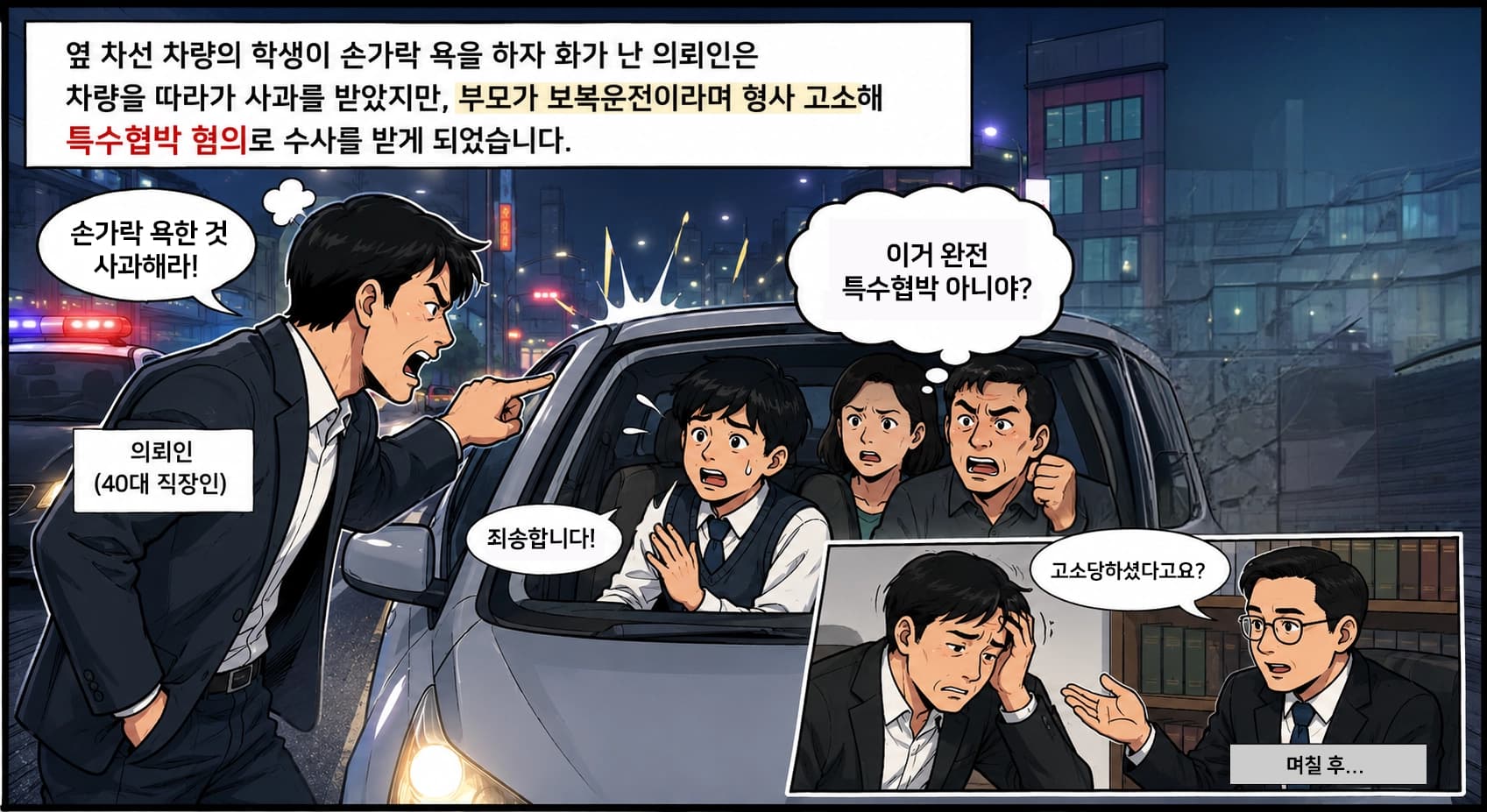
The client who came to be suspected of special (aggravated) intimidation was an office worker in his forties.
On the day of the incident, the client was driving his own vehicle back to the office after finishing an external meeting.
While driving, however, he saw a student seated in the passenger seat of a vehicle in the adjacent lane making an obscene finger gesture toward the client.
Taken aback by the sudden situation, the client became very angry and wished to ask why the student had acted that way and to receive an apology.
In the end, the client departed from his original route and began to follow that vehicle.
About ten minutes later, the other vehicle came to a stop while waiting at a traffic signal.
The client got out of his car and walked over to the other vehicle, and the student, upon noticing the client, apologized at once after hearing the client say, "Apologize for the obscene finger gesture."
The client thought that the matter had been resolved after receiving the apology.
However, the parents who were in the vehicle with the student (hereinafter the counterpart) felt fear at the very act of the client having followed their vehicle, judged that this amounted to retaliatory driving, and filed a criminal complaint against the client.
Suddenly placed at risk of criminal punishment, the client sought out a criminal defense lawyer and requested help in responding to the case.
2. Two Ways of Responding to Criminal Punishment for Special (Aggravated) Intimidation

The client, against whom a criminal complaint had been filed on suspicion of special (aggravated) intimidation arising from retaliatory driving, held several thorough consultations with a criminal defense lawyer.
The criminal defense lawyer listened to the client's account, carefully ascertained the facts, and established a response plan.
- Analysis of the dashcam footage
- Review of relevant precedents and legal principles
- Proceeding with a settlement with the counterpart
- Preparation of sentencing materials
 Emphasizing the Absence of Intent to Engage in Retaliatory Driving
In this case, the client had no intention whatsoever of causing harm to the counterpart.
The client had followed the vehicle in order to receive an apology regarding the student's obscene finger gesture toward him, and he had no intention of retaliatory driving.
The criminal defense lawyer explained that the acts generally known as retaliatory driving are things such as flashing high beams, sudden acceleration, and sudden braking.
Accordingly, by securing the dashcam footage from the client's vehicle, the lawyer established that, in contrast, the client had done nothing in particular other than bringing his vehicle to a stop and approaching the counterpart's vehicle.
In addition, citing Supreme Court Decision 90Do2102, May 10, 1991, the lawyer explained that the client's act could not be regarded as one that gave notice of harm to the counterpart, thereby denying the intent required for the suspicion of special (aggravated) intimidation.
A. Intimidation in the crime of intimidation means, generally speaking, giving notice of harm to a degree capable of causing a person to feel fear, so the intent that constitutes its subjective element consists of the actor recognizing and accepting that he is giving notice of harm to such a degree, and it does not require an intention or desire to actually realize the notified harm; however, where the actor's words and conduct amount to no more than a mere emotional insult or a momentary expression of anger, such that, in light of the surrounding circumstances, it is objectively clear that there was no intent to inflict harm, an act of intimidation or an intent to intimidate cannot be recognized, and whether there was an act of intimidation or an intent to intimidate in the above sense must be judged by comprehensively considering not only the outward form of the act but also the surrounding circumstances, such as the course that led to the act and the relationship with the victim.
Assistance With a Settlement Between the Parties
On behalf of the client, the criminal defense lawyer contacted the counterpart and proceeded with an amicable settlement.
During the settlement process, the criminal defense lawyer conveyed the client's expression of remorse and the settlement amount and persuaded the counterpart.
The counterpart, having accepted the criminal defense lawyer's persuasion, prepared a statement of no wish for punishment and a settlement agreement, and the criminal defense lawyer submitted these materials to the investigative authorities and made an appeal regarding sentencing.
3. The Result of Assistance in the Special (Aggravated) Intimidation Case: A Suspension of Indictment
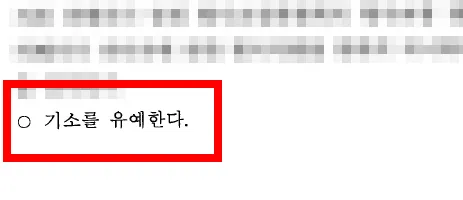
The prosecution comprehensively considered the point that the client had not pursued the vehicle with the intent to threaten or harm the counterpart but had approached in order to request an apology, and the point that no act such as sudden acceleration, sudden braking, or obstruction of the driving path, which might be regarded as actual retaliatory driving, was confirmed.
In the end, the point that the intent required for the suspicion of special (aggravated) intimidation was not sufficiently recognized was accepted, and the client was able to conclude the special (aggravated) intimidation case with a suspension of indictment, without being referred to a formal trial.
Having defended against criminal punishment and returned to daily life, the client conveyed words of thanks.
4. The Level of Criminal Punishment for Special (Aggravated) Intimidation and the Response Strategy
The intimidation referred to in special (aggravated) intimidation means giving notice of harm to a degree that causes a person to feel fear.
In this regard, it is not necessarily required that the content of the notified harm be something that can realistically be carried out immediately.
In the end, whether there was a threat of a degree that would cause the counterpart to feel fear upon hearing the words becomes an important criterion for judging whether the crime of intimidation is established.

Ordinary intimidation is, under Article 283 of the Criminal Act, punishable by imprisonment for not more than three years, a fine not exceeding 5 million won, misdemeanor imprisonment, or a minor fine.
However, special (aggravated) intimidation is subject to heavier punishment than ordinary intimidation, and may be punishable by imprisonment for not more than seven years or a fine not exceeding 10 million won.
The Reason Retaliatory Driving Is Recognized as Special (Aggravated) Intimidation
The reason retaliatory driving is recognized as special (aggravated) intimidation is that the vehicle itself is assessed as an object capable of posing a serious danger to a person's life and body.
Under the Criminal Act, special (aggravated) intimidation is established where a person intimidates while carrying a deadly weapon or other dangerous object, and the courts regard an automobile, in a driving situation, as a "dangerous object."
Therefore, acts such as making a sudden stop, blocking the driving path, or pressuring the other party by following closely behind, for the purpose of threatening the other vehicle while driving, may cause the counterpart to feel fear, and the crime of special (aggravated) intimidation may become an issue.
Even if no actual collision occurred, this is a matter that may be subject to punishment if there was a threatening act of a degree that made the counterpart feel danger.
Where a person is suspected of special (aggravated) intimidation arising from retaliatory driving, the circumstances of the dangerous driving, the situation at the time, and whether there was intent become important criteria for judgment.
Why the Assistance of a Criminal Defense Lawyer Is Needed
A special (aggravated) intimidation case is a matter that may lead to criminal punishment, depending on the degree of fear felt by the counterpart, the dangerousness of the object used, and the situation at the time, even if it began as an argument or an impulsive act.
In particular, because the investigative authorities often judge cases involving retaliatory driving, possession of a deadly weapon, or the use of a vehicle to be serious, the direction of the initial statement is very important.
Daeryun, the ninth-largest law firm in Korea (based on 2025 value-added tax filings with the National Tax Service), centered on its criminal defense lawyers, works in cooperation with the 🔗Digital Forensics Center to comprehensively analyze the CCTV footage, dashcam footage, call records, and message history from the time of the incident.
And through this, it closely reviews whether there was actual intent to intimidate and whether there is any exaggeration in the counterpart's statement.
In addition, it systematically organizes the facts from the investigation stage onward and provides assistance through the submission of a defense counsel's written opinion, the response to the police investigation, and the settlement process.
Because the course of a special (aggravated) intimidation case can change depending on how it is handled at the early stage, prompt legal review is necessary.
If you find yourself in a situation similar to that of the client in this case, we invite you to prepare a response plan by 🔗reserving a legal consultation.
This content is based on actual case studies of Daeryun Law LLC with some adaptations, and the copyright belongs to our firm.
Unauthorized reproduction, duplication, or distribution and other copyright infringements may result in legal action under applicable laws.










