




CONTENTS
- 1. The Account of the Client Who Came to Face a Suspected Violation of the Child Welfare Act

- 2. The Assistance of a Criminal Defense Lawyer in a Violation of the Child Welfare Act Case
- - Asserting That It Was Guidance for Confirming the Facts in the School Violence Case
- - Proving That the Abusive Language and Threats Asserted by the Complainant Did Not Occur
- - Establishing That the Act Did Not Reach the Level of Emotional Abuse
- 3. The Outcome of Responding to the Suspected Violation of the Child Welfare Act, a Disposition of Non-Prosecution
- - In What Cases Does It Constitute Child Abuse?
- 4. What Is Important to Examine in a Suspected Violation of the Child Welfare Act
- - Frequently Asked Questions About a Violation of the Child Welfare Act

1. The Account of the Client Who Came to Face a Suspected Violation of the Child Welfare Act
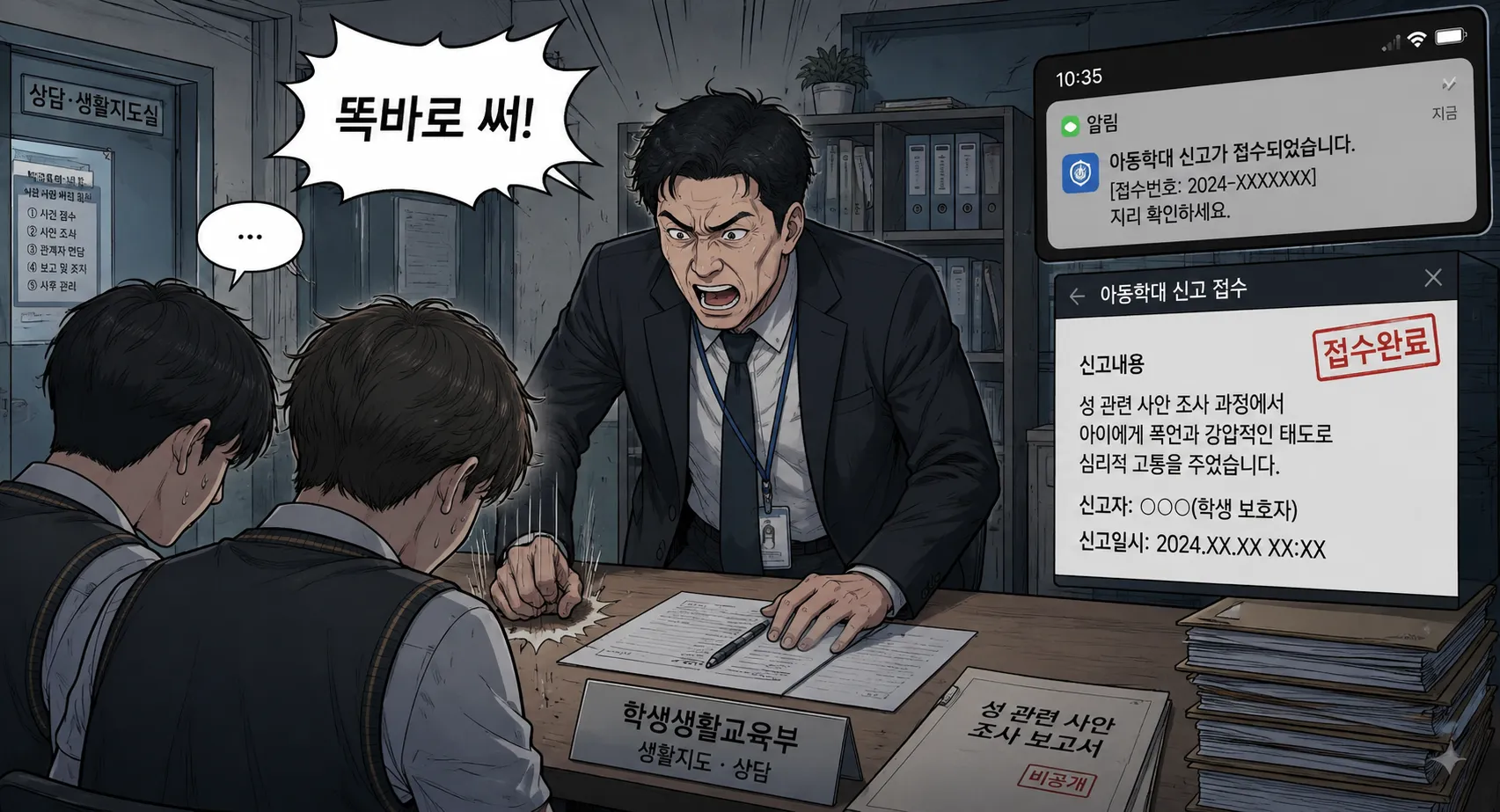
The account of the client who sought a criminal defense lawyer while facing a suspected Violation of the Child Welfare Act was as follows.
The client worked as a head teacher in charge of student guidance and discipline at a middle school and was responsible for investigating school violence matters.
The case at the time arose in the course of a school violence investigation into students who had secretly taken photographs of the body of a female student at the school and had shared and ridiculed those photographs in a group chat room.
In the course of confirming the facts with the students, when some students did not participate in the investigation in good faith or repeatedly gave statements containing false content, the client is said to have reprimanded them by shouting things such as "Are you going to do this properly, you brats? Write it down straight."
The client also judged that the students did not understand the seriousness of what they had done, and accordingly guided them strictly, saying to the other teachers in the staff room, "I think I will have to hand these kids over to the police station."
Thereupon, the complainant, who was a student's parent, went so far as to file a complaint against the client, asserting that the child had felt extreme anxiety and fear because of the client's abusive language and threats and was even undergoing psychiatric treatment and psychological therapy.
The client who sought a criminal defense lawyer was in a situation of strongly protesting a sense of unfairness that the expression "you brats," made in the course of guiding the students, had been recognized as abusive language and had become a suspected Violation of the Child Welfare Act.
2. The Assistance of a Criminal Defense Lawyer in a Violation of the Child Welfare Act Case

There were two central points in this case, in which a Violation of the Child Welfare Act was suspected.
They were whether the client's manner of guidance had been carried out for the purpose of abusing the students, or whether it was merely student guidance carried out in the course of investigating the children's school violence case.
 Asserting That It Was Guidance for Confirming the Facts in the School Violence Case
The client was a teacher in a position that required accurately ascertaining the facts with respect to the offending students, including the complainant's son, and the victimized student.
Moreover, because this case was a serious matter in which the body of a female student at the school had been secretly photographed and the images had been shared with one another and ridiculed in a group chat room, the process of ascertaining the factual confirmation statements was important.
In fact, as a result of the review by the Digital Forensics Center, evidence that the students had left the chat room was ascertained, and the school's CCTV footage also showed the students coordinating their accounts while preparing the factual confirmation statements.
Accordingly, it was asserted that the client's remarks were not intended to harass the students but had arisen in the course of guiding them to prevent false statements and to prepare accurate factual confirmation statements.
In this regard, the Child Welfare Act provides as follows with respect to child abuse.
Article 3, Subparagraph 7 of the Child Welfare Act
7. "Child abuse" means an act by an adult, including a guardian, of physical, mental, or sexual violence or cruel treatment that may harm the health or welfare of a child or hinder the child's normal development, and an act by a child's guardian of abandoning or neglecting the child.
On the basis of the above provision, it was emphasized that the client's act was not cruel treatment but merely guidance.
Proving That the Abusive Language and Threats Asserted by the Complainant Did Not Occur
The complainant asserted that the client had shouted at the students and used abusive language, and had instilled fear in the child with the words "I will have to hand you over to the police station."
However, the client explained that the client had never personally shouted or made threats.
To prove this, the staff room CCTV footage was analyzed in collaboration with this firm's Digital Forensics Center, and statements from the other teachers who had been in the same space at the time were also secured.
As a result, it was emphasized that there were no circumstances from which it could be found that the client had continuously used abusive language toward or threatened the students, as the complainant asserted.
Establishing That the Act Did Not Reach the Level of Emotional Abuse
For emotional abuse to be recognized in a Violation of the Child Welfare Act, the mere reason that a student felt discomfort or fear is insufficient.
Whether a given act reached a degree that would harm the child's mental health or development, and the process, degree, and repetitiveness of the act, are examined as a whole.
In this regard, the Supreme Court has in fact held as follows.
Supreme Court Decision 2017Do5769, March 12, 2020
An act of emotional abuse prohibited under the Child Welfare Act means mental violence or cruel treatment that reaches a degree of harming the child's mental health or welfare or hindering the normal development of mental health, or of creating a risk of bringing about such a result, and whether a given act falls under this must be judged by comprehensively considering the relationship between the actor and the victimized child, the attitude the actor showed toward the victimized child at the time of the act, the victimized child's age, sex, disposition, mental developmental state and health condition, the victimized child's reaction to the act and the change in the victimized child's condition before and after the act, the place and time at which the act occurred, the degree and manner of the act, the circumstances that led to the act, the repetitiveness or duration of the act, and the effect of the act on the normal development of the victimized child's mental health.
On the basis of the above precedent, the criminal defense lawyer asserted that the client's remarks were not repetitive or continuous cruel treatment, and that they had arisen in the course of a single instance of guidance to confirm the facts in the school violence case.
It was also urged that the cause of the student's psychiatric treatment and psychological therapy could not be conclusively attributed to the client's act of guidance, and that an accurate confirmation of the causal relationship was necessary.
3. The Outcome of Responding to the Suspected Violation of the Child Welfare Act, a Disposition of Non-Prosecution
The client, who was suspected of a Violation of the Child Welfare Act, was in a situation of having a complaint filed on the ground of having committed emotional abuse by directing abusive language and threats at a student.
However, the criminal defense lawyer emphasized that the client was a teacher who had to accurately ascertain the facts in the school violence case, and that the remarks at issue had likewise arisen in the course of student guidance.
As a result, the investigative authorities judged that it was difficult to find the suspected Violation of the Child Welfare Act against the client, and the client received a disposition of non-prosecution and was able to relieve the sense of unfairness.
In What Cases Does It Constitute Child Abuse?
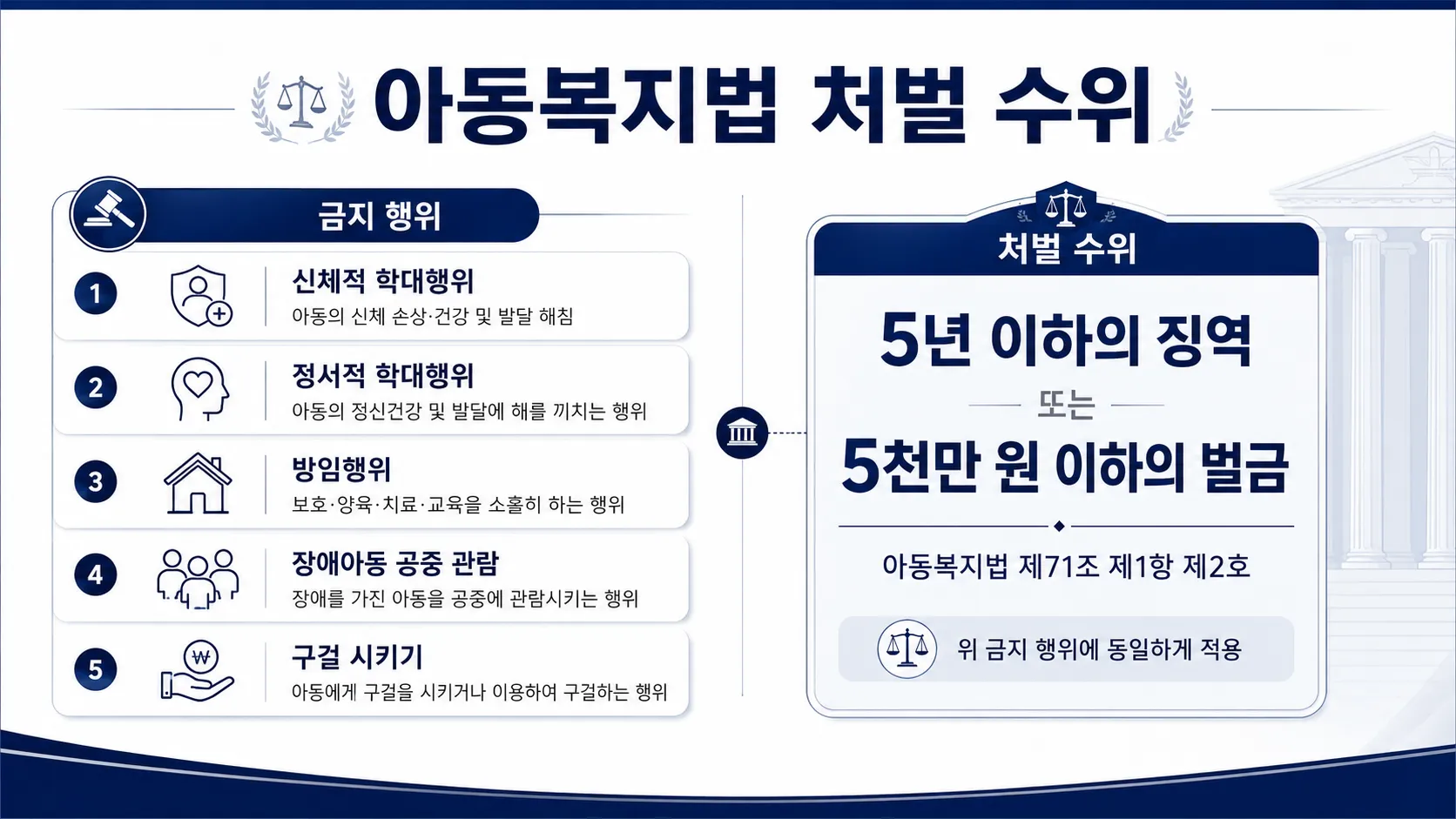
The Child Welfare Act defines a child as a person under 18 years of age, and regards as child abuse physical, mental, or sexual violence or cruel treatment that may harm a child's health or welfare or hinder normal development.
Child abuse can be classified according to the form of the act as follows.
Category | Description |
Physical abuse | An act of inflicting physical injury or harming the health and development of the body |
Emotional abuse | A mental or psychological abusive act such as verbal insult, emotional threat, confinement, or restraint |
Sexual abuse | A sexual act performed on a child for the purpose of sexual gratification |
Neglect and abandonment | An act of neglecting basic protection such as food, clothing, and shelter, education, and treatment, or of abandoning a child |
Among these, emotional abuse is not recognized merely on the ground that the other person felt discomfort or fear; rather, it is judged by comprehensively examining whether it reaches a degree that would hinder the child's mental health or normal development.
The Child Welfare Act prohibits the following acts, and a violation of them may be subject to criminal punishment.
4. What Is Important to Examine in a Suspected Violation of the Child Welfare Act
A Violation of the Child Welfare Act case is not concluded merely on the fact that a particular remark or act occurred.
Whether the suspicion is established is judged by comprehensively reviewing the purpose for which the act was carried out, the situation at the time, its repetitiveness, and the actual effect on the child's mental health.
Daeryun, the ninth-largest law firm in Korea (based on 2025 value-added tax filings with the National Tax Service), is a legal partner that provides one-team legal services led by experienced attorneys specializing in the field, and provides systematic assistance so that the client does not make disadvantageous statements, including conducting a statement rehearsal before the police and prosecution investigations and having an attorney specializing in criminal matters accompany the client at each investigation stage.
If you are in a situation requiring a response to a police investigation or criminal proceedings on suspicion of a Violation of the Child Welfare Act, please receive the assistance needed for your case by 🔗reserving a legal consultation with an attorney specializing in the field.
Frequently Asked Questions About a Violation of the Child Welfare Act
Q. Can a remark made in the course of a teacher's discipline also constitute a Violation of the Child Welfare Act?
A. It is possible depending on the case. However, a crime is not immediately recognized merely because a remark was made in the course of lightly guiding or disciplining a student. It is judged by comprehensively considering the purpose and circumstances of the act, its repetitiveness, and the effect it had.
Q. If a student asserts that the student underwent psychiatric treatment, is a Violation of the Child Welfare Act recognized?
A. Not necessarily. A suspicion is not recognized on the fact of psychiatric treatment or psychological therapy alone; whether there is a causal relationship between the symptoms and the act at issue, and whether the act actually reached a degree that would hinder mental health or normal development, are also examined.
This content is based on actual case studies of Daeryun Law LLC with some adaptations, and the copyright belongs to our firm.
Unauthorized reproduction, duplication, or distribution and other copyright infringements may result in legal action under applicable laws.










