




CONTENTS
- 1. The Story of a Client Who Sought a Criminal Defense Lawyer on a Suspected Charge of Public Indecency

- 2. The Criminal Defense Lawyer's Assistance in a Public Indecency Case
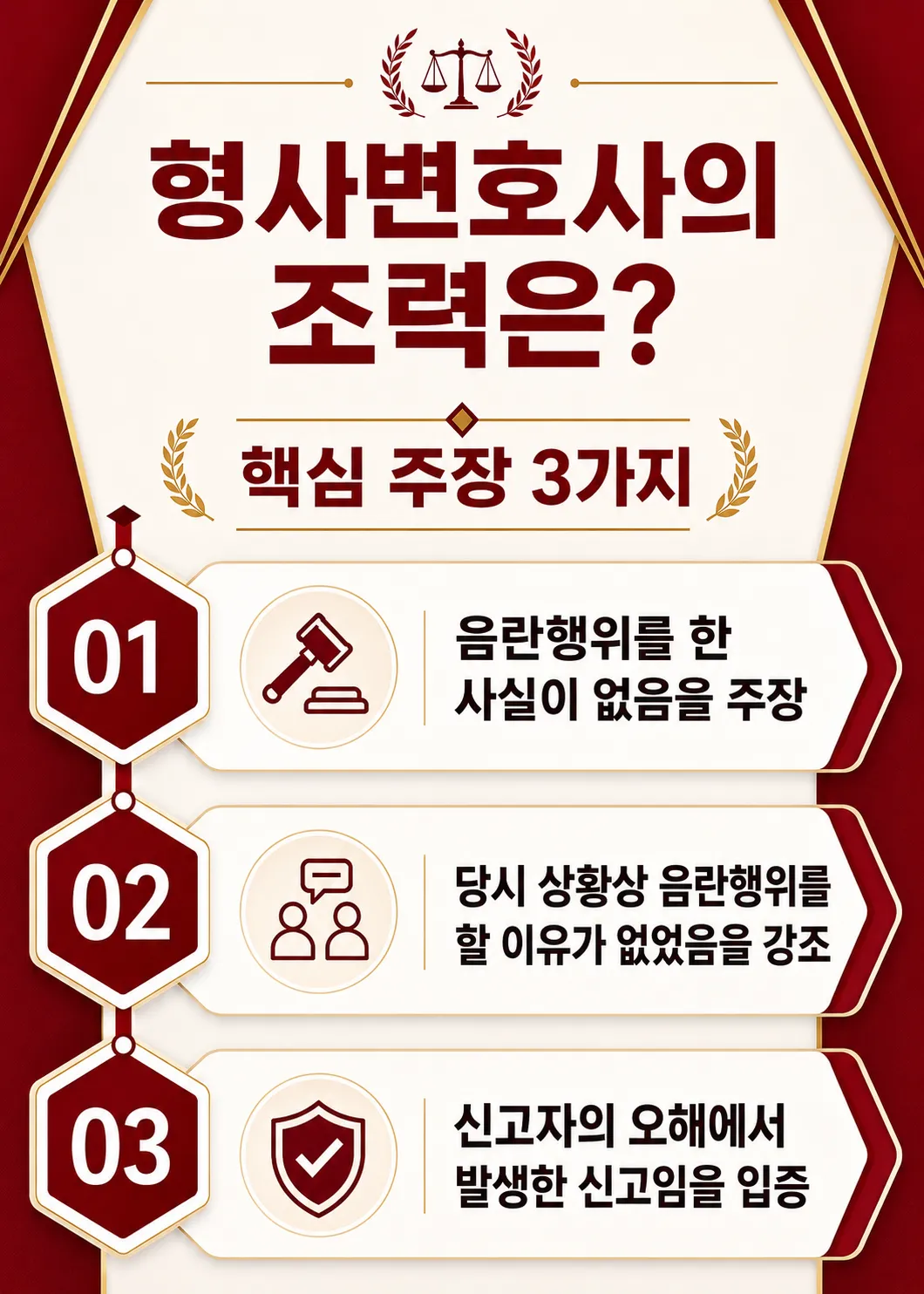
- - Asserting That No Obscene Act Had Been Committed
- - Emphasizing That, Given the Circumstances at the Time, There Was No Reason to Commit an Obscene Act
- - Establishing That the Report Arose From the Reporter's Misunderstanding
- 3. The Client Suspected of Public Indecency Receives a Non-Referral Decision
- - In What Cases Is a Public Indecency Charge Established?
- 4. Response Strategy When Suspected of Public Indecency
- - Frequently Asked Questions

1. The Story of a Client Who Sought a Criminal Defense Lawyer on a Suspected Charge of Public Indecency

The situation of the client who sought a criminal defense lawyer on a suspected charge of public indecency was as follows.
The client was operating a private office and stated that, on the day the incident occurred, the client had done light exercise in the office before leaving work.
The client explained that, because the weather was cool, the client had done simple weight exercises and stationary cycling in work clothes without changing into separate exercise clothes, and afterward practiced golf as well, sweating a great deal.
After finishing exercising, the client was sitting down, drinking water and resting, and pulled and shook the lower part of the top the client was wearing in order to cool off the sweat.
Afterward, a business counterpart visited the office as previously arranged, and related work was carried out.
The next day, however, the police came and stated that a person in the building across the way had reported that the client had committed an obscene act.
The client sought a criminal defense lawyer, expressing that the client had merely flapped the top to cool off the sweat, and that there were many people in the office at that time so there was no reason to commit such an act, protesting that the accusation was unfair.
2. The Criminal Defense Lawyer's Assistance in a Public Indecency Case
In this case, to which public indecency was applied, it was necessary to confirm whether the client had actually committed an obscene act, or whether the client came to be suspected due to the reporter's misunderstanding.
Accordingly, the criminal defense lawyer proceeded with the following assistance based on materials that could establish the circumstances at the time the incident occurred.
 Asserting That No Obscene Act Had Been Committed
The client asserted that, although the client had exercised or rested in the office, the client had not at all committed the obscene act that the reporter claimed.
Accordingly, the criminal defense lawyer analyzed the video filmed by the reporter in collaboration with this firm's Digital Forensics Center.
As a result, the video only partially showed the movement of the client's hands and arms, but there was no scene from which it could be judged that an obscene act was actually being committed.
The lawyer also emphasized that what the client had moved was, in the process of exercising, the act of grasping and shaking the top to cool off the sweat.
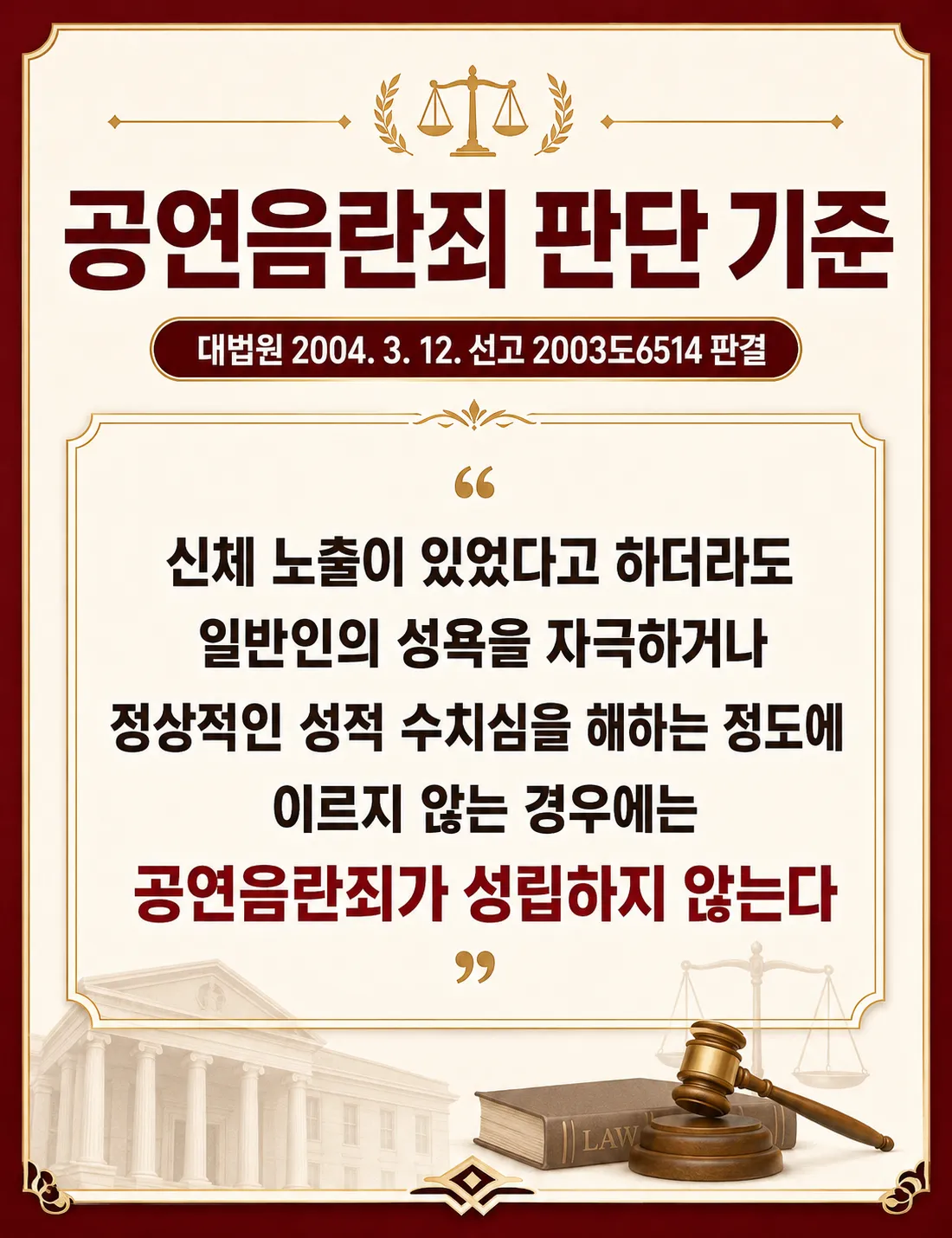
In this regard, the Supreme Court has held that even where there was exposure of the body, public indecency is not established where it does not reach the degree of stimulating the sexual desire of an ordinary person or harming the normal sense of sexual shame (Supreme Court Decision 2003Do6514, March 12, 2004).
Based on the above precedent, the criminal defense lawyer asserted that the client's conduct could not be regarded as an obscene act and that the evidence to establish it was insufficient.
Emphasizing That, Given the Circumstances at the Time, There Was No Reason to Commit an Obscene Act
The client's office was structured so that all sides were made of transparent glass, allowing the interior to be seen easily from the outside.
In addition, at the time of the incident there were also employees working in the office, and immediately after finishing exercising, a business counterpart was arranged to visit and carry out work.
Considering these circumstances, the criminal defense lawyer strongly emphasized that the client had no reason to commit an obscene act while taking such a risk.
Establishing That the Report Arose From the Reporter's Misunderstanding
After learning of the report, the client made efforts to resolve the misunderstanding directly.
The client went to the building across the way where the reporter worked, explained the client's position, and delivered a letter apologizing for having apparently caused a misunderstanding.
Afterward, the client received a note from the reporter stating that the reporter seemed to have misunderstood the situation, and the criminal defense lawyer submitted that note as evidence.
Through this, the lawyer emphasized that there was a strong possibility that the report had been made while the reporter had not clearly confirmed the situation at the time, and asserted that it was difficult to find the suspected charge of public indecency.
3. The Client Suspected of Public Indecency Receives a Non-Referral Decision
The investigative authorities, having investigated the client to whom the suspected charge of public indecency was applied, reviewed the video submitted by the reporter together with the materials submitted by the criminal defense lawyer as a whole.
As a result, it was considered that the report video alone made it difficult to conclude that the client had actually committed an obscene act, and that the reporter had expressed the position that it might have been a misunderstanding and requested withdrawal of the report.
Accordingly, the authorities judged that there was insufficient evidence to establish the suspected charge of public indecency and issued a non-referral decision.
In What Cases Is a Public Indecency Charge Established?
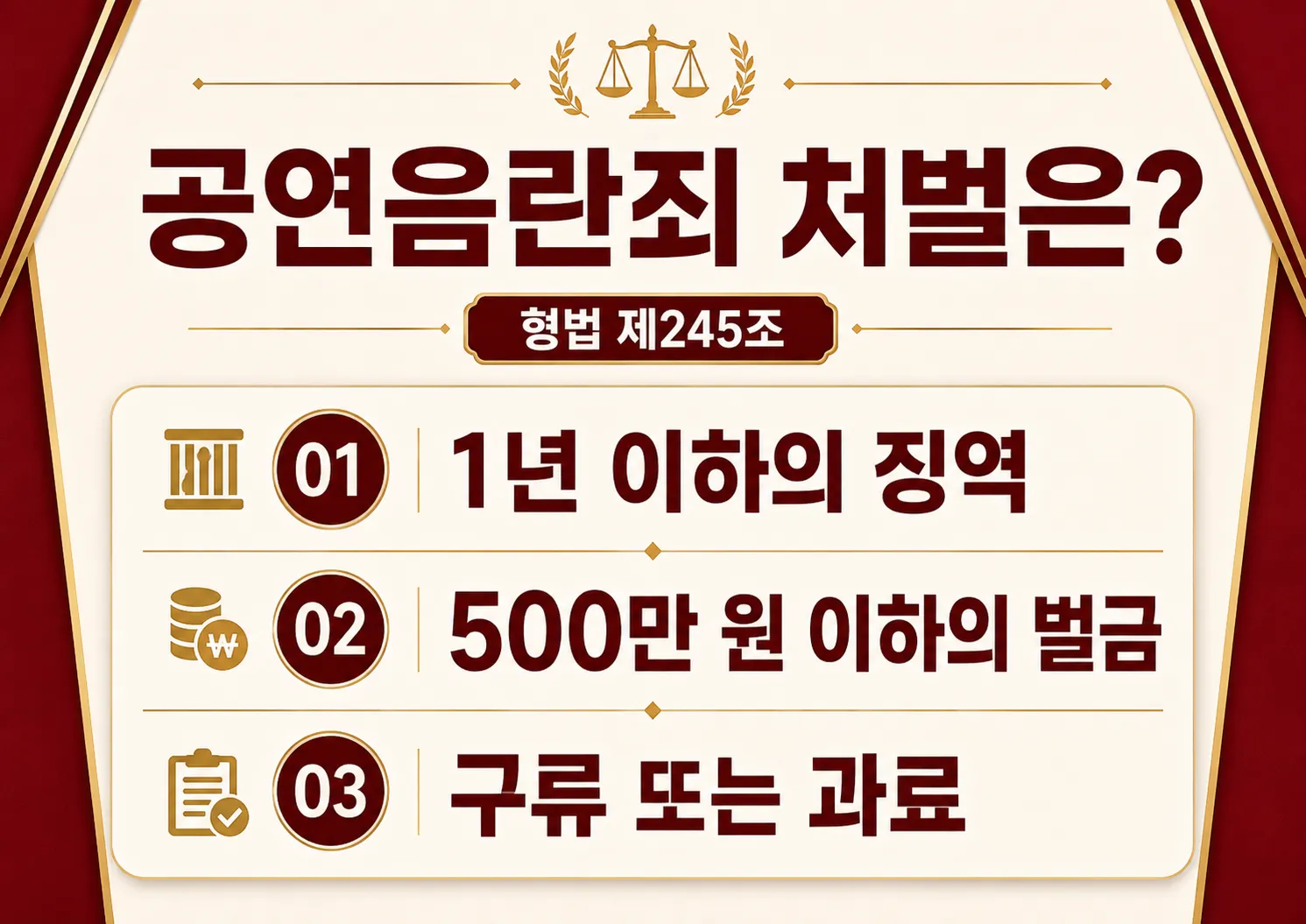
Under Article 245 of the Criminal Act, the crime is established where a person publicly commits an obscene act, and the person may be punished by imprisonment for not more than one year, a fine not exceeding 5 million won, misdemeanor imprisonment, or a minor fine.
Regarding the elements of public indecency, the Supreme Court has held as follows.
Supreme Court Decision 2003Do6514, March 12, 2004
The term "obscene act" under Article 245 of the Criminal Act refers to conduct that stimulates the sexual desire of an ordinary person, arouses sexual excitement, harms the normal sense of sexual shame, and thereby offends the sense of sexual morality, and this crime is not established only where there is a subjective sexual purpose such as the arousal or satisfaction of sexual desire; it suffices that there is an awareness of the meaning of the obscenity of the act.
In other words, the crime is generally not established merely on the ground that another person felt discomfort or misunderstood.
Whether the conduct at issue amounts to an obscene act to the degree of harming an ordinary person's sense of sexual shame, and whether such conduct actually took place under the circumstances at the time, are examined specifically and judged.
In this case as well, it was importantly considered that it was difficult to find that the client had actually committed an obscene act on the basis of the reporter's misunderstanding alone.
4. Response Strategy When Suspected of Public Indecency
Public indecency is not a crime for which punishment is determined merely by the fact that a report has been filed.
Whether an obscene act actually took place, what the situation was at the time, and whether materials exist that can prove this are importantly reviewed.
If you are in a situation of being suspected due to an unfair misunderstanding, it is necessary to organize the facts from the early stage and prepare a direction for your response.
Daeryun, the ninth-largest law firm in Korea (based on 2025 value-added tax filings with the National Tax Service), assists with responses that can support the client's position through accompaniment during police investigation and review of materials by evidence-investigation experts.
If you are facing an investigation on a suspected charge of public indecency, you may consult through a 🔗reservation for a legal consultation with an attorney specializing in the field.
Frequently Asked Questions
Q. If I did not commit public indecency but was unfairly reported, what should I do?
A. First, it is important to secure objective materials that can establish the situation at the time. If the content of the report differs from the facts or arose from a misunderstanding, you must be able to explain the actual situation through CCTV footage, dashcam footage, call records, witness statements, and the like. It is also important to maintain a consistent statement throughout the investigation by the investigative authorities.
Q. In a public indecency case, what evidence should be collected?
A. CCTV footage of the place where the incident occurred, photographs or videos taken at the time, statements of nearby witnesses, access records, and call and text records can be important evidence. If there are materials that can show that the content of the report differs from the actual situation, it is advisable to secure them from the early stage.
This content is based on actual case studies of Daeryun Law LLC with some adaptations, and the copyright belongs to our firm.
Unauthorized reproduction, duplication, or distribution and other copyright infringements may result in legal action under applicable laws.










