
CONTENTS
- 1. The Client Who Came to a Medical-Sector Attorney

- 2. Medical-Sector Attorney Provides Assistance to Defend the Client Against the Charge of Violating the Pharmaceutical Affairs Act
- - Medical-Sector Attorney Argues That the Principal Part of the Sale of the Medication Took Place at the Pharmacy
- - Medical-Sector Attorney Argues That the Delivery of the Medication Was Unavoidable
- 3. As a Result of the Medical-Sector Attorney's Assistance, a No-Prosecution Decision on the Charge of Violating the Pharmaceutical Affairs Act Was Obtained
- - Why a Medical-Sector Attorney Is Needed

1. The Client Who Came to a Medical-Sector Attorney

The client who came to Daeryun to seek the assistance of a medical-sector attorney had been charged with a 🔗violation of the Pharmaceutical Affairs Act after sending medication by courier.
The client maintained that, only for certain medications that were out of stock, the deliveries had been made for the patients' convenience and were not acts carried out with malicious intent.
Daeryun's medical-sector attorney set out to provide assistance so that mitigating circumstances would be taken into account on the client's behalf.
 Statutes Relating to the Violation of the Pharmaceutical Affairs Act, Explained by a Medical-Sector Attorney
Pharmaceutical Affairs Act, Article 50 (Sale of Medicines)
① A pharmacy founder or a medicine seller shall not sell medicines at any place other than the relevant pharmacy or shop. Provided, that this shall not apply where approval has been obtained from the Mayor, the head of a Gun, or the head of a Gu.
② A pharmacy founder shall not sell prescription medicines except where dispensing them pursuant to the prescription of a physician or dentist. Provided, that this shall not apply where they are sold to the founder of an animal hospital under the "Veterinarians Act" in accordance with the standards prescribed by Ordinance of the Ministry of Health and Welfare.
2. Medical-Sector Attorney Provides Assistance to Defend the Client Against the Charge of Violating the Pharmaceutical Affairs Act
Through a thorough consultation, the medical-sector attorney ascertained the facts of the client's case and set out to rebut and defend against the alleged statutory violation.
■ Underlying facts: Only where a medication was out of stock, rather than having the patient visit the pharmacy and collect it in person, the medication was delivered to the patient's home through an acquaintance.
■ Statute allegedly violated: A pharmacy founder and a medicine seller shall not sell medicines at any place other than the relevant pharmacy or shop (Pharmaceutical Affairs Act, Article 50 (1)).
Medical-Sector Attorney Argues That the Principal Part of the Sale of the Medication Took Place at the Pharmacy
Daeryun's medical-sector attorney argued that, although it was true that the client had delivered the medications that were out of stock, the principal part of the sale of medicines, including the ordering, dispensing, and medication guidance, had taken place within the pharmacy.
On that basis, the attorney emphasized that the case did not amount to the sale of medicines at a place other than the pharmacy or shop.
All or the principal part of the series of acts constituting the sale of medicines, including the ordering, dispensing, delivery, and medication guidance, must take place within the pharmacy or shop, or by a method that can be regarded as equivalent thereto.
Medical-Sector Attorney Argues That the Delivery of the Medication Was Unavoidable
Daeryun's medical-sector attorney argued that the patients to whom the client had delivered medication were elderly, aged over 70.
Daeryun's medical-sector attorney emphasized that the client had delivered the medication solely to spare elderly patients with limited mobility the trouble of visiting the pharmacy again, and had no other intent.
The client had simply provided a medical service so that the patients could focus on their treatment without inconvenience.
3. As a Result of the Medical-Sector Attorney's Assistance, a No-Prosecution Decision on the Charge of Violating the Pharmaceutical Affairs Act Was Obtained
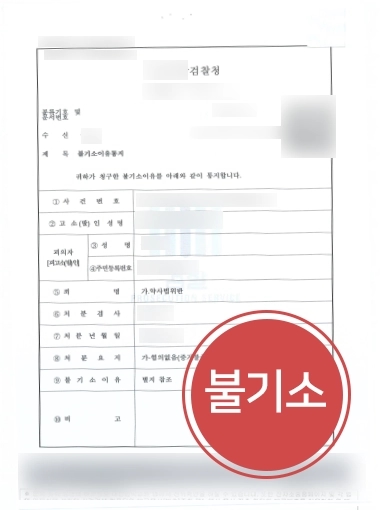
With the assistance of Daeryun's medical-sector attorney, the client received a no-prosecution decision on the ground of no suspicion of crime.
The client said, "I thought I was helping the patients' convenience, and I truly had no idea that I could be charged with a violation of the Pharmaceutical Affairs Act. With the attorney's assistance, I was able to avoid punishment."
Why a Medical-Sector Attorney Is Needed
In the case of a violation of the Pharmaceutical Affairs Act, a license may be suspended or revoked, so it is important to analyze the characteristics of the case and the state of the evidence comprehensively and to establish an appropriate defense strategy.
In particular, it is advisable to protect one's rights by working with an attorney who has specialized knowledge in the medical field, through the exercise of rights during the investigation, the securing of evidence, and the establishment of a trial strategy.
At Daeryun LLC, a 🔗specialized attorney begins the consultation as soon as an inquiry is received, which helps to expedite the matter.
If you wish to proceed promptly with the assistance of a medical-sector attorney, we invite you to contact Daeryun LLC.
This content is based on actual case studies of Daeryun Law LLC with some adaptations, and the copyright belongs to our firm.
Unauthorized reproduction, duplication, or distribution and other copyright infringements may result in legal action under applicable laws.