
CONTENTS
- 1. The Client Who Came to the Copyright Attorney

- 2. The Client's Background as Confirmed by the Copyright Attorney
- - The Copyright Act as Confirmed by the Copyright Attorney
- 3. The Copyright Attorney's Defense of the Client
- - The Copyright Attorney Emphasizes That the Client Had No Intent to Infringe the Copyright
- - The Copyright Attorney Emphasizes That the Client Hopes for a Settlement with the Copyright Holder
- 4. The Copyright Attorney's Handling of the Settlement
- - The Disposition of the Copyright Attorney's Client

1. The Client Who Came to the Copyright Attorney
The client who came to the copyright attorney requested assistance from the copyright attorney, saying that he was facing a police investigation after downloading a study program through an unlawful channel.
2. The Client's Background as Confirmed by the Copyright Attorney
The copyright attorney set out to confirm the background in order to assist with the client's case.
The client was a university student preparing for employment, and while studying for a certification to that end, he reportedly needed a study program.
While searching the internet, he learned that the study program he needed was expensive, and feeling sorry to ask his parents for money, he did not download it.
Then, he learned online that he could download the program for free through an unlawful channel.
The copyright attorney's client, without giving it much thought, downloaded it with a sense of relief that he could use the program.
A few weeks later, the client was told to appear for a police investigation on the ground that he had violated the Copyright Act,
and, frightened and flustered by a situation he was facing for the first time, he came to the copyright attorney.
 The Copyright Act as Confirmed by the Copyright Attorney
The copyright attorney's client was facing a police investigation on the ground that he had violated the Copyright Act, and to protect the client, the attorney examined the 🔗copyright law.
Copyright Act, Article 136 (Penal Provisions) (1) A person who falls under any of the following subparagraphs shall be punished by imprisonment for not more than 5 years or by a fine not exceeding 50 million won, or both may be imposed concurrently.
1. A person who infringes an author's economic rights or other property rights protected under this Act (excluding the rights under Article 93) by means of reproduction, public performance, public transmission, exhibition, distribution, rental, or preparation of a derivative work
Because the copyright attorney's client had infringed the complainant's copyright in the study program, he was liable to be punished by imprisonment for not more than 5 years or by a fine not exceeding 50 million won.
3. The Copyright Attorney's Defense of the Client
For the client, the copyright attorney accompanied him from the police investigation stage and conducted the defense as follows.
The Copyright Attorney Emphasizes That the Client Had No Intent to Infringe the Copyright
The copyright attorney's client simply wanted to study and wished to download the program, but lacking the money, he used an unlawful channel; he had no intent whatsoever to infringe the copyright.
After downloading the program, he never passed it on to any third party, and he used it solely for his own study.
From this, it can be seen that the client used the program at issue solely for the purpose of study and never used it for any commercial purpose.
The Copyright Attorney Emphasizes That the Client Hopes for a Settlement with the Copyright Holder
The copyright attorney's client feels deeply sorry toward the author of the program at issue, that is, the complainant.
Never having imagined that downloading a program for the purpose of studying alone would be such a serious offense, he feels apologetic for having caused harm to the copyright holder.
The copyright attorney's client wishes to make monetary compensation for the copyright infringement and hopes to reach a settlement.
4. The Copyright Attorney's Handling of the Settlement
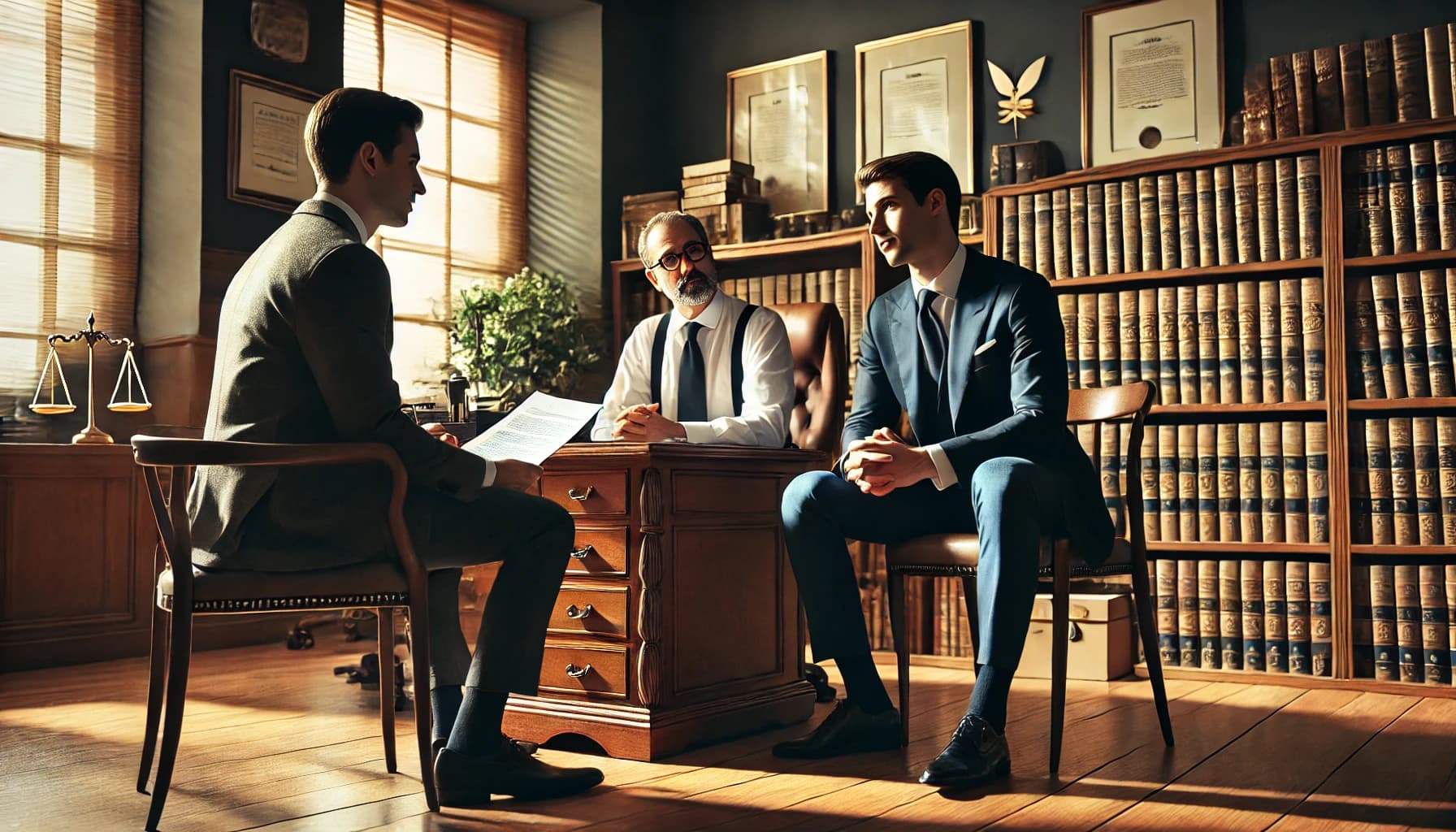
After the police investigation, the copyright attorney met with the complainant and handled the settlement on the client's behalf.
A settlement satisfactory to both sides was reached, the complainant received a sum of money and withdrew the complaint against the client, and a settlement agreement was drawn up stating that no further civil or criminal measures would be taken thereafter.
The Disposition of the Copyright Attorney's Client
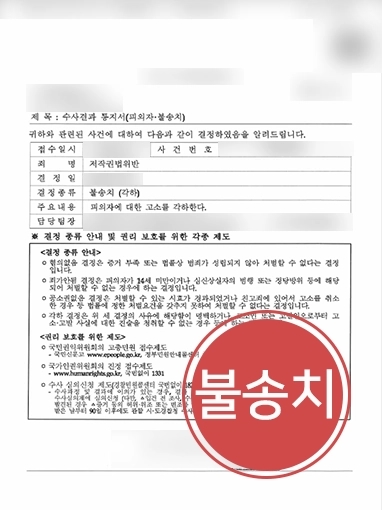
Through the copyright attorney's handling of the settlement, the client received a no-referral decision from the police.
Because the complainant had withdrawn the complaint, the no-referral was decided on the ground that the complaint against the suspect was rejected,
and although the client had been placed at risk of punishment for having committed an unlawful act unknowingly, he was able to bring the case to a good conclusion because he sought the assistance of the copyright attorney.
If you are in difficulty due to a violation of the Copyright Act, please entrust your case to the Daeryun Law Firm.
This content is based on actual case studies of Daeryun Law LLC with some adaptations, and the copyright belongs to our firm.
Unauthorized reproduction, duplication, or distribution and other copyright infringements may result in legal action under applicable laws.