
CONTENTS
- 1. The Client Who Requested Help from a Debt Collection Attorney

- - The Statutes Concerning the Credit Business Explained by a Debt Collection Attorney
- 2. The Debt Collection Attorney Providing a Defense to Defend Against the Client's Penalties
- - The Debt Collection Attorney Asserting Full Acknowledgment of the Alleged Facts
- - The Debt Collection Attorney Asserting the Absence of a Prior Record of the Same Type of Crime

1. The Client Who Requested Help from a Debt Collection Attorney

This is the account of a client who sought help from a debt collection attorney.
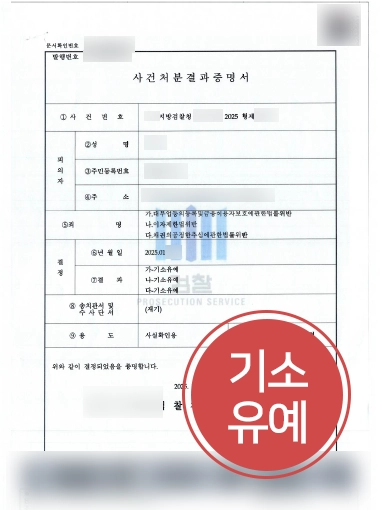
The client was facing a prosecutorial investigation on charges of violation of the Lending Business Act, violation of the Interest Limitation Act, and violation of the Fair Debt Collection Practices Act.
The circumstances of the client's case, as identified by the debt collection attorney who has handled many related cases, were as follows.
-Made loans without registering as a lending business
-Received principal and interest in excess of the statutory maximum interest rate
-Sent threatening text messages and the like to the victims
 The Statutes Concerning the Credit Business Explained by a Debt Collection Attorney
A credit (loan) business refers to engaging, as a business, in the lending of money, or in collecting money by taking over the right to receive money (a claim) from a person such as the following.
Here, the act of lending money includes discounting bills, or transferring money in a similar manner such as by way of a transfer for security.
A credit business may be operated only by a person who has registered as a credit business under the relevant statutes, and a person who engages in the credit business without registration or renewal of registration may be subject to imprisonment for not more than five years or a fine not exceeding 50 million won.
∙Statutes concerning the interest rate limit for credit business operators
When a credit business operator extends a loan to an individual, the interest rate may not exceed 20 percent per annum (a monthly or daily interest rate is converted to a simple annual rate of 20 per 100).
A person who receives interest in excess of the interest rate is subject to imprisonment for not more than three years or a fine not exceeding 30 million won.
| Relevant Statute TIP from a debt collection attorney -Late-payment interest is also included in interest. -Early-repayment fees are also included in interest. -A debt collector may not demand repayment from a third party who has no legal obligation, or cause fear through means such as violence or intimidation. |


2. The Debt Collection Attorney Providing a Defense to Defend Against the Client's Penalties

The collection attorney established a defense strategy to protect the client against punishment.
The Debt Collection Attorney Asserting Full Acknowledgment of the Alleged Facts
The debt collection attorney argued that the client acknowledged all of the alleged facts and was deeply remorseful.
The client had been laid off during the COVID-19 period from a company where the client had worked for more than ten years, and the client had continued to fail at finding new employment.
Under the responsibility of supporting the client's parents and the pressure of sustaining the client's own livelihood, the client heard that ordinary individuals could also engage in the lending business, and with impaired judgment, the client began this work.
The debt collection attorney acknowledged that the client had committed unlawful acts, but pleaded for consideration of the circumstance that the client had been under economic and psychological pressure following the loss of employment.
The Debt Collection Attorney Asserting the Absence of a Prior Record of the Same Type of Crime
The collection attorney argued that the client had no prior record of the same type of offense whatsoever.
The client is currently working diligently as a day laborer at a construction site.
The collection attorney requested leniency, emphasizing that the client had no prior record of the same type of offense and that there was no concern of reoffending.
This content is based on actual case studies of Daeryun Law LLC with some adaptations, and the copyright belongs to our firm.
Unauthorized reproduction, duplication, or distribution and other copyright infringements may result in legal action under applicable laws.