
CONTENTS
- 1. The Client Who Sought the Traffic Accident Firm

- - The Background to Being Investigated on a Retaliatory Driving Charge
- 2. The Client's Case Explained by the Traffic Accident Firm
- - Establishment of the Traffic Accident Attorney's Strategy
- 3. Assistance Provided by the Traffic Accident Firm
- - Traffic Accident Attorney: Constructing the Argument Denying Intent
- - Traffic Accident Attorney: Pointing Out the Limits of Interpreting the Dashcam Footage
- - Traffic Accident Attorney: Response at the Investigation Stage and Submission of a Statement of Opinion
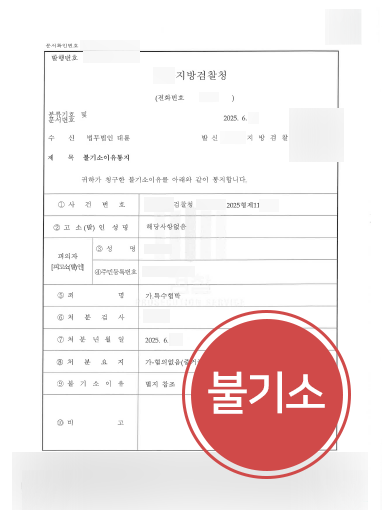
- 4. Result of the Traffic Accident Firm's Assistance: Non-Prosecution
- - How to Respond to a Traffic Accident Dispute

1. The Client Who Sought the Traffic Accident Firm

This is a case in which a client who turned to a traffic law firm, while suspected of special intimidation through retaliatory driving, obtained a non-prosecution disposition with the help of a traffic accident attorney.
 The Background to Being Investigated on a Retaliatory Driving Charge
While driving an express bus, the client tried to overtake a slow-moving vehicle ahead and friction arose with the other vehicle traveling in the second lane.
In a situation where overtaking was difficult, the client flashed the high beams several times and then returned to the bus-only lane to complete the passing maneuver.
However, as the scene of partially crossing the lane was captured on the dashcam, the other party filed a criminal complaint with the police, alleging intentional threatening driving.
The victim's side asserted that this was ‘special intimidation using an automobile, a dangerous object.’
The client then received a call for police questioning on suspicion of retaliatory driving and requested assistance from a traffic accident law firm.
2. The Client's Case Explained by the Traffic Accident Firm
The client who came to our firm regarding a traffic incident was facing a police investigation on suspicion of retaliatory driving, that is, threatening driving.
Threatening driving refers to the act of intentionally threatening another vehicle or driver, and it goes beyond a simple traffic dispute and may be punished as a serious criminal offense, such as special intimidation, special assault, or special destruction of property under the Criminal Act.
Because an automobile is regarded as a ‘dangerous object,’ a threatening act for which intent is found during driving is recognized as a serious crime.
Charge | Level of punishment |
Special intimidation (Article 284 of the Criminal Act) | Imprisonment for up to 7 years or a fine of up to 10 million won |
Special (aggravated) bodily injury (Article 258-2 of the Criminal Act) | Imprisonment for 1 to 10 years |
Special (aggravated) assault (Article 261 of the Criminal Act) | Imprisonment for up to 5 years or a fine of up to 10 million won |
Special destruction of property (Article 369 of the Criminal Act) | Imprisonment for up to 5 years or a fine of up to 10 million won |
The client in this case was also driving an express bus when, during an overtaking maneuver, a situation arose in which a collision with the other vehicle seemed imminent, and as a result he was booked on suspicion of ‘special intimidation.’
Article 284 of the Criminal Act (Special Intimidation)
Establishment of the Traffic Accident Attorney's Strategy
The other driver perceived the situation as intentional threatening driving and reported it to the police, and the client was in a crisis situation facing the possibility of criminal punishment.
However, the situation at the time could also be interpreted as a temporary lane intrusion according to the flow of traffic and available driving space, and the flashing of high beams, and there was insufficient clear evidence to conclude that it constituted threatening driving.
In response, the traffic accident attorney comprehensively analyzed the client's occupational characteristics, the road environment at the time, and the limitations of interpreting the dashcam footage, and established a strategy so that the absence of intent could be actively demonstrated.


3. Assistance Provided by the Traffic Accident Firm

The traffic accident attorney at the traffic accident law firm carried out the following strategic assistance so that the client's case could be concluded at the prosecution stage.
Traffic Accident Attorney: Constructing the Argument Denying Intent
The client was suspected of an ‘intentional threat’ over a temporary lane encroachment that occurred in the course of a simple overtaking.
The traffic accident attorney therefore actively demonstrated, on the basis of the following circumstances, that it was not intentional retaliatory driving.
▷ The high-beam flashing was also for the purpose of maintaining the flow of traffic, not a threat
▷ With multiple passengers on board, there was no benefit or motive to engage in a threatening act
Traffic Accident Attorney: Pointing Out the Limits of Interpreting the Dashcam Footage
The traffic accident attorney also closely reviewed the victim vehicle's dashcam footage, which was identified as the key evidence in this case.
The attorney then argued, on the basis of the following points among others, that it was difficult to recognize intent for retaliatory driving.
▷ The point that there was no circumstance of the client continuously driving while encroaching on the lane
Traffic Accident Attorney: Response at the Investigation Stage and Submission of a Statement of Opinion
The traffic accident attorney submitted to the investigative agency a statement of opinion reflecting the client's account.
In particular, the attorney included the following content to convey a defense rationale preemptively in advance.
▷ The driver's subjective perception and the unavoidability of the vehicle operation
▷ The logical grounds for denying intent and relevant precedents
4. Result of the Traffic Accident Firm's Assistance: Non-Prosecution

After the strategic response of the traffic law firm, the prosecution found it difficult to conclusively determine intent.
In the end, taking comprehensive account of the possibility that the steering maneuver was a simple mistake, the absence of any repetition of intentional threatening driving, and the suspect's consistent statements, the prosecution rendered a non-prosecution disposition of "no suspicion of crime."
How to Respond to a Traffic Accident Dispute
As in the case above, even where the police or the prosecution harbor suspicion, the role of the attorney in proving the absence of intent through reasonable explanation and the submission of materials is very important.
At Daeryun LLC, through a dedicated consultation attorney system, we quickly grasp the facts of the case and assign a specialized attorney by type to provide strategic assistance.
We also collaborate with insurance and evidence investigation professionals to respond comprehensively, including to derivative cases, in the event of a traffic accident.
If you are in a situation requiring related assistance, please entrust your case to a traffic accident law firm at any time through a 🔗Legal Consultation Reservation.

This content is based on actual case studies of Daeryun Law LLC with some adaptations, and the copyright belongs to our firm.
Unauthorized reproduction, duplication, or distribution and other copyright infringements may result in legal action under applicable laws.