
CONTENTS
- 1. Client Charged with Insulting a Superior Officer

- - Background of the Case
- 2. Strategy for Defending Against Punishment for Insulting a Superior Officer
- - Whether the Requirements for a Suspension of Sentencing Are Met
- - Analysis of Relevant Precedents
- - Settlement with the Victim
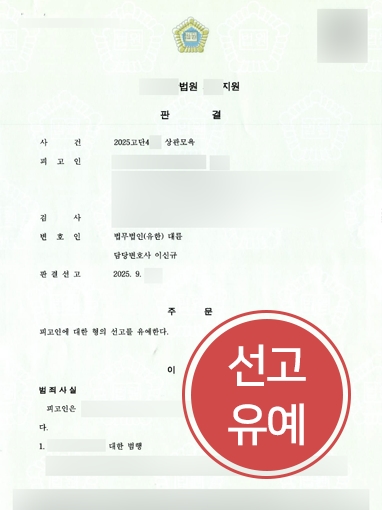
- 3. Result of the Case of Insulting a Superior Officer: ‘Suspension of Sentencing’
- - FAQ on Military Criminal Matters
- 4. Elements of Insulting a Superior Officer
- - Level of Punishment
- - If You Need Professional Assistance

1. Client Charged with Insulting a Superior Officer
The client, who faced charges of insulting a superior officer, had directed severe verbal abuse at a superior officer and was at risk of punishment. With the assistance of an attorney specializing in military criminal cases, however, the client was able to receive a suspension of sentencing.
A suspension of sentencing is a system under which guilt is recognized but the pronouncement of sentence is exempted if the defendant complies with certain conditions for a fixed period.
As a result, the client avoided punishment and was able to conclude the case without a criminal record.
 Background of the Case
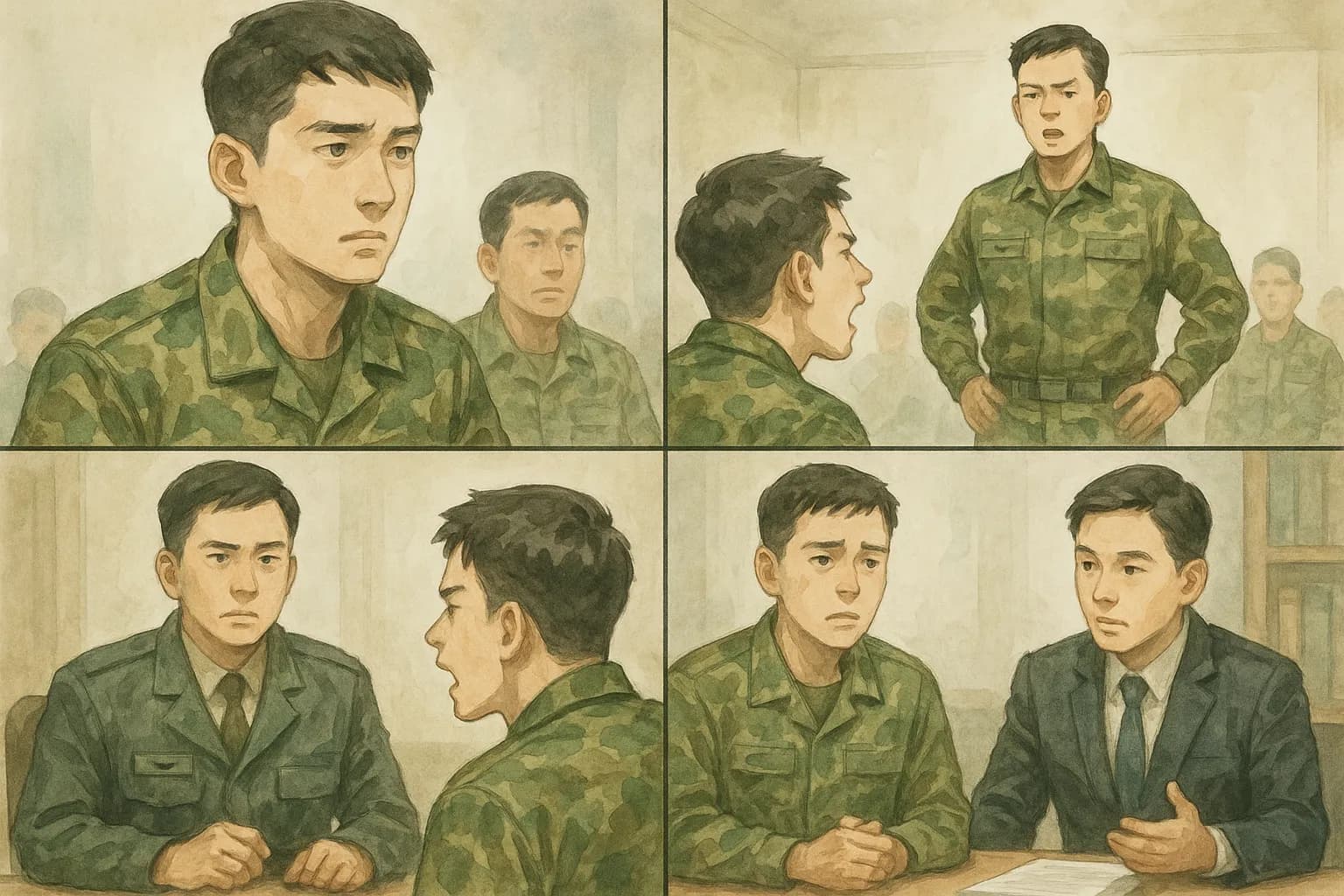
The client had long been on poor terms with a superior officer, Mr. A, and felt dissatisfied because he believed that Mr. A discriminated against him and his fellow soldiers.
Later, in a setting where many people were present, the client was unable to control his emotions and directed severe verbal abuse at Mr. A. As a result, he became subject to an investigation by the military Ministry of Justice on the charge of publicly insulting a superior officer.
Fearing punishment, the client requested assistance with the case of insulting a superior officer from an attorney specializing in military criminal cases.


2. Strategy for Defending Against Punishment for Insulting a Superior Officer
The attorney specializing in military criminal cases identified the following issues in the case so that the client could receive a suspension of sentencing.
The principal issue in this case was whether there were mitigating circumstances that could support a suspension of sentencing, such as the client's age, whether this was a first offense, and the diligence of his military service.
Based on these issues, a response strategy was formulated to assist the client.
Whether the Requirements for a Suspension of Sentencing Are Met
The attorney specializing in military criminal cases assisted the client by explaining that, on the basis of Article 59 of the Criminal Act (Penal Code), a suspension of sentencing could be considered when certain circumstances exist.
It was emphasized that, although the client was at fault for making inappropriate remarks to a superior officer, the following points sufficiently warranted the expectation that he would not commit the same wrong again even without the pronouncement of a sentence.
- The client is young and performed his military service diligently
- This is a first offense
Analysis of Relevant Precedents
The attorney specializing in military criminal cases reviewed precedents in which a suspension of sentencing had been pronounced in situations similar to that of the client.
According to Busan District Court 2021 Godan 907, a suspension of sentencing was pronounced in consideration of the fact that, although the defendant had made insulting remarks to a superior officer, he had performed his military service diligently and posed a low risk of reoffending.
Accordingly, the attorney specializing in military criminal cases emphasized, focusing on the client's specific circumstances and sincerity, that a suspension of sentencing could readily be considered.
Settlement with the Victim
With the assistance of the attorney specializing in military criminal cases, the client prepared a settlement with Mr. A and carried out a deposit with an official depository.
The attorney specializing in military criminal cases served as a facilitator during the settlement process so that the client could resolve the case promptly, and supported the smooth progress of the procedure by advising on the calculation of the deposit amount and the method of submission.
It was emphasized that, accordingly, Mr. A expressed his intention not to seek punishment of the client and prepared a settlement agreement that was submitted to the court.
3. Result of the Case of Insulting a Superior Officer: ‘Suspension of Sentencing’

Based on the strategic assistance of the attorney specializing in military criminal cases and an amicable settlement with the victim, the client demonstrated a remorseful attitude and a low likelihood of reoffending, and was able to receive a suspension of sentencing.
Satisfied with this outcome, the client expressed gratitude, stating, “Thanks to the attorney, the case was resolved amicably.”
FAQ on Military Criminal Matters
A. The crime of insulting a superior officer is an offense committed against a higher-ranking person within the military organization. Unlike ordinary insult, the level of punishment is set higher in order to protect military order and the authority of superiors.Q. How does the crime of insulting a superior officer differ from ordinary insult?
In addition, in light of the special nature of the military, it may be judged more strictly than ordinary insult during the investigation and trial process.
A. Because the crime of insulting a superior officer is not a crime requiring a complaint to prosecute, reaching a settlement with the victim does not automatically waive the legal punishment itself.Q. In the case of insulting a superior officer, is punishment waived if a settlement is reached with the victim?
However, if the victim expresses an intention not to seek punishment and submits a settlement agreement to the court, the likelihood increases that the court will take this into account and render a favorable judgment, such as a mitigation of sentence or a suspension of sentencing.
4. Elements of Insulting a Superior Officer

Insulting a superior officer is a crime that may be established when a person engages in disrespectful or insulting words or conduct toward a higher-ranking person in the military.
The elements are as follows.
② making insulting remarks or engaging in conduct that lowers his social standing
Level of Punishment
Insulting a superior officer may be punished as follows under Article 64 of the Military Criminal Act.
Because the level of punishment is higher than that for ordinary insult, an early response is of the utmost importance if one becomes involved in such a case.
Act | Level of Punishment |
Insulting a superior officer to his face | Imprisonment with or without labor for not more than 2 years |
Insulting a superior officer by displaying documents, drawings, or images, or by a speech or other public means | Imprisonment with or without labor for not more than 3 years |
Publicly stating a fact and thereby damaging the reputation of a superior officer | Imprisonment with or without labor for not more than 3 years |
Publicly stating a false fact and thereby damaging the reputation of a superior officer | Imprisonment with or without labor for not more than 5 years |
If You Need Professional Assistance
Daeryun LLC has numerous attorneys with extensive experience in military criminal cases.
Considering the particular circumstances of each case and internal military regulations, the firm establishes tailored strategies and provides prompt and accurate legal responses.
If you become involved in a case of insulting a superior officer, please feel free to request assistance from Daeryun LLC through the 🔗Legal Consultation Booking.
This content is based on actual case studies of Daeryun Law LLC with some adaptations, and the copyright belongs to our firm.
Unauthorized reproduction, duplication, or distribution and other copyright infringements may result in legal action under applicable laws.