




[Inside the Scene] “I bought it because I trusted him because he was a celebrity”... Controversy over influencer SNS marketing

2024-04-22
'Pharmacy items/expert picks' SNS review back-advertisements... Expressions of suggestive effects are also subject to punishment
“It’s out of stock. It’s already been a few months since we haven’t received the product.”, “It’s out of stock, out of stock. You have to come early in the morning on the day it comes in stock, or we won’t have it.”
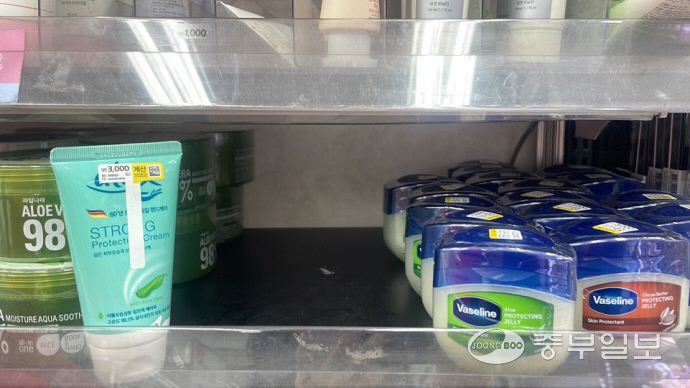
After receiving a recommendation from an influencer on a social networking (SNS) platform, the shortage of Ointment A, an over-the-counter drug, and C Shot, a cosmetic sold at discount stores B, has continued until this year since the first half of last year.
Since SNS promotion using influential influencers has a great impact on sales, controversy is expected as direct promotion equivalent to advertising may violate advertising-related laws.
In the advertising industry, marketing using influencers to increase trust and preference for products is evaluated as a practical method. This type of marketing is a method in which individuals who have gained popularity through content unrelated to advertising are naturally exposed through personal SNS channels in a format similar to their existing content directly using and evaluating a specific product.
However, even though it is a commercial advertisement that receives financial compensation from the advertiser, if the influencer's evaluation and recommendation of the product is perceived by consumers as an independent opinion unrelated to the advertiser and influences purchase choices, it may be considered an act that violates the Act on Fair Labeling and Advertising.
In particular, in the case of prescription drugs, advertising itself is completely prohibited, unlike general drugs. In addition, in addition to professionals such as pharmacists and doctors, even if the general public engages in acts that could be viewed as advertisements through specific media, they can be equally punished under the Food Labeling and Advertising Act, Articles 47 and 68 of the Pharmaceutical Affairs Act, and Article 78 of the Rules on the Safety of Medicines, etc.
The two products, A Ointment and C Shot, have a history of being recommended and introduced in videos by many YouTubers as ‘products that are good for skin improvement’, so they may be embroiled in controversy over violation of related laws.
In the case of ‘Ointment A’, an over-the-counter drug, it was confirmed that a pharmacist personally recommended it as a product effective in skin regeneration.
In order to check the actual sales status of these products, Joongbu Ilbo reporters covered pharmacies and C discount stores in Suwon, Ansan, Anyang, and Gunpo areas on the 20th, and store officials confirmed that the ‘stockout phenomenon’ regarding the products is continuing.
A pharmacist working at a pharmacy in Suwon said that in the case of ointment A, “we can’t sell it because we can’t find it.” An official at the B Discount Store in Gunpo City responded to the C-Shot product by saying, “If you want to buy that product, you must go on ‘Open Run.’ This product is sold out as soon as it comes back in stock.”
There is even an act of acquiring a large number of products through hoarding and selling them at a higher price than the original purchase price on a second-hand trading platform.
Consumers have also appeared in the second-hand market to resell items at a plus price (an act of setting a price higher than the existing price).
As consumers unconsciously tend to believe in the ‘effectiveness’ of certain products and purchase them based on recommendations from celebrities or influencers, they are defined as advertisements and strictly regulated.
Hye-young Jang, chief general counsel at Daeryun Law Firm (Limited), explained, “When explaining the reason for recommending a product through media such as radio or television through video or other methods, if it contains information or informs about the information (effectiveness) of the product, it is considered an advertisement.”
Attorney Jang pointed out, “In particular, the Pharmaceutical Affairs Act strictly prohibits ‘acts of enticing consumers about drugs and quasi-drugs,’” and added, “There is a lot of room for punishment for advertisements that use methods that could be expressed implicitly, even if the effect or efficacy is not explicitly stated.”
He continued, "Recently, there seems to have been an increase in advertisements targeting health functional foods such as nutritional supplements or cosmetics through SNS," and emphasized, "According to the Food Labeling and Advertising Act, any act that may lead to the perception that it is effective in preventing or treating diseases is a violation of the law and may lead to criminal punishment."
[View full article] - [Inside the Scene] “I bought it because I trusted him because he was a celebrity”... Controversy over influencer SNS marketing


Do you have more questions?






In-Person Consultation Booking
If you have legal concerns, consult with a specialist attorney at the nearest office.
