Page title background (PC version)Page title background (mobile version)

Press Coverage

Numerous media outlets recognize the expertise of Daeryun Law LLC.
Explore interviews, legal commentary, and columns by Daeryun lawyers.

Gyeonggi Ilbo
2025-11-24
“예배당 안 내줄거야”…교회 파벌싸움 속 예배 방해한 교인, 항소심서 무죄
“I won’t give you a place to worship”… Church member who disrupted worship amidst factional fight acquits on appeal
Indicted on charges of having church members occupy the door and disrupting worship, the appeals court said, “The church members came forward voluntarily.” Unlike the first trial, a man in his 60s who blocked the church door and disrupted a fellow pastor's worship service due to a conflict between church members was found not guilty in the appeal trial. According to the legal community on the 24th, the 4-1st Criminal Division of the Incheon District Court recently found Mr. In 2021, Mr. A was sent to trial on charges of interfering with the work of fellow pastor B by having church members block the main entrance to the church and sending a statement saying, “I will not give up the chapel.” The incident started with a dispute within the church. Due to the dispute, Mr. A received a provisional injunction from the court to suspend the execution of his duties, and Mr. B was decided to act as an acting representative. Afterwards, the church members began to fight into factions that followed Mr. A and Mr. B, respectively, and as the dispute intensified, it was confirmed that it spread to the point where they blocked the church chapel. However, Mr. A said, “I never ordered anyone to block Mr. B’s entry or issue a statement,” and added, “If Mr. B had tried to enter alone without accompanying church members, he would have been prevented from entering. He denied the charge, claiming, “It would have been allowed.” In response, the first trial court sentenced Mr. A to a suspended prison sentence. The trial court of the first trial said, “Even if the victim entered the church building alone in a situation where church members were in conflict, it was not a situation in which worship could be properly conducted. The defendant did not answer the victim’s phone call to hand over work, nor did he stop the church members’ actions. He implicitly supported the obstruction of business.” However, the appellate court partially acknowledged Mr. A’s claims and declared Mr. A not guilty based on the court’s provisional injunction decision. The appellate court explained, “The previous injunction decision only suspended the defendant from his duties and appointed the victim as an agent, but did not impose an obligation to cooperate in the handover. Looking at the submitted on-site video, it appears that the church members blocked the victim’s church members from entering, but did not block the victim.” He continued, “The church members stated that the defendant did not order them to write the statement and wrote it voluntarily.” He added, “Even if he did order them to write the statement, it was enough power to interfere with work.” “It cannot be considered an event,” he ruled. Attorney Kim In-won of Daeryun Law Firm, who represented Mr. A in the appeals court, explained, “For a statement to be recognized as an obstruction of business, there must be actual acts of pressure, such as the mobilization of a significant number of people, continuous and organized action, physical occupation, or obstruction of traffic,” and explained, “We were found not guilty by emphasizing that Mr. A was not involved in writing the statement and that he was only expressing a simple religious resolution and that no act of pressure occurred.” Reporter Park Chae-ryeong chae@kyeonggi.com[View full article] “I won’t give you a place to worship”… Church member who disrupted worship amidst factional fight acquits on appeal (Click here)
Loishu
2025-11-24
이혼변호사가 말하는 이혼 재산분할·양육비...법원은 ‘실질’을 본다
Divorce lawyer talks about divorce property division and child support... The court looks at ‘substance’
Most of those who decide to divorce face the harsh wall of reality along with deep emotional turmoil. Especially when it comes to property division and child support issues, the wall gets even higher. If your spouse continues to unilaterally notify you by saying things like, “I can’t give you a penny because I don’t have any assets in your name,” or “I quit my job, so I don’t have the money to pay child support,” your eyes will inevitably turn dark. The court's judgment surrounding property division and child support is far from these superficial claims. The core of property division is ⑴ thorough search and understanding of the other party's property, and ⑵ contribution to the formation and maintenance of property. In particular, in the case of contribution, in accordance with Article 839-2 of the Civil Act, if there is no agreement on the division of property, the family court determines the amount and method of division by taking into consideration the amount of property achieved through the cooperation of both parties and other circumstances. If you have devoted yourself to housework and childcare as a full-time housewife for decades and have maintained a family, even if you do not have property in your name, you can be recognized as having made a key contribution to the property formation process. Conversely, when it comes to child support issues, you cannot avoid responsibility simply by claiming that you have no current income. This is because the court imposes an obligation to support children by calculating the possibility of future income-earning activities, that is, ‘estimated income’, based on past income, education, experience, etc. This is in accordance with the general principle of parenting that the welfare of the child should be considered as the top priority, and does not exempt parents from responsibility simply because they do not currently have any income. A recent case that the author handled well demonstrates the court's 'substantive judgment' principle. Client A, who had been a full-time housewife for 30 years, filed for divorce from her husband. The husband dismissed Mr. A's contribution, saying that all real estate and deposits were financed with his own business income. When the lawsuit began, he even hid his assets by transferring the business he was running into the name of his eldest son, who was an adult, and withdrawing his deposits. He also tried to avoid paying child support to his second son, who was still a minor, by claiming that he had no income. After meeting the client, I carefully reviewed the circumstances of the case. In particular, it focused on verifying the assets hidden by Ms. A's husband, how Ms. A's housework contributed to the increase of the husband's assets, and that the husband's cessation of income-generating activities was aimed at avoiding child support. As a result, concrete data proved that Ms. A supported her husband's initial funds for the business and helped her husband focus solely on the business by creating a stable family environment. In addition, we obtained financial transaction details and statements from people around him showing that the husband was exercising actual operating rights even after passing the business over to his son. Based on the evidence submitted by the author, the court not only rejected the husband's claim that Mr. A's contribution was 0%, but also did not accept the husband's claim that he had no current income. The court regarded the assets (business stocks, deposits, etc.) that the husband had concealed just before the divorce suit as ‘estimated assets’ and fully reflected them in the property division, and also recognized Mr. A’s contribution as being quite high. Furthermore, in determining child support, the court ruled that the full amount of child support requested by Mr. A should be paid by calculating 'estimated income' based on past income data and the actual operation of the business. As can be seen from this case, divorce litigation is a process of obtaining a result using legal standards and objective evidence, not emotional appeals or one-sided claims. Therefore, rather than giving up hastily or responding emotionally to the other party's unfair claims, we must seek legitimate rights through a systematic response. Above all, it should be kept in mind that the initial collection of evidence and organization of facts based on the review of the matter just before the lawsuit and the establishment of a strategy are key elements that determine the outcome of the case. Attorney Do-young Do of Daeryun Yeouido Law Firm said, "In matters of property division and child support, the court considers actual contributions and responsibilities beyond superficial facts such as title or current income. A lawyer must listen to the client's story and give a lot of thought to how to argue and persuade the court." “Even if you claim to be hiding your assets or have no income, you can secure and refute objective data, such as property search activities during the litigation process, the flow of property movements and value changes confirmed in past financial transactions, and surrounding circumstances, and obtain the help of experts from the early stages of litigation to clarify the facts and secure legal evidence, so it is more important than anything else to have a strategy to cool-headedly protect your rights without being swayed by emotions,” said Ga-young Jin, lawissue reporter. news@lawissue.co.kr[View full article] Divorce lawyer talks about divorce property division and child support... The court looks at ‘substance’ (Shortcut)
9 places including JoongAng Ilbo
2025-11-24
법무법인 대륜, 글로벌화 가속도…美 뉴욕에 SJKP 출범
Daeryun Law Firm launches SJKP in New York, USA... Globalization ‘accelerates’ as a stepping stone for domestic growth
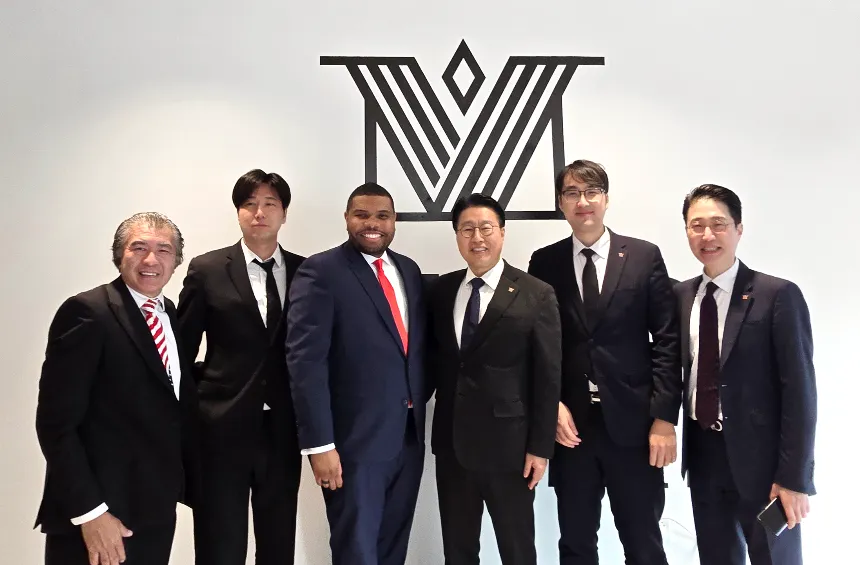
Daeryun Law Firm became the first large domestic law firm to officially launch a local independent law firm, ‘SJKP LLP’, in Manhattan, New York, USA. It is evaluated as suggesting a structural change in the way Korean law firms advance overseas by establishing a separate legal entity (LLP) that can perform legal work in the United States, rather than a simple overseas office. SJKP held an opening ceremony at its office in One World Trade Center (1WTC) in Manhattan, New York on the 20th (local time). The event was attended by about 80 political figures, including CEOs Daeryun Kim Kuk-il and Park Dong-il, New York Governor's Office Director of Asian and Pacific Affairs Sibu Nair, New York Police Commissioner (interim) Alden Foster, KOTRA New York Director Kim Rak-gon, Shinhan Bank North America President Do Geon-woo, Catskill Investment CEO Ryan Blakley, and LS Cable & System New York Corporation President Jeon Gye-ho. This was achieved. Daeryun Kim Kuk-il, CEO of SJKP, said in his opening speech, "The launch of SJKP is not simply the opening of an overseas office, but the first step in implementing the legal service model accumulated in Korea in New York, the center of the global legal market. We will expand customer-centered services based on honesty and trust to global standards to build a sustainable global one-stop service network connecting Korea and the United States." ▲ Securing speed and expertise through an independent corporation model The biggest feature of SJKP is that it is an ‘independent corporation (LLP)’ with the same legal status as a local law firm in the United States. In the case of overseas offices operated by domestic law firms, there was a limitation in that they generally only played a role in coordinating overseas transactions of Korean companies or supporting collaboration with local law firms. On the other hand, in the case of SJKP, American lawyers can directly perform litigation, consulting, and contract review work in the name of SJKP. It is symbolic in that it overcomes the legal and institutional limitations of existing overseas offices and establishes a system that can function directly as a local law firm. ▲ Establishment of a ‘direct response’ system… Strengthening customer response speed and quality As SJKP operates as an independent corporation, it is expected that there will be changes in the way customers request cases. This is because, unlike the existing method, which required reappointing a local law firm through an overseas office, lawyers residing in New York can immediately review the case and take initial action. Customers are also expected to save time and costs through prompt legal response. In addition, SJKP organically cooperates with Daeryun, which has more than 300 legal experts. Among the issues reviewed locally, if there is a need for interpretation of Korean law, it will be directly connected to Daeryun and processed accordingly. Through this, customers can receive one-stop legal services without the hassle of entrusting legal issues in the United States and Korea, two countries with different jurisdictions, to separate law firms. To strengthen its expertise, SJKP has recruited a large number of legal experts who have accumulated various experiences in major law firms in the United States, ICE (Federal Immigration and Customs Enforcement), Glover IT companies, financial institutions, and government agencies. These are New York and Washington D.C. He has accumulated practical experience in a wide range of fields, including civil and criminal affairs, international transactions, financial crimes, corporate law, asset management, real estate investment, and immigration and visas. Based on this professional manpower base, SJKP plans to expand the base of local legal services while continuing to build a professional team and advance work areas in response to the international business environment. ▲ “We will become a trusted legal partner for businesses and the Korean community in the U.S.” At the opening ceremony, the official launch of SJKP was celebrated and its specific role and aspirations in the U.S. legal market were heavily discussed. SJKP U.S. attorney Dong-hoo Son emphasized, "Our top priority is to become a reliable legal partner so that Korean companies and the Korean community can focus on business and life with peace of mind even in the unfamiliar environment of New York. We will focus on providing the fastest and most global one-stop service for legal issues that arise locally." The attendance of influential local figures also attracted attention. New York Police Commissioner Alden Foster said, "A trustworthy legal partner is essential to protect the safety and rights of the Korean community in New York. We hope that SJKP will cooperate closely with us in the process of resolving various legal issues." While providing customized legal services such as asset planning, we plan to expand to major cities around the world, including LA, Boston, Japan, and Europe. Intern reporter Kim Nahye kim.nahye1@joongang.co.kr[View full article] JoongAng Ilbo - Daeryun Law Firm launches independent law firm SJKP in New York (Go here) Jose Ilbo - Daeryun Law Firm launches SJKP in New York... Globalization ‘Acceleration’ (Shortcut) Law Leader - Daeryun Law Firm launches SJKP in New York, U.S. Globalization ‘accelerates’ as a stepping stone for domestic growth (Go here) Sports Seoul - Daeryun Law Firm launches SJKP in New York, USA... ‘Acceleration’ of globalization as a stepping stone for domestic growth (Shortcut) Korea Economic Daily - Daeryun Law Firm accelerates globalization... SJKP launched in New York, USA (Go here) Money S - Daeryun launches independent law firm 'SJKP' in New York... ‘One-stop’ legal service (link) Korea Economic Daily - Daeryun officially launches ‘SJKP LLP’, a local independent corporation in the U.S. (Click here) Legal Times - [Law Firm iN] Daeryun launches SJKP LLP in Manhattan, New York (Go here) New York Ilbo - “Korea-US provides cost-saving and integrated legal services in various fields” (link)
KBC Gwangju Broadcasting
2025-11-21
100번 넘게 층간소음 항의했다 스토킹 피소…검찰 판단은?
Complaint about noise between floors over 100 times, sued for stalking... What is the prosecution’s decision?
For 3 years, I committed stalking by going to the house above me or filing a complaint... "It created anxiety" Prosecutors said "Stalking is not a crime just because the other generation does not want to hear complaints" Not indicted A woman who was handed over to the prosecutors on charges of stalking her neighbors for several years for protesting against noise between floors was acquitted. On the 13th of last month, the Seoul Southern District Prosecutors' Office decided not to indict Mr. A, in his 50s, who was suspected of violating the law on the punishment of stalking crimes. He is accused of stalking his neighbor B, who lives above him, for about three years starting in 2021 due to noise between floors. It is known that Mr. A approached Mr. B by visiting Mr. B's house frequently or filing a complaint through the management office. Mr. B filed a complaint with the police, saying that even though he did not make noise, Mr. A continued to make misleading complaints and came to the front of the house to create anxiety. Mr. A filed a complaint. He denied it. An arbitration committee was held to resolve the issue of noise between floors, but Mr. B refused to comply, claiming that he had only legitimately filed a complaint with the management office. The prosecution decided not to indict Mr. A. The prosecution said, "If you look at the records, there were related complaints in other rooms as well, and judging from this, it appears that the noise between floors was real," but added, "The suspect has been filing complaints for a long time, causing inconvenience to not only the complainant but also the management office and other related parties. He said, "The dispute has not been resolved, so there was no other way than to file a complaint to complain about the damage." He added, "The act of filing a complaint itself cannot be said to be a crime of stalking just because the other generation expressed that they do not want to hear the complaint." Attorney Ji Min-hee of Daeryun Law Firm, who represented Mr. He explained, “Mr. A only filed a complaint to resolve the problem in a situation where he suffered from noise between floors for a long time, and he proved his innocence by emphasizing that he had no intention of causing anxiety to Mr. B.”[View full article] Complaint about noise between floors over 100 times, sued for stalking... What is the prosecution’s decision? (Shortcut)
Financial News
2025-11-19
작업 대출 사기, 공범으로 몰렸다면..."초기 대응 중요"
If you are accused of being an accomplice in a work loan fraud... "Early response is important"
Recently, ‘work loan’ organizations have been on the rise. According to a survey by the Financial Supervisory Service, the number of reports of damage from illegal private financing is increasing every year: 8,043 cases in 2020, 9,918 cases in 2021, 10,913 cases in 2022, 13,751 cases in 2023, and 15,397 cases last year. They target ordinary people who need urgent money with phrases such as ‘100% approval for everyone’ and ‘guaranteed credit rating upgrade’. In particular, because work loans are similar to the general loan process, loan applicants may participate in crimes without their knowledge and be subject to criminal punishment as accomplices. In fact, courts are tending to severely punish loan applicants who lent their names to work loans as accomplices who played an essential role in the crime. Even if the loan applicant did not know the specific method of committing the crime, if he or she knew or could have sufficiently anticipated that illegal results may occur while participating in the abnormal lending process, he or she may be recognized as a co-principal of conspiracy due to ‘intentional negligence.’ In this regard, Daeryun Law Firm lawyer Choi Han-sik (pictured) said, “Considering the structure, the loan client is liable to be punished as an accomplice in fraud or forgery of private documents, so early response is more important than anything else.” Attorney Choi served as head of the legal team at a large corporation and bank. Below is a Q&A with Attorney Choi. -What is a work loan? ▲Work loans, a type of financial fraud, refer to the entire act of defrauding financial institutions and obtaining a loan by falsifying documents such as employment certificates and withholding tax receipts of people who are not qualified for loans. Recently, the method has become more sophisticated, and brokers register loan applicants as regular employees in shell companies, etc., and then create salary transfer details or four major insurance payment records for several months to swindle loans. - What punishment will be imposed when caught? ▲ Work loans are a complex crime that combines several criminal crimes, and can be punished as follows depending on the act. First, fraud is established. The act of defrauding a financial institution with false documents to obtain a loan is itself a crime of fraud, and is punishable by imprisonment for up to 10 years or a fine of up to 20 million won. If the amount of misappropriation is more than 500 million won, the Act on the Aggravated Punishment of Specific Economic Crimes (Special Police Act) is applied and a much more severe punishment, such as imprisonment for more than 3 years, is applied. Also, since certificates of employment and income proof documents are forged during the loan process, the crime of forging private documents (Article 231 of the Criminal Act) and the crime of using forged documents (Article 234 of the Criminal Act) are applied. This corresponds to a prison term of up to 5 years or a fine of up to 10 million won. In addition, if you transfer or rent access media such as a bankbook or card at the broker's request, you will be subject to a heavy punishment of up to 5 years in prison or a fine of up to 30 million won for violating Article 49 of the Electronic Financial Transaction Act. The most important thing is that even if the loan applicant pleads that he simply lent his name, there is a very high possibility that he will be punished as an accomplice of a criminal organization. The court considers the act of providing one's name and cooperating with the loan application while knowing the dangers of work loans as an essential contribution to the crime and holds the broker responsible for the same responsibility. - The first thing to do when you find out that you have already been involved in work loans is ▲ Even if you passively followed the broker's instructions, there are many cases in which work loans are recognized as accomplices in fraud and forgery of private documents and are sentenced to prison. Therefore, as soon as you are aware of your involvement, you must stop all procedures and quickly initiate legal action. First, you must secure all relevant evidence, such as call recordings with the broker, messenger conversation details, advertising texts or postings, and deposit/withdrawal details. Based on the obtained data, it is important to consult with a legal expert to objectively analyze the extent of one's participation and intentionality, and to devise a strategy for how to make a statement during the investigation stage. If a loan has already been issued, one can consider surrendering through consultation with a lawyer. However, hasty surrender may result in admitting all charges, so you must obtain legal assistance to determine when and how to surrender. In addition, it is also necessary to immediately contact the financial institution that issued the loan, inform them of the fraudulent loan, and take measures to prevent the spread of damage, such as suspending payments. - Representative risk signals of work loans that the general public can distinguish are ▲ Recently, as non-face-to-face lending has become more active, there are many cases of people approaching through SNS or text messages with things like 'government-supported low-interest refinance loan' and '100% approval regardless of credit rating'. They pretend to be a normal procedure and induce the installation of apps from unknown sources, or ask for key personal information, such as a copy of ID card, bankbook, check card, and public certificate password, claiming that it is necessary to issue a loan. The information transmitted in this way is directly misused for crimes such as falsifying documents or opening a bank account in the name of the loan applicant, so you should never respond. Also, if an advance payment is requested for fees, work expenses, deposits, computer costs, etc., this is 100% fraud. Official financial institutions never recommend loans through text messages or SNS, or ask for money as a fee before executing a loan. Reporter Kwon Byeong-seok (bsk730@fnnews.com)[View full article] If you are accused of being an accomplice in a work loan scam..."Early response is important" (link)
2 places including Laurider
2025-11-18
“65세 정년 연장·포괄임금제 금지, 선제적 대응책 마련해야”
“Extension of retirement age to 65 and ban on inclusive wage system, preemptive response measures must be prepared”
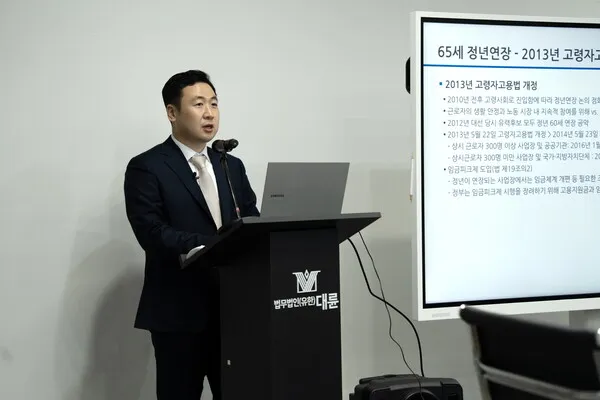
Daeryun Law Firm holds an HR seminar for foreign-invested companies. Lawyer Intae Bang introduces major issues and response tasks, focusing on banning retirement age extension and comprehensive wage system. Daeryun “We will further strengthen human resources and labor advice for companies.” Daeryun Law Firm announced on the 17th that it held a working-level discussion on trends in labor law revision at the ‘HR ROUND TABLE’ seminar held for human resources managers of foreign companies together with the Korea Foreign Enterprise Human Resources Managers Association (KOFA HR). KOFA HR This seminar, hosted by Daeryun Law Firm and held at Daeryun Law Firm's Yeouido main office on the 12th, was attended by many executives and workers in charge of human resources from global companies. The seminar speaker was lawyer Bang In-tae of Daeryun (41st class of the Judicial Research and Training Institute). Attorney Bang is a labor lawyer registered with the Korean Bar Association and is a practical expert who has provided advice and litigation on the overall personnel and labor issues, including employment contracts, wage systems, working hours, collective bargaining, and dismissal and disciplinary action, for various companies at home and abroad. In the lecture, Attorney Bang In-tae explained major issues and corporate response tasks, focusing on the 'extension of retirement age to 65' and 'ban on comprehensive wage system', which are currently being legislated. In the first session, Attorney Bang first The background on the discussion on extending the retirement age, such as labor shortage due to aging and low birth rate, and the income gap caused by raising the national pension starting age, was analyzed, and related bills currently proposed in the National Assembly were analyzed, and expected scenarios when future bills were passed were introduced. Next, as a way to prepare for the extension of the retirement age, we discussed measures to reform the system, including an evaluation system centered on competency and performance, personnel management, and career path redesign. In the second session, the main contents of the Labor Standards Act amendment regarding the ban on the comprehensive wage system were explained, and the impact on companies if comprehensive wage contracts were banned was discussed. Next, in preparation for the ban on comprehensive wage contracts, it was emphasized that companies need to make preemptive preparations by suggesting specific measures such as inspecting the working hour management system, improving work efficiency, and reorganizing wage regulations. In the Q&A session that followed the lecture, personnel practitioners at foreign companies asked questions about the operation of retirement systems and standards for judging working hours, etc., which they encountered in the field, and attorney Bang In-tae provided tailored advice based on actual cases. Attorney Kim Kuk-il, managing director of Daeryun Law Firm, said, "This seminar “We plan to further strengthen human resources and labor advice for domestic and foreign companies,” he said. “As the pace of legal change is accelerating, we plan to continue to provide opportunities for corporate human resources managers to share realistic solutions.” Meanwhile, Daeryun Law Firm is operating a corporate legal group that specializes in labor contract review, employment structure reform, collective agreements, and labor dispute response for global companies and foreign companies aiming to enter the domestic market, and is collaborating with professional organizations in the field. We are actively continuing our close-knit advisory project. Law Leader Reporter Son Dong-wook twson@lawleader.co.kr Law Leader - “Extending the retirement age to 65 and banning the comprehensive wage system, preemptive countermeasures must be prepared” (link) Money S - "Extension of retirement age to 65 and ban on inclusive wages are coming"... Daeryun presents ‘HR solution’ (link)
2 places including My Daily
2025-11-18
SJKP, 美 시라큐스 대학교 로스쿨과 글로벌 법률 교류 MOU 체결
SJKP signs global legal exchange MOU with Syracuse University Law School
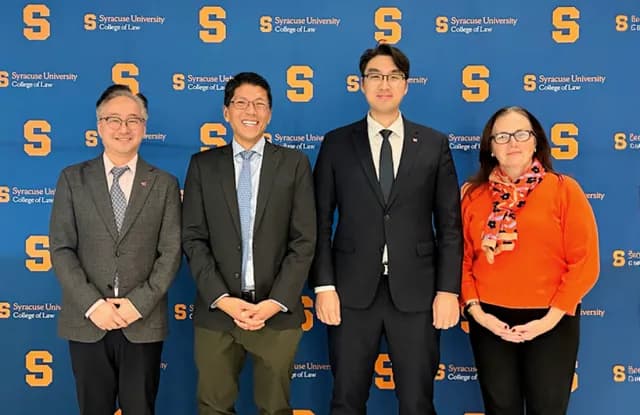
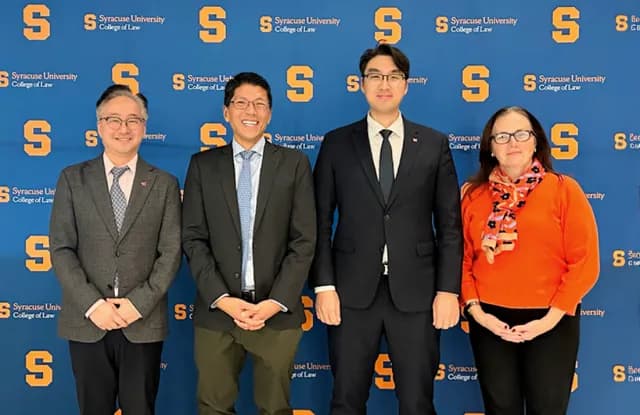
Cooperation in various fields such as international trade and customs... Promotion of global talent exchange program - SJKP “We will increase competitiveness in the Korean legal market by collaborating with institutions around the world” SJKP, the U.S. branch of Daeryun Law Firm, announced on the 18th that it has signed an MOU (business agreement) with Syracuse University College of Law in the U.S. and will begin global legal education and research cooperation. This business agreement ceremony was held with key faculty members including Dean Terence J. Lau and Vice Dean Shannon Gardner and SJKP. It was held at Syracuse University in New York, USA, with CEO Park Dong-il and American lawyer Son Dong-hu in attendance. Syracuse University is a prestigious private university in the eastern United States and is also widely known as the school from which former US President Joe Biden graduated. It has accumulated excellent educational capabilities based on its long history and tradition, and is highly regarded as an educational system that encompasses practice and academics. Through this MOU, SJKP plans to establish a foundation for practical cooperation in various fields such as global legal education, international practical seminars, and talent training. Specifically, it will broadly discuss ▲academic exchanges such as legal education ▲joint seminars focusing on comparison of cultures and systems ▲international talent training programs, etc., and promote continuous exchange of experts and joint research. We reached a consensus. In particular, in this MOU, the promotion of joint seminars specialized in the field of international trade and customs and global practice-oriented research were selected as key areas of cooperation. Based on the expertise of Dean Lau, a former Ford Motor Company legal advisor, SJKP and Syracuse Law School plan to regularly conduct joint research on global trade issues and tariff regulations. In addition, SJKP, together with Daeryun, will engage in talent exchange with Syracuse Law School. Daeryun plans to invite about 20 students from Syracuse Law School to the Daeryun Korean law firm office in May of next year and conduct a field-oriented practical exchange program with Daeryun's professional lawyers. Terence J. Lau, Dean of Syracuse University Law School, said, "The MOU with SJKP will be an important milestone in expanding Syracuse Law School's educational philosophy of practice-oriented global legal education." He added, "Based on the expertise of both institutions, we will jointly offer various global programs." “I look forward to operating it,” said Park Dong-il, CEO of Daeryun Law Firm. “Daeryun is a law firm that has been leading practice-oriented legal services in Korea, and through direct cooperation with prestigious American law schools, we have been able to contribute to fostering more practical international legal talent.” He added, “We will continue to work in solidarity with educational institutions and experts from around the world to increase the global competitiveness of the Korean legal market.” Meanwhile, SJKP, the American branch of Daeryun Law Firm, is located in Manhattan, New York. The office is located on the 76th floor of the World Trade Center, and currently provides services in major legal areas throughout the United States, including civil, criminal, domestic affairs, corporate legal affairs, investments, and international contracts. Reporter Cheon Ju-young (young1997@mydaily.co.kr)[View full article] My Daily - SJKP signs global legal exchange MOU with Syracuse University Law School (Click here) Seoul Shinmun - Daeryun Law Firm's American subsidiary SJKP collaborates with Syracuse University on global legal education and research (link)
Money Today
2025-11-18
'아이돌 응원봉' 분쟁 확산…내 IP 보호하는 전략은?
'Idol Lightstick' Dispute Spreads... What is my strategy for protecting my IP?
Recently, the controversy over the similarity of the lightstick designs of idol groups 'The Boyz' and 'QWER' is spreading beyond the fandom and into the industry as a whole. As it has been pointed out that the core design of the lightstick released by QWER is similar to the 'loudspeaker' shape that The Boyz has previously used, the conflict is expected to continue as each agency announces legal action. The essence of this situation lies in the boundary between ideas and expressions, which are the core principles of intellectual property law. Article 3 of the Framework Act on Intellectual Property defines intellectual property as something whose property value can be realized through intangible things such as knowledge, information, technology, and expressions of ideas or emotions created or discovered through human creative activities or experiences. In particular, with regard to the appearance of a product, the Design Protection Act and the Unfair Competition Prevention Act specify and protect the subject of protection. In other words, the concept of a 'loudspeaker-shaped cheering stick' itself is an idea and cannot claim exclusive rights. Although it is difficult, the specific shapes, colors, and proportions that realize it are clearly the area of intellectual property rights. It has been pointed out that the two controversial lightsticks are similar in the area of ​​these ideas, but the difference is also clear in that The Boyz's is heart-shaped and QWER's is circular, which is expected to become a major issue in future legal disputes. In this case, it is inevitable that it will ultimately be judged by two legal standards: the Design Protection Act and the Unfair Competition Prevention Act. The Design Protection Act serves as a preemptive shield that protects the exclusive rights of previously registered designs. If one party registered the design right first, the court determines infringement by considering whether the overall aesthetics of the two designs are similar in the impression they give to consumers. On the other hand, even if there is no design registration, the Unfair Competition Prevention Act can serve as an ex post facto relief device. The core of this law is to prevent acts that disrupt market order and obtain unfair profits by imitating the results of others' significant investments or efforts without permission. The court comprehensively considers whether a specific design is already widely known in the market and whether latecomers have imitated it and confused consumers. So what should companies and creators prepare to prevent IP disputes that frequently occur in rapidly growing industries and daily life? First, an IP portfolio must be created. Many companies and creators are often unaware of what intangible assets they have. For example, in the case of tech companies, it is necessary to look at not only patents but also ideas from the design process, such as research notes and blueprints. Design assets such as the product's appearance and packaging, web and app UI, and content assets such as promotional videos and work manuals are also essential. Even in the case of creators, creative works such as completed scripts and works, as well as individual characters and storyboards, must be recognized as a ‘bundle of rights.’ Second, ‘registration first, disclosure later’ must be made an iron rule of business. Before revealing an idea to the world, the most reliable and economical way to protect it is to secure legal rights by first applying for design rights or trademark rights. Responding after a dispute breaks out will only result in the double whammy of enormous litigation costs and a decline in brand image. Third, the possibility of legal disputes during the collaboration process must be blocked through contracts. IP disputes frequently occur not only in relationships with external competitors, but also with internal collaborators (employees, outsourced services, partners) who work together to complete ideas. Therefore, internal risks must be thoroughly managed from the beginning of the business by establishing clear legal measures such as ① signing a non-disclosure agreement (NDA) before discussing ideas, ② establishing employee invention regulations that clearly state that employees' ideas are company assets, and ③ stipulating IP ownership provisions for outsourced services in the contract. Ultimately, the way to avoid disputes lies in 'routine' management. Building an IP portfolio, the principle of first registration and then disclosure, and tight contract management provide a much more effective shield than responding after the fact. Unnecessary legal disputes can be prevented by preventing legal risks in advance by changing the attitude of recognizing IP protection devices as core competitiveness rather than complex regulations. Small and Medium Business Team[View full article] 'Idol Lightstick' Dispute Spreads... What is my strategy for protecting my IP? (Shortcut)
KBC Gwangju Broadcasting
2025-11-17
30대 술 마시고 운전했는데 '무죄'...왜? 법원 "운전 고의 없어”
I was in my 30s after drinking and driving, but I was found not guilty... why? Court: “Driving was not intentional”
Driving while drunk and crashing into a parked car... “I just touched him in his sleep,” the rebuttal court said, “The defendant was asleep until the police arrived... If he had been intentional, he would have left the place” A man who was handed over to trial on charges of drinking and driving a vehicle was found not guilty. The Ansan Branch of Suwon District Court found Mr. A, in his 30s, not guilty on charges of violating the Road Traffic Act (drinking driving) on the 29th of last month. Mr. A had a blood alcohol content of He was accused of driving a vehicle while intoxicated at 0.147%. In the process, it was confirmed that Mr. A crashed into a vehicle parked behind his vehicle. Mr. A denied the charge. After drinking, he fell asleep in the car. It was hot, so he turned on the air conditioner, and in his sleep, he touched the gear and put it in reverse. The court said, "At the time of the incident, the car was parked only at the rear of the defendant's vehicle," and "If he had intended to drive, he would have driven forward. “There was no special reason to back up,” he said, and declared him not guilty. He added, “The defendant was still sleeping in the car after colliding with the car behind him, until the police arrived on the scene,” and added, “If there had been intent, he would have left the location.” Attorney Kim Young-min of Daeryun Law Firm, who represented Mr. A, explained, "The Supreme Court ruled that if a car moves without the will or involvement of the person inside the car, it does not constitute driving. It is common to get out of the car to check the state of damage when a traffic accident occurs, but Mr. A emphasized that he was asleep without the intention of driving." #Drunk driving #Not guilty #Not intentional #Accident Park Seok-ho (haitai2000@ikbc.co.kr)[View full article] I was in my 30s after drinking and driving, but I was found not guilty... why? Court: “Driving was not intentional” (Shortcut)
Seoul Newspaper
2025-11-17
“사소한 불일치는 위증 아냐”…배임 재판 출석했다 위증 피소된 50대 ‘불기소’
“Minor discrepancies are not perjury”... A man in his 50s who attended a trial for breach of trust and was accused of perjury was ‘not indicted’
A man who was accused of perjury by the company after testifying as a witness in a company's trial for breach of duty was acquitted. Although the testimony based on memory had some differences from objective facts, the prosecution judged that the overall purpose could not be considered false. According to the legal community on the 17th, the Changwon District Prosecutors' Office decided not to indict Mr. A, who was transferred on charges of perjury last September. In August of last year, Mr. A was sued for giving false testimony while attending the trial of Mr. B, the former CEO of the company he worked for, on charges of breach of trust. The issue in the trial at the time was whether Mr. B executed the funds without receiving approval from the chairman, the actual owner of the company. Mr. A, who worked as the head of the management department at the company, testified in court, saying, "All funds, even if small amounts, were subject to the final approval of the chairman. Additional salaries paid to executives were also according to the chairman's instructions." The company then sued Mr. A for perjury, claiming that all of Mr. A's testimony was false. The company claimed that vouchers that had not been approved by the chairman were confirmed, and in particular, vouchers related to foreign currency execution were not approved by the chairman at all. The company also claimed that the payment of additional salaries to executives was done at the direction of Mr. B, and that Mr. A testified falsely even though he wrote a fact-confirmation statement regarding this. However, Mr. A denied the charges, saying, “The fact that some slips did not have the chairman’s approval was simply an omission in the lump-sum approval process, and I did not intentionally lie.” Mr. A also claimed, "In the case of executing foreign currency, there was no approval process from the beginning, and everything was reported verbally to the chairman. The confirmation of facts was also written according to the instructions of a company official." The prosecution ruled that although there were some inconsistencies with the facts in Mr. A's testimony based on memory, the overall purpose was not different from objective facts and there was no intention to perjure, and they were dismissed. It is a result of a combination of factors such as the possibility that the slip with the missing payment occurred by mistake as claimed by Mr. A, and that it is against common sense to give a large amount of additional salary to an executive without the instructions of the chairman, who has the final approval authority. Attorney Jong-Hoon Han of Daeryun Law Firm, who represented Mr. A, said, “The crime of perjury cannot be established simply because the testimony differs from objective facts, and the witness must recognize that he or she has made a false statement against his or her memory. The client must be aware that he or she is responsible for the company’s payment system and self-execution process. “Because I consistently stated what I remembered, I was able to get an acquittal by legally explaining that the entire testimony could not be viewed as false just because of some exceptional facts,” he said. Reporter Jeong Cheol-wook[View full article] “Minor discrepancies are not perjury”... A man in his 50s who attended a trial for breach of trust and was accused of perjury was ‘not indicted’ (link)
Have more questions?
Quick Menu

KakaoTalk